ICAN is hiring a Staff Accountant to provide financial and administrative support to ICAN’s Finance Director and broader team.
Kaaj Magazine is a digital magazine led by Farahnaz Forotan, one of Afghanistan’s prominent journalists, who heads a distinguished editorial team dedicated to telling the human stories of a nation shaped by decades of conflict.
At the heart of Kaaj’s work is a powerful conviction: Afghan women, who have paid some of the highest costs of war while remaining among its most enduring voices for peace, deserve to have their experiences documented and heard. Many of these women have been peacebuilders at the heart of war and darkness, sustaining communities and hope even in the most difficult moments.
Through human-centered storytelling, features, interviews, documentaries, and investigative reporting, Kaaj brings together narratives that illuminate the lived realities of Afghan society.
More than a news outlet, Kaaj Magazine is a digital platform that goes beyond headlines. It seeks to preserve the human narratives of Afghanistan, especially the stories of women whose courage, resilience, and quiet acts of peacebuilding have shaped the country even in its darkest times. By placing people at the center of its reporting, Kaaj aims to deepen global understanding of Afghanistan and its unfolding human story.
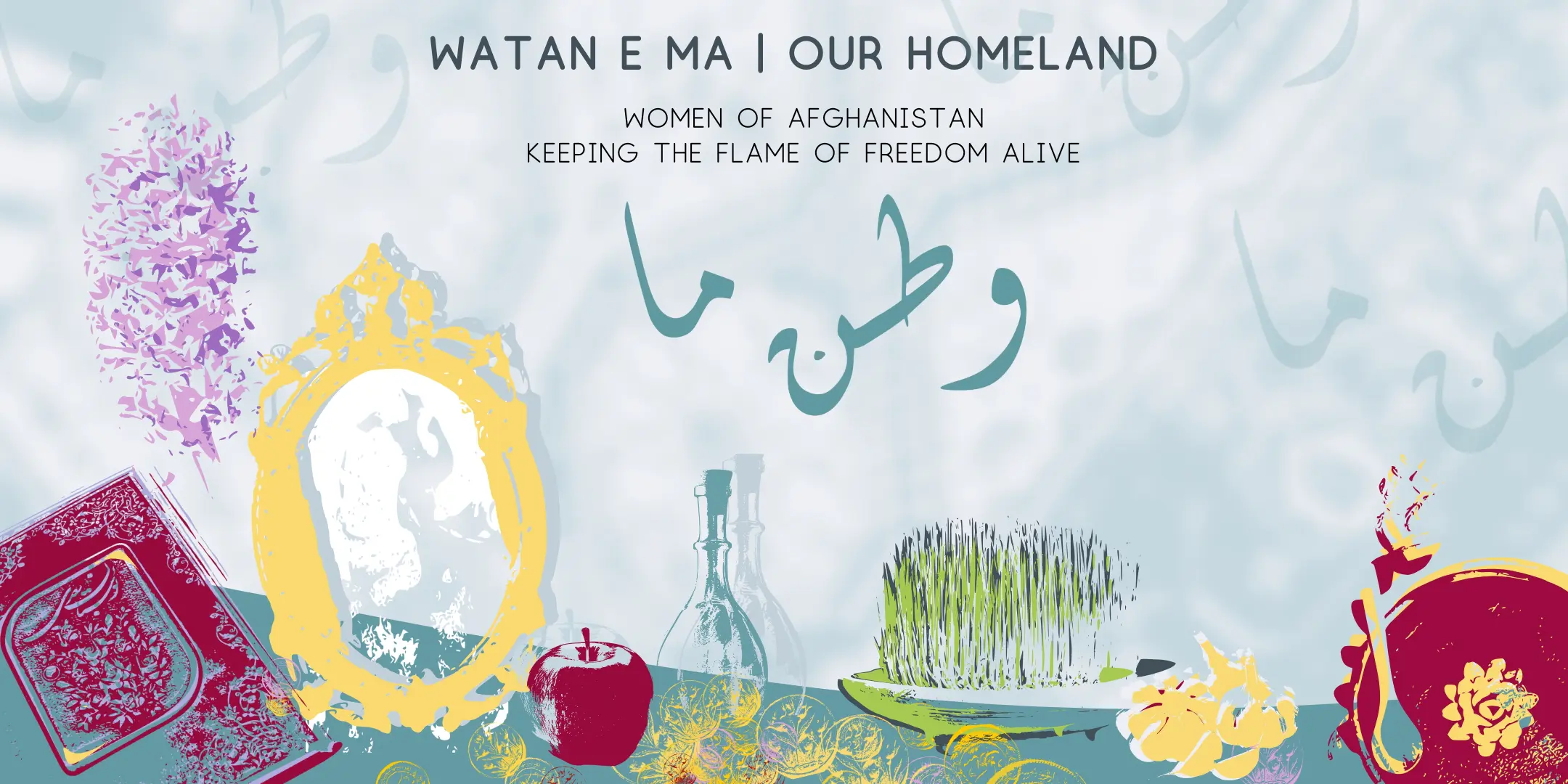
PRESS RELEASE: Watan e Ma – وطن ما – Our Homeland: An Interactive Event and Exhibit Honoring the Resilience of Afghan Women Peacebuilders
This Winter Will Also Pass O coldness of winter, Within you, thousands of springs lie hidden. The fire of love, within the ice, Will create the warmth of life. Be patient, O soul, For beyond this long night, The light of dawn waits for you. ~ Rumi این زمستان نیز خواهد گذشت ای سردی زمستان، در دل تو هزاران بهار نهفته است آتشِ […]
In a powerful departure from traditional advocacy, ICAN—guided by our Afghan partners and women peacebuilders—hosted the event “Watan e Ma – وطن ما – Our Homeland: Women of Afghanistan Keeping the Flame of Freedom Alive” on March 17, 2025 at Blue Gallery in New York City. Held during the 69th Commission on the Status of Women (CSW69), the event celebrated Afghan cultural heritage and the resilience of Afghan women peacebuilders, who persist in their leadership for peace, justice, and equality under the Taliban’s regime of gender apartheid.
Empatiku is a civil society organization based in Indonesia that fosters empathy in the security and education sectors and addresses the rise of violent extremism. Since its establishment in 2015, Empatiku has innovated its programs to ensure the involvement of civil society, especially women, in bringing about social change.
The Center for Egyptian Women’s Legal Assistance (CEWLA) is a non-governmental organization that was founded in 1995. Its strives to offer Egyptian women legal support and assistance regarding their rights under the Egyptian Constitution and laws, and international conventions.
Women for Justice Foundation (WJF) is an Egyptian-Canadian nonprofit organization based in Ottawa, Canada and established in 2019.
Yakjah Reconciliation and Development Network (Yakjah) is a youth and women-led nonprofit organization and social innovator for peacebuilding, based in India. It is a non-partisan platform for women and youth vulnerable to marginalization, polarization, and radicalization by conflict experiences.
The Regional Coalition for Women Human Rights Defenders in South West Asia and North Africa (WHRDMENA) is a group of women human rights defenders – individuals and groups – who have established a coalition of women defenders in the Middle East and North Africa (MENA) region.
IMAN Research is a think tank based in Kuala Lumpur that focuses on issues of security, peacebuilding, and sustainable development. It provides academic and informal research to governments, development organizations, and specialists working in policy-development.
Qadims Lumiere School and College was founded by Bushra Qadim Hyder in Peshawar, Pakistan. The institution provides a positive alternative to violent extremism through education, actively addressing divisions among Pakistani identity groups and gender inequalities that are exploited by extremist outfits.
Digital Shelter is an initiative founded in March 2018 by human rights defenders in Somalia who are committed to advancing digital safety, digital rights, internet freedom, and digital inclusion.
The National Transformational Leadership Institute (NTLI) was launched in 2016 as a partnership between the University of Juba, the Ministry of Gender, Child and Social Welfare, and UN Women South Sudan. Created to meet South Sudan’s urgent need for ethical, inclusive, gender-responsive policies and visionary leadership in the aftermath of conflict, NTLI has quickly risen as a regional center of excellence in East Africa.