ICAN’s Mission Five Steps for Sustainable Prevention of Sexual Violence in Conflict ICAN Partner AWAPSA: A Catalyst for Kenya’s First SGBV Court The War Against Ourselves: Afghan Women Peacebuilders’ Response to the Mental Health Crisis in Afghanistan Protecting Women Peacebuilders: The Front Lines of Sustainable Peace
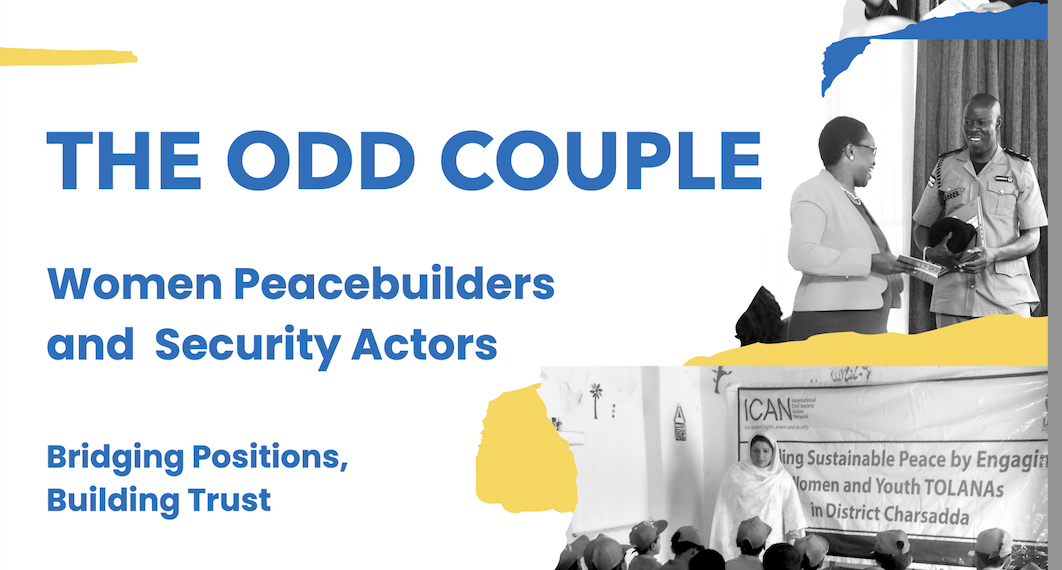
The Odd Couple: Women Peacebuilders and Security Actors Bridging Positions, Building Trust
The WPS agenda has proven a vital entry point for women peacebuilders to engage with the security sector and build trust within affected communities. These efforts—often invisible—are contributing to the reform of the sector, reshaping local security environments and mitigating violence.
The War Against Ourselves: Afghan Women Peacebuilders’ Response to the Mental Health Crisis in Afghanistan
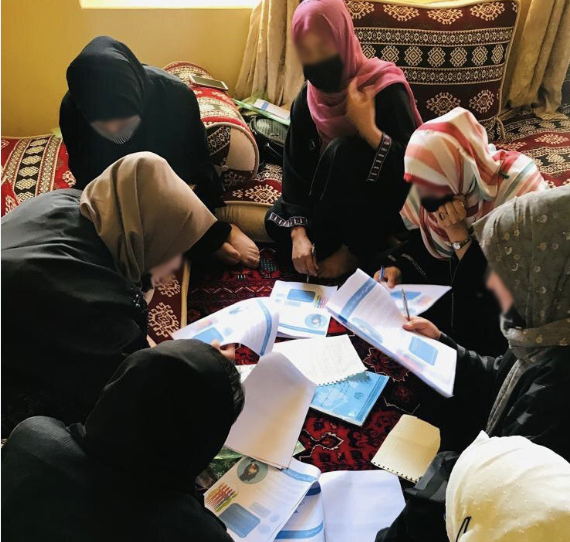
This case study describes the drivers of the mental health crisis in Afghanistan, its gendered and cultural dimensions, and the strategies used by Afghan women-led peacebuilding organizations to provide solutions. The authors conducted interviews with representatives of Afghan women-led peacebuilding organizations and thematic experts, which were complemented by a desk review of project documentation and […]
Open Statement to the United Nations Security Council on behalf of Women Peacebuilders Marking 25 Years of the Women, Peace, and Security Agenda
On October 6, 2025, the U.N. Security Council holds its annual open debate on Resolution 1325 on Women, Peace, and Security. Today, we are not issuing a new statement. Instead, we are honoring our community of women peacebuilders—who appeared before the Security Council throughout these 25 years, speaking for the millions they represent—by echoing their messages.
Home»ICAN Latest»
The Ever-Present Cycle of Conflict and Peace Making
The Ever-Present Cycle of Conflict and Peace Making
13 July 2020
By Morgan Mitchell
In the 14th virtual WASL call, peacebuilders discussed the ‘cycle of conflict’ and how it affects their work on conflict prevention, de-escalation, and peacebuilding.
Around the world, women peacebuilders are working within their communities to de-escalate violent conflict and prevent the recurrence of conflict in post-conflict or transitional environments. However, their work is made increasingly more difficult by the framing of conflict resolution as a linear process. As one women peacebuilder from the UK explained, “Most governments see peace processes as a linear approach. The linear approach is seen as a ‘get out clause’ – as soon as one stage of the process breaks down the government reverts back to the beginning of the process. This pattern is used as an excuse to not move on.” In contrast to this common idea, WASL partners suggest that conflict is actually a cycle and that most countries will experience multiple phases of the cycle, simultaneously. Governments must understand this dynamic in order to enable sustainable peace. The issue of institutional misframing has been exacerbated by COVID-19. A women peacebuilder from Colombia noted, “many of the resources that were originally dedicated to peace negotiations have now been redirected to COVID prevention.” As a result, violent conflict has re-emerged.
Despite these challenges, women peacebuilders have seized opportunities to continue their work during COVID. The pandemic has created an occasion for communities to consider conflict prevention and, more specifically, how to address the fundamental elements of conflict within their communities. A woman peacebuilder from Afghanistan stated, “Conflict prevention requires us to tackle the root causes of conflict – poverty, lack of access to education, inequality, unemployment, lack of security and even the role of the international community in the country.” This viewpoint was echoed by the experiences of a woman peacebuilder from Egypt when she added, “the pandemic is creating a rebuilding moment for all of our institutions by driving the underlying factors of extremism to the fore of dialogue within the society,” emphasizing that COVID has offered communities an opportunity to rebuild better by engaging in dialogues focused on understanding the root causes of conflict and how to mitigate them.
Conflict prevention requires us to tackle the root causes of conflict – poverty, lack of access to education, inequality, unemployment, lack of security and even the role of the international community in the country.
As communities start to rebuild and systems and institutions begin to re-establish themselves, we will enter into a particularly salient moment where we will be called to adamantly promote women in every aspect of the cycle of conflict prevention and conflict resolution. A peacebuilder from Afghanistan marked the importance of this promotion by identifying women’s political participation in all stages of conflict prevention and resolution as the primary focus of women peacebuilders post-COVID. A second pertinent idea is the concept of peacebuilding as a constant, ongoing process. A woman peacebuilder from Colombia commented on the increasing tension and conflict in the region resulting from the worsening economic situation due to COVID. Despite the clear need for COVID relief, this woman peacebuilder emphasized that peacebuilding efforts cannot be sacrificed or diminished for any other cause. “In peace agreements, deep transformation with security forces must be discussed all the time,” she stated. Her sentiment was reiterated by a woman peacebuilder from the UK who emphasized that peace negotiations need to be “consistently sustained” in order to be successful.
During COVID WASL partners have been using various technologies to continue building peace and making impactful change in their communities. One woman peacebuilder from the UK explained that she had been using interactive messaging to spread informational health and safety messages to women in remote locations across multiple regions in Pakistan and Afghanistan. While this method has been slow, it has been instrumental in facilitating conversations between various groups of women between these two countries. Similarly, women peacebuilders in Afghanistan are using text messaging, mail outs and conventional letter writing to reach the communities they serve. Globally, women peacebuilders are increasing access to technology for other women while remaining healthy and safe and are advocating for flexible funding that can be directed towards a range of technologies and bolster programmatic success.
The pandemic is creating a rebuilding moment for all of our institutions by driving the underlying factors of extremism to the fore of dialogue within the society
The pandemic has put pressures on women peacebuilders and the local and national environments that they work within, to reframe their view of conflict resolution and prevention and address the enabling factors of violent conflict at every level. The struggle for sustainable peace can never be relaxed. Governments must integrate a systematic, adaptable approach to de-escalation and conflict prevention as they recover from COVID for peace to be actualized and sustained and it is crucial that women be involved in every aspect of these processes. Additionally, as women peacebuilders continue to work in spaces of conflict prevention, it is critical to involve communities in identifying early warning signs of conflict and extremism. As one woman peacebuilder from Turkey pointed out, “communities can see conflict forming early on, so conversations with these communities will inform us of conflicts brewing and how to transform them.”
On October 6, 2025, the U.N. Security Council holds its annual open debate on Resolution 1325 on Women, Peace, and Security. Today, we are not issuing a new statement. Instead, we are honoring our community of women peacebuilders—who appeared before the Security Council throughout these 25 years, speaking for the millions they represent—by echoing their messages.
ICAN FeaturedICAN LatestICAN UpdatesWASL UpdatesWomen's Alliance for Security Leadership
On behalf of the International Civil Society Action Network (ICAN) and members of the global Women’s Alliance for Security Leadership (WASL), we are honored to nominate Francesca Albanese, United Nations Special Rapporteur on the situation of human rights in the Palestinian territories occupied since 1967, for the 2026 Nobel Peace Prize.
در عرصه صحت روانی، افغانستان با بحران پیچیدهای مواجه است که این بحران به طور جدایی ناپذیر با ناامنی شدید فیزیکی، سیاسی و اقتصادی در کشور گره خورده و این نا امنی ها بحران را تشدید میکند. برای رسیدگی به آسیب های روانی، صحت و بهداشت جامعه به شیوه های پاسخگو به جنسیت و با مد نظر گرفتن حساسیت های فرهنگی، سازمانهای فعال در عرصه صلح سازی به رهبری زنان افغان در موقعیتی منحصربه فرد قرار دارند. این سازمان ها خدمات ابتدایی ارائه میدهند، مهارتها را توسعه میبخشند و در شکلدهی هنجارهای فرهنگی و جنسیتی نقش مؤثر ایفا میکنند.
ICAN FeaturedICAN LatestICAN UpdatesWASL UpdatesWomen's Alliance for Security LeadershipWPSO
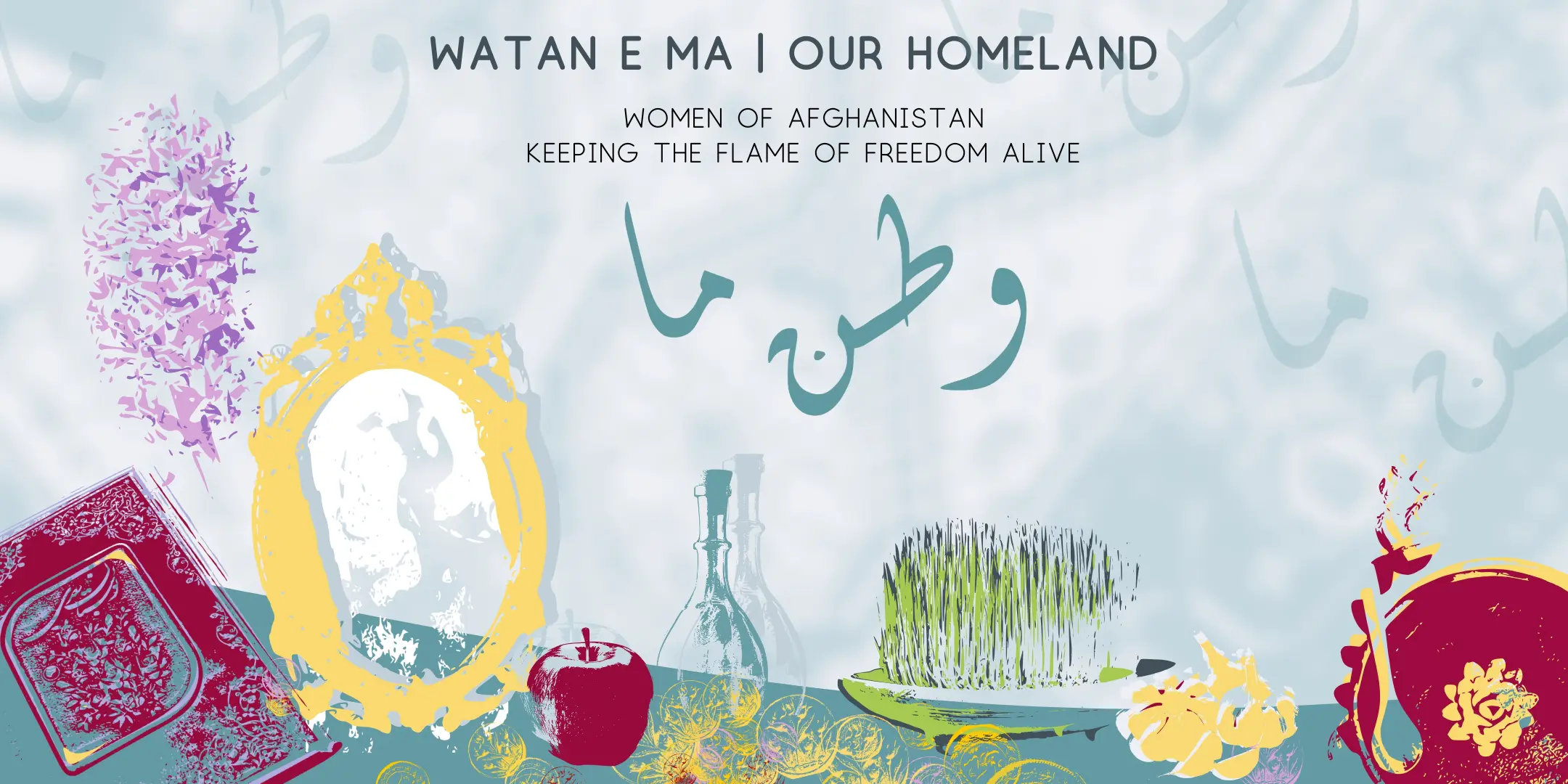
In a powerful departure from traditional advocacy, ICAN—guided by our Afghan partners and women peacebuilders—hosted the event “Watan e Ma – وطن ما – Our Homeland: Women of Afghanistan Keeping the Flame of Freedom Alive” on March 17, 2025 at Blue Gallery in New York City. Held during the 69th Commission on the Status of Women (CSW69), the event celebrated Afghan cultural heritage and the resilience of Afghan women peacebuilders, who persist in their leadership for peace, justice, and equality under the Taliban’s regime of gender apartheid.
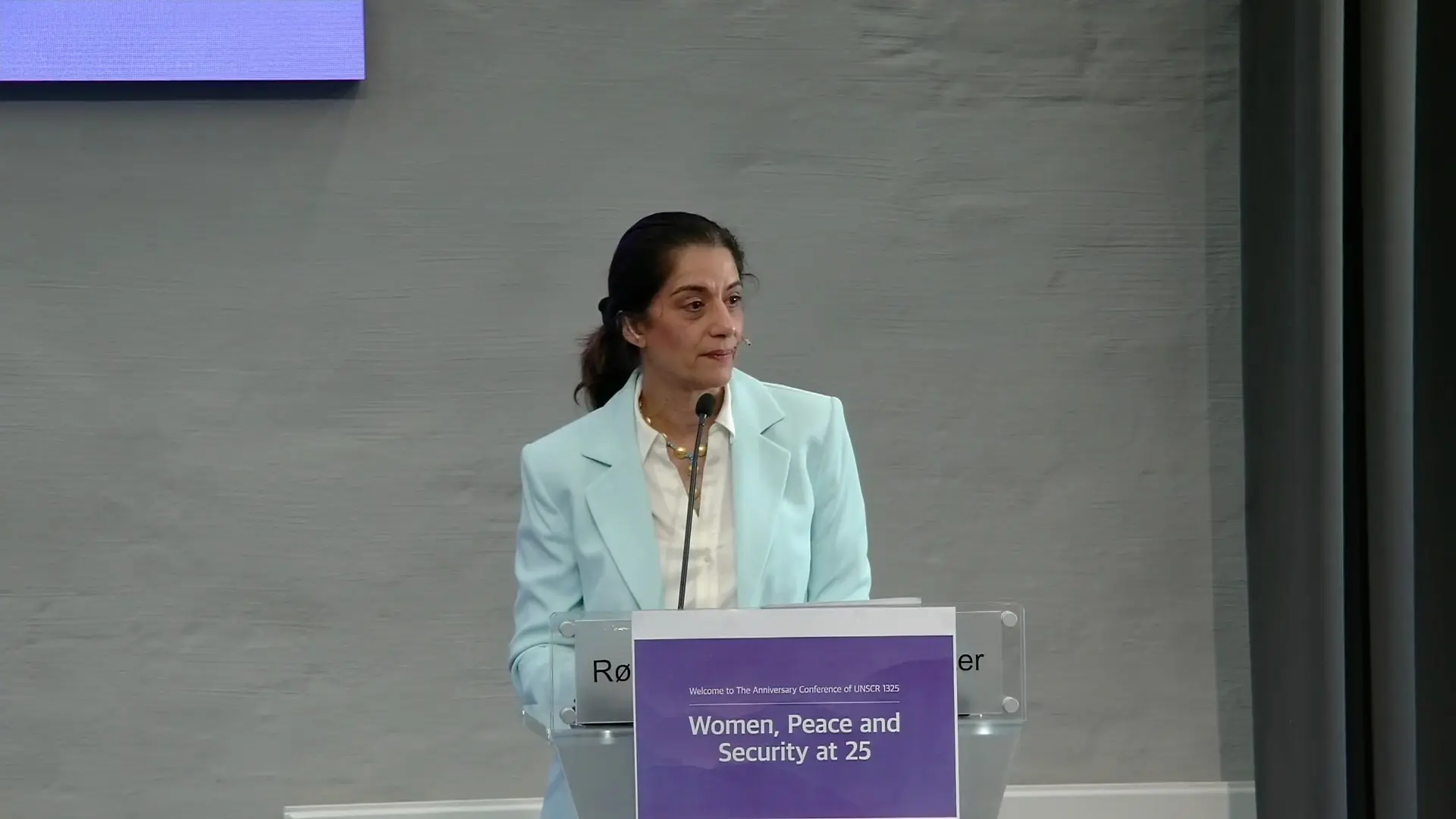
On May 5, 2025, ICAN's Sanam Naraghi Anderlini delivered the keynote speech at the two-day international conference "25th Anniversary Conference of UNSCR 1325 Women, Peace and Security."
As Senator Mobina Jaffer concludes 23 years of distinguished public service in the Canadian Senate, we extend our deepest thanks for her steadfast leadership as Chair of ICAN’s Board of Directors from 2014 to 2024.
Together with André Mundal, our new Interim Chair of the ICAN Board of Directors, we are delighted to welcome two new members to our Board of Directors.
Trust between communities and the security sector is critical for effective governance and peace. So is a vibrant civil society. When women peacebuilders are recognized and engaged as independent, strategic partners and security actors—in their own right—the results are transformative. Twenty-five years on from the launch of the WPS agenda, women peacebuilders’ creativity and contributions to societal peace and security are not only timely, they are even more essential.
Allamin FoundationAWAPSAAWAWBetter Peace InitiativeCIASECoACTGEN MyanmarGender and ExtremismsICAN FeaturedICAN LatestICAN UpdatesPAIMANPCIDWASL UpdatesWomen's Alliance for Security Leadership
Afghanistan is facing a complex mental health crisis inextricably linked with and compounding the dire state of physical, political, and economic insecurity in the country. Afghan women-led peacebuilding organizations are uniquely positioned to address community members’ health and wellness in gender-responsive, culturally- sensitive, and trauma-informed ways.
ICAN FeaturedICAN LatestICAN UpdatesWASL UpdatesWomen's Alliance for Security LeadershipWPSO
As the Women’s Alliance for Security Leadership (WASL) continues to expand globally, fostering stronger regional and national networks, we are excited to announce the formation of the first-ever WASL Steering Committee.