ICAN’s Mission Five Steps for Sustainable Prevention of Sexual Violence in Conflict ICAN Partner AWAPSA: A Catalyst for Kenya’s First SGBV Court The War Against Ourselves: Afghan Women Peacebuilders’ Response to the Mental Health Crisis in Afghanistan Protecting Women Peacebuilders: The Front Lines of Sustainable Peace
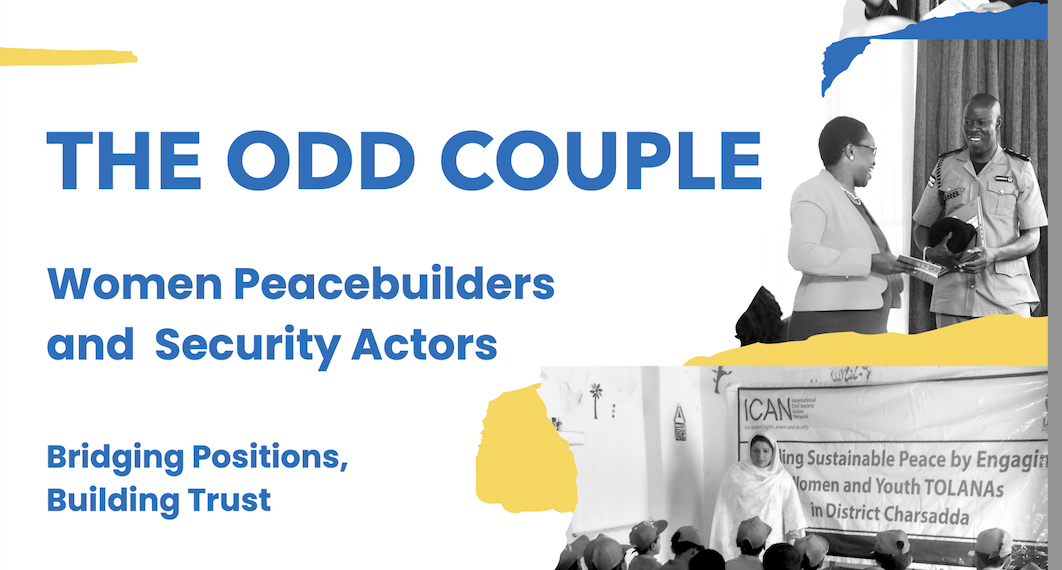
The Odd Couple: Women Peacebuilders and Security Actors Bridging Positions, Building Trust
The WPS agenda has proven a vital entry point for women peacebuilders to engage with the security sector and build trust within affected communities. These efforts—often invisible—are contributing to the reform of the sector, reshaping local security environments and mitigating violence.
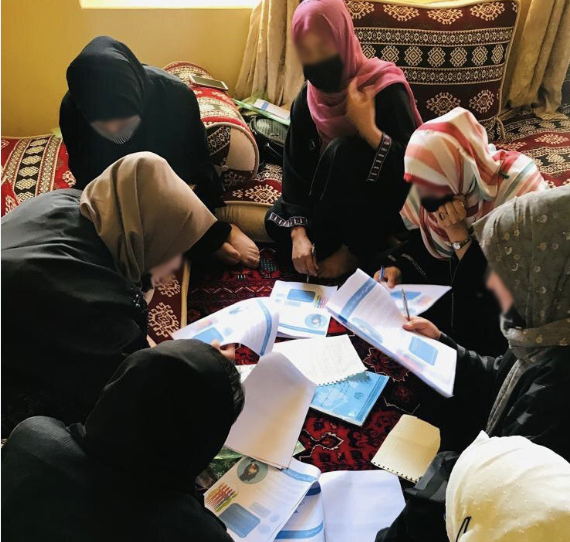
The War Against Ourselves: Afghan Women Peacebuilders’ Response to the Mental Health Crisis in Afghanistan
This case study describes the drivers of the mental health crisis in Afghanistan, its gendered and cultural dimensions, and the strategies used by Afghan women-led peacebuilding organizations to provide solutions. The authors conducted interviews with representatives of Afghan women-led peacebuilding organizations and thematic experts, which were complemented by a desk review of project documentation and […]
Open Statement to the United Nations Security Council on behalf of Women Peacebuilders Marking 25 Years of the Women, Peace, and Security Agenda
On October 6, 2025, the U.N. Security Council holds its annual open debate on Resolution 1325 on Women, Peace, and Security. Today, we are not issuing a new statement. Instead, we are honoring our community of women peacebuilders—who appeared before the Security Council throughout these 25 years, speaking for the millions they represent—by echoing their messages.
Home»ICAN Featured»
A Date to Remember: The UN Security Council in Conversation with WASL, the United Nations of Women Peacebuilders
A Date to Remember: The UN Security Council in Conversation with WASL, the United Nations of Women Peacebuilders
13 August 2020
The Coronavirus pandemic may have shut the door on shuttle diplomacy and air travel, but it opened a window to virtual diplomacy of a more creative and inclusive variety. On July 30th, 2020, eighteen current and future members of the UN’s Security Council experienced just that.
They joined ICAN’s weekly community check-in call with 33 of our partners from 25 countries across the Women’s Alliance for Security Leadership (WASL). “Twenty years ago, we as women peacebuilders invited the Security Council to join us in the basement of the [UN] Church Center in New York,” said ICAN’s Founder and CEO, Sanam Naraghi Anderlini in her welcoming remarks. That conversation was a steppingstone towards attaining UNSCR 1325 on women, peace and security (WPS). “The peacebuilders that we have with us here are risking their lives every day to bring peace,” she added. “We want to have a genuine exchange, between the UN’s Security Council and our partners in WASL, who are a united nations of women peacebuilders. We each have questions and answers for each other. I hope we can challenge ourselves about what we can do differently together to ensure sustainable peace now and for the future”, said Naraghi Anderlini.
The gathering was a fitting tribute to Germany’s Ambassador Christoph Heusgen as he presided over the Council on his last day. Germany entered the Security Council with a strong commitment to the WPS agenda, with the adoption of new resolutions and political momentum in favor of women’s participation in peace processes. But he was frank in his assessment:
“We have rules and the evidence and all of the information… however women are still sidelined, marginalized and ignored.”
In talking to the WASL members he said, “It is important to hear your experiences so that we can better understand why this is happening. By having you speak with the Security Council representatives we hope to connect our insights regarding the WPS agenda and discuss how we can better implement the WPS agenda on the ground.”
Face to Face with Realities on the Ground
For nearly two hours, the dialogue flowed, not with prepared remarks that is hallmark of formal UN settings, but in genuine exchange about the facts on the ground, queries and responses, pledges and solutions. The discussions touched on the state of current peace processes, ,the threat that peacebuilders face and their need for protection, warning signs of rising conflict and the resurgence of violent extremism under the cover of Covid-19, and creativity and persistence of women peacebuilders as they take on the responsibility to protect their communities.
On the topic of the ongoing wars, the reality of Libya today was a stark reminder of the failures of the international community. A country rich in resources and human capital, is plagued now, said one Libyan WASL member. “The infrastructure is destroyed including water, electricity, telecommunications, and transportation. It causes huge challenges and mental stress to communities, but particularly women who have become breadwinners, as well as primary caregivers for the children and the family.”
The factions supported by the international community, she said, “use power cuts as a political tool and systemic corruption and the violent nature of the current government has been reaching ridiculous levels affecting everything from access to health services, education, and even applying for passport.”
Similar frustration and sentiments arose from the Yemeni peacebuilders. “The Yemeni people are enduring harsh economic conditions including not receiving their salaries for years now. Meanwhile the humanitarian response is failing Yemenis as it has been ineffective, suffering from corruption, diversion of aid, and excluding to women led organizations,” they said frankly. “We have facilitated the release of 944 detainees, while the official agreements were not able to free one detainee,” she said. As Covid-19 came, Yemeni women peacebuilders were preemptive in providing food and sanitation and calling for a ceasefire. The UK’s representative acknowledged this, noting,
“COVID has shined a light on women peacebuilders and their work.”
But in their experience with the UN, WASL’s Yemeni members have seen no such acknowledgement. “We regret that the UN Envoy jumps to celebrate the promises of elusive parties to release the detainees and doesn’t hold them accountable when they don’t implement their promises. We as women’s organizations, want to express our disappointment due to the continuous exclusion of women in the peace process. The UN Envoy’s current approaches to including women do not meet our aspirations or our sacrifices. The UN’s actions continue to be symbolic and not meaningful.” It is time, one said, to “turn words into action.”
Estonia’s Gert Auvaart added his thoughts, “Especially now, in the context of the pandemic, the role of women in all walks of life must be valued more.” Reflecting on this critical link between the grassroots and the global arena, he added, “We all need to take concrete steps from the grassroots to the multilateral level in order to manage the risks and the disproportionate heavy burden that COVID19 puts on women and girls.”
Yet, said the Yemenis, “Despite all this, we feel outcast and face continuous exclusion from the peace processes. We ask for women peacebuilders representation in the peace negotiations and 50% female representation in the UN Envoy’s team.”
Their concerns were echoed by Afghan peacebuilders “While the Afghan peace process is very political between the US and the Taliban, communities have learnt to resolve their own disputes. It is very important to include local Afghans, who understand the roots of the process in the peace talks in order to build sustainable peace.” And she warned, “Will it be ensured that the peace process is inclusive and brings in women and minorities who know what is needed? Or are we going to witness another failed peace process in Afghanistan?”
Delivering on the Promise of Participation
In response, Belgium’s representative, Karen Van Vlierberge, noted,
“One important lesson is that there is room for improvement within the UN.”
Further adding, “With regards to Afghanistan the EU will provide the future support to Afghanistan based on the countries commitment to promoting women’s rights.”
The UK’s representative echoed the sentiments. “Our priorities are to increase women’s meaningful participation in the peace process, in particular in South Sudan, Yemen and Afghanistan and to increase support and protection to women resolving conflict, countering violent extremism and building peace at the grassroots,” said Sonia Farrey, anticipating the anniversary of SCR 1325.
Noting that his predecessor in 2008 had ushered in UNSC Resolution 1889 that highlights the critical role of women in post conflict recovery, Vietnam’s Ambassador Dang Dinh Quy also spoke out. “WPS is a priority to Vietnam. We incorporate WPS agenda on all of our statements because we know the important role of the women, especially in peacebuilding processes.” In addition, he spoke about the Rohingya crisis and suggested that the Security Council and ASEAN could play a more significant role for the rehabilitation of the Rohingya. Germany’s State Secretary Michelle Müntefering echoed his call, “Let’s make sure that the Women, Peace and Security agenda is part and parcel of all country-specific mandates of the Council,” she said, adding, “Let’s hear from more civil society representatives in the Council.”
South Africa’s Ambassador Jerry Matjila reflected on the contributions of South African women to his own country’s transition. “During the [apartheid] struggle and post 1994, we realized the immense role played by women in ushering in democracy.
“We need to ensure that the voices of women are heard at a national level as well. Until there is a pipeline for women in all fields, especially peacebuilding, we will not have peace.”
As an incoming member, Ireland’s Brian Flynn joined in, saying, “Ireland is committed to having women peacebuilders at the table. I can assure you that this will be a place of focus alongside our partners on the council.”
Belgium’s Ambassador, Karen Van Vlierberge raised a concern about the safety of peacebuilders, to which WASL members from around the world responded emphatically. From Kashmir, a WASL member who has been under lock down and house arrest for nearly ten months, reflected on the difficulties in his country. “Covid-19 has become a cover and excuse for more violence,” he said, reflecting on India’s actions in Kashmir, its treatment of Muslim minorities and the recent border tensions with China.
Syrian peacebuilders were frank in their assessment. “Please help us protect those who are building peace on the ground,” implored one as she emphasized the need to protect women peacebuilders to enable their work. WASL’s Cameroonian partners added a reality check about the risks that peacebuilders face; “We are the women doing humanitarian response. We are the women educating our communities on prevention strategies and control efforts. We are the women building the roads to reach rural communities.”
“Yet, while we work towards peace in our communities, we are the ones that are the most attacked.”
Their questions and request to the Council was clear:
“Who is protecting us? Who is helping us? We believe in the UN and we want to know what you can do to provide us with support and protection?”
An Iraqi peacebuilder dealing with displacement, the aftermath of ISIS, and now the pandemic, reiterated the role the UN could play: “We need UN protection because we are targeted by multiple groups and this affects our work.”
The United Kingdom’s Political Coordinator, Sonia Farrey answered the call, stating her government’s commitment and plans to “increase support and protection to women resolving conflict, countering violent extremism and building peace at the grassroots.” Germany’s State Secretary Michelle Müntefering said it was crucial to “hold UN Missions accountable to what we have mandated them to do: implement the Women, Peace and Security agenda!”
New Threats and the Urgency of Prioritizing Prevention
“We want the UN community and international community to make prevention a top priority,” said a Moroccan WASL member. “We want them to work with our governments to provide training and invest in education that is necessary to promote and maintain human rights values, including tolerance and inclusive leadership.” This focus on education and inclusion is particularly pertinent given the resurgence of violent extremists in the midst of the Covid-19 pandemic. From North Africa to South and Southeast Asia, WASL members emphasized that extremist groups have filled the void in the absence of state services particularly with regard to food and income provision. Their messages about the pandemic run counter to the state’s efforts, and they play to the public’s fears. Around the world, but in fragile and conflict states especially, the pandemic has revealed the importance of trust between a state and the society.
The challenge is not simply to convey a message of hygiene or warning, but to understand that the messenger is crucial. Here again, women peacebuilders have proven their crucial role. “Our communities know us and trust us,” said a Cameroonian peacebuilder working in war affected areas where host communities are blaming the internally displaced women and girls for spreading the virus. WASL’s member in Albania who has a track record in addressing violent extremism and the rehabilitation of returnees and initiated food and hygiene parcels to marginalized families as Covid-19 hit, echoed her remarks.
“As women peacebuilders we build the bridge between our community and our government. We are a crucial part of peace.”
Her Moroccan colleague, agreed, “We want to be a part of the strategies that are implemented because we are the ones that are doing the work and are aware of the context.”
The wars of today said Naraghi Anderlini, are both local and geopolitical. To prevent and resolve them, the international community needs peacebuilders who can address these dimensions. This explains much of the success of women peacebuilders. They have a depth of local cultural knowledge, relationships across the political and societal divides, a track record of service that enables them to have access and trust and solutions that are rooted and viable. As one WASL member, a school principal from Pakistan, noted, “Through peace education we have seen a transformation in the number of children that were turning to jihad. These children are realizing that jihad is not the solution and they want a change.” The experience resonates in Albania: “Our work with PVE has been holistic . . . We have trained young people to oppose any form of extremism, raised women’s awareness of extremism within their communities and marched for peace and security with civil society and local religious actors.”
How the UNSC Can Stand with Women Peacebuilders
In her closing remarks, German’s State Secretary Michelle Müntefering, offered the most emphatic call:
“We need to look beyond anniversaries and celebrations… to make sure that 5, 10 or 20 years from now we will not look at implementation gaps again…We need to empower those at the frontlines – all frontlines in this crisis, whether at home, in hospitals, schools, in the office or the peace building space. And we need to make sure that funding continues to reach women’s organizations – not just continue but go beyond what has been committed in the past.”
With regard to the role of the UN and other multilateral mediation efforts, she was clear.
“Specific targets for meaningful participation of women. . . should be a precondition for any UN-led mediation effort!”
Muntefering also spoke of the bilateral efforts of member states. “Let’s raise the importance of women peacebuilders, activists and human rights defenders in our bilateral relations and discussions with countries in conflict or post-conflict situations,” she said, offering Germany as a committed partner. “Germany stands ready to engage with all of you to make Women, Peace and Security the core security issue that it is! It is not simply an ‘add-on’, a ‘nice to have’, once a peace agreement has been signed.”
“I mean it when I say, I stand with women peacebuilders!” declared Ambassador Heusgen at the start of the meeting. Ambassador Jose Singer of the Dominican Republic chided, to the emphatic agreement of others, you mean:
“We stand with women peacebuilders!”
“To genuinely stand with and act for women peacebuilders,” said Naraghi Anderlini in her closing remarks, “We welcome you to join the ICAN/WASL She Builds Peace Call to Action,” and adopt the following measures immediately:
1. Focus on the ending and preventing wars. As WASL members say, the wars today cannot be won by force. As our Kashmiri colleague stated, “We need to silence guns and open the doors of dialogue and diplomacy”;
2. Set a gold standard for UN peace mediation and facilitation efforts by making the inclusion of women peacebuilders as independent delegations to all processes from the outset. As you heard, they bring a knowledge of the ground realities and the warring parties, as well as a track record of caring and protecting their communities and nations to the table. If the UNSC is committed to enabling sustainable peace, women peacebuilders are essential to your endeavors;
3. Integrate WPS commitments into all the country specific discussions and mandates the Council issues;
4. Recognize the efforts and invite women peacebuilders to brief you for every issue and country on your agenda;
5. Fund women’s peace organizations; and,
6. Uphold the commitments made in paragraph 6 of SCR 2493 (2019) to protect women peacebuilders through the Council’s efforts, missions and hearings and your diplomatic missions in conflict affected contexts.
Naraghi Anderlini concluded the call with a standing invitation to the Council members for a regular interactive call with WASL. “We have a responsibility to bring ourselves and our children a peaceful future,” she said, “This should be our legacy – so join us any week. We look forward to hosting you the next gathering.”
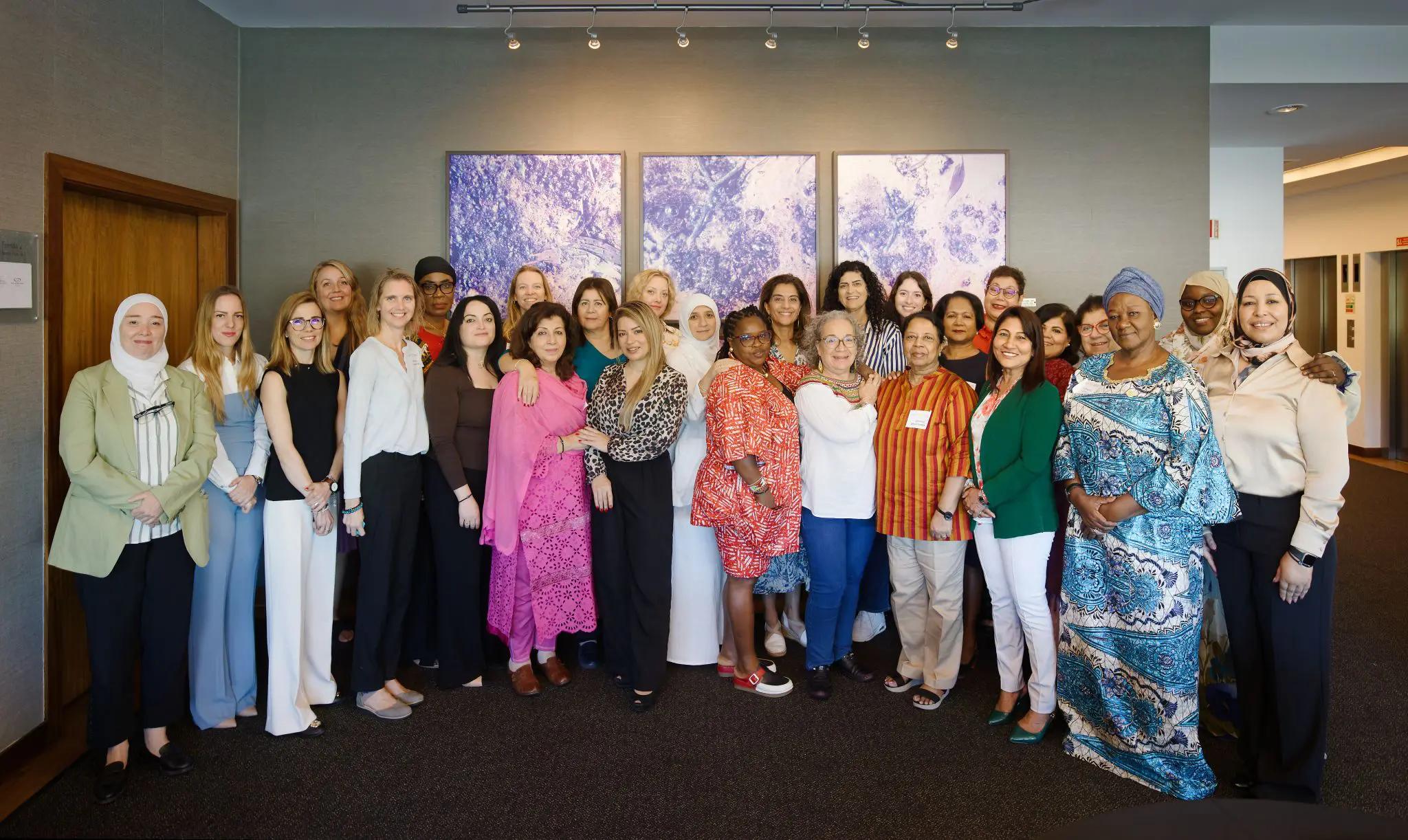
ICAN convened 20 members of WASL in Lisbon for the “Our Strategies, Our Peace” Writers’ Workshop. This unique gathering provided a secure and creative space for women peacebuilders to share their strategies, experience, expertise, and stories from conflict and crisis contexts.
Addu Women's AssociationAllamin FoundationAWAWCAGEADCIASECOECICAN FeaturedMobaderoonPAIMANRescue MeWCDCAWi'amWomen's Alliance for Security LeadershipWPSO
On October 6, 2025, the U.N. Security Council holds its annual open debate on Resolution 1325 on Women, Peace, and Security. Today, we are not issuing a new statement. Instead, we are honoring our community of women peacebuilders—who appeared before the Security Council throughout these 25 years, speaking for the millions they represent—by echoing their messages.
ICAN FeaturedICAN LatestICAN UpdatesWASL UpdatesWomen's Alliance for Security Leadership
In South Sudan, a nation where peace has long remained fragile and democratic progress uncertain, women are stepping forward to shape the future of their country. Long excluded from the corridors of power, they are forging their own movement for lasting change.
On behalf of the International Civil Society Action Network (ICAN) and members of the global Women’s Alliance for Security Leadership (WASL), we are honored to nominate Francesca Albanese, United Nations Special Rapporteur on the situation of human rights in the Palestinian territories occupied since 1967, for the 2026 Nobel Peace Prize.
در عرصه صحت روانی، افغانستان با بحران پیچیدهای مواجه است که این بحران به طور جدایی ناپذیر با ناامنی شدید فیزیکی، سیاسی و اقتصادی در کشور گره خورده و این نا امنی ها بحران را تشدید میکند. برای رسیدگی به آسیب های روانی، صحت و بهداشت جامعه به شیوه های پاسخگو به جنسیت و با مد نظر گرفتن حساسیت های فرهنگی، سازمانهای فعال در عرصه صلح سازی به رهبری زنان افغان در موقعیتی منحصربه فرد قرار دارند. این سازمان ها خدمات ابتدایی ارائه میدهند، مهارتها را توسعه میبخشند و در شکلدهی هنجارهای فرهنگی و جنسیتی نقش مؤثر ایفا میکنند.
ICAN FeaturedICAN LatestICAN UpdatesWASL UpdatesWomen's Alliance for Security LeadershipWPSO
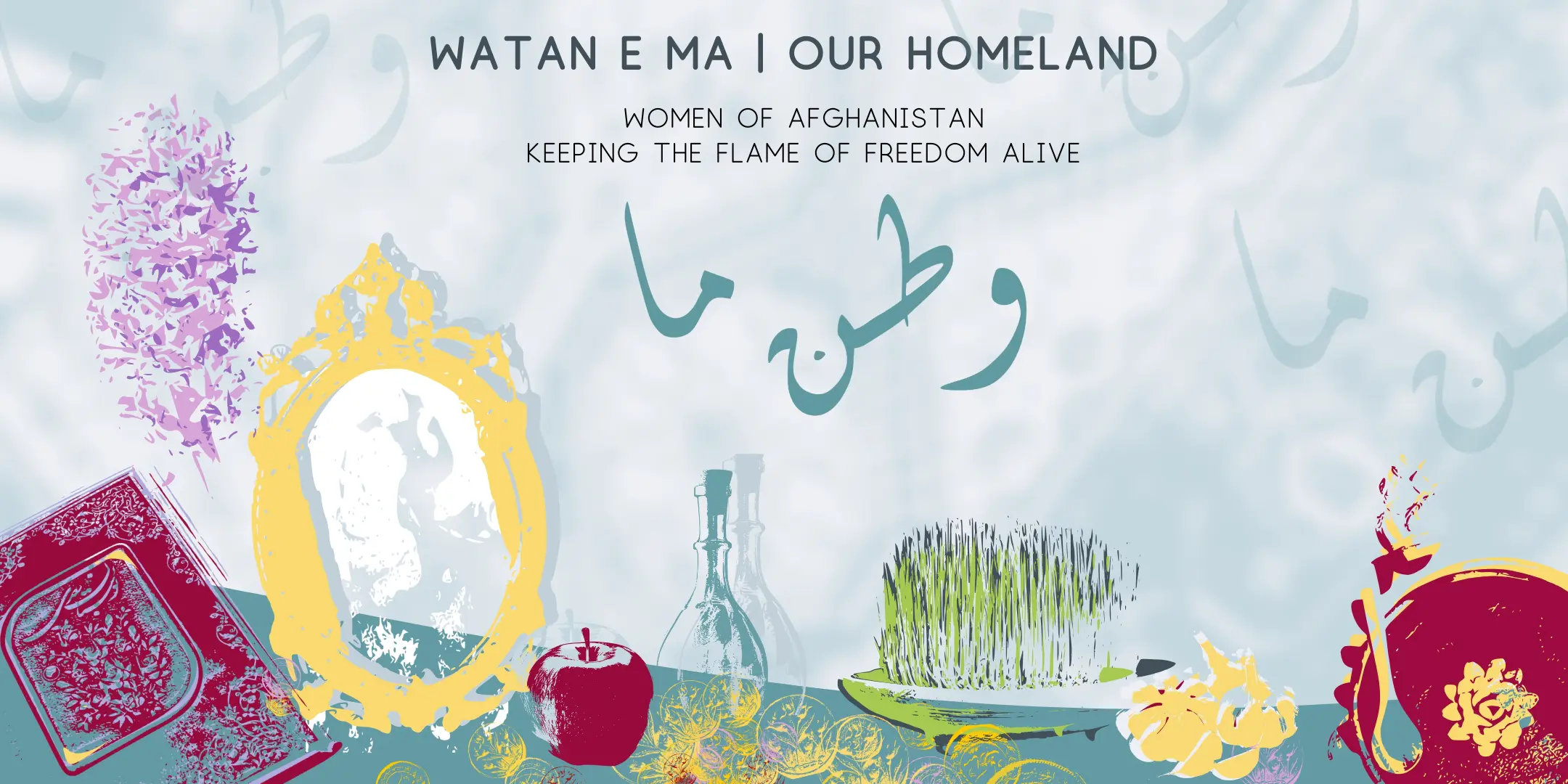
In a powerful departure from traditional advocacy, ICAN—guided by our Afghan partners and women peacebuilders—hosted the event “Watan e Ma – وطن ما – Our Homeland: Women of Afghanistan Keeping the Flame of Freedom Alive” on March 17, 2025 at Blue Gallery in New York City. Held during the 69th Commission on the Status of Women (CSW69), the event celebrated Afghan cultural heritage and the resilience of Afghan women peacebuilders, who persist in their leadership for peace, justice, and equality under the Taliban’s regime of gender apartheid.
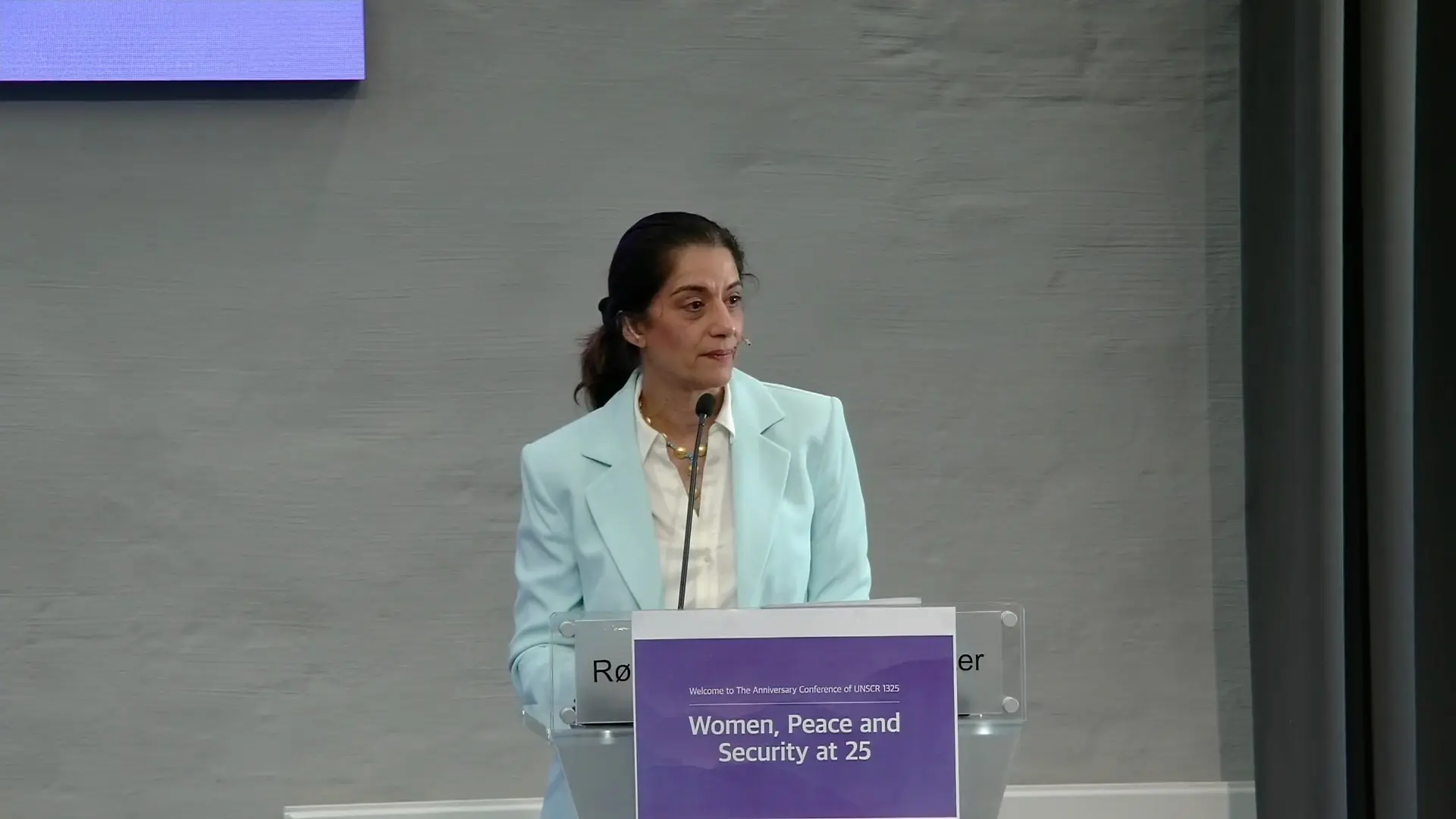
On May 5, 2025, ICAN's Sanam Naraghi Anderlini delivered the keynote speech at the two-day international conference "25th Anniversary Conference of UNSCR 1325 Women, Peace and Security."
As Senator Mobina Jaffer concludes 23 years of distinguished public service in the Canadian Senate, we extend our deepest thanks for her steadfast leadership as Chair of ICAN’s Board of Directors from 2014 to 2024.
Together with André Mundal, our new Interim Chair of the ICAN Board of Directors, we are delighted to welcome two new members to our Board of Directors.
Trust between communities and the security sector is critical for effective governance and peace. So is a vibrant civil society. When women peacebuilders are recognized and engaged as independent, strategic partners and security actors—in their own right—the results are transformative. Twenty-five years on from the launch of the WPS agenda, women peacebuilders’ creativity and contributions to societal peace and security are not only timely, they are even more essential.
Allamin FoundationAWAPSAAWAWBetter Peace InitiativeCIASECoACTGEN MyanmarGender and ExtremismsICAN FeaturedICAN LatestICAN UpdatesPAIMANPCIDWASL UpdatesWomen's Alliance for Security Leadership