ICAN’s Mission Five Steps for Sustainable Prevention of Sexual Violence in Conflict ICAN Partner AWAPSA: A Catalyst for Kenya’s First SGBV Court The War Against Ourselves: Afghan Women Peacebuilders’ Response to the Mental Health Crisis in Afghanistan Protecting Women Peacebuilders: The Front Lines of Sustainable Peace
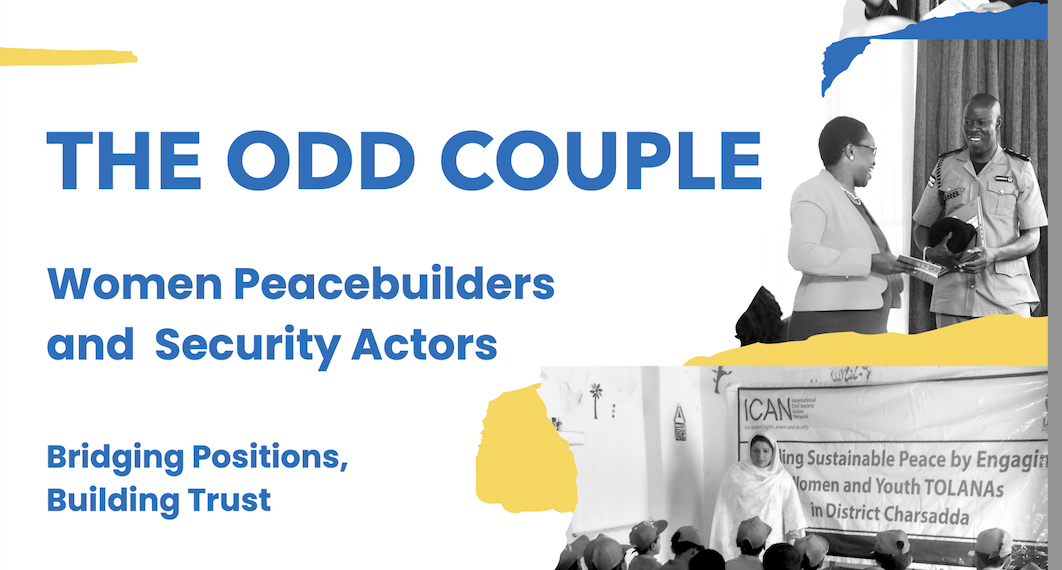
The Odd Couple: Women Peacebuilders and Security Actors Bridging Positions, Building Trust
The WPS agenda has proven a vital entry point for women peacebuilders to engage with the security sector and build trust within affected communities. These efforts—often invisible—are contributing to the reform of the sector, reshaping local security environments and mitigating violence.
The War Against Ourselves: Afghan Women Peacebuilders’ Response to the Mental Health Crisis in Afghanistan
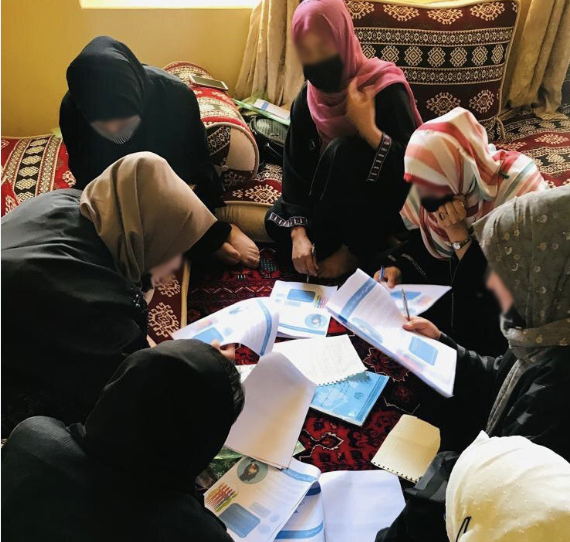
This case study describes the drivers of the mental health crisis in Afghanistan, its gendered and cultural dimensions, and the strategies used by Afghan women-led peacebuilding organizations to provide solutions. The authors conducted interviews with representatives of Afghan women-led peacebuilding organizations and thematic experts, which were complemented by a desk review of project documentation and […]
Open Statement to the United Nations Security Council on behalf of Women Peacebuilders Marking 25 Years of the Women, Peace, and Security Agenda
On October 6, 2025, the U.N. Security Council holds its annual open debate on Resolution 1325 on Women, Peace, and Security. Today, we are not issuing a new statement. Instead, we are honoring our community of women peacebuilders—who appeared before the Security Council throughout these 25 years, speaking for the millions they represent—by echoing their messages.
Home»ICAN Latest»
Hope versus Extremism: How Women are Using Peacebuilding in the Covid-19 Crisis
Hope versus Extremism: How Women are Using Peacebuilding in the Covid-19 Crisis
05 October 2020
By Kendahl Tyburski
The pandemic continues to spread with cases rising globally and new countries experiencing its detriment daily. As Canadian Parliamentary Secretary to the Minister of Foreign Affairs, Mr. Rob Oliphant, stated to members of the Women’s Alliance for Security Leadership (WASL), “As long as Covid–19 exists in one country, in one state of the world, it exists everywhere.” This far reaching threat, though intimidating to most, continues to motivate women peacebuilders. From handing out personal protection equipment and delivering them to the most vulnerable communities to creating mobile clinics, women peacebuilders adapt daily to the changing needs of their communities, pivoting peacebuilding efforts where needed to ensure the health and safety of all. In Yemen and Libya, already fragile health systems have collapsed, leaving a void for those experiencing Covid-19 symptoms who find themselves with nowhere to go. ICAN Founder and CEO Sanam Naraghi-Anderlini MBE identified WASL members as “…first responders, [who are taking] on the burden of responsibility,” recognizing that they unfailingly step in when and where their communities need them.
You can’t fight extremism with military or violence; you can only fight extremism with hope.
Women peacebuilders anticipated exacerbated security challenges in the early days of 2020, and these have materialized as the disease spreads further into vulnerable spaces. As Oliphant noted, “Covid-19 is an opportunity for bullies to gain a comparative advantage.” Violent extremist groups use their platforms to establish power within communities, reaching out to offer support where the national and international systems have failed, preying on those in need to join their efforts in exchange for a sense of safety. Within Nigeria, Boko Haram has exploited the vulnerabilities of those marginalized by sexual violence and youth who, without the daily structure of school, lack purpose and direction. Though communities were finding success at eradicating violent extremism prior to the pandemic, it is becoming a much more complicated challenge in 2020. But Ahlam Almilaji of Syria recognizes that “women can control against the return of terrorism,” in these difficult times. The Allamin Foundation, a WASL member in Nigeria, teaches women in settlement camps self-care techniques and reaches others through radio programs to share knowledge on the pandemic and the situation throughout their state. The Women’s Center for Development and Culture in Albania are incorporating youth programs into their work to encourage them to join peacebuilding efforts instead of falling into the hands of violent extremist groups. While this work is necessary, without the support of international actors, these local actors are placing themselves in grave danger when attempting to prevent violent extremism on their own.
While violent extremist groups take advantage of the vulnerable and national governments continue to fail their citizens, women peacebuilders embrace hope, foster interconnectedness, and uphold values of peace and justice. Oliphant observed the hope that the WASL partners put forth, recognizing that “hope and extremism are on a teeter-totter. You can’t fight extremism with military or violence; you can only fight extremism with hope.” For women peacebuilders to continue to take on the responsibility of providing hope and care to their communities, they need sustainable support, funding, and protection by the international community – but in times of global and domestic crises this proves difficult. When the international community is faced with the choice, it appears easier to look internally and solve problems within their own borders. This leads the crisis to not only be defined by a widespread virus or economic turmoil. “We have a choice about whether this is a moral crisis,” Oliphant noted. Governments and non-governmental organizations are needed as interlocuters to work with local actors around the world.
Canada has repeatedly taken on a role as an interlocuter, showing profound global leadership through its feminist foreign policy and women centered approach to funding peacebuilding and development. As the international community, we need to ensure that any policy commitments are not simply for decoration but are implemented to further recognize and fund women peacebuilders. As Oliphant stated “the strength of the women’s communities and networks [WASL partners] represent must be fostered… If they are not, no one in the world is safe.”
On October 6, 2025, the U.N. Security Council holds its annual open debate on Resolution 1325 on Women, Peace, and Security. Today, we are not issuing a new statement. Instead, we are honoring our community of women peacebuilders—who appeared before the Security Council throughout these 25 years, speaking for the millions they represent—by echoing their messages.
ICAN FeaturedICAN LatestICAN UpdatesWASL UpdatesWomen's Alliance for Security Leadership
On behalf of the International Civil Society Action Network (ICAN) and members of the global Women’s Alliance for Security Leadership (WASL), we are honored to nominate Francesca Albanese, United Nations Special Rapporteur on the situation of human rights in the Palestinian territories occupied since 1967, for the 2026 Nobel Peace Prize.
در عرصه صحت روانی، افغانستان با بحران پیچیدهای مواجه است که این بحران به طور جدایی ناپذیر با ناامنی شدید فیزیکی، سیاسی و اقتصادی در کشور گره خورده و این نا امنی ها بحران را تشدید میکند. برای رسیدگی به آسیب های روانی، صحت و بهداشت جامعه به شیوه های پاسخگو به جنسیت و با مد نظر گرفتن حساسیت های فرهنگی، سازمانهای فعال در عرصه صلح سازی به رهبری زنان افغان در موقعیتی منحصربه فرد قرار دارند. این سازمان ها خدمات ابتدایی ارائه میدهند، مهارتها را توسعه میبخشند و در شکلدهی هنجارهای فرهنگی و جنسیتی نقش مؤثر ایفا میکنند.
ICAN FeaturedICAN LatestICAN UpdatesWASL UpdatesWomen's Alliance for Security LeadershipWPSO
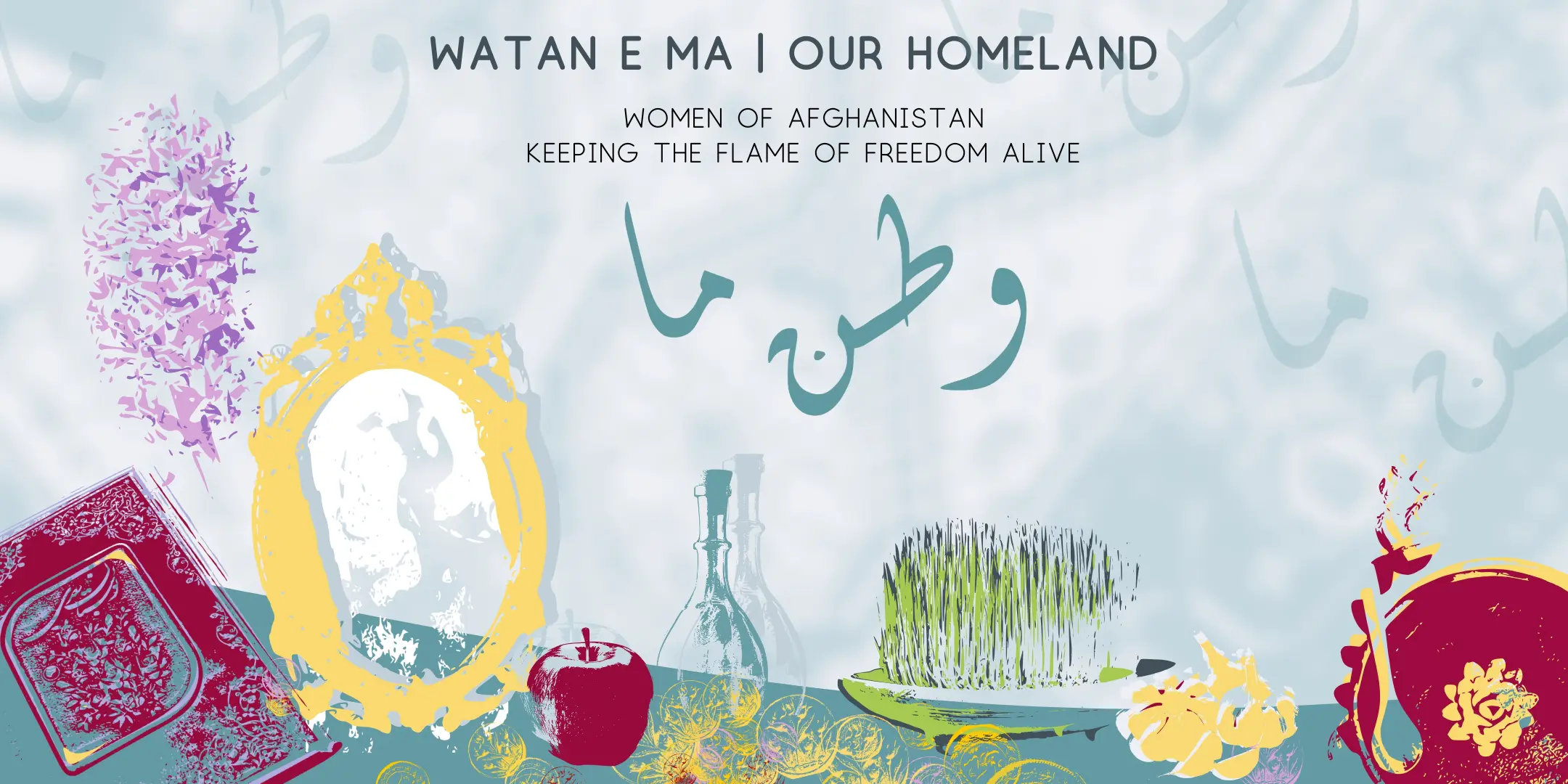
In a powerful departure from traditional advocacy, ICAN—guided by our Afghan partners and women peacebuilders—hosted the event “Watan e Ma – وطن ما – Our Homeland: Women of Afghanistan Keeping the Flame of Freedom Alive” on March 17, 2025 at Blue Gallery in New York City. Held during the 69th Commission on the Status of Women (CSW69), the event celebrated Afghan cultural heritage and the resilience of Afghan women peacebuilders, who persist in their leadership for peace, justice, and equality under the Taliban’s regime of gender apartheid.
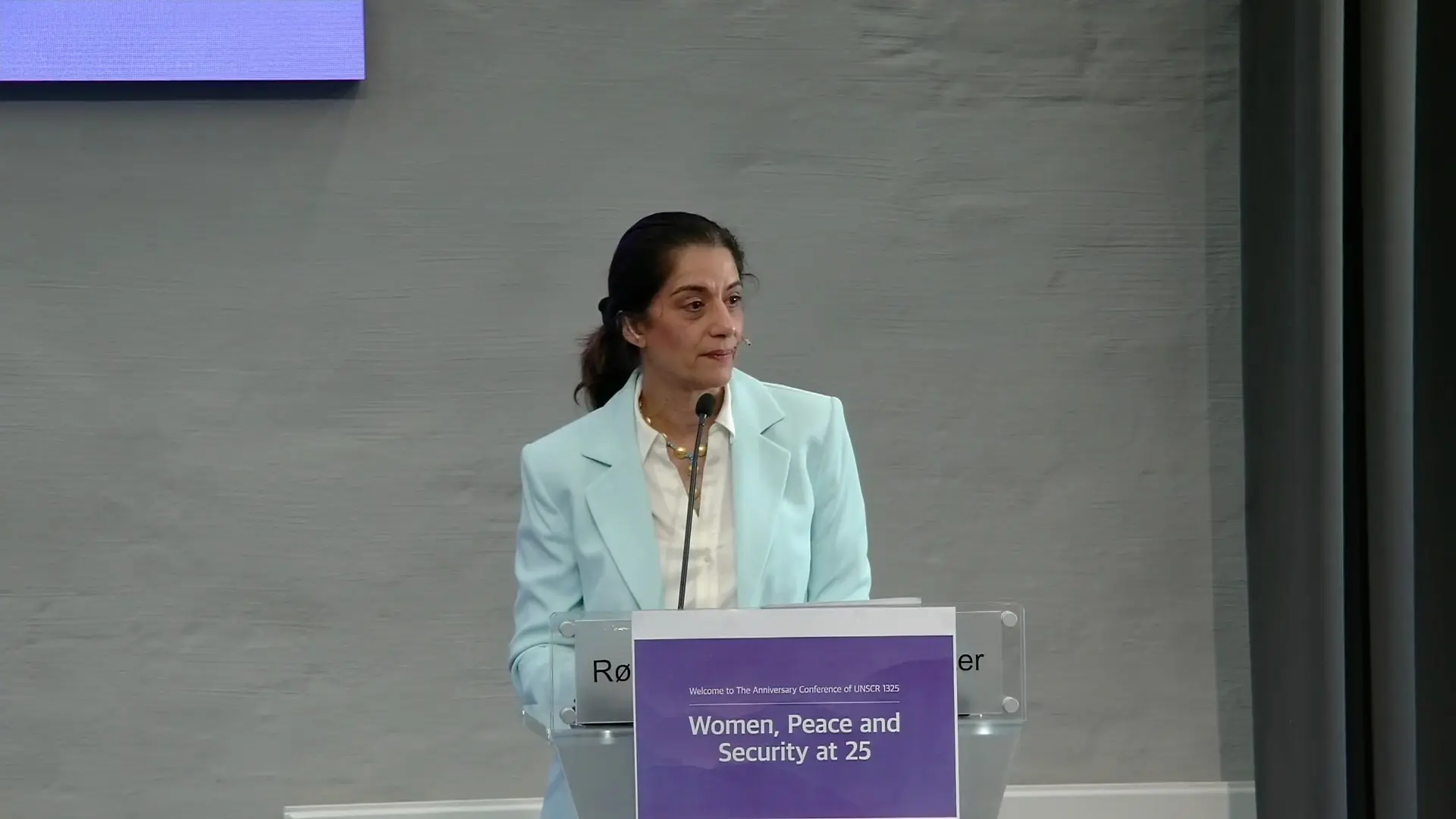
On May 5, 2025, ICAN's Sanam Naraghi Anderlini delivered the keynote speech at the two-day international conference "25th Anniversary Conference of UNSCR 1325 Women, Peace and Security."
As Senator Mobina Jaffer concludes 23 years of distinguished public service in the Canadian Senate, we extend our deepest thanks for her steadfast leadership as Chair of ICAN’s Board of Directors from 2014 to 2024.
Together with André Mundal, our new Interim Chair of the ICAN Board of Directors, we are delighted to welcome two new members to our Board of Directors.
Trust between communities and the security sector is critical for effective governance and peace. So is a vibrant civil society. When women peacebuilders are recognized and engaged as independent, strategic partners and security actors—in their own right—the results are transformative. Twenty-five years on from the launch of the WPS agenda, women peacebuilders’ creativity and contributions to societal peace and security are not only timely, they are even more essential.
Allamin FoundationAWAPSAAWAWBetter Peace InitiativeCIASECoACTGEN MyanmarGender and ExtremismsICAN FeaturedICAN LatestICAN UpdatesPAIMANPCIDWASL UpdatesWomen's Alliance for Security Leadership
Afghanistan is facing a complex mental health crisis inextricably linked with and compounding the dire state of physical, political, and economic insecurity in the country. Afghan women-led peacebuilding organizations are uniquely positioned to address community members’ health and wellness in gender-responsive, culturally- sensitive, and trauma-informed ways.
ICAN FeaturedICAN LatestICAN UpdatesWASL UpdatesWomen's Alliance for Security LeadershipWPSO
As the Women’s Alliance for Security Leadership (WASL) continues to expand globally, fostering stronger regional and national networks, we are excited to announce the formation of the first-ever WASL Steering Committee.