ICAN’s Mission Five Steps for Sustainable Prevention of Sexual Violence in Conflict ICAN Partner AWAPSA: A Catalyst for Kenya’s First SGBV Court The War Against Ourselves: Afghan Women Peacebuilders’ Response to the Mental Health Crisis in Afghanistan Protecting Women Peacebuilders: The Front Lines of Sustainable Peace
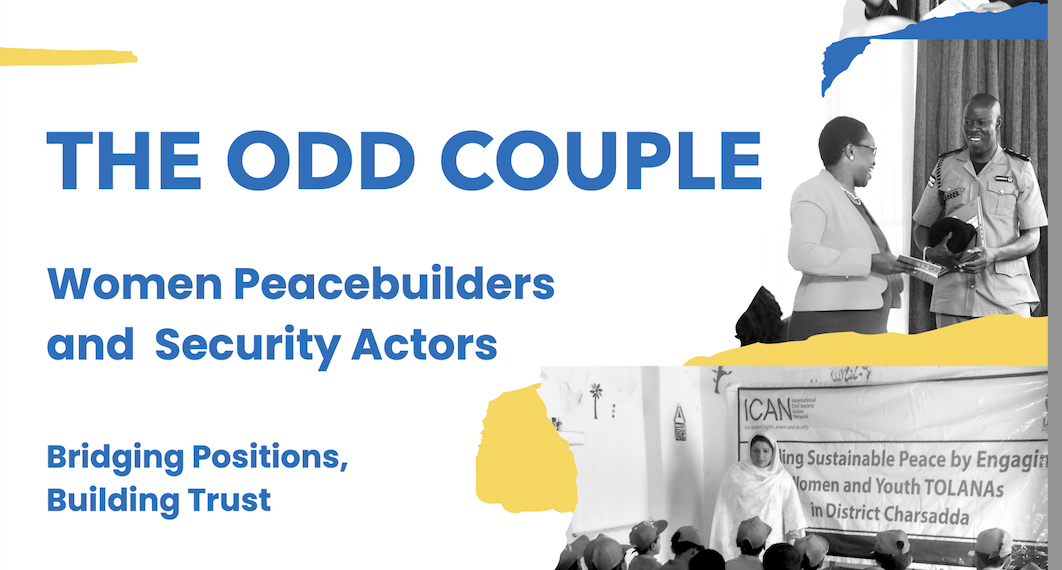
The Odd Couple: Women Peacebuilders and Security Actors Bridging Positions, Building Trust
The WPS agenda has proven a vital entry point for women peacebuilders to engage with the security sector and build trust within affected communities. These efforts—often invisible—are contributing to the reform of the sector, reshaping local security environments and mitigating violence.
The War Against Ourselves: Afghan Women Peacebuilders’ Response to the Mental Health Crisis in Afghanistan
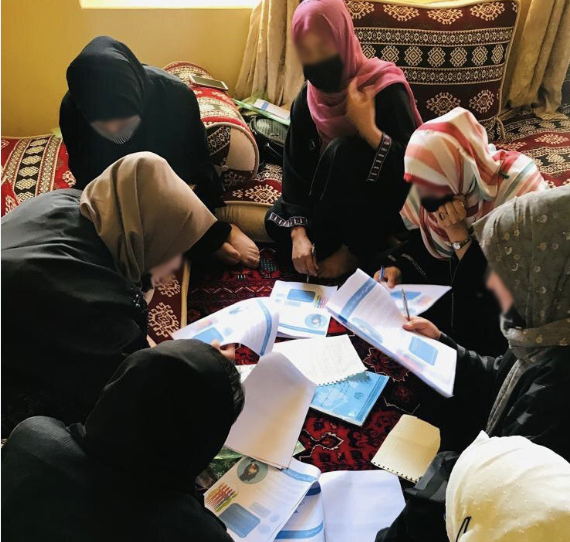
This case study describes the drivers of the mental health crisis in Afghanistan, its gendered and cultural dimensions, and the strategies used by Afghan women-led peacebuilding organizations to provide solutions. The authors conducted interviews with representatives of Afghan women-led peacebuilding organizations and thematic experts, which were complemented by a desk review of project documentation and […]
Open Statement to the United Nations Security Council on behalf of Women Peacebuilders Marking 25 Years of the Women, Peace, and Security Agenda
On October 6, 2025, the U.N. Security Council holds its annual open debate on Resolution 1325 on Women, Peace, and Security. Today, we are not issuing a new statement. Instead, we are honoring our community of women peacebuilders—who appeared before the Security Council throughout these 25 years, speaking for the millions they represent—by echoing their messages.
Home»ICAN Featured»
Self-Resourcing and Income-Generation in Peacebuilding Work: How Women Peacebuilders Put the Humanitarian-Development-Peace Nexus into Practice
Self-Resourcing and Income-Generation in Peacebuilding Work: How Women Peacebuilders Put the Humanitarian-Development-Peace Nexus into Practice
22 December 2021
By Lauren Mellows
Violent conflicts and crises are the main drivers of humanitarian need and mass displacement. They also increase poverty, worsen gender-equity and undermine development progress. There is a growing recognition of the need to integrate humanitarian, development, and peacebuilding programming, often referred to as the “triple nexus.” In the international aid community, however, top-down, siloed structure and funding systems remain the norm, to the detriment of collaborative, holistic, and flexible approaches.
The International Civil Society Action Network (ICAN) and our partners in the Women’s Alliance for Security Leadership (WASL) have always recognized the need to break down silos between sectors. The COVID-19 pandemic demonstrated in stark terms how women peacebuilders are present, active, preemptive, and responsive to crises, leveraging limited resources to tackle multiple challenges in fragile contexts. To better respond to situations as they arise and meet the immediate humanitarian and security needs of their communities, women peacebuilders are combining their peacebuilding work with the provision of livelihoods training activities. To complement donor funding, some women peacebuilders are implementing income generation and “self-resourcing” strategies that enable them to autonomously fund and sustain their peacebuilding work. On Wednesday 15th December, we held the first of an ongoing series of discussions about this expansive topic. In our final thematic WASL call of 2021, WASL members from Yemen, Cameroon, Tajikistan, Libya, Liberia and Syria shared their experiences combining livelihoods support, income-generation and self-resourcing with peacebuilding activities.
Channeling funds back into the community
Our partners recognize that for communities to engage in peacebuilding activities, a certain living standard must be met. It is only when unburdened from the daily struggles of poverty, hunger and unemployment, that individuals and groups have space to reflect on and explore peaceful solutions to conflict . This is a central reason WASL partners from a variety of national contexts support small-scale livelihood projects and provide microcredits to their beneficiaries, channeling income back into the communities where they carry out peacebuilding activities.
In Cameroon and Tajikistan, our partners have supported women to start agricultural projects by providing seed funding and infrastructure, such as greenhouses. They have also supported women to start small businesses, including small scale-fishing, food provision, personal training and chair rentals. The need for such income-generating initiatives is clear: when Liberian WASL partner Woman Education and Development Organization (WEDOL) asked the women in their peacebuilding and mediation training how they could best be supported to take on roles as peace ambassadors in communities, they suggested an agricultural project, community saving loan initiative and livelihoods skills training.
Various WASL partners already offer such livelihoods skills training, including PAIMAN in Pakistan, which teaches vulnerable women from conflict zones in traditional embroidery techniques and connects them with buyers, and Reach Out in Cameroon, which trained 1200 women in Kumba to start livelihood projects and enter the workplace. Zenobia, a WASL partner that works on peacebuilding with Syrian refugee communities in Turkey, helps girls and young women enter the job market through online education, CV guidance and interview practice. Zenobia also provides direct financial support to struggling families and assists with school fees for girls. In Cameroon, WASL member Pathways for Women’s Empowerment and Development (PaWED) runs a center to train women in economic empowerment and financial independence. They also operate a women-led poultry farm, which has the dual impact of providing livelihoods for women in the community who rear and sell the chicks in markets, and of fully funding the organization’s peacebuilding activities, which at present receive no external donor funding.
Self-resourcing for sustainability
Several WASL member organizations fund their peacebuilding work at least partially through their own income-generating activities. Women peacebuilders in Cameroon, Yemen and Libya carry out research and advisory services on a consultancy basis to help fund their organizations. A Libyan organization also teaches computer courses and provides English language training for a fee, to enable them to provide pro bono training for disadvantaged women and girls. Other income-generation methods WASL members have adopted include renting out their office spaces for training and events and renting their equipment – such as projectors and printers – to others, in places where these are hard or expensive to access.
In Yemen, the Youth Leadership Development Foundation (YLDF) has developed a self-sourcing café and safe entertainment and learning space for women and girls to use. The income the café generates is fed back into the organization. As WASL Program Director Melinda Holmes put it: “It’s all about pragmatic solutions and using what you have.”
From livelihoods to peace – what is the link?
A key feature of the discussion was how humanitarian and development initiatives such as livelihood support, training and income-generation contribute to peacebuilding. Several WASL members explained how their humanitarian interventions and livelihood development programs gave them exposure and earned them trust in communities, deepening ties with existing beneficiaries and providing opportunities to access new groups for their peacebuilding interventions. According to a partner in Cameroon:
These women, who have been with us [receiving livelihood support] for many years, are now community peace champions and ambassadors in communities – we call them first to give capacity, peace and mediation training
Humanitarian efforts can also increase the credibility and sustainability of peacebuilding organizations. In the case of Food4Humanity in Yemen, humanitarian efforts during COVID-19 opened new channels of communication between the organization and government offices, gaining trust and generating a level of protection for the civil society members and peacebuilders carrying out their work.
Food4Humanity’s Water4Peace project clearly demonstrates the link between peacebuilding, aid and development. By building and repairing water stations in target districts in Yemen, female family members do not have to travel for hours a day to collect water. WASL member and Water4Peace founder, Muna Luqman, explained that as a result women and girls have more time to work on their schooling or livelihoods and are at reduced risk of sexual and gender-based violence (SGBV). Through the project, 400 girls were re-enrolled in school, which reduced rates of child marriage and improved their life prospects.
Economic projects such as these enable diverse groups, which include men, women and youth, to work collectively towards common goals. When they are accompanied by a skilled facilitator who can help address differences, facilitate dialogue, and build trust between group members, then they have a significant ability to reduce violence and contribute to peace.. In Syria, a WASL member hopes to implement this “triple nexus” approach to repair divisions in communities caused by the war:
Livelihoods play an important part in peacebuilding… we plan to build small projects which people can share together in villages where there was fighting, so they can live once again and move forward together to build civic peace.
Livelihood and income generating projects can shift gender dynamics within communities by strengthening the financial independence of women. As one Cameroonian partner explained when discussing her poultry farm initiative, “we eliminated the need for middlemen – because we never have ‘middle-women’, only ‘middlemen’.” Economic empowerment also encourages women to take a leadership role in peacebuilding initiatives. This was particularly evident in Pakistan where, a WASL partner explained, “confidence brings [women] into a leadership role, then they become a guiding force for other women and youth.”
“It’s not an either-or but diversification for sustainability.”
– Melinda Holmes
In addition to sharing the successes partners have had in this space, the conversation explored key challenges. Several partners were curious about how to get started on income-generation projects, employing the well-known phrase “it takes money to make money.” Partners also expressed concern about how carrying out these activities could affects the status and legality of an organization. One WASL partner noted that “if you are looking like a commercial project, it’s misunderstood and not well looked upon.” The partners all concluded that income-generation could not replace their donor funding and that due to the comparative size of grants, donor relationships and support remains crucial.
The conversation was the first of many to come. In 2022, ICAN and WASL hope to have a closer look at the various sub-topics within self-resourcing and income generation as well as conduct wider conversations about the triple nexus. COVID-19 and climate change have created new humanitarian, development, and peacebuilding challenges which require peacebuilders to bridge siloes as they address the emerging needs in their communities. Through upcoming exchanges women peacebuilders from around the world will raise questions and concerns, share ideas, and discuss best practices around the evolving triple nexus approach.
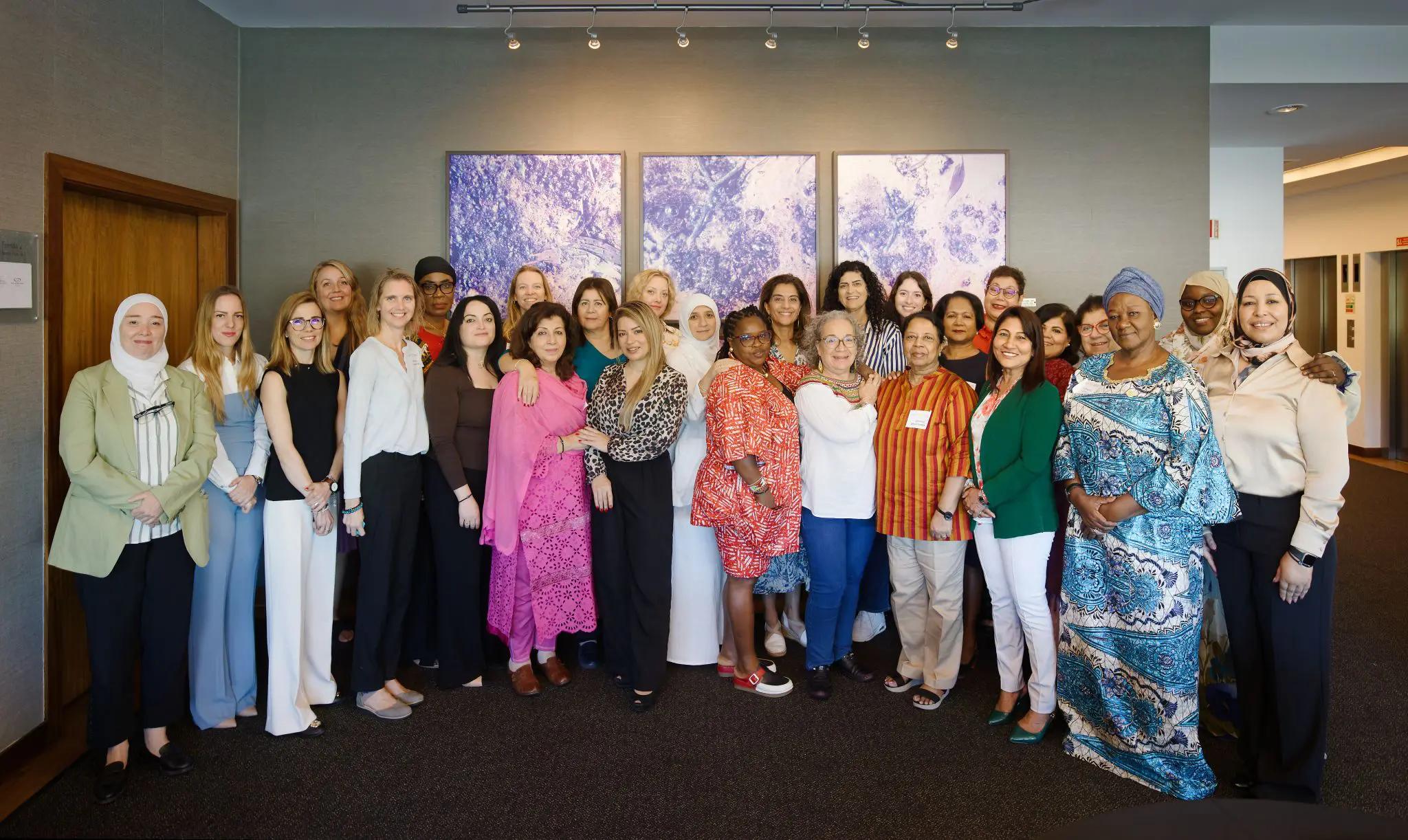
ICAN convened 20 members of WASL in Lisbon for the “Our Strategies, Our Peace” Writers’ Workshop. This unique gathering provided a secure and creative space for women peacebuilders to share their strategies, experience, expertise, and stories from conflict and crisis contexts.
Addu Women's AssociationAllamin FoundationAWAWCAGEADCIASECOECICAN FeaturedMobaderoonPAIMANRescue MeWCDCAWi'amWomen's Alliance for Security LeadershipWPSO
On October 6, 2025, the U.N. Security Council holds its annual open debate on Resolution 1325 on Women, Peace, and Security. Today, we are not issuing a new statement. Instead, we are honoring our community of women peacebuilders—who appeared before the Security Council throughout these 25 years, speaking for the millions they represent—by echoing their messages.
ICAN FeaturedICAN LatestICAN UpdatesWASL UpdatesWomen's Alliance for Security Leadership
In South Sudan, a nation where peace has long remained fragile and democratic progress uncertain, women are stepping forward to shape the future of their country. Long excluded from the corridors of power, they are forging their own movement for lasting change.
On behalf of the International Civil Society Action Network (ICAN) and members of the global Women’s Alliance for Security Leadership (WASL), we are honored to nominate Francesca Albanese, United Nations Special Rapporteur on the situation of human rights in the Palestinian territories occupied since 1967, for the 2026 Nobel Peace Prize.
در عرصه صحت روانی، افغانستان با بحران پیچیدهای مواجه است که این بحران به طور جدایی ناپذیر با ناامنی شدید فیزیکی، سیاسی و اقتصادی در کشور گره خورده و این نا امنی ها بحران را تشدید میکند. برای رسیدگی به آسیب های روانی، صحت و بهداشت جامعه به شیوه های پاسخگو به جنسیت و با مد نظر گرفتن حساسیت های فرهنگی، سازمانهای فعال در عرصه صلح سازی به رهبری زنان افغان در موقعیتی منحصربه فرد قرار دارند. این سازمان ها خدمات ابتدایی ارائه میدهند، مهارتها را توسعه میبخشند و در شکلدهی هنجارهای فرهنگی و جنسیتی نقش مؤثر ایفا میکنند.
ICAN FeaturedICAN LatestICAN UpdatesWASL UpdatesWomen's Alliance for Security LeadershipWPSO
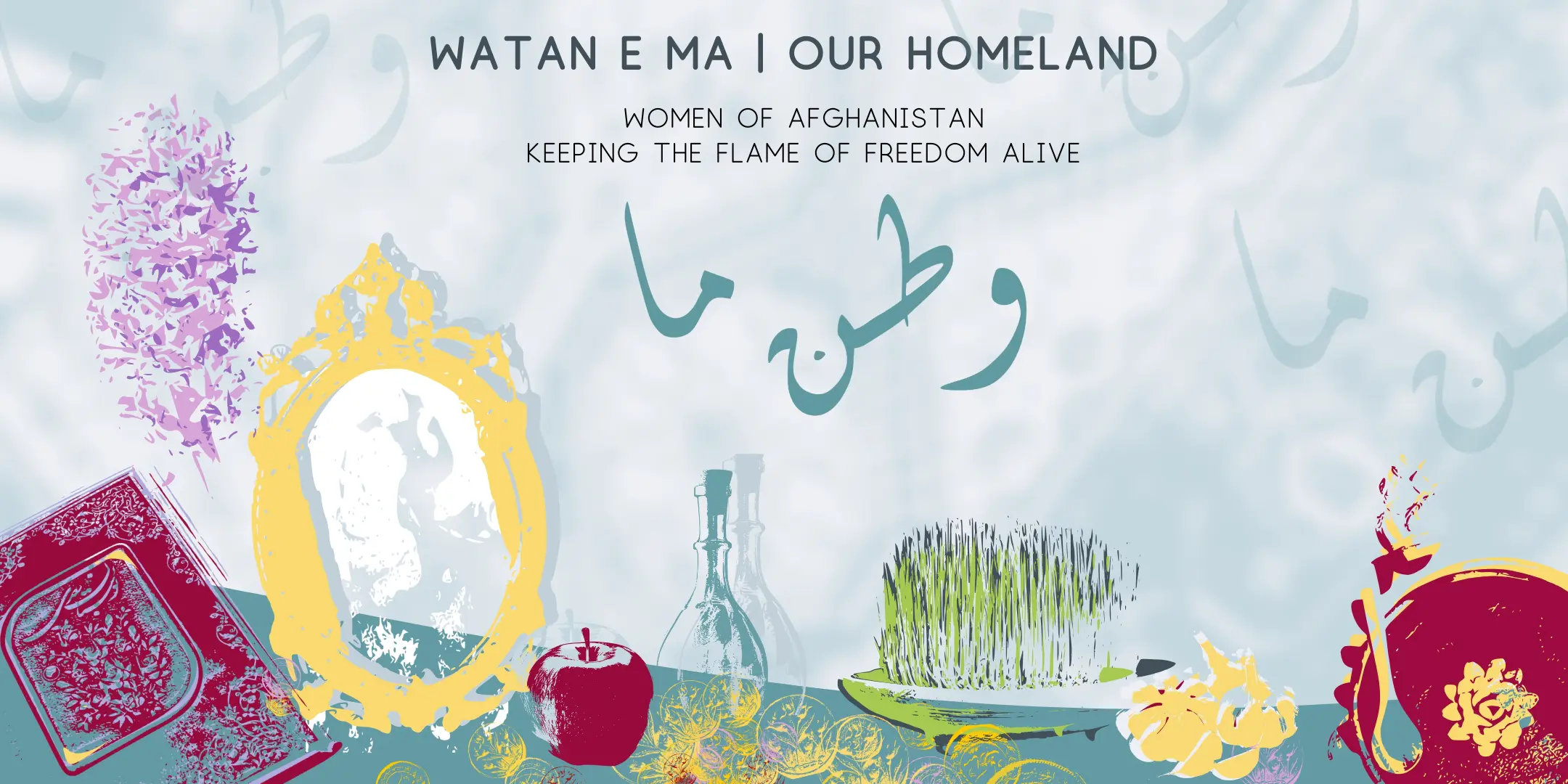
In a powerful departure from traditional advocacy, ICAN—guided by our Afghan partners and women peacebuilders—hosted the event “Watan e Ma – وطن ما – Our Homeland: Women of Afghanistan Keeping the Flame of Freedom Alive” on March 17, 2025 at Blue Gallery in New York City. Held during the 69th Commission on the Status of Women (CSW69), the event celebrated Afghan cultural heritage and the resilience of Afghan women peacebuilders, who persist in their leadership for peace, justice, and equality under the Taliban’s regime of gender apartheid.
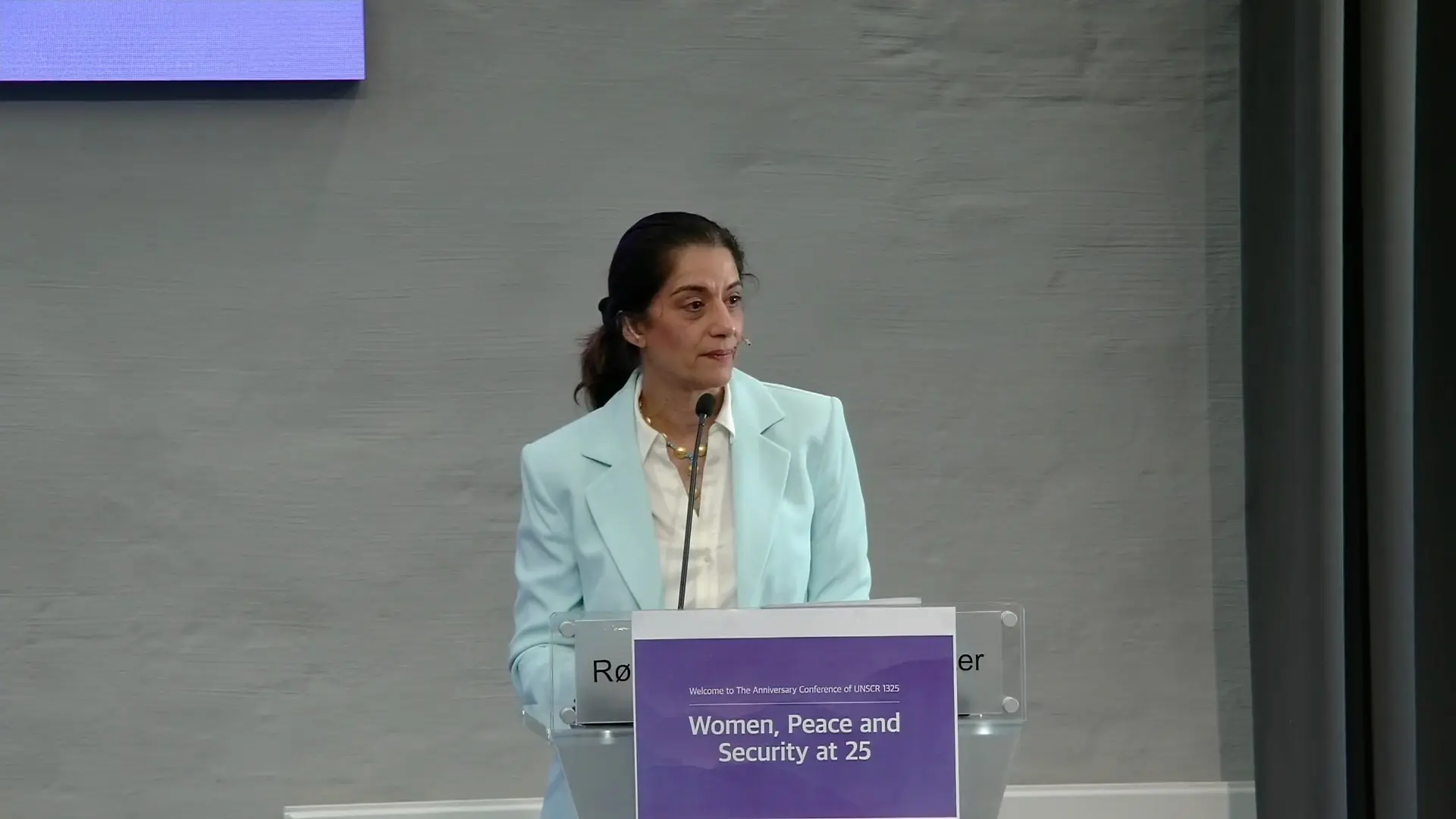
On May 5, 2025, ICAN's Sanam Naraghi Anderlini delivered the keynote speech at the two-day international conference "25th Anniversary Conference of UNSCR 1325 Women, Peace and Security."
As Senator Mobina Jaffer concludes 23 years of distinguished public service in the Canadian Senate, we extend our deepest thanks for her steadfast leadership as Chair of ICAN’s Board of Directors from 2014 to 2024.
Together with André Mundal, our new Interim Chair of the ICAN Board of Directors, we are delighted to welcome two new members to our Board of Directors.
Trust between communities and the security sector is critical for effective governance and peace. So is a vibrant civil society. When women peacebuilders are recognized and engaged as independent, strategic partners and security actors—in their own right—the results are transformative. Twenty-five years on from the launch of the WPS agenda, women peacebuilders’ creativity and contributions to societal peace and security are not only timely, they are even more essential.
Allamin FoundationAWAPSAAWAWBetter Peace InitiativeCIASECoACTGEN MyanmarGender and ExtremismsICAN FeaturedICAN LatestICAN UpdatesPAIMANPCIDWASL UpdatesWomen's Alliance for Security Leadership