ICAN’s Mission Five Steps for Sustainable Prevention of Sexual Violence in Conflict ICAN Partner AWAPSA: A Catalyst for Kenya’s First SGBV Court The War Against Ourselves: Afghan Women Peacebuilders’ Response to the Mental Health Crisis in Afghanistan Protecting Women Peacebuilders: The Front Lines of Sustainable Peace
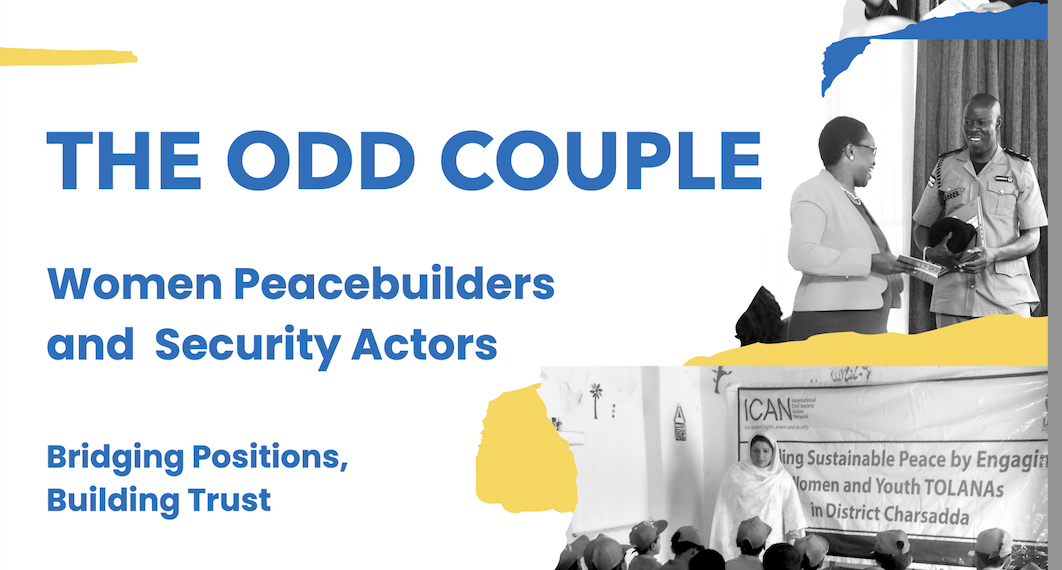
The Odd Couple: Women Peacebuilders and Security Actors Bridging Positions, Building Trust
The WPS agenda has proven a vital entry point for women peacebuilders to engage with the security sector and build trust within affected communities. These efforts—often invisible—are contributing to the reform of the sector, reshaping local security environments and mitigating violence.
The War Against Ourselves: Afghan Women Peacebuilders’ Response to the Mental Health Crisis in Afghanistan
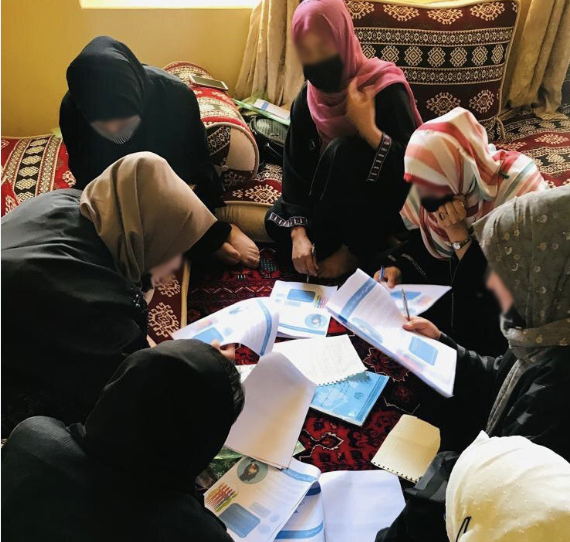
This case study describes the drivers of the mental health crisis in Afghanistan, its gendered and cultural dimensions, and the strategies used by Afghan women-led peacebuilding organizations to provide solutions. The authors conducted interviews with representatives of Afghan women-led peacebuilding organizations and thematic experts, which were complemented by a desk review of project documentation and […]
Open Statement to the United Nations Security Council on behalf of Women Peacebuilders Marking 25 Years of the Women, Peace, and Security Agenda
On October 6, 2025, the U.N. Security Council holds its annual open debate on Resolution 1325 on Women, Peace, and Security. Today, we are not issuing a new statement. Instead, we are honoring our community of women peacebuilders—who appeared before the Security Council throughout these 25 years, speaking for the millions they represent—by echoing their messages.
Home»ICAN Latest»
Widespread Violence Across Libya Threatens Women Peacebuilders
Widespread Violence Across Libya Threatens Women Peacebuilders
08 August 2022
By Charlotte Morgan and Stacey Schamber
The Libyan Women’s Forum (LWF), member of the Women’s Alliance for Security Leadership (WASL), invited their colleague and Libyan parliamentarian, Ibtesam Al Rubai, to join the WASL weekly community call on July 20, 2022 to discuss the situation in Libya. Ms. Al Rubai, a lawyer by training, was appointed as a judge in 2020, and recently joined the Women’s Caucus Unit established by the Libyan parliament.
After the 2011 uprising, Libyan women actively sought to participate in political and public life, reaching 17% representation in parliament. However, the international withdrawal and lack of subsequent support to Libya post-2014 precipitated the deterioration of security and increased militarization. The increasing control and conflict among various militant groups has excluded women from public life and condoned widespread violence. Women and girls experience gender-based violence in the domestic and public spheres. In the week prior to the call, shockingly seven women were reported murdered.
Ms. Al Rubai described ubiquitous acceptance of violence, particularly among the younger generation, which prohibits public discourse, media coverage and condemnation of such violence. She reiterated the need for legislation protecting women from violence perpetrated by their husbands, fathers and brothers: “This law has been sitting in the drawers, held up in the parliament for the last two years.” There is still the legal provision that allows rapists to marry their victims in order to escape punishment, and existing law, which criminalizes violence against women, is rarely called upon to prevent or convict perpetrators.
There is still the legal provision that allows rapists to marry their victims in order to escape punishment.
In addition, Ms. Al Rubai has witnessed increased violence and threats against women peacebuilders (WPBs), activists and women human rights defenders (WHRDs). Many women are targeted for speaking out, advocating for peace and for criticising the use of violence by the dominant political parties and militias. They fear for their security and if they are able, often leave Tripoli and Libya itself with their families. The violence against WPBs and WHRDs in Libya has caused many to retreat from participating in political life and civil society, resulting in a drawback of many of the hard-won gains in women’s rights.
The profound impunity and lack of political will within Libya to protect women and mitigate violence becomes glaringly abject at the international level. Any foreign attention or intervention in Libya is preoccupied with political and economic issues and access to natural resources like oil. As Shahrazad Magrabi of the LWF commented, “I’m surprised that the human rights leaders in this world, for example, the UK, US, the only intervention and talk is about oil problems or shortages. Seven women were killed in one week, where is the UK ambassador?”
Any foreign attention or intervention in Libya is preoccupied with political and economic issues and access to natural resources.
ICAN’s founder and CEO, Sanam Naraghi Anderlini, MBE concurred that we cannot rely on any response from the UN or international institutions. Rather, we need to generate awareness by drawing on tribal, religious, historical, traditional customs that can be brought back to life around protection and respect for women. For example, one WASL member from Afghanistan brought men into the conversation to discuss their experiences of violence in order to open the door to more conducive conversations around violence against women within their communities. Another network member in Iraq implemented an initiative in which WPBs engaged with sympathetic local religious and community leaders to challenge practices that were harmful to women. In Ms. Anderlini’s words, “the strategy is not from top-down and not from governments; it really has to be community by community, engaging leaders and influencers.”
Concluding the call, Ms. Al Rubai expressed her gratitude for the solidarity experienced through the WASL community. She also called upon the international community to pressure the Libyan government to address the significant levels of violence, as well as provide financial support and training. Shahrazad Magrabi advised: “we need to leave the parliamentarians to do their jobs and to focus their pressure on the executive bodies of political parties. This is crucial.”
On October 6, 2025, the U.N. Security Council holds its annual open debate on Resolution 1325 on Women, Peace, and Security. Today, we are not issuing a new statement. Instead, we are honoring our community of women peacebuilders—who appeared before the Security Council throughout these 25 years, speaking for the millions they represent—by echoing their messages.
ICAN FeaturedICAN LatestICAN UpdatesWASL UpdatesWomen's Alliance for Security Leadership
On behalf of the International Civil Society Action Network (ICAN) and members of the global Women’s Alliance for Security Leadership (WASL), we are honored to nominate Francesca Albanese, United Nations Special Rapporteur on the situation of human rights in the Palestinian territories occupied since 1967, for the 2026 Nobel Peace Prize.
در عرصه صحت روانی، افغانستان با بحران پیچیدهای مواجه است که این بحران به طور جدایی ناپذیر با ناامنی شدید فیزیکی، سیاسی و اقتصادی در کشور گره خورده و این نا امنی ها بحران را تشدید میکند. برای رسیدگی به آسیب های روانی، صحت و بهداشت جامعه به شیوه های پاسخگو به جنسیت و با مد نظر گرفتن حساسیت های فرهنگی، سازمانهای فعال در عرصه صلح سازی به رهبری زنان افغان در موقعیتی منحصربه فرد قرار دارند. این سازمان ها خدمات ابتدایی ارائه میدهند، مهارتها را توسعه میبخشند و در شکلدهی هنجارهای فرهنگی و جنسیتی نقش مؤثر ایفا میکنند.
ICAN FeaturedICAN LatestICAN UpdatesWASL UpdatesWomen's Alliance for Security LeadershipWPSO
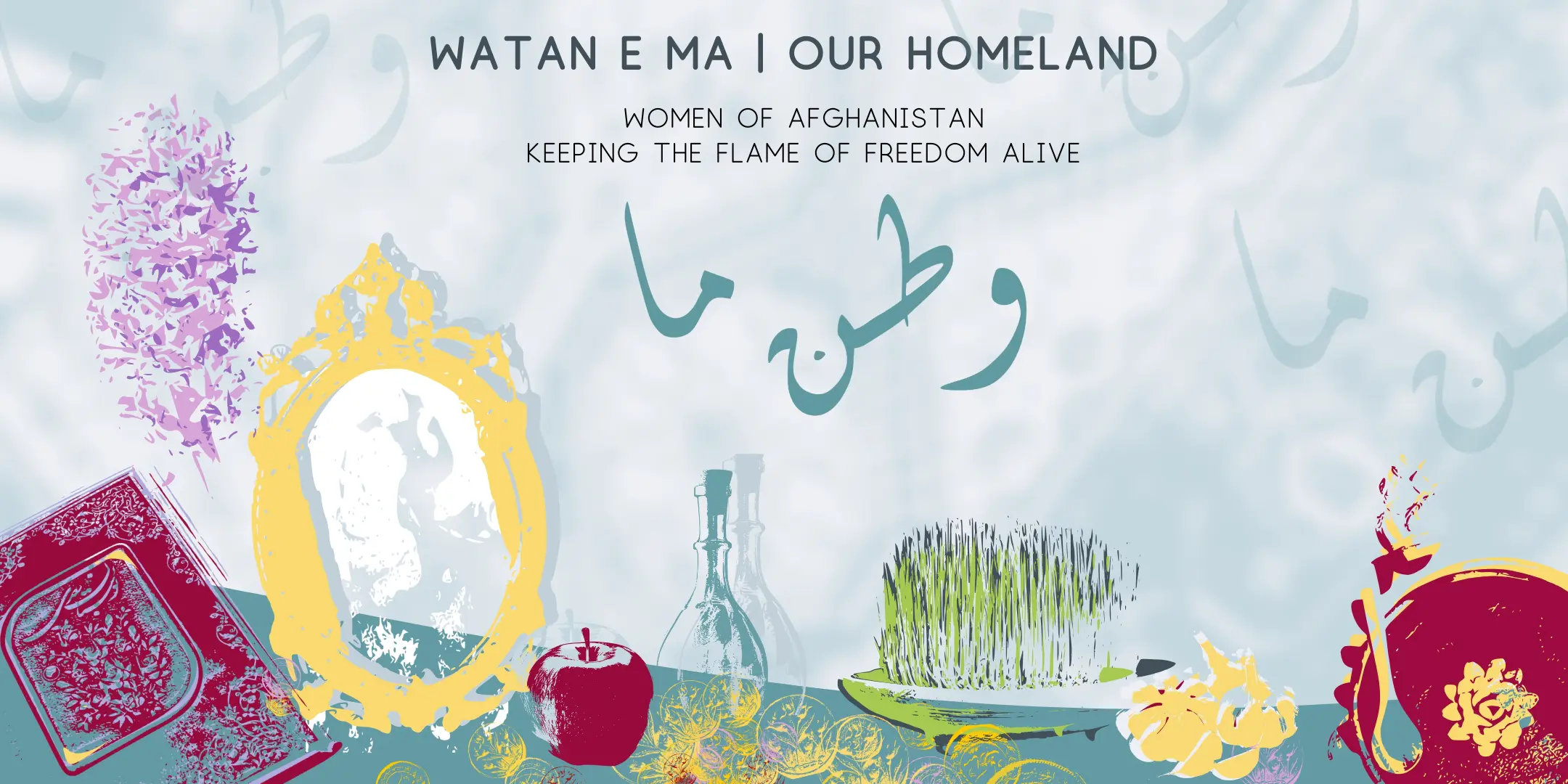
In a powerful departure from traditional advocacy, ICAN—guided by our Afghan partners and women peacebuilders—hosted the event “Watan e Ma – وطن ما – Our Homeland: Women of Afghanistan Keeping the Flame of Freedom Alive” on March 17, 2025 at Blue Gallery in New York City. Held during the 69th Commission on the Status of Women (CSW69), the event celebrated Afghan cultural heritage and the resilience of Afghan women peacebuilders, who persist in their leadership for peace, justice, and equality under the Taliban’s regime of gender apartheid.
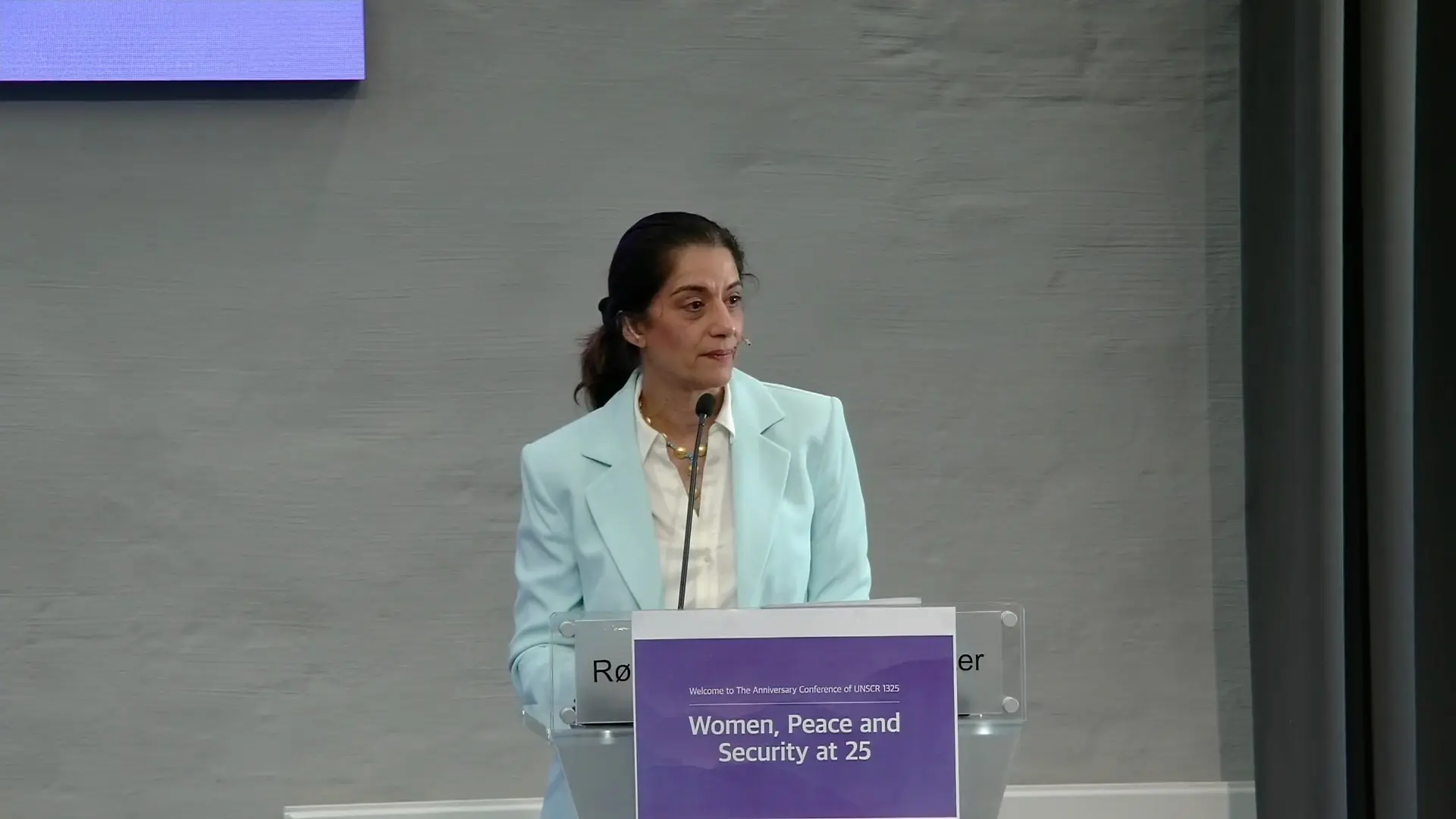
On May 5, 2025, ICAN's Sanam Naraghi Anderlini delivered the keynote speech at the two-day international conference "25th Anniversary Conference of UNSCR 1325 Women, Peace and Security."
As Senator Mobina Jaffer concludes 23 years of distinguished public service in the Canadian Senate, we extend our deepest thanks for her steadfast leadership as Chair of ICAN’s Board of Directors from 2014 to 2024.
Together with André Mundal, our new Interim Chair of the ICAN Board of Directors, we are delighted to welcome two new members to our Board of Directors.
Trust between communities and the security sector is critical for effective governance and peace. So is a vibrant civil society. When women peacebuilders are recognized and engaged as independent, strategic partners and security actors—in their own right—the results are transformative. Twenty-five years on from the launch of the WPS agenda, women peacebuilders’ creativity and contributions to societal peace and security are not only timely, they are even more essential.
Allamin FoundationAWAPSAAWAWBetter Peace InitiativeCIASECoACTGEN MyanmarGender and ExtremismsICAN FeaturedICAN LatestICAN UpdatesPAIMANPCIDWASL UpdatesWomen's Alliance for Security Leadership
Afghanistan is facing a complex mental health crisis inextricably linked with and compounding the dire state of physical, political, and economic insecurity in the country. Afghan women-led peacebuilding organizations are uniquely positioned to address community members’ health and wellness in gender-responsive, culturally- sensitive, and trauma-informed ways.
ICAN FeaturedICAN LatestICAN UpdatesWASL UpdatesWomen's Alliance for Security LeadershipWPSO
As the Women’s Alliance for Security Leadership (WASL) continues to expand globally, fostering stronger regional and national networks, we are excited to announce the formation of the first-ever WASL Steering Committee.