ICAN’s Holistic Security Menu: A New Way to Support Women Peacebuilders
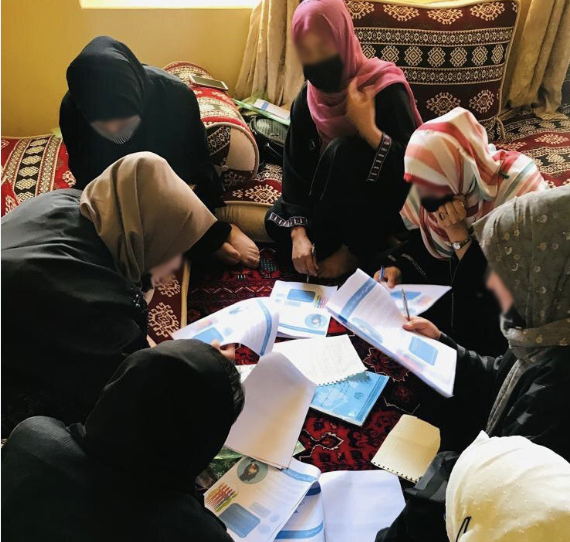
Women peacebuilders often operate in some of the world’s most dangerous contexts—yet the security support available to them is frequently fragmented, repetitive, and short-term. Recognizing the need for a fundamentally different approach, ICAN conducted a holistic security assessment of its Afghan partners, including members of the Women’s Alliance for Security Leadership (WASL). The result is the Holistic Security Menu: a co-designed, partner-driven model that provides practical and sustainable security support—on women peacebuilders’ […]
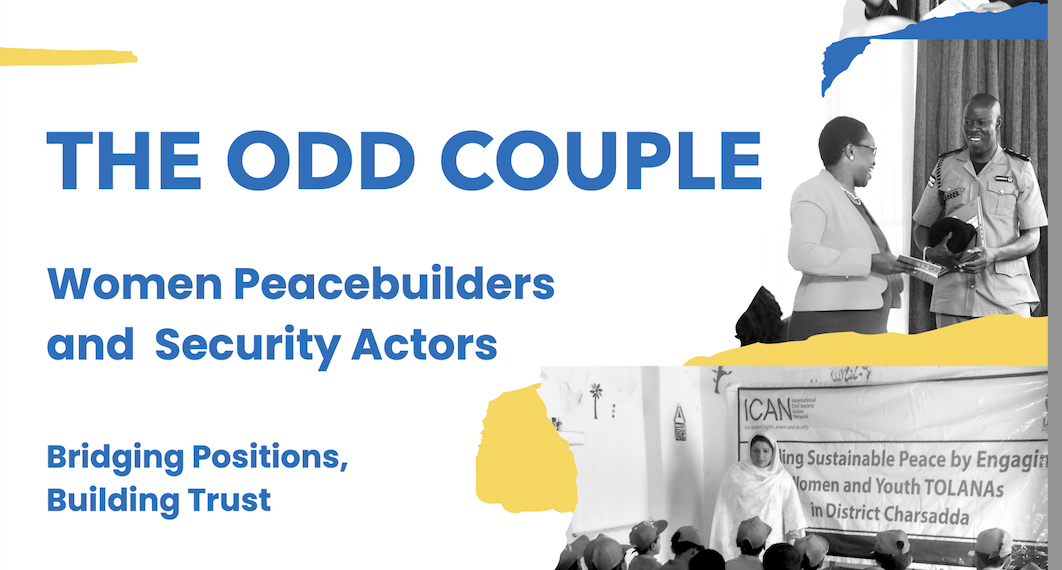
The Odd Couple: Women Peacebuilders and Security Actors Bridging Positions, Building Trust
The WPS agenda has proven a vital entry point for women peacebuilders to engage with the security sector and build trust within affected communities. These efforts—often invisible—are contributing to the reform of the sector, reshaping local security environments and mitigating violence.
The War Against Ourselves: Afghan Women Peacebuilders’ Response to the Mental Health Crisis in Afghanistan
This case study describes the drivers of the mental health crisis in Afghanistan, its gendered and cultural dimensions, and the strategies used by Afghan women-led peacebuilding organizations to provide solutions. The authors conducted interviews with representatives of Afghan women-led peacebuilding organizations and thematic experts, which were complemented by a desk review of project documentation and […]
Open Statement to the United Nations Security Council on behalf of Women Peacebuilders Marking 25 Years of the Women, Peace, and Security Agenda
On October 6, 2025, the U.N. Security Council holds its annual open debate on Resolution 1325 on Women, Peace, and Security. Today, we are not issuing a new statement. Instead, we are honoring our community of women peacebuilders—who appeared before the Security Council throughout these 25 years, speaking for the millions they represent—by echoing their messages.
Home»Stories»
ICAN Partner AWAPSA: A Catalyst for Kenya’s First SGBV Court
ICAN Partner AWAPSA: A Catalyst for Kenya’s First SGBV Court
07 October 2022
Kenya’s first special court for handling sexual and gender-based violence (SGBV) cases was opened in March 2022, at Shanzu Law Courts, Mombasa. Advocacy for Women in Peace and Security Africa (AWAPSA) sat down with ICAN’s Maya Kavaler to discuss how this was possible through their Innovative Peace Fund grant.
Through 2020 and 2021, as COVID-19 dominated headlines globally, another “shadow pandemic” swept across the world with many countries experiencing surging rates of domestic and gender-based violence (GBV). Kenya was no exception, with a shocking 92% increase in GBV cases between January and June 2020, compared to the previous year. On the frontline of responding to this phenomenon was Advocacy for Women in Peace and Security Africa (AWAPSA), a women-led peacebuilding organization working to promote peace, security and stability, and prevent violent extremism in Kenya. AWAPSA has been operating since 2013 and has partnered with the International Civil Society Action Network (ICAN) since 2017.
AWAPSA’s Program Manager, Mohamed Hamisi, explained how interventions to prevent the spread of COVID-19 in Kenya, including curfews and restrictions on movement, led to job losses and intensified financial hardships. In the coastal region, where AWAPSA operates, many rely on the informal sector and tourism industry – both of which were particularly affected by the pandemic. These financial strains, coupled with confinement at home and fear of the virus, led to frustration, stress, and anger, thus magnifying a domestic and GBV problem that already plagued the region.
Though SGBV affects the whole of Kenya, AWAPA’s Executive Director and a member of the Women’s Alliance for Security Leadership (WASL), Sureya Roble, believes that the cultural and Islamic heritage of the coastal counties, as well as the lack of resources and investment in the region, contribute to the shame and stigma associated with being a SGBV survivor, making it far less likely for women to speak openly about their experiences:
“At the coast, our community is very reserved, so for someone to come out and say I was raped, or my daughter was defiled, it is not an easy thing. People are scared of what happens: What next? What if my relatives hear?”
Further aggravating the situation is the below average female literacy rate as compared with the rest of country and the prevalence of early marriage. Without access to education, many women do not understand their rights or the process of reporting violence: “Victims don’t know where to start” explained Roble.
AWAPSA set out to change this.
Identifying and Addressing SGBV through Education, Dialogue and Trust-Building
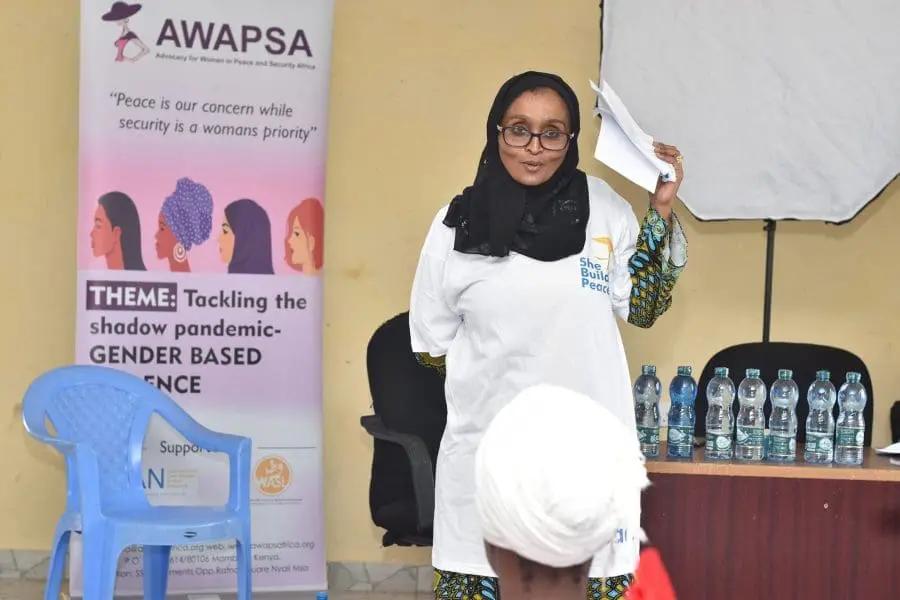
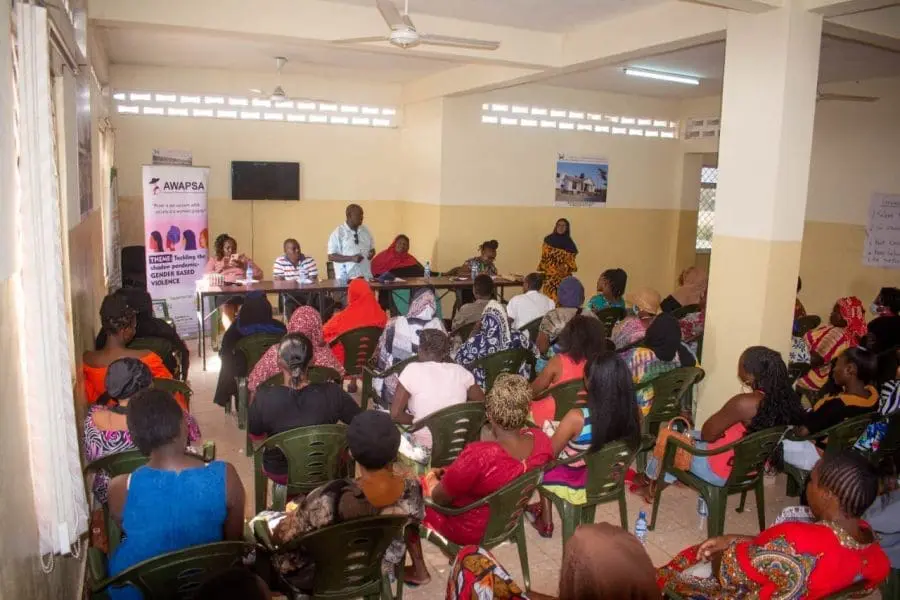
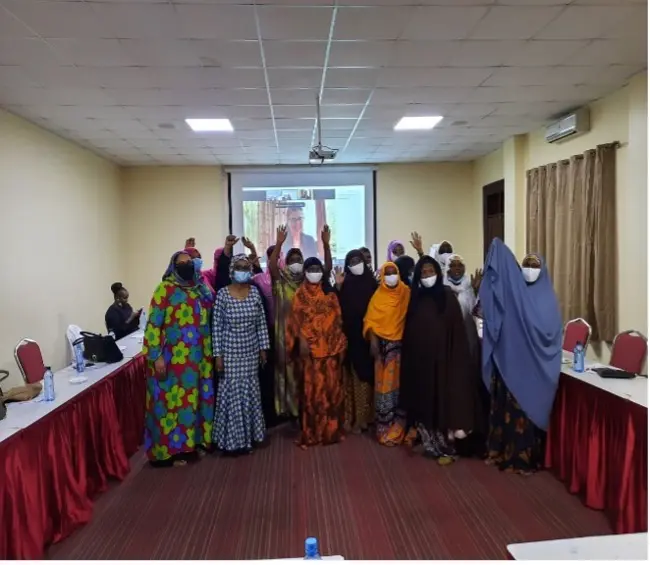
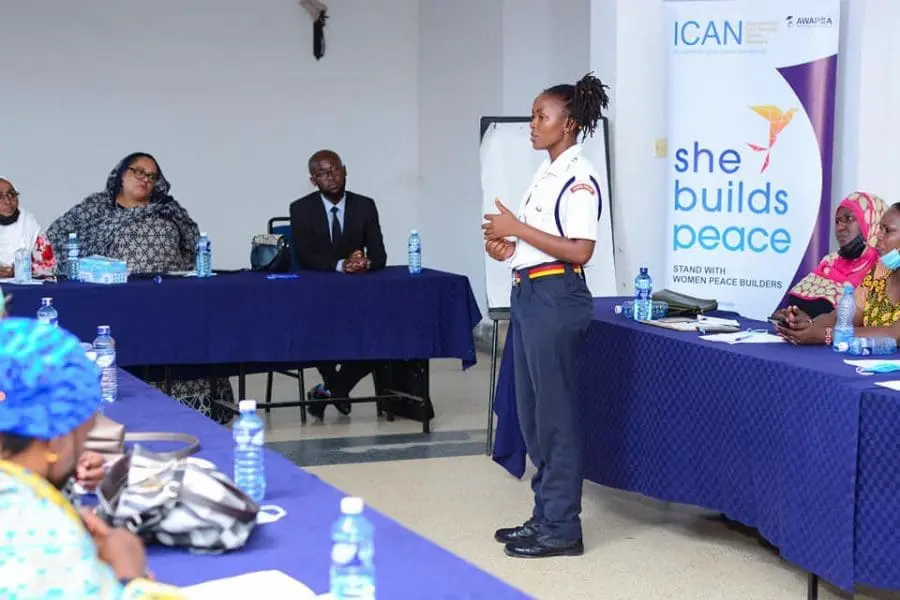
Funded by ICAN’s Innovative Peace Fund (IPF), AWAPSA launched a project in Mombasa, Kilifi and Kwale counties to increase awareness of SGBV, educate women and girls on how to report instances, and facilitate the reporting of cases to the police. AWAPSA brought together large groups of women and girls for convenings called “women engagement forums.” These included survivors and those at greater risk of experiencing SGBV, together with women from the community, including faith leaders, health workers, civil society, and police officers. During the women engagement forums, female police officers educated participants on the meaning of SGBV, examples of the numerous forms this type of violence can take, and the proper procedures for reporting cases at the police station through the gender desk. Female lawyers and civil society organizations helped participants understand their rights and what to expect when pursuing a case in court. The forums were also an opportunity to enable other participants, including the police, to better understand the threats and challenges faced by women in this area. These sessions built trust between the various stakeholders and led to wider community awareness, as participants shared what they had learned with their family and friends.
ICAN accompanied AWAPSA through the project cycle and supported them on project development, budgeting, monitoring and evaluation, and reporting. As a result of their IPF project, AWAPSA was able to build partnerships and network with like-minded organizations, deliver justice to victims, and lobby for better care and services, including safe houses. Most significantly, they developed a close relationship with the Federation of Women Lawyers (FIDA) Kenya – a non-profit that offers free legal aid to women, to whom AWAPSA can refer victims.
The First Step in Achieving Justice: Kenya’s First SGBV Court
One of the most significant and unforeseen outcomes of AWAPSA’s IPF-funded project was the establishment of a court of law specializing in SGBV cases. This concept came out of the first phase of the women engagement forums, where it became apparent that the current justice system was failing survivors in a plethora of ways. Due to the pandemic, courts conducted hearings online rather than in person, adding another barrier for survivors, particularly those from rural areas who were unable to access stable internet or did not have the knowledge or equipment needed to appear virtually in court. Furthermore, cases in court were taking too long and failed to properly safeguard the survivors. Roble explained how the courts offered little privacy and survivors, especially child victims, often struggled to narrate their stories:
“The previous courts that we had were not child friendly. Most of our cases are defilement, sodomy cases, rape cases and its young people effected… but everyone listens irrespective whether they are part of the case or not. Let’s say for example the next case is coming up, people who are there waiting and buying time end up sitting and listening to what is happening. So, there is no privacy, and this created a lot of complications.”
At the time, out of 30 cases heard daily at Mombasa Law Court, 19 were related to incidents of sexual and gender-based violence. It was against this backdrop that AWAPSA and FIDA decided that they would lobby for a special court to specifically manage SGBV cases. With support from ICAN’s IPF, they networked with other women’s and human rights organizations, gained allies amongst women judges and magistrates, and advocated to Kenya’s Chief Judiciary to establish a new court.
“Heading in the right direction”: A ‘Survivor-Centered’ Approach
In a historic moment on March 10, 2022, Kenya’s first female Chief Justice, Martha Koome, opened the doors to Kenya’s SGBV specialized court at Shanzu Law Courts, Mombasa. The court, which serves all six counties in the coastal region, adopts a ‘survivor-centered’ approach, with experienced prosecutors and support staff. Roble explained:
“[The court] has brought confidence to victims because they feel like they are recognized. They have a place and they can speak up, they get privacy, and their cases are taken seriously.”
Since it has been operating, the court has seen approximately 120 cases, including child-rape cases and incidents of severe domestic violence , and brought justice to many survivors.
The Mombasa court is a prototype, and AWAPSA plans to advocate for other similar courts to be set up across the country. Roble believes that there is still work to be done for the court to be operating at its full potential. At present, the court meets only twice weekly, meaning there are delays and some aspects of victim support and privacy could be improved. However, she emphasized that the court is a strong sign that Kenya is finally taking the issue of SGBV seriously. This, coupled with the fact that Kenya’s much anticipated 2022 general elections passed with relatively little violence, means “this country is heading in the right direction” she says.
AWAPSA’s Executive Director, Sureya Roble was honored as a Justice Champion at the African Women Summit in May 2022 in Kigali, Rwanda, in recognition of her work championing women’s rights and bringing justice to survivors of sexual and gender-based violence.
On October 6, 2025, the U.N. Security Council holds its annual open debate on Resolution 1325 on Women, Peace, and Security. Today, we are not issuing a new statement. Instead, we are honoring our community of women peacebuilders—who appeared before the Security Council throughout these 25 years, speaking for the millions they represent—by echoing their messages.
ICAN FeaturedICAN LatestICAN UpdatesWASL UpdatesWomen's Alliance for Security Leadership
In South Sudan, a nation where peace has long remained fragile and democratic progress uncertain, women are stepping forward to shape the future of their country. Long excluded from the corridors of power, they are forging their own movement for lasting change.
On behalf of the International Civil Society Action Network (ICAN) and members of the global Women’s Alliance for Security Leadership (WASL), we are honored to nominate Francesca Albanese, United Nations Special Rapporteur on the situation of human rights in the Palestinian territories occupied since 1967, for the 2026 Nobel Peace Prize.
در عرصه صحت روانی، افغانستان با بحران پیچیدهای مواجه است که این بحران به طور جدایی ناپذیر با ناامنی شدید فیزیکی، سیاسی و اقتصادی در کشور گره خورده و این نا امنی ها بحران را تشدید میکند. برای رسیدگی به آسیب های روانی، صحت و بهداشت جامعه به شیوه های پاسخگو به جنسیت و با مد نظر گرفتن حساسیت های فرهنگی، سازمانهای فعال در عرصه صلح سازی به رهبری زنان افغان در موقعیتی منحصربه فرد قرار دارند. این سازمان ها خدمات ابتدایی ارائه میدهند، مهارتها را توسعه میبخشند و در شکلدهی هنجارهای فرهنگی و جنسیتی نقش مؤثر ایفا میکنند.
ICAN FeaturedICAN LatestICAN UpdatesWASL UpdatesWomen's Alliance for Security LeadershipWPSO
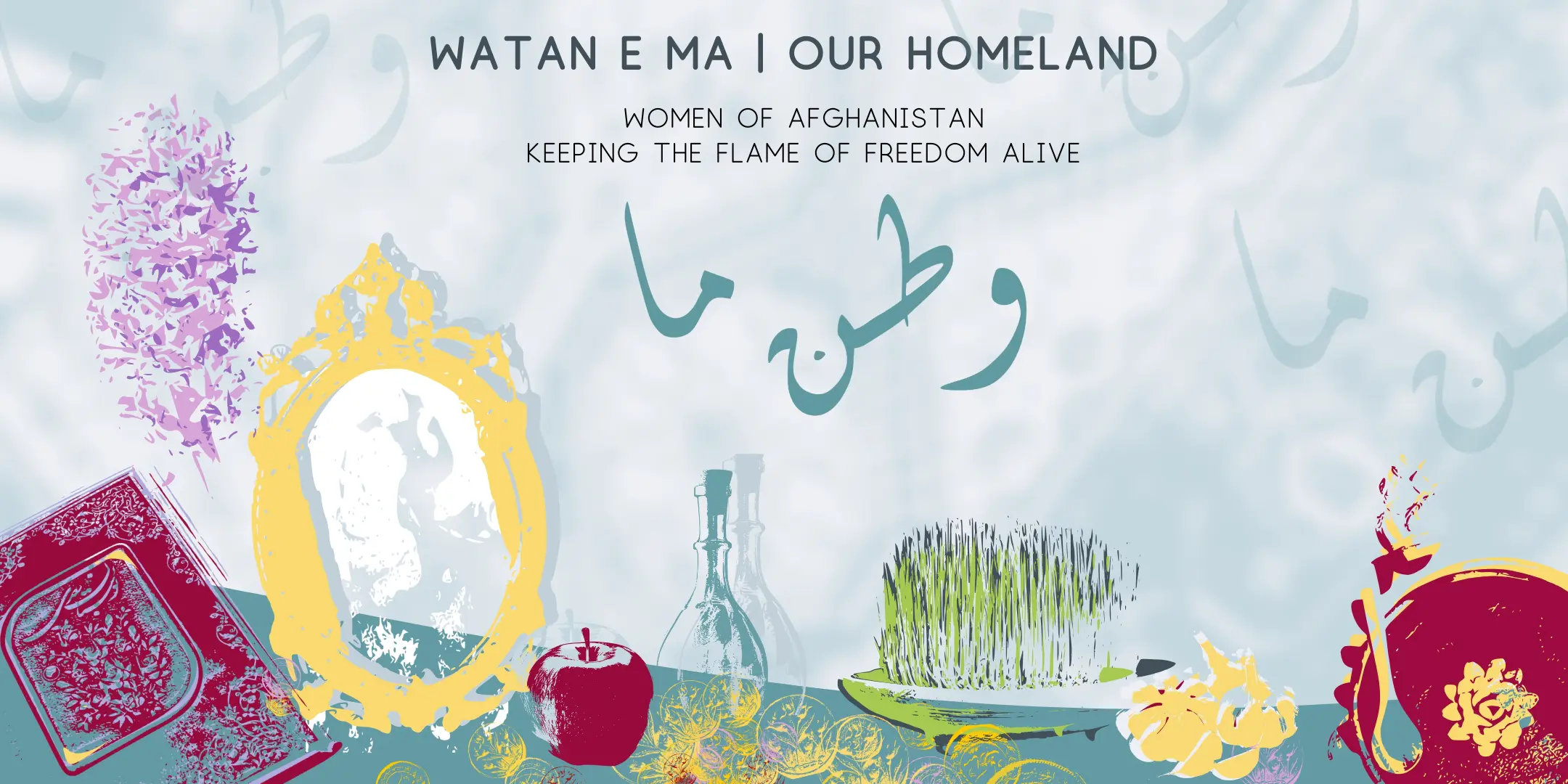
In a powerful departure from traditional advocacy, ICAN—guided by our Afghan partners and women peacebuilders—hosted the event “Watan e Ma – وطن ما – Our Homeland: Women of Afghanistan Keeping the Flame of Freedom Alive” on March 17, 2025 at Blue Gallery in New York City. Held during the 69th Commission on the Status of Women (CSW69), the event celebrated Afghan cultural heritage and the resilience of Afghan women peacebuilders, who persist in their leadership for peace, justice, and equality under the Taliban’s regime of gender apartheid.
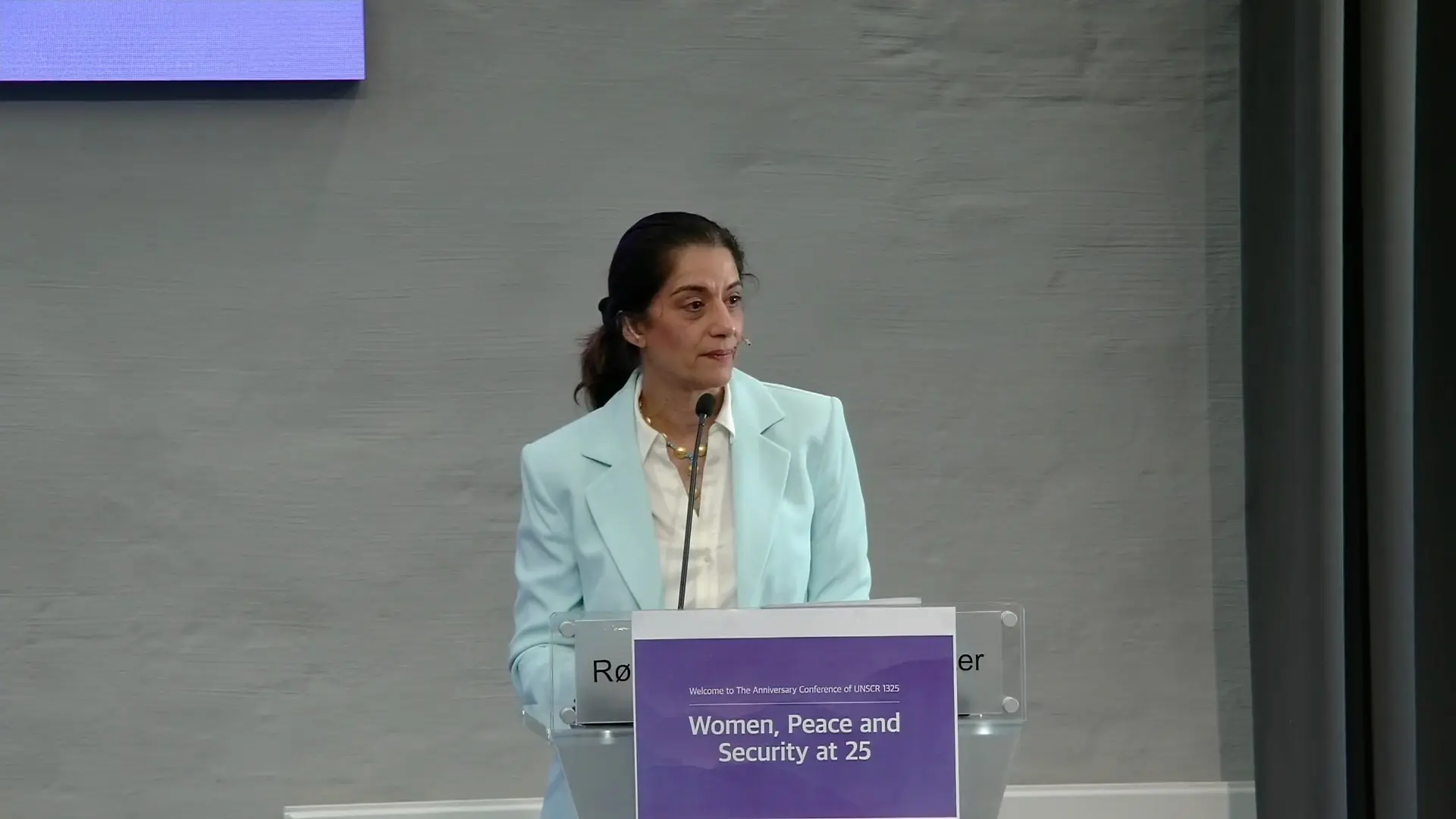
On May 5, 2025, ICAN's Sanam Naraghi Anderlini delivered the keynote speech at the two-day international conference "25th Anniversary Conference of UNSCR 1325 Women, Peace and Security."
As Senator Mobina Jaffer concludes 23 years of distinguished public service in the Canadian Senate, we extend our deepest thanks for her steadfast leadership as Chair of ICAN’s Board of Directors from 2014 to 2024.
Together with André Mundal, our new Interim Chair of the ICAN Board of Directors, we are delighted to welcome two new members to our Board of Directors.
Trust between communities and the security sector is critical for effective governance and peace. So is a vibrant civil society. When women peacebuilders are recognized and engaged as independent, strategic partners and security actors—in their own right—the results are transformative. Twenty-five years on from the launch of the WPS agenda, women peacebuilders’ creativity and contributions to societal peace and security are not only timely, they are even more essential.
Allamin FoundationAWAPSAAWAWBetter Peace InitiativeCIASECoACTGEN MyanmarGender and ExtremismsICAN FeaturedICAN LatestICAN UpdatesPAIMANPCIDWASL UpdatesWomen's Alliance for Security Leadership
Since gaining independence in 1948, Myanmar has been shaped by relentless conflict, political upheaval, and deep-seated resistance. Ethnic divisions, decades of military rule, and systemic gender inequality have compounded the struggles faced by women across the country. Yet, despite oppression and violence, Myanmar’s women have consistently led movements for justice and change, standing at the forefront of resistance.