Countering Extremism in Iraq: A New Horizon for Peace
Iraqi Al-Firdaws Society (Al-Firdaws) is taking a new approach to peacebuilding. Their project, Horizon: Promoting Community Peace, supported by ICAN’s Innovative Peace Fund (IPF), brings together youth, local security forces, and civil society actors to address violent extremism through dialogue, education, and community-based action.
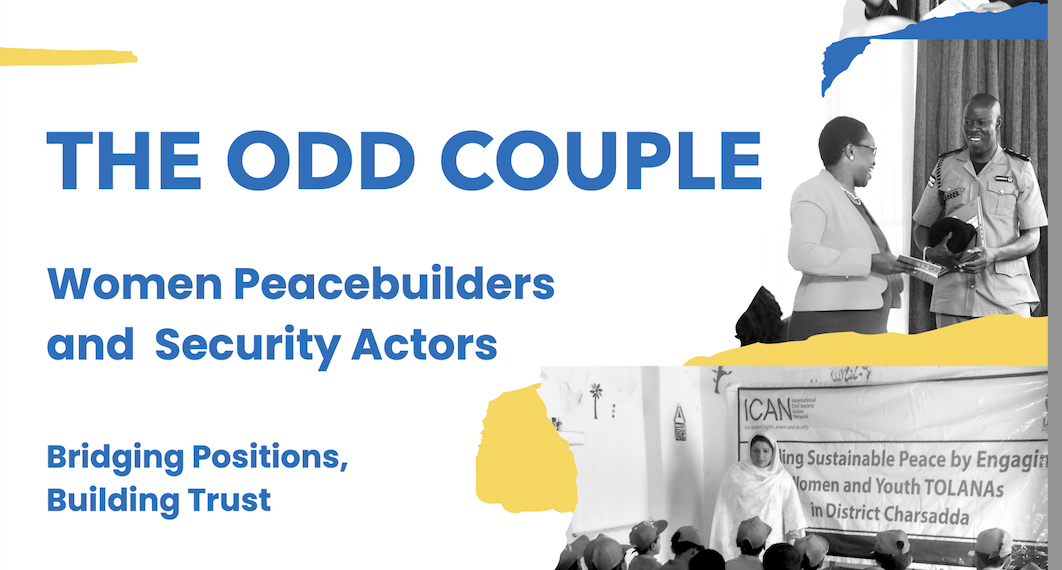
The Odd Couple: Women Peacebuilders and Security Actors Bridging Positions, Building Trust
The WPS agenda has proven a vital entry point for women peacebuilders to engage with the security sector and build trust within affected communities. These efforts—often invisible—are contributing to the reform of the sector, reshaping local security environments and mitigating violence.
The War Against Ourselves: Afghan Women Peacebuilders’ Response to the Mental Health Crisis in Afghanistan
This case study describes the drivers of the mental health crisis in Afghanistan, its gendered and cultural dimensions, and the strategies used by Afghan women-led peacebuilding organizations to provide solutions. The authors conducted interviews with representatives of Afghan women-led peacebuilding organizations and thematic experts, which were complemented by a desk review of project documentation and […]
Open Statement to the United Nations Security Council on behalf of Women Peacebuilders Marking 25 Years of the Women, Peace, and Security Agenda
On October 6, 2025, the U.N. Security Council holds its annual open debate on Resolution 1325 on Women, Peace, and Security. Today, we are not issuing a new statement. Instead, we are honoring our community of women peacebuilders—who appeared before the Security Council throughout these 25 years, speaking for the millions they represent—by echoing their messages.
Home»ICAN Updates»
To Address Extremisms In The New Decade, Do What The Women Say
To Address Extremisms In The New Decade, Do What The Women Say
19 October 2022
A gendered analysis by Rosalie Fransen of emerging trends and threats in the counterterrorism and countering/preventing violent extremism landscape.
If 2020 was a year of stocktaking and questioning the status quo, 2021 invites us to put our reflections into action – so, too, for the counterterrorism (CT) and preventing and countering violent extremism (P/CVE) community, as it grapples with a world that is both increasingly connected and pluralistic, and unequal and divided.
The United Nations is currently convening its second virtual Counter-Terrorism Week, a gathering of member states, civil society and private sector organizations that comes on the heels of the 7th review of the General Assembly’s United Nations Global Counter-Terrorism Strategy (GCTS). As this year marks 15 years since the adoption of the first GCTS and the start of a new decade of CT and P/CVE work, events naturally focus on assessing trends and threats, and addressing emerging challenges.
At the International Civil Society Action Network (ICAN), we offer our own perspective on the CT and P/CVE landscape. Below are some of the key challenges and opportunities we have noticed in the extremisms space, analyzed through a gender lens, and rooted in the experiences and observations of our partners, particularly members of the Women’s Alliance for Security Leadership (WASL) network.
Threats and challenges we have observed in our work on gender and extremisms:
1. Co-option and exploitation of civil society. Although civil society actors are increasingly being acknowledged in CT and P/CVE rhetoric as critical partners, they continue to be silenced, co-opted, and exploited at national and international levels. Engagement of civil society often starts and ends at inviting them to speak at events or acknowledging their contributions verbally. Funding for the work of grassroots civil society on extremisms remains scarce, and opportunities for meaningful engagement in policymaking and programmatic decision-making are rare. Meanwhile, vague and overreaching CT legislation has led to the closing of civic space and repression of civil society activity in the name of national security.
Women peacebuilders, who already carry significant risk due to their willingness to work across divides and challenge power structures, are particularly impacted by these legislative measures. Their work remains underfunded, unrecognized, and unprotected. Our partners have reported issues with opening bank accounts, delays in financial transactions, and oppressive administrative requirements – sometimes leading to the suspension of projects.
Fionnuala Ní Aoláin, the UN Special Rapporteur on the promotion and protection of human rights and fundamental freedoms while countering terrorism, recently called for the need for “profound recalibration, restraint, and meaningful oversight of counterterrorism practices,” lest they continue to be misused to target civil society actors. Addressing the challenge of violent extremism will require upending current power dynamics and putting women peacebuilders and other local actors at the center of our discussions. As a start, ICAN has issued guidelines on how to protect, recognize, and fund the long-term capacity of women peacebuilders.
2. Silos and technocratic solutions. Due to a growing body of research by the UN and many others, we are well-aware of the structural drivers of violent extremism: overly-securitized responses, inequality, poor governance, corruption, exclusion, marginalization, and shrinking civic space. While several global agendas focus on tackling these drivers, namely the CT and P/CVE, SDG 16, human rights, and women, peace, and security agendas, siloed approaches to their implementation have stagnated progress. For instance, while good governance sits at the heart of the SDG16 agenda, it is often left out of P/CVE discussions, with governments failing to acknowledge their own role in institutionalizing racism, inequality, and exclusion. The same is true for human rights issues: although abuse by the security sector has been found to drive radicalization to violent extremism, governments continue to rely on overly aggressive security approaches in their CT responses.
Rather than meaningfully addressing complex structural issues such as governance, economic inequality, and human rights, P/CVE practice favors shorter-term, less politically sensitive technocratic solutions. Empowering individual young people or launching a digital counternarrative platform is, after all, simpler than redressing government failures and reforming state security institutions. The SDG16 agenda provides a potential entry point for initiating conversations around government accountability by centering good governance, inclusive societies, and access to justice. Ultimately, however, tackling structural drivers to terrorism and violent extremism will necessitate both investment (into positive, peaceful solutions and reform) and divestment (from securitized approaches and socioeconomic policies that produce inequality and exclusion).
3. Failure to express what we are “for.” Violent extremist groups are excellent communicators. They paint a clear picture of how the world ought to be and offer a sense of belonging and agency to those willing to join them to realize their vision. Meanwhile, the CT and P/CVE community still struggles to offer an alternative vision, instead taking a problem-oriented approach by expressing what it stands against: “preventing” and “countering” violent extremism. To move towards a truly transformative agenda, as our CEO Sanam Naraghi-Anderlini has argued, we will need a conceptual shift to define what we aspire to. In 2020, global activist movements like the Black Lives Matter movement demonstrated the power of expressing such a positive vision, rallying millions across the globe to fight for freedom, liberation, and justice.
To this end, ICAN proposes the international community adopts a framework of peace, equality, resilience, and pluralism (PREP) as an overarching goal, encompassing CT and C/PVE efforts:
Trends and opportunities we have observed in our work on gender and extremisms:
1. Extreme pluralism and the importance of identity. Over the past decade, migration, urbanization, and globalization have created increasingly pluralistic societies. Growing pluralism has prompted internal crises for individuals, communities and countries who fear losing national identity, status, and an understanding of where they fit in the world. Extremist movements capitalized on this new reality: they elevate one identity (religion, ethnicity, nation, gender, class) over all others, fostering exclusion and division. Extremist ideology is always gendered, promoting rigid notions about the role and status of men and women, based on masculine supremacy and the subservience of women. Young people, who increasingly possess multiple, complex, layered identities, are particularly vulnerable to the sense of belonging and clear-cut explanation for the world that extremist groups provide. Indeed, identity-seeking has been identified as a key factor in individual radicalization to violent extremism.
In our responses, we have an opportunity to articulate an alternative vision: one that fosters pluralism and respect for the multiplicity of identities. In CT and C/PVE work, identity considerations are relevant at all levels of intervention. At the national level, education can serve as a means of promoting respect for multiple perspectives and identities, and teaching history that covers the experiences of marginalized groups. At the community level, civil society can promote religious literacy and interpretations of religious texts that emphasize common humanity. At the individual level, rebuilding identity is a critical part of reintegrating former extremists into their society. Women peacebuilders are well-positioned to lead on these identity-driven interventions, since they are locally rooted, have the trust of their communities, and understand the context and cultural nuances of their settings. Their work engages people’s core identities, by touching both hearts and minds.
2. Women peacebuilders as first responders. The COVID-19 pandemic deepened existing divisions, exacerbating ethno-nationalism, religious and other extremisms. During weekly virtual meetings, WASL members reported an uptick in hate speech, xenophobia, and extremist messaging. Poor or biased responses by governments and aggravated economic inequality further fed into extremist narratives. Where governments failed to provide socioeconomic and health services, extremist groups stepped in to gain the trust of the population.
Women peacebuilders, including members of WASL, were the first to notice signs of rising extremisms in their communities. They rapidly shifted their work to meet this new challenge, filling vacuums left by states by providing health, social and economic support. In Afghanistan, for instance, a WASL member established a men’s network that grew from 20 to 300 members. The network shares information about COVID-19 with local communities and works to prevent extremism, discourage early marriage, and promote women’s participation in local councils. In Cameroon, women peacebuilders integrated community dialogues and psychosocial support into their humanitarian response to COVID-19, which enabled them to detect early warning signs for radicalization among youth.
The COVID-19 crisis has demonstrated the importance of preserving the social fabric at the local level in times of emergency and re-emphasized the need to invest in and protect work at the grassroots, particularly work by women-led civil society, who have an ear to the ground and can shift their work rapidly to meet emerging challenges.
3. The power of on-line narratives. An explosive growth in internet users over the past two decades and a “digital surge” in the use of technology during the pandemic has left the world more connected than ever. While hyper-connectivity has enabled new relationships and linkages, it has also contributed to divisive narratives – notably, a rise in on-line extremist hate speech. As seen in countries such as Iraq, hate speech is highly gendered and often used to target female civil society leaders and women active in the public sphere, as well as minority groups like the LGBTQ+ community. Extremist actors use sexual defamation, accusations of allegiance to the West, and shaming as tools to silence and disempower women and minorities, in some cases leading to real-life violence.
Women peacebuilders play a key role in challenging divisive rhetoric by disseminating peaceful, gender-sensitive and positive narratives rooted in their local culture, religion, and traditions. Crucially, such narratives need to be disseminated by locally trusted interlocuters to be credible and culturally appropriate. Interventions that encourage physical connectivity across identity groups, such as exposing young people to the practices of religious groups other than their own, also serve as an important counterweight to the polarized on-line environment. Since this work exposes women peacebuilders to significant risk, it requires substantial investment into measures for their protection. ICAN’s PREP framework of peace, resilience, equality and pluralism offers a useful set of values for the development of on-line narratives.
For more information on ICAN’s work on promoting gendered positive alternatives to extremisms, please see our Gender and Extremisms program page.
On October 6, 2025, the U.N. Security Council holds its annual open debate on Resolution 1325 on Women, Peace, and Security. Today, we are not issuing a new statement. Instead, we are honoring our community of women peacebuilders—who appeared before the Security Council throughout these 25 years, speaking for the millions they represent—by echoing their messages.
ICAN FeaturedICAN LatestICAN UpdatesWASL UpdatesWomen's Alliance for Security Leadership
On behalf of the International Civil Society Action Network (ICAN) and members of the global Women’s Alliance for Security Leadership (WASL), we are honored to nominate Francesca Albanese, United Nations Special Rapporteur on the situation of human rights in the Palestinian territories occupied since 1967, for the 2026 Nobel Peace Prize.
در عرصه صحت روانی، افغانستان با بحران پیچیدهای مواجه است که این بحران به طور جدایی ناپذیر با ناامنی شدید فیزیکی، سیاسی و اقتصادی در کشور گره خورده و این نا امنی ها بحران را تشدید میکند. برای رسیدگی به آسیب های روانی، صحت و بهداشت جامعه به شیوه های پاسخگو به جنسیت و با مد نظر گرفتن حساسیت های فرهنگی، سازمانهای فعال در عرصه صلح سازی به رهبری زنان افغان در موقعیتی منحصربه فرد قرار دارند. این سازمان ها خدمات ابتدایی ارائه میدهند، مهارتها را توسعه میبخشند و در شکلدهی هنجارهای فرهنگی و جنسیتی نقش مؤثر ایفا میکنند.
ICAN FeaturedICAN LatestICAN UpdatesWASL UpdatesWomen's Alliance for Security LeadershipWPSO
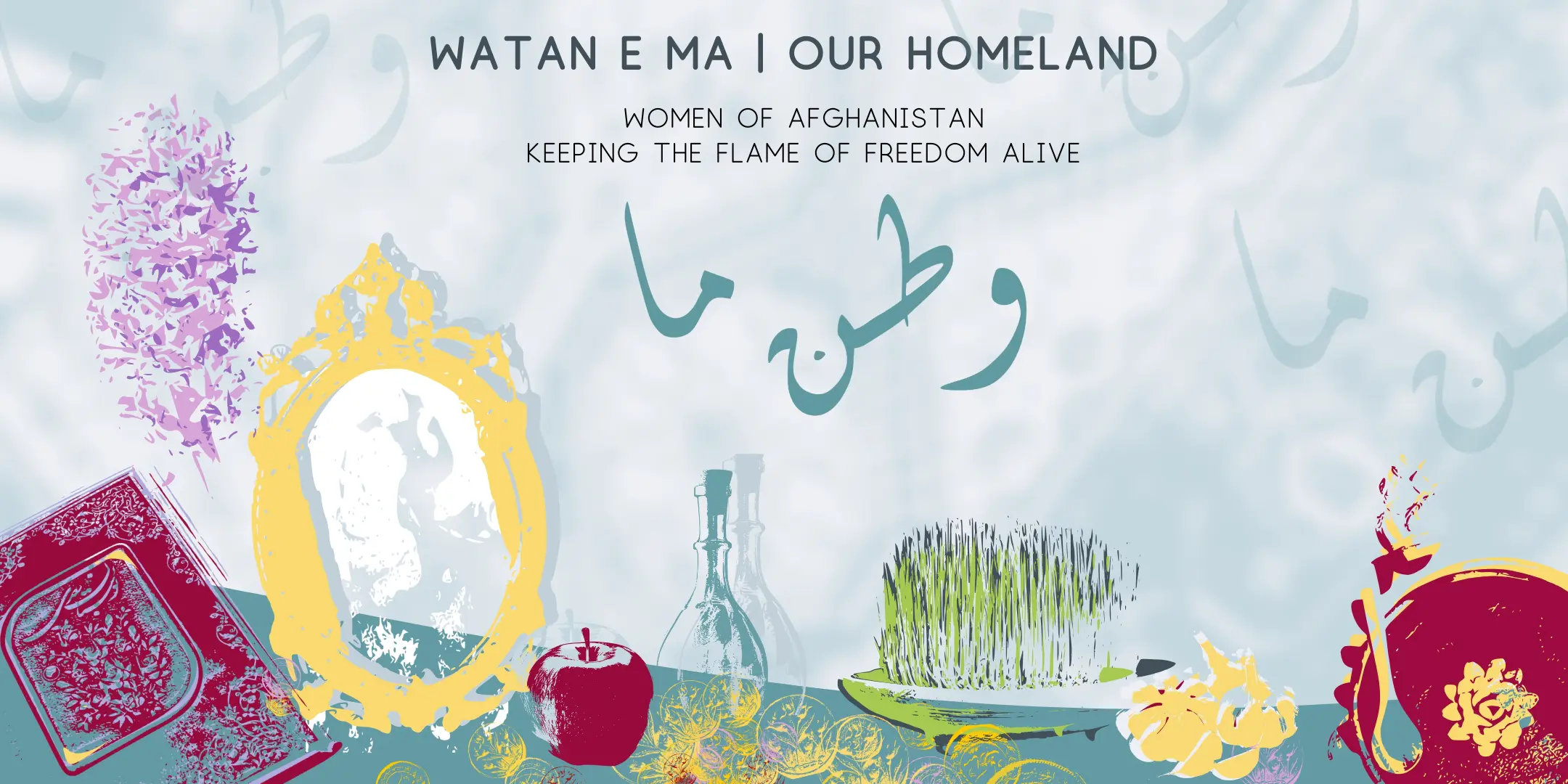
In a powerful departure from traditional advocacy, ICAN—guided by our Afghan partners and women peacebuilders—hosted the event “Watan e Ma – وطن ما – Our Homeland: Women of Afghanistan Keeping the Flame of Freedom Alive” on March 17, 2025 at Blue Gallery in New York City. Held during the 69th Commission on the Status of Women (CSW69), the event celebrated Afghan cultural heritage and the resilience of Afghan women peacebuilders, who persist in their leadership for peace, justice, and equality under the Taliban’s regime of gender apartheid.
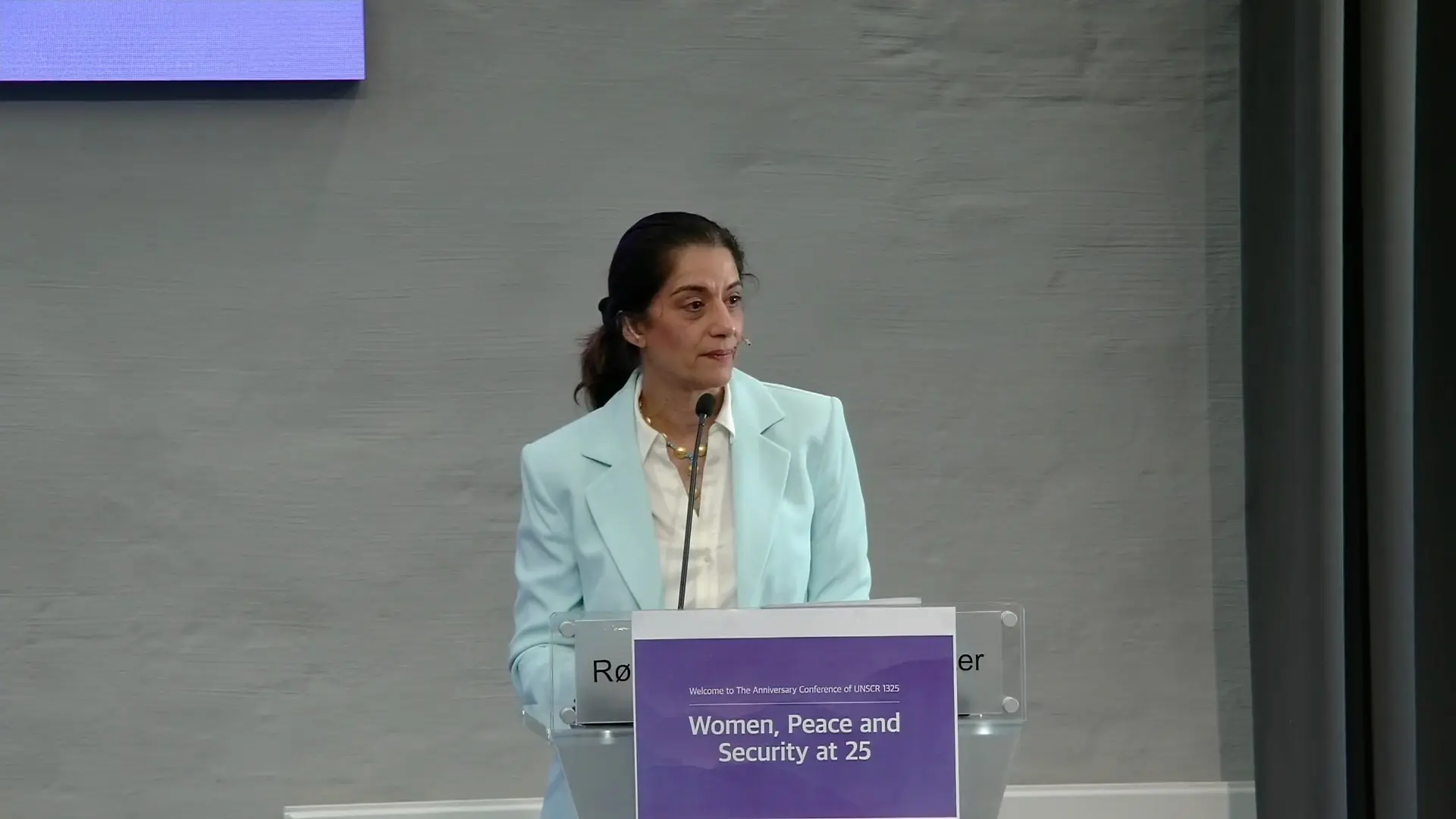
On May 5, 2025, ICAN's Sanam Naraghi Anderlini delivered the keynote speech at the two-day international conference "25th Anniversary Conference of UNSCR 1325 Women, Peace and Security."
As Senator Mobina Jaffer concludes 23 years of distinguished public service in the Canadian Senate, we extend our deepest thanks for her steadfast leadership as Chair of ICAN’s Board of Directors from 2014 to 2024.
Together with André Mundal, our new Interim Chair of the ICAN Board of Directors, we are delighted to welcome two new members to our Board of Directors.
Trust between communities and the security sector is critical for effective governance and peace. So is a vibrant civil society. When women peacebuilders are recognized and engaged as independent, strategic partners and security actors—in their own right—the results are transformative. Twenty-five years on from the launch of the WPS agenda, women peacebuilders’ creativity and contributions to societal peace and security are not only timely, they are even more essential.
Allamin FoundationAWAPSAAWAWBetter Peace InitiativeCIASECoACTGEN MyanmarGender and ExtremismsICAN FeaturedICAN LatestICAN UpdatesPAIMANPCIDWASL UpdatesWomen's Alliance for Security Leadership
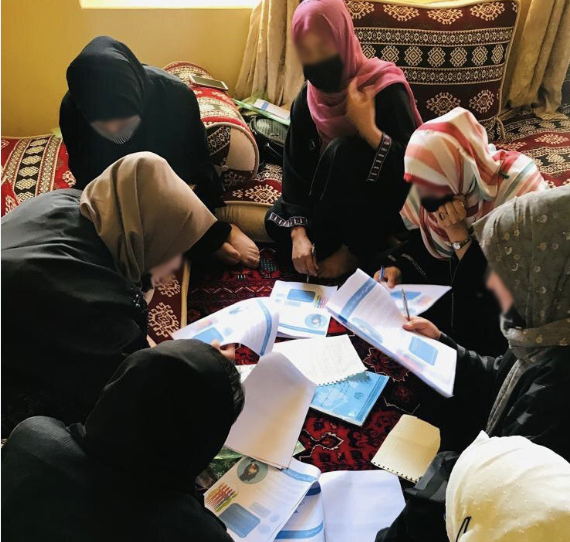
Afghanistan is facing a complex mental health crisis inextricably linked with and compounding the dire state of physical, political, and economic insecurity in the country. Afghan women-led peacebuilding organizations are uniquely positioned to address community members’ health and wellness in gender-responsive, culturally- sensitive, and trauma-informed ways.
ICAN FeaturedICAN LatestICAN UpdatesWASL UpdatesWomen's Alliance for Security LeadershipWPSO
As the Women’s Alliance for Security Leadership (WASL) continues to expand globally, fostering stronger regional and national networks, we are excited to announce the formation of the first-ever WASL Steering Committee.