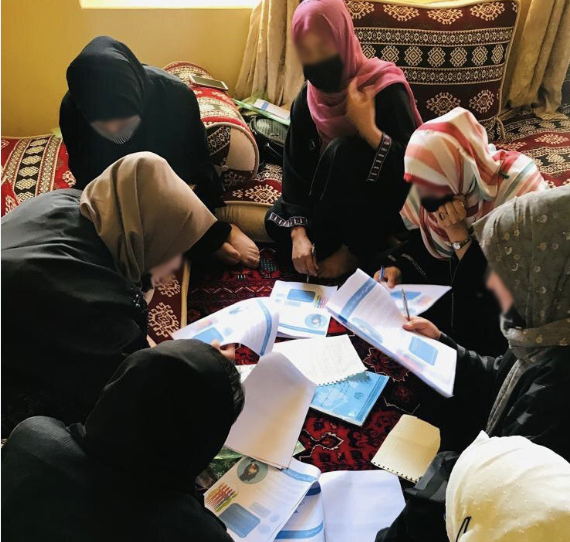
Women peacebuilders effectively deploy activist methods such as non-violent protest, civil disobedience, alliance-building, and movement organizing that fall outside of traditional NGO funding and project structures. Women have long been at the forefront of such protest movements. From the 2011-12 revolutions in Tunisia, Egypt, Libya and Yemen, to the October 2019 protests in Iraq, the Myanmar struggle for democracy, the Sudan revolution and in 2022 Iran, women are present, organized and vocal in public spaces.
In Latin America they are leading indigenous and social movements for the environment. Historically and across the world, women-led movements have tended to be grounded in non-violent action and transformation. Their movements are also highly inclusive, protecting and advocating for the needs of everyone in their communities, including men.
That said, a persistent risk that many have encountered is the takeover by other forces, once a conflict reaches the point of negotiations, or an authoritarian state is toppled. For women peacebuilders, approaching their work as movement-building is critical to sustainability and authenticity. It is also more engaging than using short-term projects and NGO-centric language as it reaches a broader swath of people who then participate as citizens, rather than beneficiaries.
Conducting peacebuilding advocacy through activism and protest instills public ownership: the messages belong to the people, rather than being set and approved by funders. Activist tactics also allow women peacebuilders to operate entirely outside of existing power structures and institutions, vocally demonstrating their resistance and practicing the new structures they envision.
Finally, besides being an advocacy tool, protests can themselves be a peacebuilding strategy. They build unity around shared aims of peace, justice, and equality; provide a sense of agency, hope, and purpose; and offer a non-violent avenue to channel grievances.