ICAN’s Mission Five Steps for Sustainable Prevention of Sexual Violence in Conflict ICAN Partner AWAPSA: A Catalyst for Kenya’s First SGBV Court The War Against Ourselves: Afghan Women Peacebuilders’ Response to the Mental Health Crisis in Afghanistan Protecting Women Peacebuilders: The Front Lines of Sustainable Peace
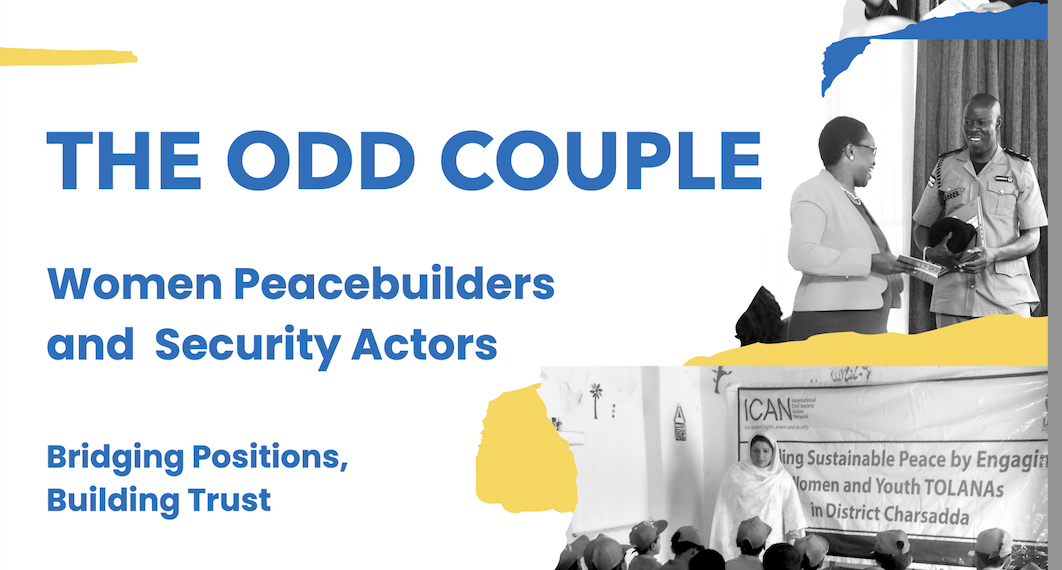
The Odd Couple: Women Peacebuilders and Security Actors Bridging Positions, Building Trust
The WPS agenda has proven a vital entry point for women peacebuilders to engage with the security sector and build trust within affected communities. These efforts—often invisible—are contributing to the reform of the sector, reshaping local security environments and mitigating violence.
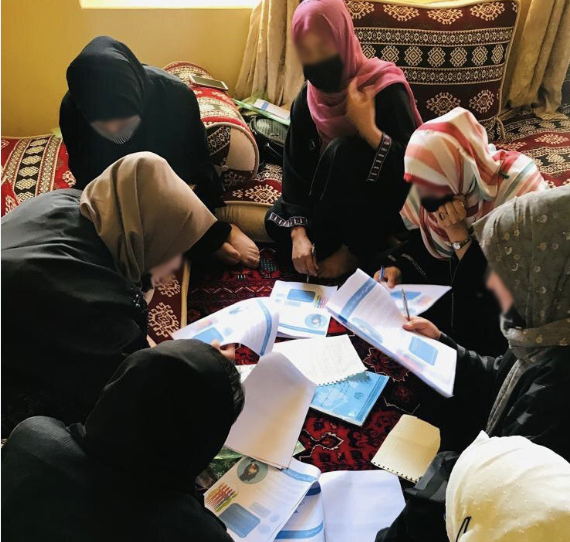
The War Against Ourselves: Afghan Women Peacebuilders’ Response to the Mental Health Crisis in Afghanistan
This case study describes the drivers of the mental health crisis in Afghanistan, its gendered and cultural dimensions, and the strategies used by Afghan women-led peacebuilding organizations to provide solutions. The authors conducted interviews with representatives of Afghan women-led peacebuilding organizations and thematic experts, which were complemented by a desk review of project documentation and […]
Open Statement to the United Nations Security Council on behalf of Women Peacebuilders Marking 25 Years of the Women, Peace, and Security Agenda
On October 6, 2025, the U.N. Security Council holds its annual open debate on Resolution 1325 on Women, Peace, and Security. Today, we are not issuing a new statement. Instead, we are honoring our community of women peacebuilders—who appeared before the Security Council throughout these 25 years, speaking for the millions they represent—by echoing their messages.
Home»ICAN Latest»
No Feminist Foreign Policy Without Feminist Funding
No Feminist Foreign Policy Without Feminist Funding
07 December 2023
The International Civil Society Action Network (ICAN) was invited to attend the Shaping Feminist Foreign Policy Conference at the World Forum in The Hague from November 1-2, 2023. Organized by the Dutch Ministry of Foreign Affairs (MFA), the conference welcomed more than 750 participants from over 40 countries.
On the first day of the conference, ICAN hosted a side event titled: No Feminist Foreign Policy Without Feminist Funding, in partnership with the Global Partnership for the Prevention of Armed Conflict (GPPAC). Our interactive session highlighted four key recommendations to increase financial support for women-led peacebuilding organizations and establish more equitable funding practices:
Direct Funding to Local Women Peacebuilders
Grantmaking Based on Partnership and Trust
Flexibility of Funding in Emergencies
Institutional Support
The speakers—which included women peacebuilders, intermediaries, and funders—participated in a debate-style conversation over which funding recommendation has greatest potential impact on peacebuilding outcomes. We engaged the audience to vote on the recommendations at the start of the discussion and concluded the event with a poll seeking the audience’s preference on which funding recommendation they would most like to see integrated into a feminist foreign policy.
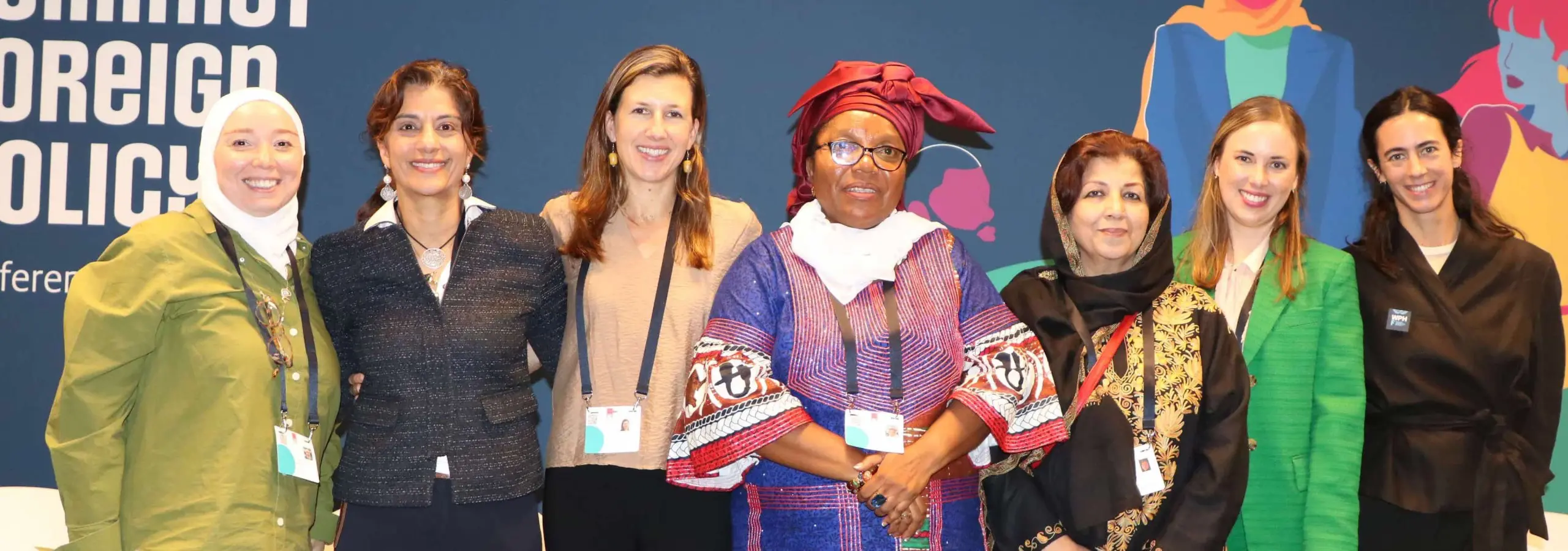
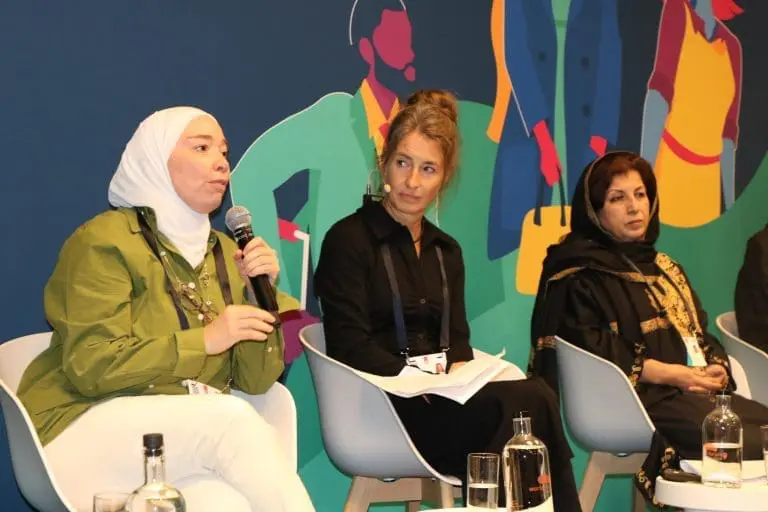
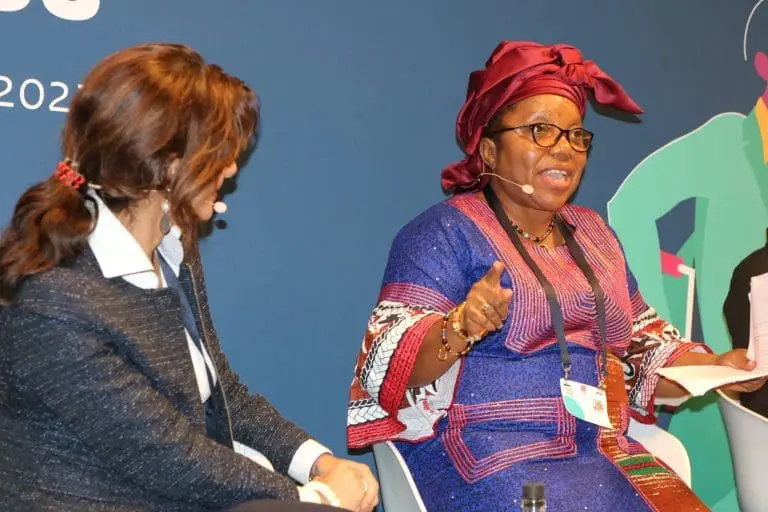
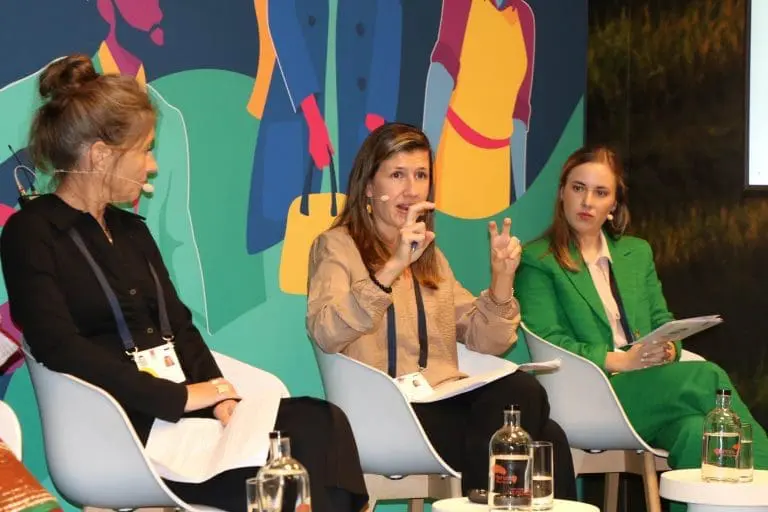
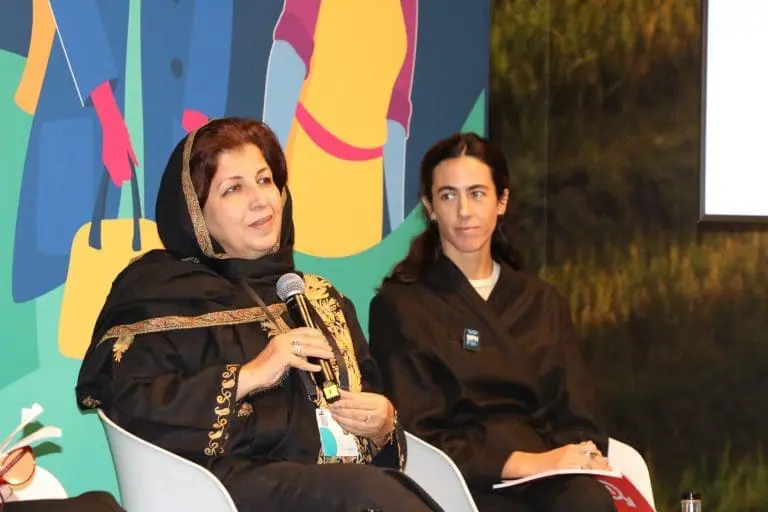
The panel featured members of the ICAN-spearheaded Women’s Alliance for Security Leadership (WASL): Esther Omam, Executive Director of Reach Out, Cameroon; Abir Haj Ibrahim, Co-Founder of Mobaderoon, Syria; and Mossarat Qadeem, Co-Founder and Executive Director of PAIMAN Alumni Trust, Pakistan, alongside ICAN’s Sanam Naraghi Anderlini and France Bognon. Mirjam Horstmeier from the Dutch MFA, Johanna Hilbert from GPPAC, and Sophie Giscard d’Estaing from Women’s Peace and Humanitarian Fund (WPHF) also brought their perspectives and experiences to the discussion.
The session encouraged radical candor around the barriers and challenges preventing quality feminist funding and highlighted best practices.
1. Direct Funding to Local Women Peacebuilders
“Support women-led organizations because we are at the center of the action. When everyone runs away, we are there.”
– Esther Omam, Executive Director, Reach Out Cameroon
Drawing on her experiences in the context of the Anglophone crisis in Cameroon, Esther Omam opened the debate, putting forward a compelling case for dedicating more funding to women-led peacebuilding organizations globally. She highlighted how locally rooted organizations such as Reach Out are present across conflict cycles, have unique trust and access in communities, and have deep contextual knowledge that international organizations often lack.
“Women are the ones who take the front row of going into their communities to rebuild them and to mend the wounds…before international organizations or governments come in, women are there. Why? Because we do not only act with our heads, but equally we use our hearts.”
– Esther Omam, Executive Director, Reach Out Cameroon
2. Grantmaking Based on Partnership and Trust
“We’ve been saying to donors instead of thinking about ‘appetite for risk’ think about ‘appetite for trust.’ Trust local partners–women peacebuilders–who are risking their lives to serve their communities. They know what is needed, when, and how.”
– Sanam Naraghi Anderlini, MBE, Founder and CEO, ICAN
Championing the second recommendation, ICAN’s Innovative Peace Fund (IPF) Director, France Bognon, advocated for participatory grantmaking processes whereby donors establish formal consultation mechanisms and give decision-making power about funding to the communities that they aim to serve.
“We want to ensure that when donor governments look at the resourcing portion of their feminist foreign policy that they are going to consult the women leading organizations that are directly impacted by this work.”
– France Bognon, Program Director, ICAN
ICAN and GPPAC are leaders in participatory grantmaking, building pipelines of dialogue with partners to understand how their funding models—from proposal to reporting—can best reflect and adapt to suit the operating realities of women peacebuilders.
“GPPAC has been a thought leader in improving peacebuilding financing…we’ve brought together peacebuilders, donors, and financial experts to develop concrete recommendations to shift the power so local peacebuilders are no longer contractors but partners.”
– Johanna Hilbert, GPPAC
3. Flexibility of Funding in Emergencies
The third recommendation put forward in the session centered flexibility in project funding. Flexibility enables women peacebuilders to respond to new and urgent issues, including national disasters or unexpected conflicts.
Notably, this recommendation broadens the definition of peacebuilding work to encompass the intersections between peace, rights, development, and humanitarian interventions, commonly referred to as the “triple nexus.”
“When emergencies happen, we need our international partners who have a triple nexus mandate to value our work and come together to support us.”
– Abir Haj Ibrahim, Co-Founder, Mobaderoon, Syria
Advocating for this recommendation, Abir Haj Ibrahim drew on her experiences leading Mobaderoon’s peacebuilding work in Syria. In February 2023, when devastating earthquakes hit Syria and Turkey, Mobaderoon’s proposed peacebuilding dialogues became inconceivable. She instead adapted her programming, using her access and status as a trusted leader to deliver humanitarian relief and crucial safety information to affected communities. Remarkably, with less than $25,000, Mobaderoon mobilized 500 volunteers and provided emergency rental accommodation for 42 families.
“We did only what we believe that we should do for our community because we have gained their trust during the last 10 years.”
– Abir Haj Ibrahim, Co-Founder, Mobaderoon, Syria
4. Institutional Support
“If you don’t give the institution support, the institution will not be there to sustain what you have actually invested in.”
Mossarat Qadeem took the lead convincing the audience of the need for donors to “fund the organization, not only the project,” including proposal writing, monitoring and evaluation, reporting, staff salaries, accounting, and security.
She explained that when her organization, PAIMAN, was unable to continue its in-person programming during the COVID-19 pandemic lockdowns, institutional support was imperative to sustain their presence on the ground and maintain trust in communities. Esther Omam also provided a valuable example of the value of institutional support. She shared that when the roads to Reach Out’s offices were destroyed by conflict actors, leaving employees vulnerable to security threats and kidnapping, her staff were unable to attend work. However, due to their donor’s flexible funding policy, she was able to have the road repaired and continue their peacebuilding work.
Feminist Funding is Holistic
Closing the event, WPHF’s Sophie Giscard d’Estaing underscored the importance of implementing funding policies which consider all four recommendations—direct funding, trust, flexibility, and institutional support:
“When a crisis hits, women’s organizations are on the frontlines reacting. Giving them flexibility to re-shift budgets and activities not only allows them to respond to the needs of their communities, but also recognizes that they know best based on their networks, their ownership, their sustainability, their connections on the ground, and their reach.”
During the event’s closing poll, the audience re-affirmed that the funding recommendation with the strongest potential for impact was direct funding to women peacebuilders. Based on the debate, institutional support rose to the second highest-ranked audience priority for feminist foreign policy.
Directing resources meaningfully to local women peacebuilders requires changes in policies, procedures, and institutional cultures.Without holistic, flexible, collaborative, trusting funding, women peacebuilders can only achieve a fraction of their potential impact. For foreign policy to truly be feminist, it must center the needs of women and communities, including by transforming most aspects of how funding has traditionally beendisbursed.
On October 6, 2025, the U.N. Security Council holds its annual open debate on Resolution 1325 on Women, Peace, and Security. Today, we are not issuing a new statement. Instead, we are honoring our community of women peacebuilders—who appeared before the Security Council throughout these 25 years, speaking for the millions they represent—by echoing their messages.
ICAN FeaturedICAN LatestICAN UpdatesWASL UpdatesWomen's Alliance for Security Leadership
On behalf of the International Civil Society Action Network (ICAN) and members of the global Women’s Alliance for Security Leadership (WASL), we are honored to nominate Francesca Albanese, United Nations Special Rapporteur on the situation of human rights in the Palestinian territories occupied since 1967, for the 2026 Nobel Peace Prize.
در عرصه صحت روانی، افغانستان با بحران پیچیدهای مواجه است که این بحران به طور جدایی ناپذیر با ناامنی شدید فیزیکی، سیاسی و اقتصادی در کشور گره خورده و این نا امنی ها بحران را تشدید میکند. برای رسیدگی به آسیب های روانی، صحت و بهداشت جامعه به شیوه های پاسخگو به جنسیت و با مد نظر گرفتن حساسیت های فرهنگی، سازمانهای فعال در عرصه صلح سازی به رهبری زنان افغان در موقعیتی منحصربه فرد قرار دارند. این سازمان ها خدمات ابتدایی ارائه میدهند، مهارتها را توسعه میبخشند و در شکلدهی هنجارهای فرهنگی و جنسیتی نقش مؤثر ایفا میکنند.
ICAN FeaturedICAN LatestICAN UpdatesWASL UpdatesWomen's Alliance for Security LeadershipWPSO
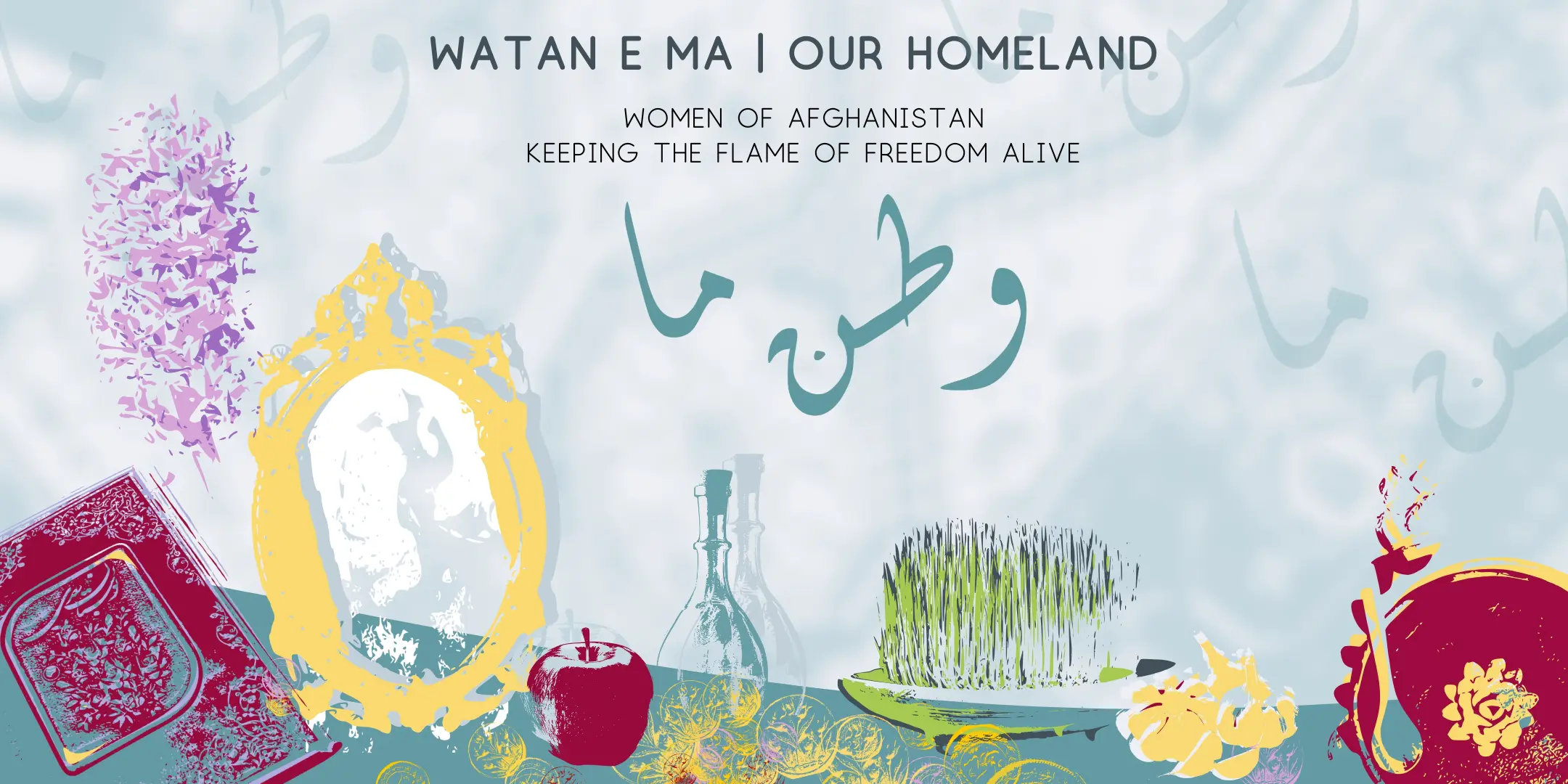
In a powerful departure from traditional advocacy, ICAN—guided by our Afghan partners and women peacebuilders—hosted the event “Watan e Ma – وطن ما – Our Homeland: Women of Afghanistan Keeping the Flame of Freedom Alive” on March 17, 2025 at Blue Gallery in New York City. Held during the 69th Commission on the Status of Women (CSW69), the event celebrated Afghan cultural heritage and the resilience of Afghan women peacebuilders, who persist in their leadership for peace, justice, and equality under the Taliban’s regime of gender apartheid.
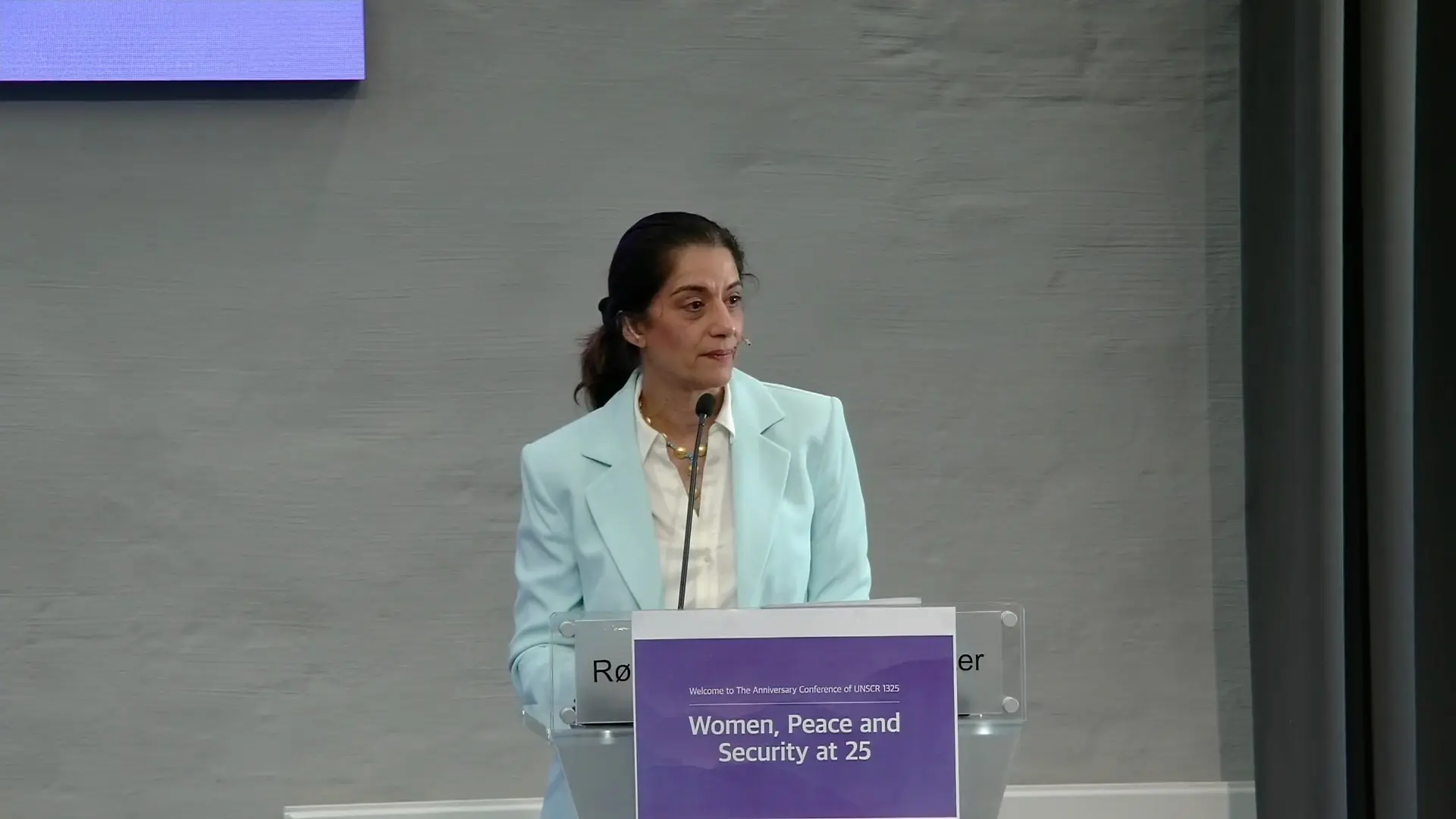
On May 5, 2025, ICAN's Sanam Naraghi Anderlini delivered the keynote speech at the two-day international conference "25th Anniversary Conference of UNSCR 1325 Women, Peace and Security."
As Senator Mobina Jaffer concludes 23 years of distinguished public service in the Canadian Senate, we extend our deepest thanks for her steadfast leadership as Chair of ICAN’s Board of Directors from 2014 to 2024.
Together with André Mundal, our new Interim Chair of the ICAN Board of Directors, we are delighted to welcome two new members to our Board of Directors.
Trust between communities and the security sector is critical for effective governance and peace. So is a vibrant civil society. When women peacebuilders are recognized and engaged as independent, strategic partners and security actors—in their own right—the results are transformative. Twenty-five years on from the launch of the WPS agenda, women peacebuilders’ creativity and contributions to societal peace and security are not only timely, they are even more essential.
Allamin FoundationAWAPSAAWAWBetter Peace InitiativeCIASECoACTGEN MyanmarGender and ExtremismsICAN FeaturedICAN LatestICAN UpdatesPAIMANPCIDWASL UpdatesWomen's Alliance for Security Leadership
Afghanistan is facing a complex mental health crisis inextricably linked with and compounding the dire state of physical, political, and economic insecurity in the country. Afghan women-led peacebuilding organizations are uniquely positioned to address community members’ health and wellness in gender-responsive, culturally- sensitive, and trauma-informed ways.
ICAN FeaturedICAN LatestICAN UpdatesWASL UpdatesWomen's Alliance for Security LeadershipWPSO
As the Women’s Alliance for Security Leadership (WASL) continues to expand globally, fostering stronger regional and national networks, we are excited to announce the formation of the first-ever WASL Steering Committee.