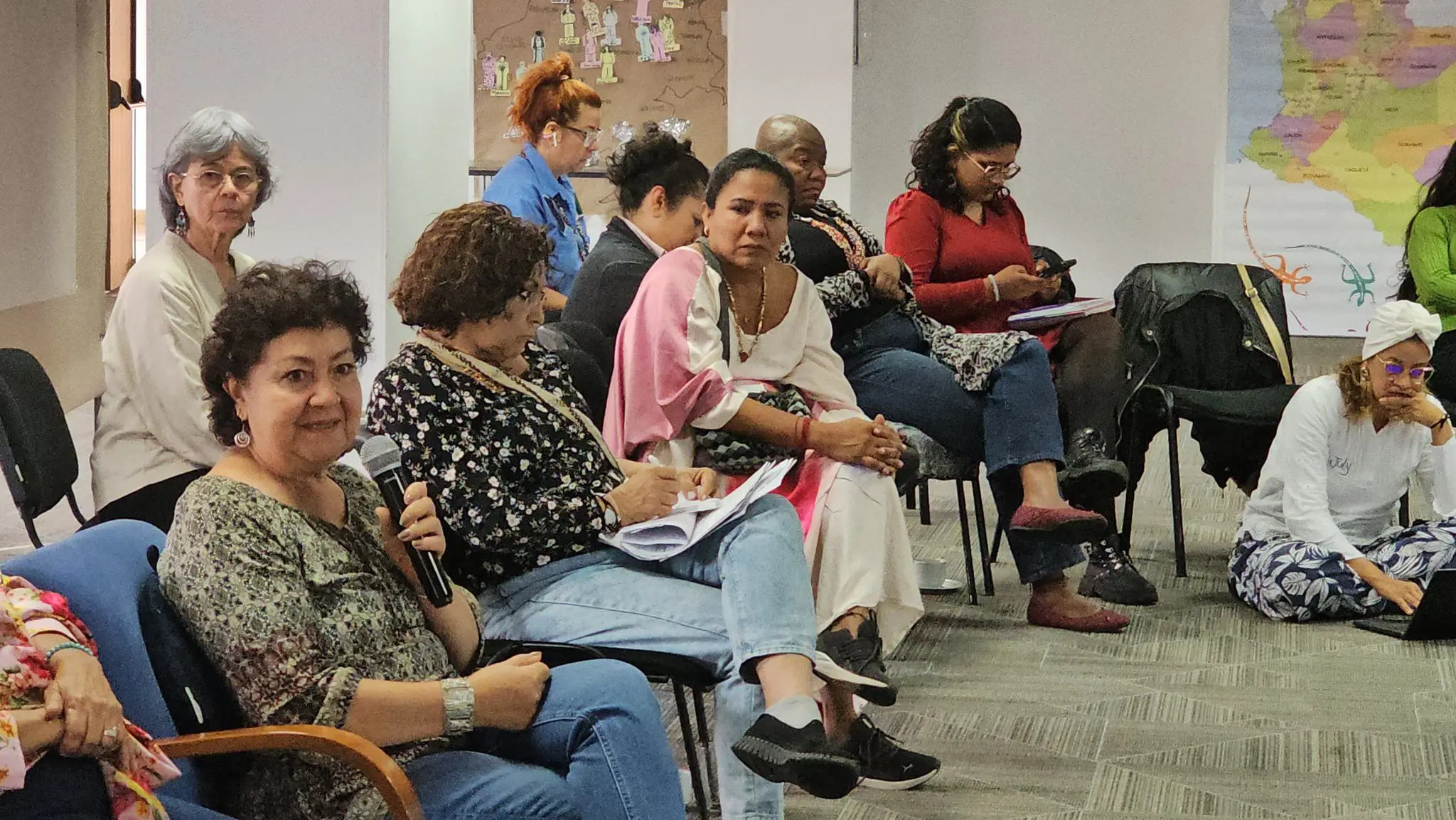
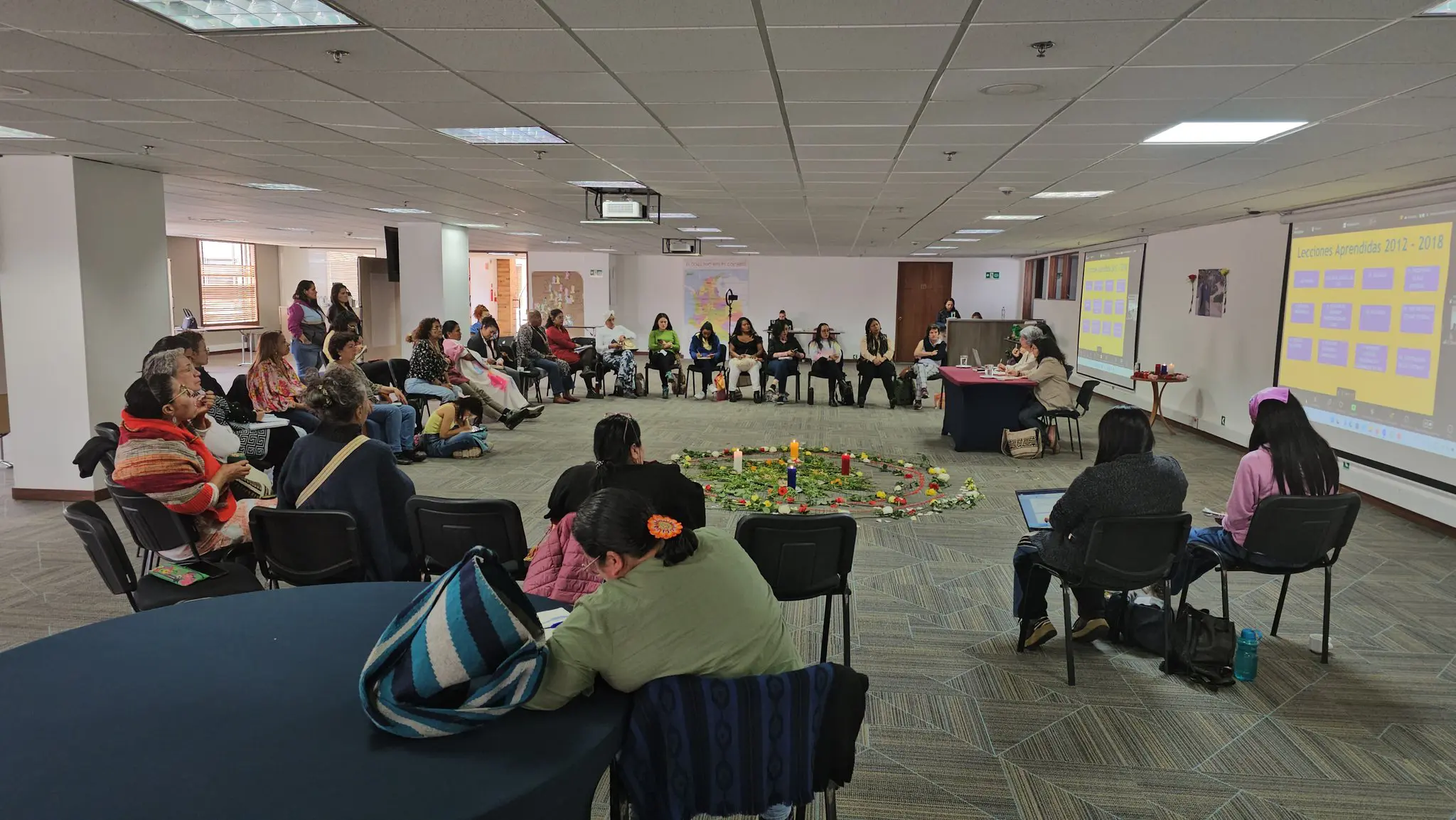
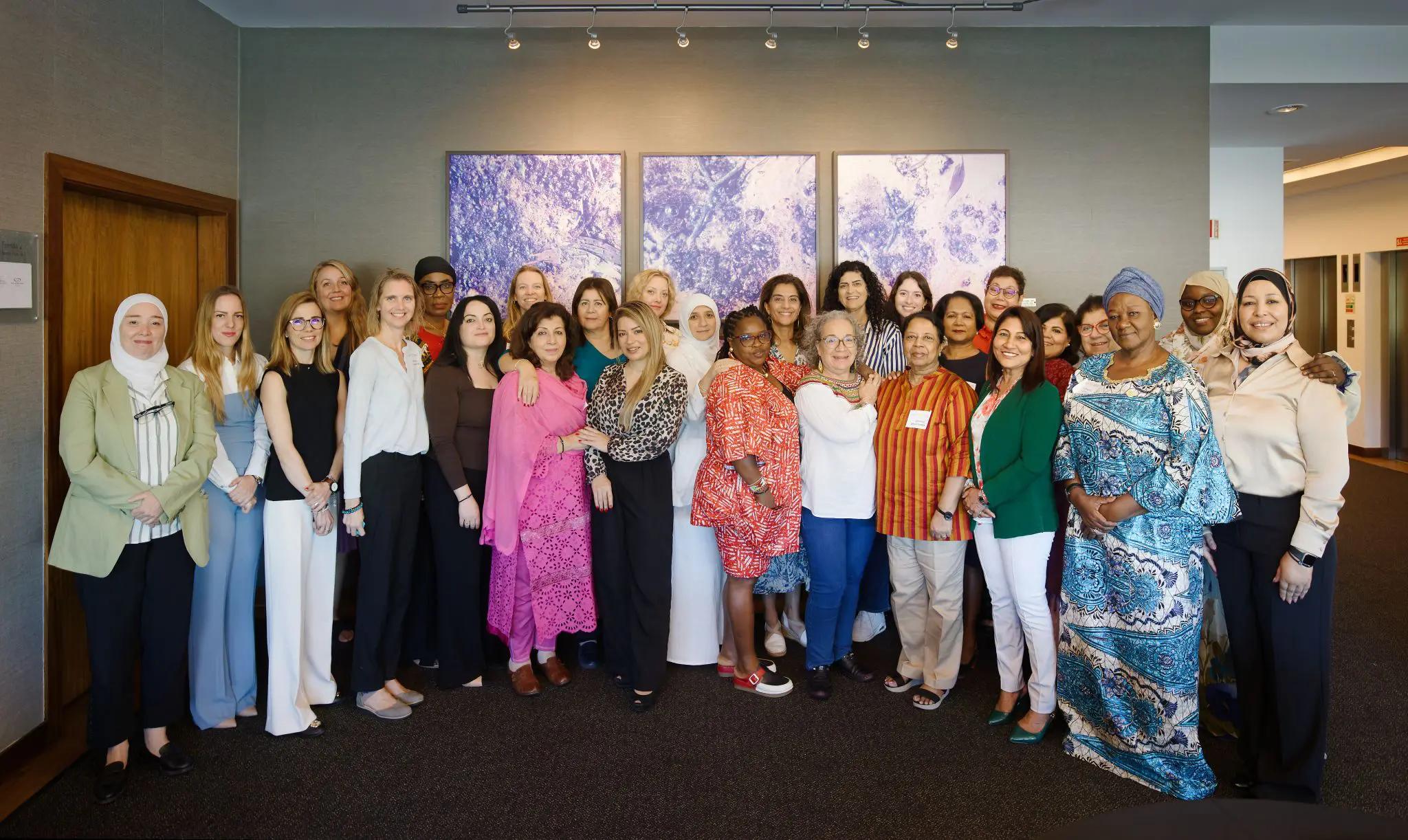
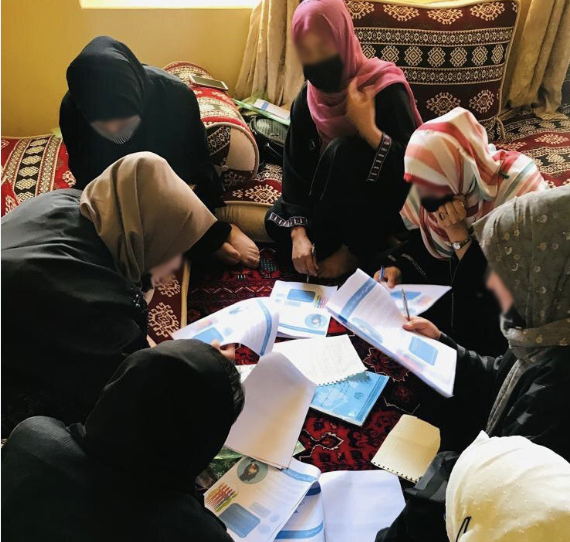
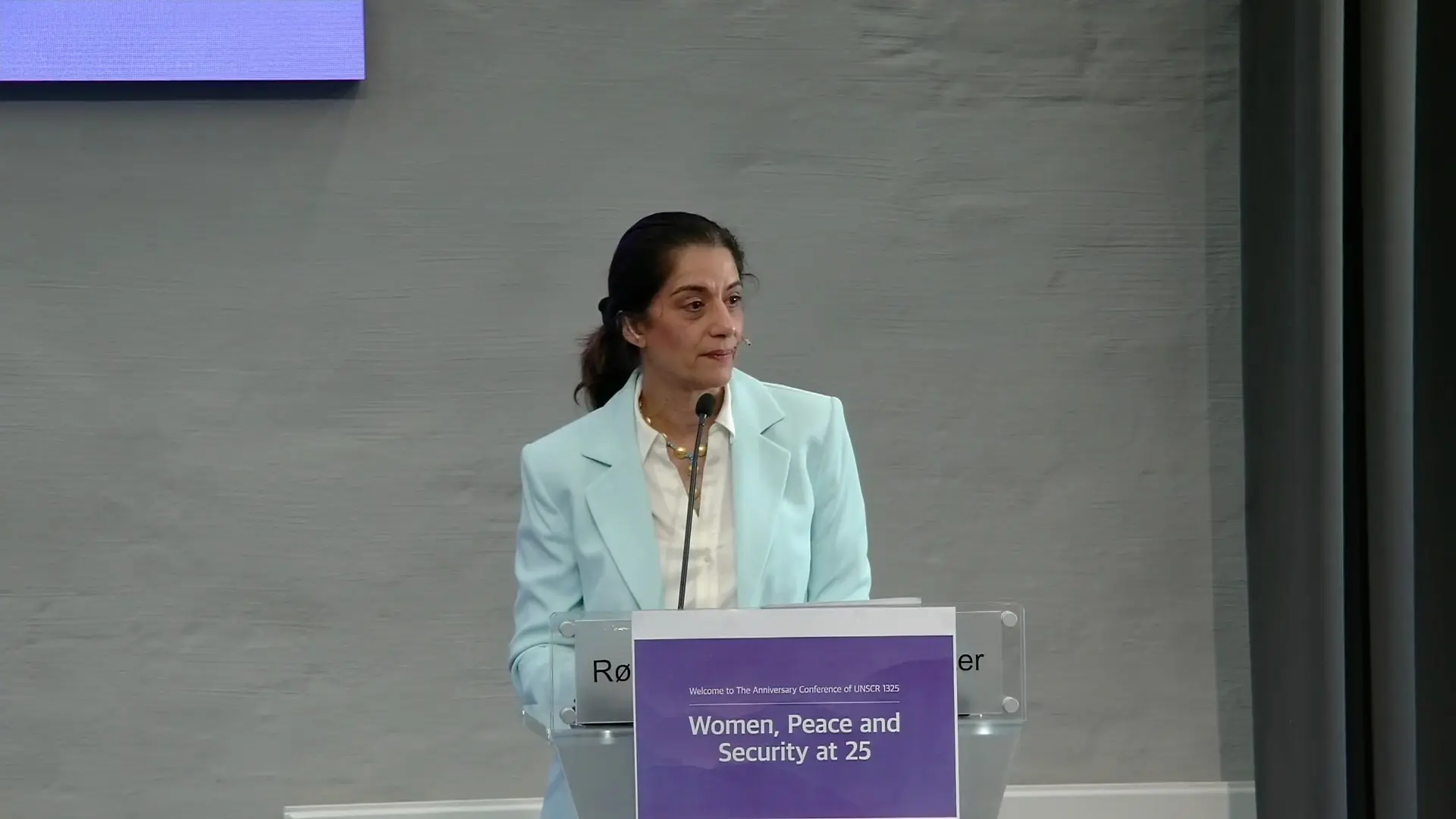
From July 25–31, 40 Colombian women representing 22 regions convened in Bogotá to reaffirm their commitment to the Women, Peace, and Security (WPS) Agenda and its application in the Colombian context. The convening, supported by the Rapid Response Window of the United Nations Women’s Peace and Humanitarian Fund (WPHF), in partnership with the International Civil Society Action Network (ICAN), centered the possibilities of harnessing feminist approaches in fully realizing Colombia’s Total Peace Plan.
The women are members of the Colectivo de Pensamiento y Acción Mujeres, Paz y Seguridad, or the Women, Peace, and Security Collective of Thought and Action. The Collective aims to make visible the experiences and realities of indigenous, rural, and Afro-descendant women who often face intersectional forms of discrimination and violence. The Collective convenes a diversity of organizations that promote regional peacebuilding, promoting effective strategies to ensure the full and equal participation of women in peacebuilding and reconciliation processes. The collaboration between feminist and women’s civil society organizations (CSOs) at the macro, micro, and community levels empowers Colombian women and ensures their meaningful participation.
Collectiveness is central to their work. As Rosa Emilia Salamanca, Executive Director at Corporación de Investigación y Acción Social y Económica (CIASE), highlighted, “Our name is not a name, it creates a sense of collective ownership that is critical to building and sustaining the desired impact.”
A recent report published by the Peace and Reconciliation Foundation (Fundación Paz & Reconciliación – PARES) found that the Total Peace Plan has advanced little in achieving its aim of the complete demobilization of the country’s warring factions and criminal groups. This reality spurred the urgent need for a convening of the Collective to dive deeply into the policies of the Total Peace Plan, to accelerate women’s participation in the process, and to envision a strategic and feminist approach to sustainable protection and security.
Over the course of four days, the Collective’s conversation spanned several topics. This included high-level discussions on the need for an intersectional lens for the implementation of the Total Peace Plan, which would dismantle the hierarchical and patriarchal view of the local, regional, and national, placing equal value on the critical roles they play in the plan’s implementation. The Collective agreed that in order to move the Total Peace Plan forward with a feminist lens, they must socialize their intersectional lens with key political actors and groups from diverse backgrounds. By preparing to foster “imaginable dialogues and peaceful agreements,” the women are working to better position themselves as political actors ready to engage in constructive dialogue.
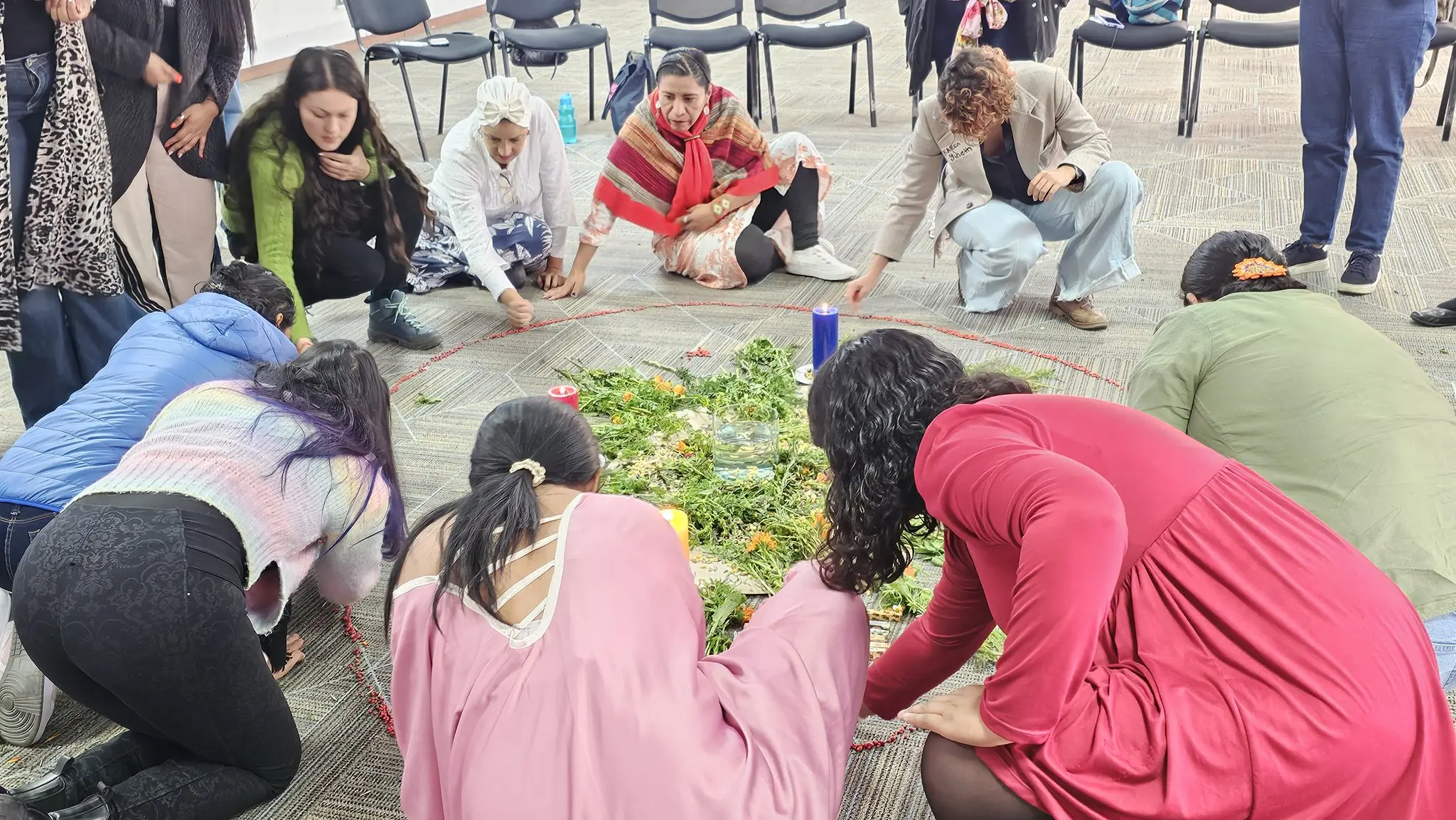
The women of the Collective prioritize healing and feminist methodologies in their work. During the convening, the poignancy of this strategy was exemplified in a mandala exercise. Each woman brought a flower from their respective region to build a mandala in the center of the room. The mandala was employed as a spiritual guidance tool to establish a sacred space, to focus attention, and to aid meditation.
The convening emphasized bringing the participants’ own contexts and backgrounds into the room, offering opportunities for joy and sorrow, and grounding the meeting in one another’s realities. According to one participant, this emphasis made the conference room in Bogotá feel “magical.” It laid the foundation for each woman, and for the Collective, to heal and move forward toward a brighter future together.