The U.S. and Israel’s War on Iran and its Regional Ramifications
The International Civil Society Action Network (ICAN) and the Women’s Alliance for Security Leadership (WASL) Statement: The Escalating U.S.-Israeli War on Iran and its Regional Ramifications
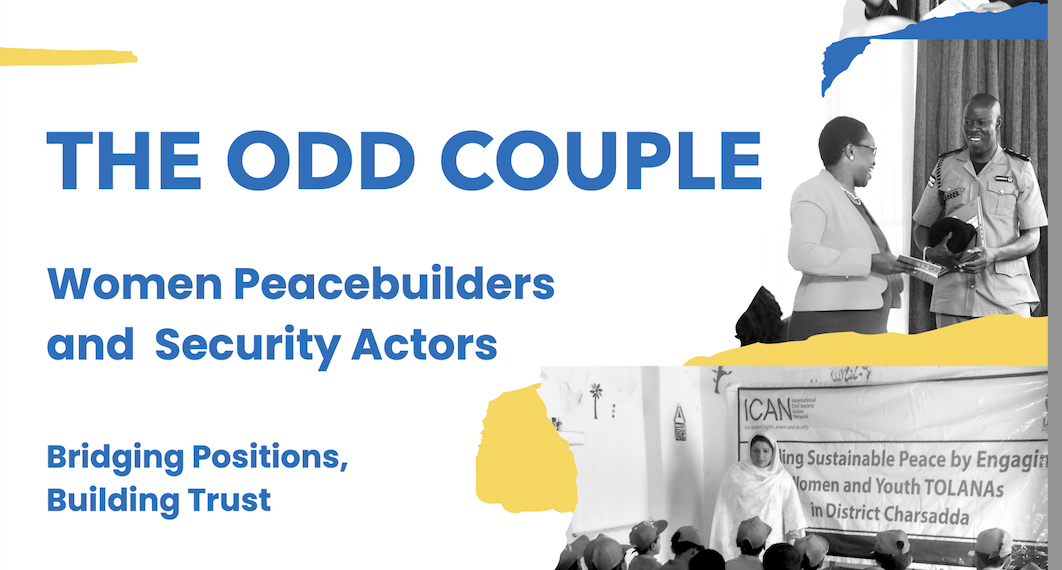
The Odd Couple: Women Peacebuilders and Security Actors Bridging Positions, Building Trust
The WPS agenda has proven a vital entry point for women peacebuilders to engage with the security sector and build trust within affected communities. These efforts—often invisible—are contributing to the reform of the sector, reshaping local security environments and mitigating violence.
The War Against Ourselves: Afghan Women Peacebuilders’ Response to the Mental Health Crisis in Afghanistan
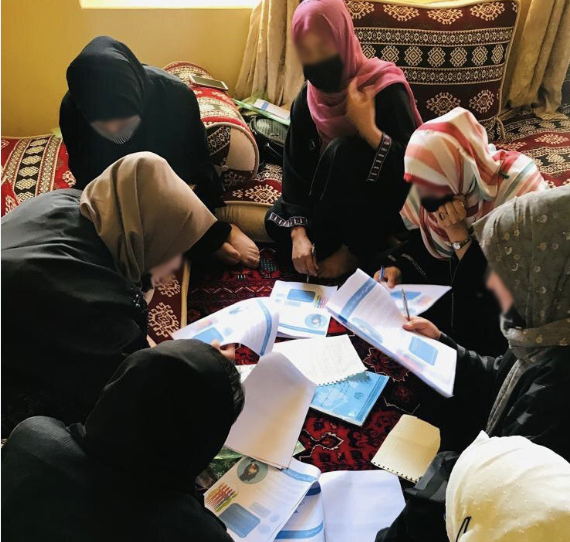
This case study describes the drivers of the mental health crisis in Afghanistan, its gendered and cultural dimensions, and the strategies used by Afghan women-led peacebuilding organizations to provide solutions. The authors conducted interviews with representatives of Afghan women-led peacebuilding organizations and thematic experts, which were complemented by a desk review of project documentation and […]
Home»ICAN Latest»
Breaking from the Status Quo: Afghan Women’s Creative Resistance Through Art, Culture, and Heritage
Breaking from the Status Quo: Afghan Women’s Creative Resistance Through Art, Culture, and Heritage
29 May 2025
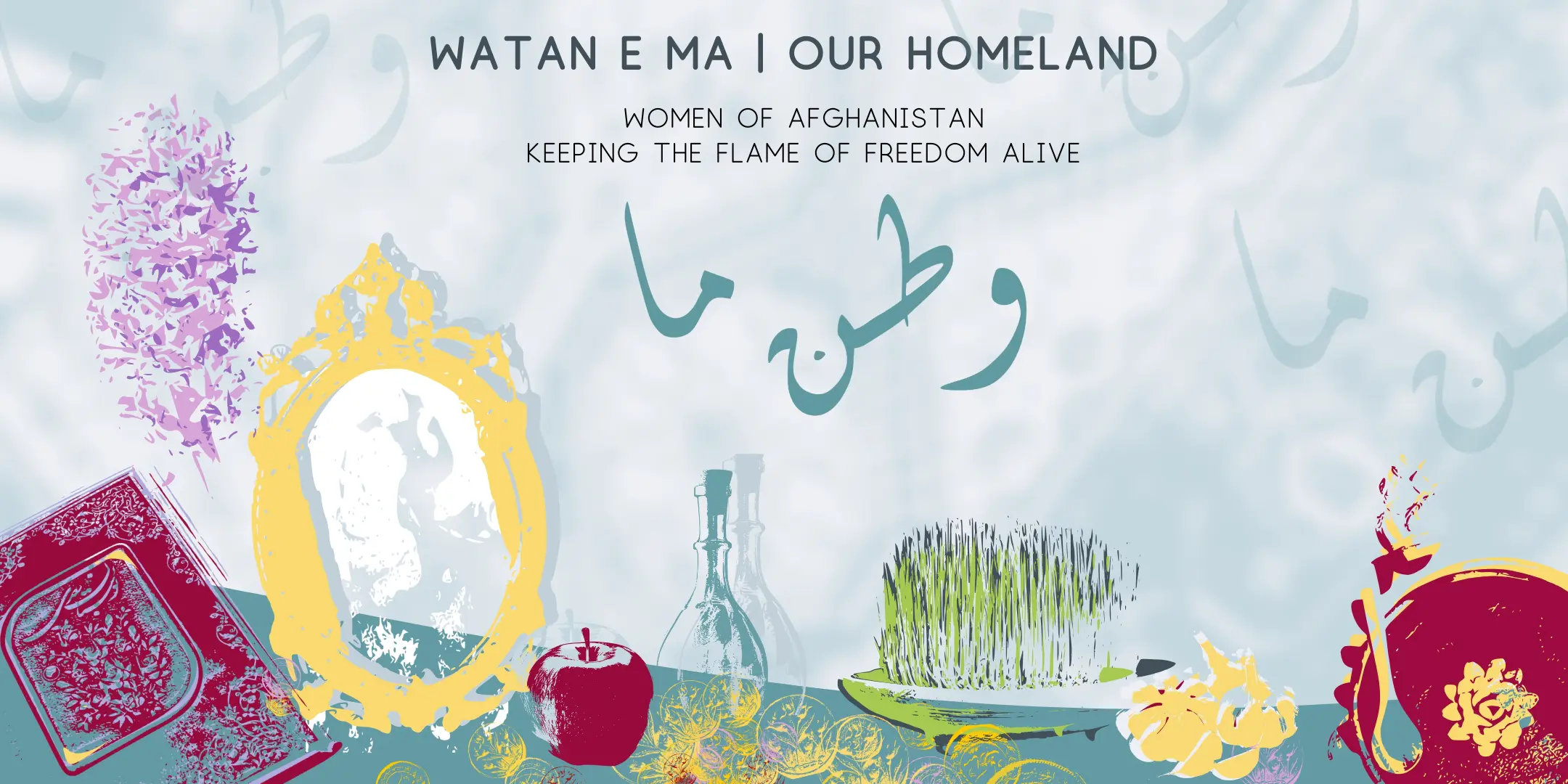
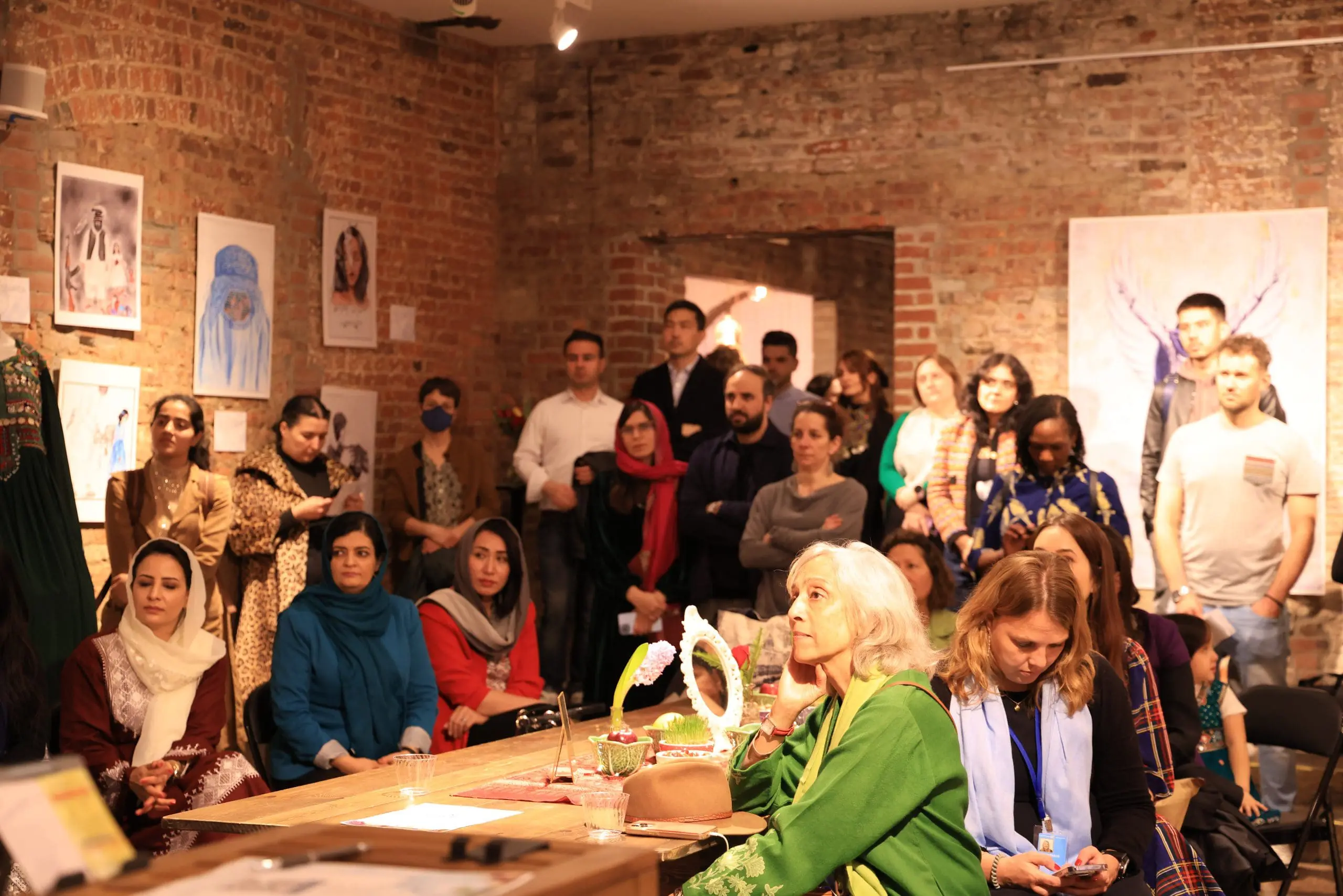
In a powerful departure from traditional advocacy, ICAN—guided by our Afghan partners and women peacebuilders—hosted the event “Watan e Ma – وطن ما – Our Homeland: Women of Afghanistan Keeping the Flame of Freedom Alive” on March 17, 2025 at Blue Gallery in New York City. Held during the 69th Commission on the Status of Women (CSW69), the event celebrated Afghan cultural heritage and the resilience of Afghan women peacebuilders, who persist in their leadership for peace, justice, and equality under the Taliban’s regime of gender apartheid.
Watan e Ma embraced culture not only as a celebration but as a strategic act of resistance, through the lens and symbolism of Nowruz—a time of renewal and hope.
Into the Fire: An Event That Immersed Us in Afghanistan and the Resistance
Co-designed with ICAN’s Afghan partners, Watan e Ma brought together Afghan women leaders, peacebuilders, artists, activists, musicians, politicians, and international allies. Speakers included ICAN partner, Wazhma Frogh of Wellness, Prosperity, and Socio Empowerment Organization (WPSO); Farahnaz Forotan of Kaaj; Nahid Shahalimi of We the Women; and Richard Bennett, United Nations Special Rapporteur on the Situation of Human Rights in Afghanistan.
Vivid, striking art scaled the walls of Blue Gallery, with each piece conveying what it is like to live as a woman, girl, or gender diverse person in Afghanistan. Resisting erasure, the collection rejects the Taliban’s oppressive authoritarian regime that attempts to silence Afghan women and girls.
In one of the evening’s most powerful moments, Wazhma Frogh read aloud a letter from a woman in Afghanistan:
“I hear that people are talking about Afghan women. But what is also important is that they should be the witness of our endless struggles and endless pain. The streets look strange, quiet. The times we laughed on the streets seem to be far away. If you’re talking to people about us, tell them I continue to tell my stories to the moon, because these days they don’t allow us to see the sun from the windows. So next time when you look at the moon, remember me.”
In her remarks, ICAN’s Founder and CEO Sanam Naraghi Anderlini spoke to the symbolism of Nowruz:
“In difficult times, culture and nature replenish our souls, and we in turn give back to nature and culture. Nowruz is the nexus of that. It’s an ancient and indigenous ritual heralding in the spring and the new year. It’s the time of renewal and hope, of life and beauty and transformation of the young rising up and the old giving way […] It’s the ascendance of light over darkness, or to put it simply, it’s nature being nature with all its power and resilience, regardless of what human beings try to impose. And it’s the essence of peace in a pluralistic world because it embraces and includes all of us, regardless of our faith, our gender, our ethnicity, or our race.”
Honoring Culture and Creative Political Expression as Peacebuilding
Watan e Ma highlighted a vital but often-overlooked dimension of peacebuilding that has the power and influence to anchor peace and equality—by invoking and honoring cultural heritage through creative expression and political resistance, Afghan women peacebuilders are speaking to the hearts and minds of Afghans around the world.
Through powerful images, sounds, and stories of suffering under Taliban rule, attendees were confronted with the harsh reality of life in Afghanistan—beyond what politics or diplomacy can convey.
“It’s important to remember that civic space is also made up of poets, artists, musicians, actors, academics, philosophers, and everything that makes up the fabric of any society, including Afghan society. And the Taliban are attempting to wipe that out, but, as we see here today, it is impossible to do that.” — Richard Bennett, UN Special Rapporteur on the situation of Human Rights in Afghanistan
Transporting Performances
The evening’s performances carried memory and longing in every note. Nina Yaqob, an award-winning Afghan-German opera singer, delivered a sobering rendition of the Afghan national anthem that lifted the fortitude of Afghan women and girls with the force of a mezzo soprano and invoked grief and pride in equal measure. Her performance left the room heavy with acknowledgement of the sacrifices and contributions that Afghan women have made to their country in the past and in this era of darkness.
“I had the deep honor of performing the Afghan national anthem in a classical rendition—a moment of profound emotion and remembrance for all the women who lost their voices, their freedom, and their dreams. Art is not just expression—it is resistance, a bridge to understanding and force for change.” — Nina Yaqob (via Instagram)
A stunning ensemble followed: Quraishi Roya (rubab), Sahel Handa (rubab), Mehrnam Rastegari (Kamancheh and vocals), and Mir Naqibul Islam (tabla). Their blend of traditional Afghan instruments and contemporary music expressed their love and longing for Afghanistan and grounded the event in a cultural reverie.
Short films from Kaaj, HRD+ network, and We the Women provided showcased the indomitable spirit of Afghan women leading the charge for equality.
Breaking Traditional Modes of Advocacy
Understanding the need for cultural grounding and celebration, the event was planned as an ambitious, immersive evening that would embrace attendees, while honoring women peacebuilders and their countless sacrifices as they work to rebuild and reverse Afghanistan’s trajectory.
“Working on and planning this event with our partners and the artists was the antidote to the bureaucratic grind that this field of work can be. It confronted the hypocrisy of and milquetoast international commitments by reminding everyone of the humanity and very real lives and consequences of gender apartheid and the stakes—generations of work and rights hard won that were lost and another generation of Afghan women and girls lost to extremism. I felt the warmth and generosity of Afghan culture and recognized that equality is rooted in Afghan heritage; the very same that our partners are fighting to restore.” — Sarah McMains, Senior Program Officer, ICAN
“What I loved most about the Watan e Ma launch was the way it brought together pain and power in one space—turning collective grief into purpose, and exile into resistance. It reminded me that even far from home, Afghan women are still shaping its future with love, courage, and unwavering hope.” — Program Officer, ICAN
Looking Ahead: Keeping the Flame of Freedom Alive
To carry this work and the spirit of Watan e Ma forward, ICAN is creating a digital exhibit to ensure the stories, artwork, and messages from the event remain accessible to all. We are also seeking host institutions for the physical artworks so they can continue to spark dialogue and solidarity around the world.
We are deeply grateful to every attendee, partner, facilitator, artist, and ally who brought their time, energy, and heart to this vision.
We will continue to explore and create opportunities like Watan e Ma and to champion creative approaches to political resistance and alternative modes of advocacy.
“Heartfelt thanks to everyone who made this event possible! A special tribute to our dear colleagues at [ICAN] for their extraordinary work in keeping Afghanistan—especially the challenges Afghan women face—at the top of the agenda. Together, we must stay united, grow stronger, and continue advocating to protect the rights of Afghan women and girls.” – Mary Akrami (via Twitter/X)
The International Civil Society Action Network (ICAN) and the Women’s Alliance for Security Leadership (WASL) Statement: The Escalating U.S.-Israeli War on Iran and its Regional Ramifications
On October 6, 2025, the U.N. Security Council holds its annual open debate on Resolution 1325 on Women, Peace, and Security. Today, we are not issuing a new statement. Instead, we are honoring our community of women peacebuilders—who appeared before the Security Council throughout these 25 years, speaking for the millions they represent—by echoing their messages.
ICAN FeaturedICAN LatestICAN UpdatesWASL UpdatesWomen's Alliance for Security Leadership
On behalf of the International Civil Society Action Network (ICAN) and members of the global Women’s Alliance for Security Leadership (WASL), we are honored to nominate Francesca Albanese, United Nations Special Rapporteur on the situation of human rights in the Palestinian territories occupied since 1967, for the 2026 Nobel Peace Prize.
در عرصه صحت روانی، افغانستان با بحران پیچیدهای مواجه است که این بحران به طور جدایی ناپذیر با ناامنی شدید فیزیکی، سیاسی و اقتصادی در کشور گره خورده و این نا امنی ها بحران را تشدید میکند. برای رسیدگی به آسیب های روانی، صحت و بهداشت جامعه به شیوه های پاسخگو به جنسیت و با مد نظر گرفتن حساسیت های فرهنگی، سازمانهای فعال در عرصه صلح سازی به رهبری زنان افغان در موقعیتی منحصربه فرد قرار دارند. این سازمان ها خدمات ابتدایی ارائه میدهند، مهارتها را توسعه میبخشند و در شکلدهی هنجارهای فرهنگی و جنسیتی نقش مؤثر ایفا میکنند.
ICAN FeaturedICAN LatestICAN UpdatesWASL UpdatesWomen's Alliance for Security LeadershipWPSO
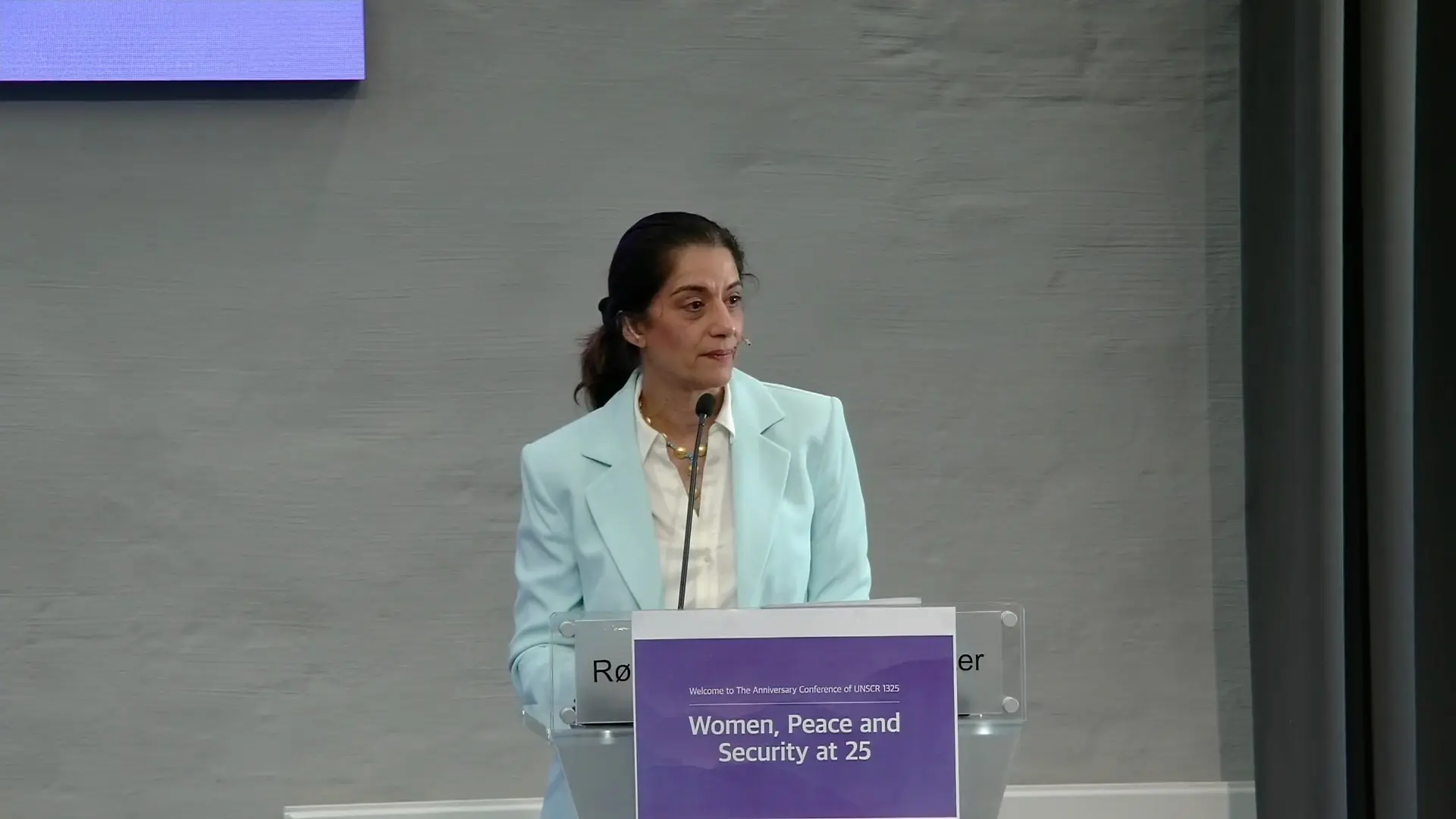
On May 5, 2025, ICAN's Sanam Naraghi Anderlini delivered the keynote speech at the two-day international conference "25th Anniversary Conference of UNSCR 1325 Women, Peace and Security."
As Senator Mobina Jaffer concludes 23 years of distinguished public service in the Canadian Senate, we extend our deepest thanks for her steadfast leadership as Chair of ICAN’s Board of Directors from 2014 to 2024.
Together with André Mundal, our new Interim Chair of the ICAN Board of Directors, we are delighted to welcome two new members to our Board of Directors.
Trust between communities and the security sector is critical for effective governance and peace. So is a vibrant civil society. When women peacebuilders are recognized and engaged as independent, strategic partners and security actors—in their own right—the results are transformative. Twenty-five years on from the launch of the WPS agenda, women peacebuilders’ creativity and contributions to societal peace and security are not only timely, they are even more essential.
Allamin FoundationAWAPSAAWAWBetter Peace InitiativeCIASECoACTGEN MyanmarGender and ExtremismsICAN FeaturedICAN LatestICAN UpdatesPAIMANPCIDWASL UpdatesWomen's Alliance for Security Leadership