
About the project
ICAN’s documentation initiative seeks to showcase women peacebuilders’ strategies through a series of autoethnographies, culminating in a published, edited volume. Building on our Recognizing Women Peacebuilders Framework, these autoethnographies will emphasize the ways in which women peacebuilders blend different sources of power and leverage to shape their work.
For too long, the stories, strategies, and wisdom of women peacebuilders—especially those from the Global South—have been silenced or sidelined in global peace and security discourse, or turned into anonymous contributions shaping the dissertations of doctorate candidates and researchers from the Global North.
“This volume is both an act of restoration and reclamation. We bring forward the architects and builders of peace, those who have operated in the shadows of political processes but carried the heaviest burdens and crafted the most innovative, culturally resonant solutions to conflict and violence. The project challenges the hierarchy of knowledge in the peace and security field and reframes whose expertise counts. In documenting their strategies, we are building the canon of women’s peace praxis—evidence that is grounded, generative, and globally transformative.” – Sanam Naraghi Anderlini, MBE, ICAN CEO and Founder
Meet the Authors

Fatima Al-Bahadly is an Iraqi woman human rights defender from the city of Basra in southern Iraq. Fatima works with youth to combat the militarization of society. She fights against the recruitment of children and youth, including one of her own sons, to militant groups, and works on their reintegration into society. She is the founder of Al-Firdaws Society, an organization focused on protecting women and girls affected by war and strengthening their role in peacebuilding. Al-Firdaws provides literacy, education, and skills workshops and works to bring an end to violence against women in areas where women are most marginalized. Al-Bahadly and her organization raise awareness among community members about the impact of child marriage and early school leaving on women and girls, calling on religious clerics and tribal leaders to recognize the important role that women play in society. Due to this work through the years, Al- Bahadly has been the subject of death threats and has faced severe social pressure from her tribe.

Dr. Amat Al-Salam Al-Hajj leads the Abductees’ Mothers Association (AMA), the most prominent voice for the forcibly disappeared and arbitrarily detained in Yemen that has been instrumental in centering the issue and securing the release of thousands of detainees. Since its establishment in 2016, the Abductees’ Mothers Association has created independent branches in governates across the country comprised of women from both sides of the conflict who work together to release prisoners from all warring factions. Drawing on social and cultural traditions, they use their position as Yemeni women to mediate and provide humanitarian assistance in ways that men in their society cannot. Dr. Al-Hajj is a member of the National Dialogue Conference’s support program, the Yemeni Women Reconciliation for Security and Peace, and Yemeni Women’s Pact for Peace and Security.

Hamsatu Allamin is a distinguished educator, gender activist, and peacebuilder who became a human rights defender at the height of the Boko Haram insurgency in her home community in northeast Nigeria. Raised in a peaceful society rooted in Islamic scholarship, she was devastated as her own neighbors became perpetrators of violence. Refusing to stand by, she courageously entered communities where Boko Haram was heavily recruiting—facing suspicion and threats— to build trust with women and open channels for dialogue about the true teachings of Islam. She also engaged with security forces, advocating for more just and informed responses to the insurgency’s toll on innocent civilians. As Founder and Executive Director of the Allamin Foundation for Peace and Development, she leads transformative work on education, gender justice, and post-conflict reintegration. Allamin has established networks representing over 25,000 victims and survivors, and serves on influential national and international peacebuilding bodies, including the African Union’s FemWise and the USIP Network of Nigerian Facilitators. Her pioneering efforts have earned her international recognition, including the 2016 Woman PeaceMaker Award and the 2018 Islamic Development Bank Laureate for Women’s Contribution to Sustainable Peace.

Rudina Çollaku is a committed human rights advocate and expert in women’s empowerment and peacebuilding in Albania. As the Founder and Executive Director of the Woman Center for Development and Culture Albania (WCDCA), since 2010, she has led efforts to advance the Women, Peace, and Security (WPS) agenda through grassroots mobilization, capacity building, and policy advocacy. With a background in human resource management, Çollaku brings a strategic approach to her work, focusing on empowering women and youth as agents of peace and resilience, particularly in preventing and countering violent extremism. Under her leadership, WCDCA has become a driving force in promoting women’s roles as peacebuilders and community leaders in Albania and the Western Balkans. She is deeply engaged in building local partnerships, strengthening civic education, and ensuring that the voices of women are central in national and regional peace and security dialogues. Çollaku’s work has been featured in international platforms, highlighting her as a leading voice in the effort to localize the WPS agenda and build inclusive, just societies.

Visaka Dharmadasa became a peacebuilder not by choice, but through profound personal loss. In 1998, one of her two sons, both drafted into the Sri Lankan army, went missing in action. Grief-stricken and enraged by the government’s silence, she refused to be powerless. Instead, she gathered other mothers of missing servicemen and made an extraordinary decision: to walk into the jungles and meet directly with the Liberation Tigers of Tamil Eelam (LTTE), the group responsible for their sons’ fates. That unprecedented act of courage opened a back channel that helped facilitate the 2000 ceasefire and set Dharmadasa on a lifelong path as a peacebuilder. As Founder and Chair of the Association of War Affected Women (AWAW), she has since dedicated her life to ending cycles of violence and ensuring women’s inclusion in peace processes. Visaka’s work spans grassroots activism and high-level diplomacy—educating soldiers and community leaders on the laws of war, advancing the Women, Peace, and Security (WPS) agenda, and advocating for the humane treatment of prisoners of war. In 2023, she convened Buddhist monks and the Tamil diaspora to produce the landmark six-point Himalaya Declaration, which earned national recognition. A nominee for the 2005 Nobel Peace Prize and recipient of numerous international awards, Visaka holds key leadership roles in global peace networks including Women Waging Peace and WASL.

Wazhma Frogh is a human rights lawyer and peacebuilding practitioner from Afghanistan who has been working at the intersection of women’s rights, conflict resolution, and legal reform for over 25 years. Long before Afghanistan became central to international peace and security debates, she was documenting local conflicts, engaging in legislative advocacy, and amplifying women’s voices in peace processes. Her work focuses on community-based peacebuilding, countering violent extremism through local actors—particularly mothers and religious leaders—and promoting gender-inclusive mediation. She is the founder and director of Women and Peace Studies Organization Canada, and formerly served as a councilor on Afghanistan’s High Peace Council. She has played a critical role in shaping national dialogues and legal reforms, including laws addressing gender-based violence and traditional dispute resolution mechanisms.
Now based in Canada, she continues to engage in global justice mechanisms, including the case on Afghanistan before the International Criminal Court. Wazhma holds advanced degrees in international law from the University of Warwick and the American University of Afghanistan and is widely recognized for her leadership in the global Women, Peace, and Security agenda.
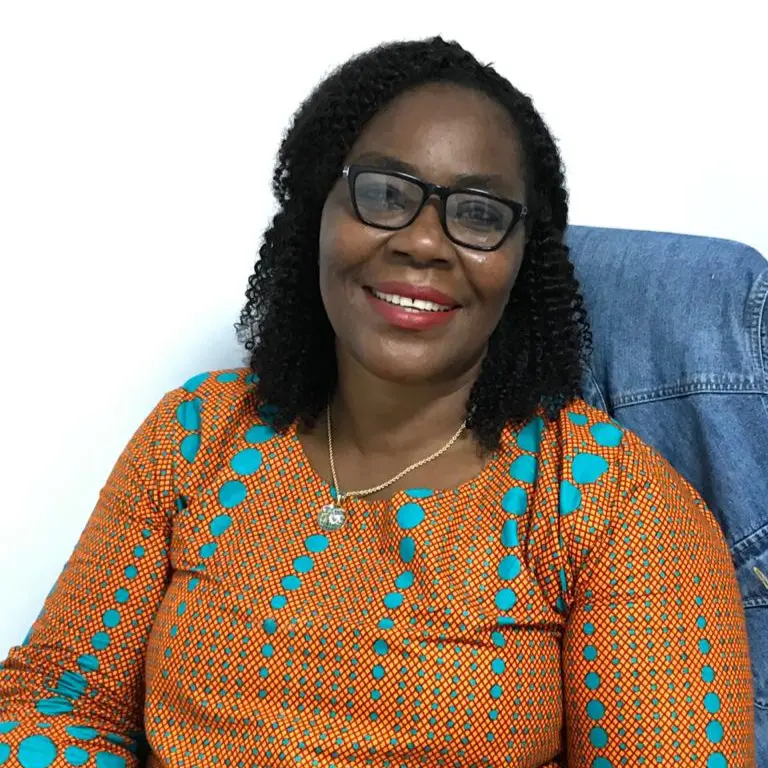
Cerue Konah Garlo is a pioneering feminist and hands-on peacebuilding activist who has spent over two decades advancing women’s rights, inclusive governance, and post-conflict recovery in Liberia. A highly respected civil society leader, she has designed and delivered impactful capacity building programs focused on gender equality, community mobilization, and citizen participation, particularly amplifying the voices and agency of women survivors of conflict. Until her recent retirement, Garlo served as the Senior Gender Specialist at the Carter Center Rule of Law Program in Liberia, where she led national efforts to ensure that the implementation of the Freedom of Information Law was inclusive and gender-responsive. She provided technical assistance to government institutions, civil society, and women’s groups, and played a key role in elevating women’s access to information as a right and tool for empowerment. Garlo has trained hundreds of women for political participation, led dozens of SGBV trainings for government and community leaders, and contributed to foundational research on UNSCR 1325, including the “What the Women Say” series. With academic credentials in accounting, economics, and social work, she combines technical expertise with deep grassroots engagement, leaving behind a powerful legacy as one of Liberia’s most influential feminist peacebuilders.

Abir Haj Ibrahim was initially involved in voluntary initiatives alongside her role at Total E&P Syria within the oil sector. In 2010, her path took a significant turn when she co-founded the Mobaderoon Peacebuilding Network. She was instrumental in the network’s evolution, which thrived through ongoing community engagement and grassroots support for youth. She facilitated dialogues among diverse communities, establishing a safe space for communication and strategic planning. With the onset of conflict in Syria, her role expanded into building bridges and conflict resolution in response to local needs. She became a peacebuilding facilitator and co-managed the Peace Ambassador program, where she trained and collaborated with over 300 potential peace ambassadors, promoting unity and preventing sectarianism at the grassroots level. Abir also engaged in multi-track dialogue platforms, including the Syrian Civil Society room in Geneva, contributing to the Syrian Peace Talks. Her efforts extended to forging sustainable partnerships and creating a global platform for knowledge and experience exchange with other networks. Her commitment to peacebuilding earned her the Livia Foundation Prize in 2014 and a nomination for the USIP Women Peacebuilder Prize in 2023.

Focused on mainstreaming empathy in addressing violent behavior including violent extremism, Mira Kusumarini has led groundbreaking efforts in Indonesia to detect and handle early cases of radicalization at the community level. Empatiku Foundation, which Kusumarini founded and directs, is institutionalizing restorative dialogue as part of the approach to social reintegration of former convicts, deportees and returnees affiliated with terrorist organizations in collaboration with relevant government agencies at the local, regional and national level. Currently, this model is in the process of being replicated in other regions of Indonesia and several ASEAN countries.

For over 18 years, Halima Mohamed has been at the forefront of agitating for the rights of women and girls at the grassroots level in Kenya and the East African Region. The Co-Founder and Executive Director of Coast Education Centre (COEC), Mohamed works closely with women and girls across the Coastal Counties to prevent, counter, and heal from violent extremism. Her multi-faceted approach spans psychosocial support for women and girls impacted by violent extremism; advocating for policy change and implementation of gendered policies such as the Coast Women CVE Charter and the Gender Pillar and Victims of Terror Pillar in the Refined National Strategy to CVE in Kenya; and leading groundbreaking research to understand why young women are joining Al-Shabaab. Mohamed has led the development of the Kilifi and Mombasa Local Action Plans for the implementation of UNSCR 1325. She represents the civil society organizations of the Coast Region at the National Council for NGOs of Kenya as the Director, and a Director of International Great Lakes Region (ICGLR) under Peace and Security Pillar.

Sabrina Mowlah-Baksh is a formative member and former Chair of WINAD, a feminist organization leading on women and security issues in Trinidad & Tobago. Mowlah-Baksh has engaged in pioneering work to address the impact of illicit guns on communities through the application of gender analysis. WINAD’s work revolves around advocacy, policy development, research, capacity building, and community interventions through women and girls. Mowlah- Baksh has served as a Councillor and Deputy Mayor of the City of San Fernando, was a 2017 Women Peace Maker of the Joan B. Kroc Institute for Peace and Justice, and holds a Master’s in Gender and Development.

Channeling her ingenuity and experience growing up in a marginalized region of Tunisia, Ahlem Nasraoui has pioneered the use of social entrepreneurship to address the country’s social challenges—from economic and political exclusion to gender inequality and violent extremism. Young Leaders Entrepreneurs, the association she founded, has organized countless hackathons, boot camps, startup incubators, peace labs, job fairs, peer mentorships, and other initiatives, such as the BMW and UNAOC intercultural award-winning Unleash Tunisia Venture Bus. In addition to holding a master’s degree in business communication and local economy, Nasraoui has received numerous honors recognizing her activism and leadership, and her initiatives have been replicated widely inside and outside the country.
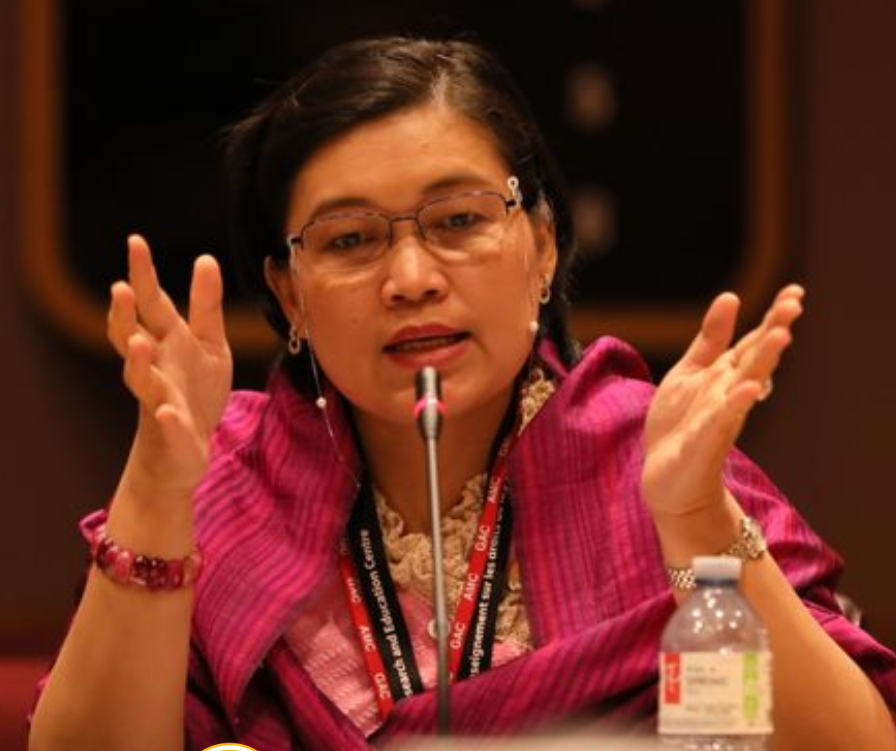
May Sabe Phyu is a human rights and gender equality advocate in Myanmar, with deep expertise in women’s rights, peacebuilding, and humanitarian response in conflict settings. As Director of the Gender Equality Network (GEN), she leads a coalition of over 100 organizations working to end discrimination against women and marginalized communities. She is a founding member of multiple influential networks, including the Kachin Peace Network, Kachin Women Peace Network, and the Alliance for Gender Inclusion in the Peace Process (AGIPP), that advance women’s meaningful participation in Myanmar’s peace and political processes. Following the 2021 military coup, she played a pivotal role in mobilizing women’s groups to form a Women’s Human Rights Defenders network. She continues to coordinate this network as it pushes for gender-responsive humanitarian aid and the inclusion of the Women, Peace, and Security agenda in Myanmar’s pro-democracy movement. Her leadership and advocacy have earned her international recognition, including the U.S. Department of State’s International Women of Courage Award and the Franco-German Prize for Human Rights and Rule of Law. She is currently a Dorothea S. Clarke Fellow at Cornell Law School, where she continues to elevate the voices of women and ethnic minorities in the struggle for justice and democratic reform in Myanmar.

Nina Potarska is a gender expert on peacebuilding and conflict resolution who has been collecting narratives and conducting research on both sides of the contact line in Ukraine since long before that conflict was making international headlines. A vocal civil society activist in her own right, her work focused on monitoring and responding to the needs and observance of the rights of women living in conflict-affected areas, gender-based violence and conflict-related violence, and gender-inclusive mediation. Potarska is the director of the Center for Social and Labor Research and the national coordinator of the International Women’s League for Peace and Freedom in Ukraine.
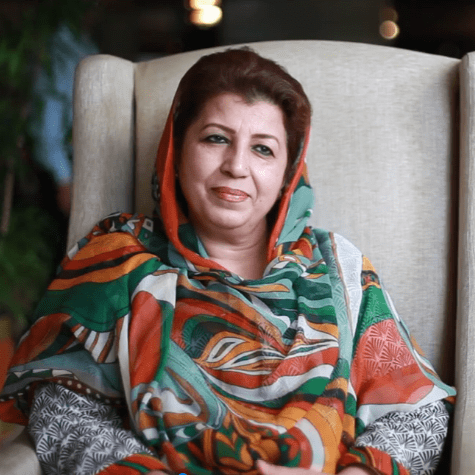
In 2007, as suicide attacks impacted her region in Pakistan, Mossarat Qadeem was compelled to take action to prevent violent extremism at the grassroots level. Through her organization, the PAIMAN Alumni Trust, Qadeem has forged a movement of over 5,000 women and youth committed to peace and dialogue. Directly engaging Taliban leaders, mothers sewing suicide bombing vests, local youth, and religious leaders, her work has averted 13 bombings and suicide attacks. Qadeem is internationally known expert on preventing and countering violent extremism, de-radicalization, women peace, religion, and security, and has spoken in the UN General Assembly and Security Council on the subject. To all her work, Qadeem brings the knowledge and experience she acquired during her 14 years as a political science professor at the University of Peshawar. Qadeem holds a master’s degree in political science, Peshawar University as well in gender studies from the International Institute of Social Sciences, Den Hague, an M.Phil degree in International Politics, University of Hull, and an MCPA from Harvard University’s Kennedy School. She is recipient of many prestigious national and international awards including the UN N-Peace Award 2016 Action for Change and a 2019 Woman Peacemaker fellowship at the University of San Diego’s Kroc Institute.

Amina Rasul-Bernardo is a prominent Muslim leader, peacebuilder, and advocate for human rights and democratic governance in the Philippines. As President of the Philippine Center for Islam and Democracy (PCID) and a member of the Board of Regents of Mindanao State University, she has been at the forefront of efforts to advance peace, justice, and inclusive development in Muslim Mindanao. Rasul-Bernardo has led pioneering work in engaging Muslim women, particularly educators in Islamic education institutions called madrasahs, as key actors in peacebuilding and the prevention of violent extremism. Her leadership resulted in the creation of Noorus Salam (Light of Peace), a national network of Muslim women peace advocates. She has also worked closely with religious leaders to develop an Islamic peace education program, bridging faith and civic engagement. Rasul-Bernardo’s impact extends beyond grassroots organizing to national and international platforms, where she amplifies the voices of Muslim communities and champions inclusive policy reform. Through initiatives like the She Talks Peace podcast and her work developing the Diploma Program on Women, Peace and Security at Mindanao State University, she continues to build dialogue across divides and promote women’s leadership in peace and security efforts globally.

Dr. Pauline Riak is a signatory to the current Revitalized Peace Agreement to the Conflict in South Sudan (R-ARCSS) and a member of the Joint Monitoring and Evaluation Commission, that oversees the work of the mechanisms for the implementation of the R-ARCSS. Professor Riak is a trained and experienced mediator in gendered and inclusive techniques for sustainable peace agreements. She is the first of only two female full professors at the university level in South Sudan. The founder of the Sudanese Women’s Association in Nairobi (SWAN), Professor Riak mentored the growth and empowerment of over 800 women in exile. In the first government after independence, more than 75% of the prominent political and military women leaders in independent South Sudan were active members of SWAN. She is the co-founder of the South Sudanese Women’s Coalition for Peace and Development (SSWCPD). For six years, she served as the Chairperson of the South Sudan Anti-corruption Commission (with national ministerial portfolio). She is currently the Chairperson of the Board of Directors of the Sudd Institute, a leading think tank research organization in South Sudan, and the Deputy Vice Chancellor for Academic Affairs and Research at the Rumbek University of Science and Technology, South Sudan.

Robinah Rubimbwa is a feminist, educator, and peacebuilder from Uganda who has shaped the Women, Peace, and Security (WPS) agenda across East Africa and beyond. As the Founder and Executive Director of the Coalition for Action on 1325 (COACT), she leads an alliance of women’s organizations working to secure peace, justice, and protection for women and girls in conflict-affected communities. A pioneer in the localization of UN Security Council Resolution 1325, Rubimbwa was the first to initiate Uganda’s in-country monitoring and has since become a regional force in building inclusive peace from the ground up. She works at the intersection of grassroots activism and high-level policy, engaging local leaders, youth, security forces, and governments to mainstream gender in peacebuilding. Her influence extends internationally: she has supported the development of National Action Plans in Uganda, Rwanda, Burundi, Kenya, and Sierra Leone, and advised UN Women on Uganda’s third WPS NAP. Rubimbwa’s leadership is recognized globally; she serves on the advisory boards of influential networks including FemWise-Africa and Women Waging Peace. With a rich academic background and decades of hands-on experience, she is shaping policy and transforming how peace is envisioned, built, and sustained through the power of women and youth.

Rosa Emilia Salamanca is Executive Director of Corporación de Investigación y Acción Social y Económica (CIASE) in Colombia, a feminist organization works for a more peaceful Colombian society. An active leader in Women, Peace and Security (WPS) research and practice, Salamanca is a member of the National Summit of Women and Peace; the WPS Collective for Reflection and Action; and Coalicion 1325, which advocates for a Colombian National Action Plan on WPS. She was one of the 2018 Women Peacemakers at the Joan B. Kroc Institute for Peace and Justice at the University of San Diego. Salamanca is a member of the National Commission for Guarantees for Security and Non-Repetition in the frame of the Final Peace agreement signed in Colombia between the Colombian Government and the FARC/EP as a representative of women’s organizations. Salamanca works and promotes dialogues between different communities in conflict. In recent years with her colleagues at CIASE she developed a protection tool, Secure, Here and Now, which comprises a battery of indicators to identify and measure risk factors and is intended to enhance the security of women peacebuilders and human rights defenders from a holistic and feminist security perspective.

A prolific leader who has held positions including government cabinet minister and chief executive officer, Dr. Mariyam Shakeela’s most important contributions are in her civil society activism. She focuses on building peace, security and human rights, and the economic, social, and political empowerment of women and youth, building on her multidisciplinary career spanning foreign affairs, gender, human rights, health, environment, energy, and business. Dr. Shakeela holds a doctorate from Curtin University and serves as Honorary Consul of Belgium in The Maldives. With numerous appointments as chairperson, committee and board memberships, and representation in regional and international association and networks, Dr. Shakeela is instrumental in connecting The Maldives to the world. Her contributions at all levels—from her work with Addu Women’s Association (AWA) and Maldives Women Chamber of Commerce (MWCC), to the International Scouts and Guide Fellowship and the Civil Service Action Group (CSAG) of UN Women—center The Maldives not only as a tourist destination but as a political actor with serious experience on critical issues from climate resilience to preventing of violent extremism.
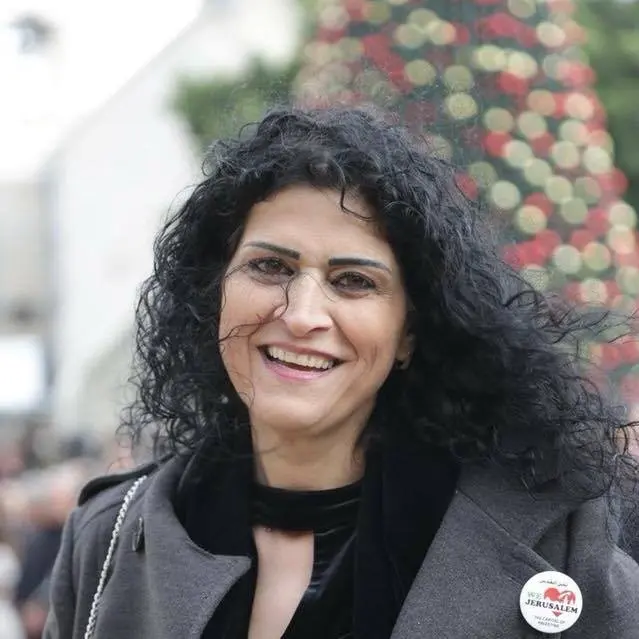
Growing up in Bethlehem under occupation, Lucy Talgieh witnessed the impact of violence and injustice on her community’s daily life. She promotes women’s leadership in conflict resolution throughout the West Bank as Head of Women’s Development at Wi’am: the Palestinian Conflict Transformation Center. Talgieh was elected to the Bethlehem City Council twice, starting in 2017, where she has advocated for progressive policies to empower marginalized communities. Beyond her local work, Talgieh is actively engaged in national, regional, and international networks, advocating for women’s rights, increased political participation, and justice for Palestine on a global level. She earned a bachelor’s degree in Psychosocial Studies from Bethlehem University and, followed by a master’s degree in Democracy and Human Rights from Birzeit University, deepening her understanding of governance and social equity.

Clotilda Andiensa Waah is an educationist, gender equality advocate, and peacebuilder from Cameroon who has been at the forefront of conflict transformation in the Anglophone regions since 2018. As Founder and Coordinator of the Center for Advocacy in Gender Equality and Action for Development (CAGEAD), she has dedicated her life to empowering women and youth in rural communities through education, advocacy, and action. Her work centers on breaking cycles of violence and inequality by promoting nonviolent communication, preventing sexual and gender-based violence, and building coalitions for sustainable peace. Through CAGEAD, she leads awareness campaigns, facilitates trainings in schools and communities, and forges strategic partnerships with civil society groups to amplify women’s voices in peace processes. She is a key member of the South West North West Women’s Task Force (SNWOT), a collective advocating for peace and justice amid ongoing armed conflict. Despite threats, limited resources, and deep-rooted resistance, she continues to speak truth to power, championing the Women, Peace, and Security agenda in one of Cameroon’s most volatile regions.

Nancy Yammout is the Co-Founder and President of Rescue Me, a non-governmental organization focused on violent crimes and violence prevention. Yammout and her sister, cofounder, Maya, conducted forensic social field research on extremism, victims of extremism, refugees, war, and trauma. Over the past 10 years, they have interviewed more than 100 prisoners in Roumieh prison and Barbar el Kazin accused of extremism and related charges in order to develop a behavioral analysis profile of these individuals. Simultaneously, Rescue Me runs programs with prisoners and at-risk youth, supporting their rehabilitation from radicalization and trauma. These programs include vocational trainings, social media, expressive art, and psycho-social intervention programs. She is the founder of TalkToNancy.com, a platform dedicated to delivering accessible, evidence-based therapy and mental wellness tools tailored to Arabic-speaking populations. She is particularly passionate about trauma-informed care, post-conflict recovery, and promoting emotional resilience among individuals, professionals, and communities.For too long, the stories, strategies, and wisdom of women peacebuilders—especially those from the Global South—have been silenced or sidelined in global peace and security discourse, or turned into anonymous contributions shaping the dissertations of doctorate candidates and researchers from the Global North.
Hear from the Authors
