The Odd Couple: Women Peacebuilders and Security Actors Bridging Positions, Building Trust
The WPS agenda has proven a vital entry point for women peacebuilders to engage with the security sector and build trust within affected communities. These efforts—often invisible—are contributing to the reform of the sector, reshaping local security environments and mitigating violence.
The War Against Ourselves: Afghan Women Peacebuilders’ Response to the Mental Health Crisis in Afghanistan
This case study describes the drivers of the mental health crisis in Afghanistan, its gendered and cultural dimensions, and the strategies used by Afghan women-led peacebuilding organizations to provide solutions. The authors conducted interviews with representatives of Afghan women-led peacebuilding organizations and thematic experts, which were complemented by a desk review of project documentation and […]
In recent years, sexual harassment in Egypt has become a major concern. According to a UN report, sexual harassment is so common that people have become accustomed to such occurrences, and those witnessing harassment rarely act to prevent it.[1] Social acceptance of such behavior contributes to the escalation of sexual violence and gang rapes.
The volunteers at HarassMap are dedicated to addressing the root causes of this problem by changing the perception and behavior of Egyptians so that they no longer tolerate harassers or blame victims. HarassMap is built upon the core belief that engaging with the public is critical to combating sexual harassment in Egypt, because advocacy for stricter laws and adherence to international standards are not enough. In raising awareness around the issue of violence against women, experience around the world in numerous and differing contexts has shown that the behavior of perpetrators is not only tolerated, but that it is excused and victims are often blamed. In Egypt, sexual harassment has been dealt with in a similar manner. When confronted with such violence the average observer tends to excuse the behavior of harassers (e.g., he can’t help it, the harassed tempted the harasser by how she/he dressed or something she/he is doing, men can’t afford to get married, boys will be boys, etc.),[2] while the women are shamed into silence or receive threats to themselves or their families for speaking up. By engaging with the public and fostering good traditional community sense, HarassMap volunteers seek to encourage people to feel some responsibility for those around them and create social consequences for those who harass.
A Diverse Approach with a Broad Reach
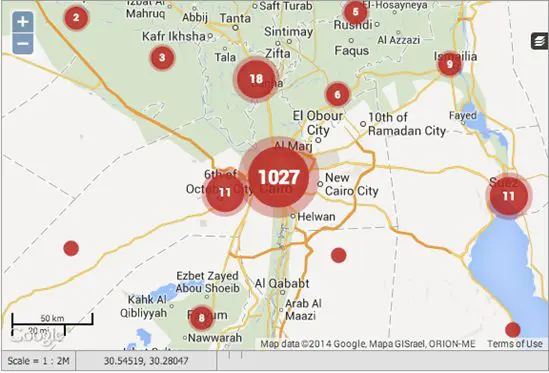
With volunteer teams in 22 governorates across Egypt, HarassMap combines a myriad of approaches in an effort to change the atmosphere in the streets. They have created a system that enables public reporting of sexual harassment incidents via crowdsourcing, an online reporting system used to gather information from a wide group of people. Once the report is validated, the time and location of the incident is included on an Ushahidi map, creating an invaluable resource that identifies hotspots for sexual harassment and demonstrates the frequency with which such incidents occur.
Invaluable Research Can Change Perception
HarassMap conducts research to evaluate the effectiveness of crowdsourcing as a method of data collection. Because these incidents are highly personal and include detailed information, such as where, when, to whom, and by whom, they have found that the anonymous aspect of crowdsourced information allows for more candid and complete disclosure. Armed with crucial details of actual events, HarassMap can be used to negate stereotypes about sexual harassment (e.g., that women are harassed because of their style of dress, or that veiled women don’t get harassed) and motivate people to take a stand against it. In August 2014, HarassMap released “Towards a Safer City- Sexual Harassment in Greater Cairo: Effectiveness of Crowdsourced Data”, which analyzes the benefits of using different technologies to record incidents of sexual harassment. Their research efforts also include monitoring and analyzing media coverage of sexual harassment in Egypt, the results of which are used in their own media campaigns, and the publication of an annual report (this year’s report will cover 2013 and 2014).
Empowering the Community
HarassMap also utilizes innovative community outreach efforts. “Neighborhood Outreach Campaigns/ Days” involves a nationwide effort to send over 1000 volunteers to the streets to raise awareness, dispel myths and encourage bystanders to stand up against sexual harassment. Using evidence from their reports, the volunteers directly engage citizens on the issue of sexual harassment, answering any questions they have and educating them on why it affects Egyptian society as a whole. This approach is used to mobilize regular citizens to become positive role models and advocates for the cause. Drawing from lessons learned during their community mobilization work, HarassMap has launched several public campaigns in which they use research to contradict myths about harassment that are perpetuated in the media. To combat popular stereotypes used to blame victims, they fight back with statistics. “80% of women who were harassed were wearing hijab” and “39% of the harassers in 2012 were below the age of puberty” are points impossible to ignore and make for an impactful message. The campaigns are launched using social media, print, and community outreach.
By fostering a community-based approach, HarassMap targets the source of the perpetuation of sexual harassment. Efforts to amend the current legal framework must be coupled with a change in the perceptions of Egyptian citizens so that they view sexual harassment as socially unacceptable and proactively discourage any such action.
ICAN’s Mission Five Steps for Sustainable Prevention of Sexual Violence in Conflict ICAN Partner AWAPSA: A Catalyst for Kenya’s First SGBV Court The War Against Ourselves: Afghan Women Peacebuilders’ Response to the Mental Health Crisis in Afghanistan Protecting Women Peacebuilders: The Front Lines of Sustainable Peace
Thank you for your donation to ICAN. Your contribution strengthens women peacebuilders who are preventing violence, protecting communities, and rebuilding trust in some of the world’s most fragile contexts. By supporting ICAN and the Women’s Alliance for Security Leadership (WASL), you help women-led organizations in more than 40 countries mediate conflicts, assist families in crisis, and drive […]
On behalf of the International Civil Society Action Network (ICAN) and members of the global Women’s Alliance for Security Leadership (WASL), we are honored to nominate Francesca Albanese, United Nations Special Rapporteur on the situation of human rights in the Palestinian territories occupied since 1967, for the 2026 Nobel Peace Prize.
We are deeply honored and excited to welcome Terry Greenblatt and Sawsan Chebli to the International Civil Society Action Network (ICAN) Board of Directors.
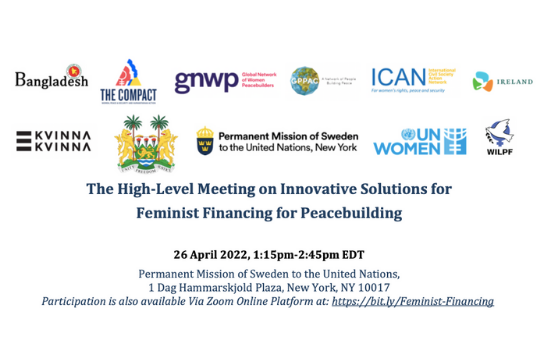
ICAN together with GPPAC, GNWP, Kvinna till Kvinna, Permanent Missions of Bangladesh, Ireland and Sweden to the United Nations, UN Women, WILPF and WPS-HA Compact cordially invite you to a high-level hybrid roundtable on Innovative Solutions for Feminist Financing for Peacebuilding, to take place on 26 April 2022 at 1:15-2:45pm EDT as part of discussions surrounding the High-Level Meeting on Financing for Peacebuilding.
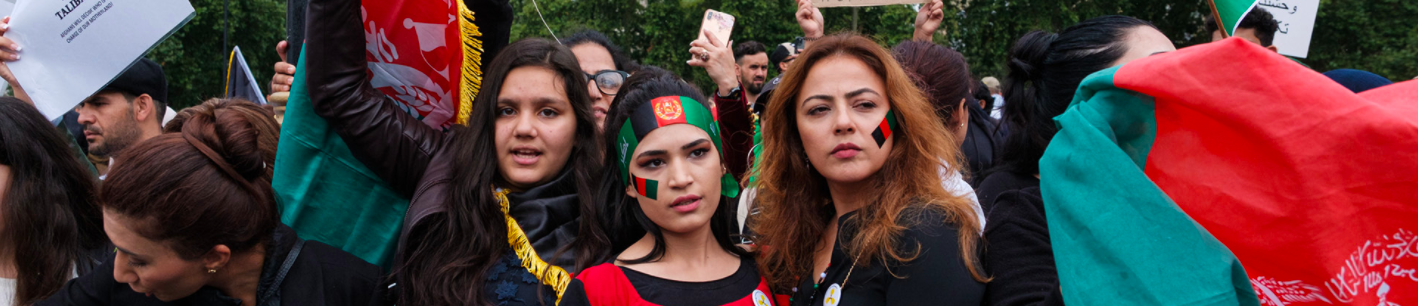
We are a coalition of NGOs, academics, activists, women’s rights defenders, journalists, artists, filmmakers and peacebuilders. We are working to get our Afghan colleagues and families, who are under direct threat from the Taliban, to safety. They have worked to bring peace to Afghanistan over the last 20 years, have fought for the rights of all Afghans, and especially women, girls and minority groups in direct opposition to the Taliban. They now come to us for help because nobody came for them.
The February 1st military coup in Myanmar brutally crushed dissent, and the crackdowns and killings continue. In May another resurgence of violence in Palestine and Israel brought renewed attention to this 54-year conflict. How do social activists survive and thrive when the tanks roll in, the bombs drop, the raids and the arbitrary arrests begin? These, among other questions, were discussed on June 29th at the fifth session of the Coming of Age of the Women, Peace and Security Agenda series, entitled ‘Survival and Activism under Occupation’, focusing on Myanmar and Palestine.
Our fund disbursed $1 million in grants to 24 partners across 17 countries from Syria to Somalia, Colombia to Cameroon, Iraq to Indonesia & more Investing In Trust
Check out this 📽️ to see how ICAN's Innovative Peace Fund supported women peacebuilders' COVID19 response.