The Odd Couple: Women Peacebuilders and Security Actors Bridging Positions, Building Trust
The WPS agenda has proven a vital entry point for women peacebuilders to engage with the security sector and build trust within affected communities. These efforts—often invisible—are contributing to the reform of the sector, reshaping local security environments and mitigating violence.
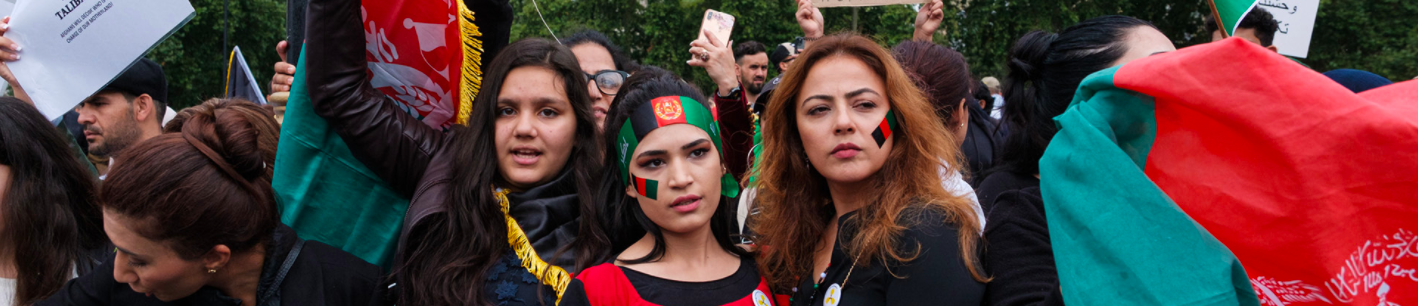
The War Against Ourselves: Afghan Women Peacebuilders’ Response to the Mental Health Crisis in Afghanistan
This case study describes the drivers of the mental health crisis in Afghanistan, its gendered and cultural dimensions, and the strategies used by Afghan women-led peacebuilding organizations to provide solutions. The authors conducted interviews with representatives of Afghan women-led peacebuilding organizations and thematic experts, which were complemented by a desk review of project documentation and […]
Experience and research show that belligerent parties are open to interaction with civil society actors, notably elders and religious leaders. But on the question of women, there is significant resistance across most contexts. While parties may claim that the exclusion of women is a ‘cultural’ matter, data suggests that it is universal and often steeped in sexist norms. Excuses for the exclusion of women range from “they are not qualified” to “it is not safe for them to travel”—even when women are living in war zones.
How to overcome this barrier:
1. Frame the inclusion of women as beneficial to the interests of belligerent parties, because (a) it increases their legitimacy by demonstrating care for their constituencies, and (b) it informs the substance of negotiations and improves their understanding of issues affecting ordinary people.
2. Encourage parties to appoint women with technical expertise and strong ties to women peacebuilders.
3. Provide gendered briefing papers on agenda topics, so all delegates can understand how women and men are affected by and respond to war.
4. Encourage inclusion of women parliamentarians or women from other governance structures.
5. Offer positive incentives, such as additional seats, to parties that include a critical mass of women.
6. Establish a minimum quota for women; if no women are appointed, these seats remain empty.
7. Facilitate the interaction of women peacebuilders with conflict parties to highlight issues affecting their communities and their work for peace.
8. Where women are included in delegations, engage them separately to provide technical support and connect them to women peacebuilders.
9. Encourage envoys to establish gender expert support teams of local women leaders to inform and advise the mediators and their teams.
In Colombia, two women were appointed to the government panel because of their technical expertise and knowledge; at the same time, they open to engagement with women peacebuilders. Throughout the Colombian process, links between Track I and Track II processes encourages women’s influence beyond the peace table. In 2013, for example, the Women and Peace Summit convened 449 women and produced six proposals for peace agreement implementation, which were later submitted to the negotiating groups.
ICAN’s Mission Five Steps for Sustainable Prevention of Sexual Violence in Conflict ICAN Partner AWAPSA: A Catalyst for Kenya’s First SGBV Court The War Against Ourselves: Afghan Women Peacebuilders’ Response to the Mental Health Crisis in Afghanistan Protecting Women Peacebuilders: The Front Lines of Sustainable Peace
Thank you for your donation to ICAN. Your contribution strengthens women peacebuilders who are preventing violence, protecting communities, and rebuilding trust in some of the world’s most fragile contexts. By supporting ICAN and the Women’s Alliance for Security Leadership (WASL), you help women-led organizations in more than 40 countries mediate conflicts, assist families in crisis, and drive […]
On behalf of the International Civil Society Action Network (ICAN) and members of the global Women’s Alliance for Security Leadership (WASL), we are honored to nominate Francesca Albanese, United Nations Special Rapporteur on the situation of human rights in the Palestinian territories occupied since 1967, for the 2026 Nobel Peace Prize.
We are deeply honored and excited to welcome Terry Greenblatt and Sawsan Chebli to the International Civil Society Action Network (ICAN) Board of Directors.
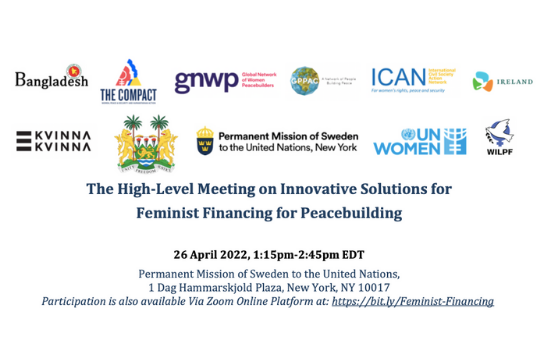
ICAN together with GPPAC, GNWP, Kvinna till Kvinna, Permanent Missions of Bangladesh, Ireland and Sweden to the United Nations, UN Women, WILPF and WPS-HA Compact cordially invite you to a high-level hybrid roundtable on Innovative Solutions for Feminist Financing for Peacebuilding, to take place on 26 April 2022 at 1:15-2:45pm EDT as part of discussions surrounding the High-Level Meeting on Financing for Peacebuilding.
We are a coalition of NGOs, academics, activists, women’s rights defenders, journalists, artists, filmmakers and peacebuilders. We are working to get our Afghan colleagues and families, who are under direct threat from the Taliban, to safety. They have worked to bring peace to Afghanistan over the last 20 years, have fought for the rights of all Afghans, and especially women, girls and minority groups in direct opposition to the Taliban. They now come to us for help because nobody came for them.
The February 1st military coup in Myanmar brutally crushed dissent, and the crackdowns and killings continue. In May another resurgence of violence in Palestine and Israel brought renewed attention to this 54-year conflict. How do social activists survive and thrive when the tanks roll in, the bombs drop, the raids and the arbitrary arrests begin? These, among other questions, were discussed on June 29th at the fifth session of the Coming of Age of the Women, Peace and Security Agenda series, entitled ‘Survival and Activism under Occupation’, focusing on Myanmar and Palestine.
Our fund disbursed $1 million in grants to 24 partners across 17 countries from Syria to Somalia, Colombia to Cameroon, Iraq to Indonesia & more Investing In Trust
Check out this 📽️ to see how ICAN's Innovative Peace Fund supported women peacebuilders' COVID19 response.