The Odd Couple: Women Peacebuilders and Security Actors Bridging Positions, Building Trust
The WPS agenda has proven a vital entry point for women peacebuilders to engage with the security sector and build trust within affected communities. These efforts—often invisible—are contributing to the reform of the sector, reshaping local security environments and mitigating violence.
The War Against Ourselves: Afghan Women Peacebuilders’ Response to the Mental Health Crisis in Afghanistan
This case study describes the drivers of the mental health crisis in Afghanistan, its gendered and cultural dimensions, and the strategies used by Afghan women-led peacebuilding organizations to provide solutions. The authors conducted interviews with representatives of Afghan women-led peacebuilding organizations and thematic experts, which were complemented by a desk review of project documentation and […]
Home»Uncategorized»
Barrier Six: “The exclusion of women is cultural.”
Barrier Six: “The exclusion of women is cultural.”
23 December 2015
“The exclusion of women is cultural,” and “the peace table isn’t the place to deal with gender equality.”
If the exclusion of women from peace processes was a cultural phenomenon, then we would see significant differences between Colombia and Syria, Burma and Burundi—places that are very different from each other. Yet the exclusion of women from peacemaking is common to all these cases. It is a universal phenomenon, suggesting that other factors are relevant, notably that the peace table is a place where power is brokered and shared. Those who come to the table want to keep it limited. They neither want to share the power nor be accountable to alternative forces. At the same time, some argue that the peace table is no place to address sensitive cultural norms, either through women’s participation or through placing issues of gender equality on the agenda. But the assumption that women come to the table only to demand gender equality is false.
How to overcome this barrier:
1. Refute these claims by noting that the effects of war are women’s and men’s issues. In war zones, women peacebuilders often speak of the needs of their community, especially the threats facing men.
2. Note that women peacebuilders often raise critical issues relevant to everyone (e.g resource sharing with a gender perspective, police reform, and security sector reform).
3. Convene women peacebuilders to inform and seek input about key agenda topics. Don’t just talk to them about gender issues and women’s needs.
4. Ask parties about differential experiences and needs of women and men in their constituencies in relation to each major topic on the agenda (land rights, demobilization, etc.).
Agreements reached at the peacetable set the blueprint for the future of an entire society including the women, minorities, and other groups. If these groups do not have representation at the table, they are at risk of having their future be “on” the table and negotiated away. The Aceh Peace Talks led to the rise of an islamist force that has pushed a regressive agenda against women’s rights. Peace negotiated to benefit one group or sector of society cannot come at the cost of the lives of another sector, especially if they are half the population.
ICAN’s Mission Five Steps for Sustainable Prevention of Sexual Violence in Conflict ICAN Partner AWAPSA: A Catalyst for Kenya’s First SGBV Court The War Against Ourselves: Afghan Women Peacebuilders’ Response to the Mental Health Crisis in Afghanistan Protecting Women Peacebuilders: The Front Lines of Sustainable Peace
Thank you for your donation to ICAN. Your contribution strengthens women peacebuilders who are preventing violence, protecting communities, and rebuilding trust in some of the world’s most fragile contexts. By supporting ICAN and the Women’s Alliance for Security Leadership (WASL), you help women-led organizations in more than 40 countries mediate conflicts, assist families in crisis, and drive […]
On behalf of the International Civil Society Action Network (ICAN) and members of the global Women’s Alliance for Security Leadership (WASL), we are honored to nominate Francesca Albanese, United Nations Special Rapporteur on the situation of human rights in the Palestinian territories occupied since 1967, for the 2026 Nobel Peace Prize.
We are deeply honored and excited to welcome Terry Greenblatt and Sawsan Chebli to the International Civil Society Action Network (ICAN) Board of Directors.
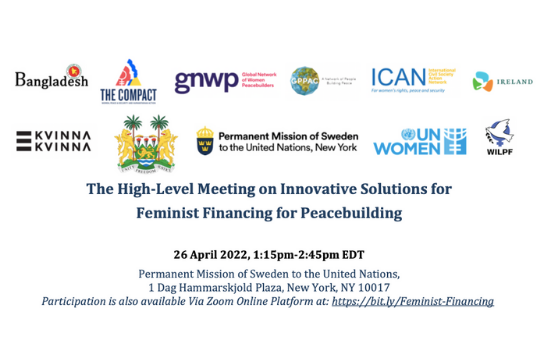
ICAN together with GPPAC, GNWP, Kvinna till Kvinna, Permanent Missions of Bangladesh, Ireland and Sweden to the United Nations, UN Women, WILPF and WPS-HA Compact cordially invite you to a high-level hybrid roundtable on Innovative Solutions for Feminist Financing for Peacebuilding, to take place on 26 April 2022 at 1:15-2:45pm EDT as part of discussions surrounding the High-Level Meeting on Financing for Peacebuilding.
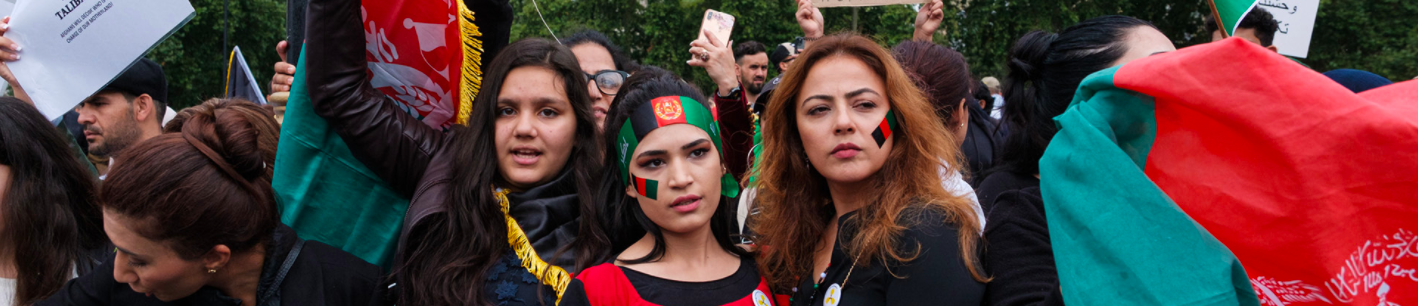
We are a coalition of NGOs, academics, activists, women’s rights defenders, journalists, artists, filmmakers and peacebuilders. We are working to get our Afghan colleagues and families, who are under direct threat from the Taliban, to safety. They have worked to bring peace to Afghanistan over the last 20 years, have fought for the rights of all Afghans, and especially women, girls and minority groups in direct opposition to the Taliban. They now come to us for help because nobody came for them.
The February 1st military coup in Myanmar brutally crushed dissent, and the crackdowns and killings continue. In May another resurgence of violence in Palestine and Israel brought renewed attention to this 54-year conflict. How do social activists survive and thrive when the tanks roll in, the bombs drop, the raids and the arbitrary arrests begin? These, among other questions, were discussed on June 29th at the fifth session of the Coming of Age of the Women, Peace and Security Agenda series, entitled ‘Survival and Activism under Occupation’, focusing on Myanmar and Palestine.
Our fund disbursed $1 million in grants to 24 partners across 17 countries from Syria to Somalia, Colombia to Cameroon, Iraq to Indonesia & more Investing In Trust
Check out this 📽️ to see how ICAN's Innovative Peace Fund supported women peacebuilders' COVID19 response.