The Odd Couple: Women Peacebuilders and Security Actors Bridging Positions, Building Trust
The WPS agenda has proven a vital entry point for women peacebuilders to engage with the security sector and build trust within affected communities. These efforts—often invisible—are contributing to the reform of the sector, reshaping local security environments and mitigating violence.
The War Against Ourselves: Afghan Women Peacebuilders’ Response to the Mental Health Crisis in Afghanistan
This case study describes the drivers of the mental health crisis in Afghanistan, its gendered and cultural dimensions, and the strategies used by Afghan women-led peacebuilding organizations to provide solutions. The authors conducted interviews with representatives of Afghan women-led peacebuilding organizations and thematic experts, which were complemented by a desk review of project documentation and […]
Home»ICAN Latest»
Ground Realities: Women, Peacebuilding & the Pandemic
Ground Realities: Women, Peacebuilding & the Pandemic
29 April 2020
A UNDP & Civil Society Global Dialogue
By Melinda Holmes, Sanam Naraghi Anderlini
UNDP joined the fourth weekly virtual meeting with members of the Women’s Alliance for Security Leadership (WASL) on April 23, 2020. Assistant Secretary General Asako Okai, UNDP’s Crisis Bureau Director, and her colleagues joined the ICAN-hosted call with some 45 women peacebuilders leading civil society organizations (CSO) in countries affected by conflict an violent extremism across Asia, Africa, the Arab World and Latin America.
Participants spoke from their perspective and experiences as first responders with attention to their activities and their recommendations in the three key priorities of UNDP’s Covid19 strategy:
Healthcare
Livelihoods; and
Crisis management & coordination
Healthcare, Sanitation, Extremism and Peacebuilding:
In Somalia among the internally displaced populations, peacebuilders say, ‘social distancing is a luxury and people can’t afford to buy soap.’ Meanwhile the challenges stemming from the spread of propaganda and disinformation are a threat to CSOs and community health workers. The implications for women are profound. They make up 90% of health and care workers. They are at risk not only from the virus but also from targeting by extremists.
Somali peacebuilders are attempting to share public health messages, but report that people believe that they are immune to COVID-19 as extremists are spreading such messages, and many people are turning to traditional superstitions and beliefs as comfort.
Extremists also attacked Imams who supported the government’s public health awareness messages. Many are now fearful of speaking out. This leaves the job to CSOs who are concerned that if they seek outside help extremists will block aid from coming in. Meanwhile WASL members report that the death rate is spiking and mass graves are being dug.
There are similar reports about Somalis in Kenya (Mombasa and Eastleigh). They do not believe the public health warnings.
How can we teach people to wash their hands without water or soap?
From Cameroon to Yemen, women are making soap, and tackling the lack of water. The shortage of water has both exacerbated and been exacerbated by the conflict. In Yemen, Food4Humanity, a local CSO has been undertaking the repair of water pumping stations a means of preventing and ending local conflict among communities. Prior to the pandemic, to enable access to the pumps, they also negotiated an agreement that girls would be sent to school. Now with the urgent need for water as part of the Covid19 prevention, the CSO is continuing its water works programmes and providing hygiene awareness and supplies to local communities.
In Pakistan, a network of women peacebuilders established by Paiman Trust and supported by ICAN to undertake prevention and deradicalization from violent extremism has mobilized to produce hand sanitizers, masks and other basic necessities. They are using a traditional rooftop communication networks to share health guidance.
But in Morocco and elsewhere since mosques have been closed men are breaking the law and congregating on rooftops to pray. Women peacebuilders expressed concern about what may happen during Ramadan when people are used to going out daily to the mosque and to visit family and friends.
“COVID-19 has revealed many aspects to our work and the fissures that exist in our societies”, remarked a WASL member from Iraq that others echoed. In many fragile contexts, people have no trust in the state because of their experiences of the levels of corruption, absenteeism in terms of provision of services, and oppressive behavior. So now they are skeptical about public health announcements. They adhere more to the message of religious militants who are providing people with their food and subsistence needs, while reinforcing the messages that states are failing and uncaring.
Simultaneously illiteracy is an ongoing challenge for effective public education. “The internet is the only window to the world now,” a Syrian member of WASL stated, “rumors spread easily and families take incorrect measures [as a result] because most have low levels of education and awareness.” On the ground and in remote areas, WPBs are simplifying and localizing messages into pictures to explain the need for social distancing and sanitation.
People have no trust in the state because of their experiences of the levels of corruption, absenteeism in terms of provision of services, and oppressive behavior. So now they are skeptical about public health announcements.
Subsistence and Livelihoods
Much of the rhetoric and response to COVID-19 is predicated on a basic level of income and services that is a fantasy for many communities, noted many of the peacebuilders. How can people stay home when they are dependent on daily wages to feed their families? Food insecurity is a pressing concern amid fears of skyrocketing prices, especially in Muslim-majority countries and communities with the holy month of Ramadan amidst this pandemic. Everywhere, women’s incomes are affected by restrictions on movement that prevent them from selling their wares. In Colombia, Iraq and Turkey, as elsewhere, women who have been divorced, displaced, or are survivors of violence have the most vulnerable livelihoods.
Across the world, the pandemic has increased stresses in terms of gender roles and division of labor within the household. As reported widely the scale and breadth of domestic violence is itself a pandemic. While it is predominantly men perpetrating violence against women and children, there is also violence perpetrated by women against children and sometimes men. In South Asia where women live with their husband’s families, the violence is also women against women. In many cases, men are not ready to contribute more at home or to undertake unpaid care work. In Morocco, for example, activists note the sense of entitlement that some men display regarding their status. Peacebuilders believe these factors contribute to the rise in violence at home.
“I am doing what I can, but I need help.”
– A Syrian peacebuilder feeding thousands of Syrian refugee families in Turkey
Women’s Locally-led Responses and Solutions:
As first responders, women peacebuilders are trying to fill the vacuums and urgent basic needs of families’ in terms food and sanitization. In Indonesia, for example, they are matching small farmers who have excess produce they can no longer get to market, with communities that have food shortages. Around the world, women peacebuilders are encouraging wealthy individuals to donate funds to purchase the foods. Leveraging their own trusted relationships and access to the marginalized communities the peacebuilders are coordinating the collection of funds, the interactions with local grocers and supplier and the delivery to those most in need. But the demand is overwhelming and assistance is limited. “I am doing what I can,” said one Syrian peacebuilder feeding thousands of Syrian refugee families in Turkey, “but I need help.”
Crisis Management: Division of Labour & Standing with Women Peacebuilders
Local peacebuilders report that governmental responses to the pandemic vary from state to state. Among states, international organizations and others there is also varying understanding of the gendered dimensions of this crisis and generally limited awareness of the enormous burden that women’s community based organizations have taken on.
Meanwhile in Libya where the health care system is collapsed, the Ministry of Health has paved the way for doctors to volunteer, but not women doctors.
In Yemen, WASL members report that government responses on the ground are minimal, and that the different authorities are busy blaming each other for their respective failures. Meanwhile, women and youth are responding to the coronavirus relying on only their own resourcefulness and resilience. Civil society is coordinating among itself, but needs support from the international community.
This crisis has amplified the reality that around the world states are often absent, incapable or mistrusted, making local civil society and international organizations vital to crisis response at the community-level. Local CSOs are not only responding to local needs, they understand the need for integrated approaches to response and recovery as a matter of course. The trust that peacebuilders have established within communities is their entry point in accessing and determining the needs and issues arising. It is also enabling them to understand the inter-related nature of the challenges – for example how lack of funds ties in with hunger and dependency on militant forces that are offering subsistence in exchange for loyalty in the long term. Or as one Liberian peacebuilder noted, alongside the food and sanitation packages provided, she also provides sanitary pads for women and girls.
What we are hearing confirms yet again that where strong local infrastructure and systems (both human and material) exist, communities are more resilient.
State-Civil Society Collaboration is Essential and Possible
An example of more effective state-civil society collaboration was provided from Indonesia. As one peacebuilder noted, the two sectors are working closely together, having acknowledged the limits of state capacity to go it alone. They have set up three joint task forces to coordinate (1) medical support and personal protective equipment (PPE), (2) psychosocial support and food security, and (3) volunteers and donations.
The needs remain great and the scope for collaboration significant. 69 women peacebuilders from 15 provinces stretching from Aceh to Papua in Indonesia representing different NGOs, national commissions, student groups and think tanks gathered virtually to coordinate their efforts. They are seeking now to work with provincial governments and share their insights with the Minister of Women’s Empowerment and the Head of the National Task Force on how to strengthen gender mainstreaming in disaster management.
“Does the crisis present a transformational potential for the future?”
– Assistant Secretary General Asako Okai, UNDP’s Crisis Bureau Director
UNDP representatives shared that while global policy is considering the challenges and understands the centrality of gender issues and community resilience it has yet to trickle down to the local level. Recognizing the urgency of the COVID-19 pandemic, UNDP has channeled funding to the country offices to support their efforts to help prepare, respond, and recover from the pandemic.
UNDP colleagues expressed the need to support the She Builds Peace campaign globally and improve networking with women peacebuilders nationally and locally to ensure a better design and delivery of the institution’s interventions. They also emphasized that these efforts to engage CSOs serve to improve local governance. International organizations must also play their important advocacy role with governments. For example, the UN Special Representative of the Secretary General and Special Envoys are pushing governments to comply with his call for a global ceasefire.
ASG Asako Okai asked the participants if this crisis presents transformational potential for the future? The response was conditional. To say ‘yes’ we need to get the immediate responses right, now. In addition to balance compounding crises such as bombing, displacement, floods and cholera, we need to shore up urgent needs, while anticipating long term conditions, and ensure that every response is gendered and drawn from the local voices and front line responders.
A strong, independent civil society sector is critical for effective crisis response and social cohesion and a key indicator of good governance…To be effective UNDP must put gender responsiveness and equitable partnership with local CSOs at the centre of its national prevention response and recovery strategies everywhere.
“Women peacebuilders have been the first and most agile responders locally, providing food and sanitation, dealing with domestic violence, and addressing rising extremisms , said Sanam Anderlini, the Founder and CEO of ICAN, which is providing financial grants and other technical support and guidance to many of its partners. “We see again, that a strong, independent civil society sector is critical for effective crisis response and social cohesion and a key indicator of good governance.” Said Anderlini, “To be effective UNDP must put gender responsiveness and equitable partnership with local civil society at the centre of its national prevention response and recovery strategies everywhere.”
Across Syria, communities are finding ways to reconnect after years of war through dialogue, storytelling, art, and collective action. Mobaderoon’s Local Peace Committees demonstrate why lasting peace begins within communities themselves.
ICAN FeaturedInnovative Peace FundMobaderoonOur StoriesStoriesWASL UpdatesWomen's Alliance for Security Leadership
The International Civil Society Action Network (ICAN) and the Women’s Alliance for Security Leadership (WASL) Statement: The Escalating U.S.-Israeli War on Iran and its Regional Ramifications
Introducing the Holistic Security Menu: a co-designed, partner-driven model that provides practical and sustainable security support—on women peacebuilders’ own terms.
On October 6, 2025, the U.N. Security Council holds its annual open debate on Resolution 1325 on Women, Peace, and Security. Today, we are not issuing a new statement. Instead, we are honoring our community of women peacebuilders—who appeared before the Security Council throughout these 25 years, speaking for the millions they represent—by echoing their messages.
ICAN FeaturedICAN LatestICAN UpdatesWASL UpdatesWomen's Alliance for Security Leadership
در عرصه صحت روانی، افغانستان با بحران پیچیدهای مواجه است که این بحران به طور جدایی ناپذیر با ناامنی شدید فیزیکی، سیاسی و اقتصادی در کشور گره خورده و این نا امنی ها بحران را تشدید میکند. برای رسیدگی به آسیب های روانی، صحت و بهداشت جامعه به شیوه های پاسخگو به جنسیت و با مد نظر گرفتن حساسیت های فرهنگی، سازمانهای فعال در عرصه صلح سازی به رهبری زنان افغان در موقعیتی منحصربه فرد قرار دارند. این سازمان ها خدمات ابتدایی ارائه میدهند، مهارتها را توسعه میبخشند و در شکلدهی هنجارهای فرهنگی و جنسیتی نقش مؤثر ایفا میکنند.
ICAN FeaturedICAN LatestICAN UpdatesWASL UpdatesWomen's Alliance for Security LeadershipWPSO
In a world increasingly divided by polarization, fear, and misinformation, building trust at the community level has never been more urgent. Religious and faith leaders—often seen as voices of moral authority and guidance—wield significant influence over the social and political attitudes of their communities. As locally rooted, trusted community leaders themselves, the women peacebuilders who make up the Women’s Alliance for Security Leadership (WASL) recognize the value of engaging with religious actors to advance inclusive peace and gender equality
AMAN IndonesiaAWAWICAN FeaturedOdessaWASL UpdatesWi'am
In a powerful departure from traditional advocacy, ICAN—guided by our Afghan partners and women peacebuilders—hosted the event “Watan e Ma – وطن ما – Our Homeland: Women of Afghanistan Keeping the Flame of Freedom Alive” on March 17, 2025 at Blue Gallery in New York City. Held during the 69th Commission on the Status of Women (CSW69), the event celebrated Afghan cultural heritage and the resilience of Afghan women peacebuilders, who persist in their leadership for peace, justice, and equality under the Taliban’s regime of gender apartheid.
Trust between communities and the security sector is critical for effective governance and peace. So is a vibrant civil society. When women peacebuilders are recognized and engaged as independent, strategic partners and security actors—in their own right—the results are transformative. Twenty-five years on from the launch of the WPS agenda, women peacebuilders’ creativity and contributions to societal peace and security are not only timely, they are even more essential.
Allamin FoundationAWAPSAAWAWBetter Peace InitiativeCIASECoACTGEN MyanmarGender and ExtremismsICAN FeaturedICAN LatestICAN UpdatesPAIMANPCIDWASL UpdatesWomen's Alliance for Security Leadership
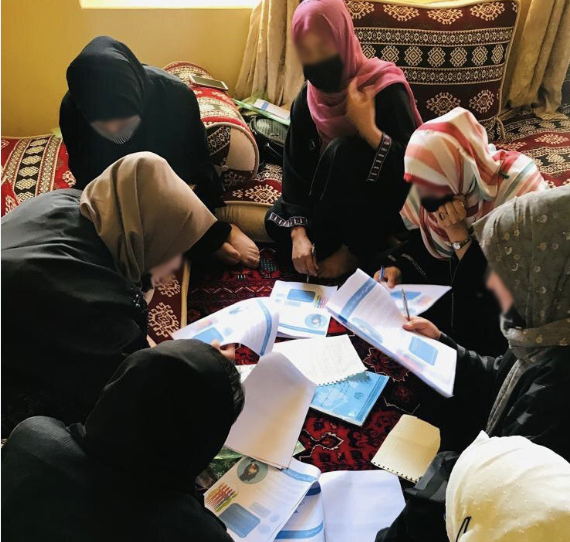
Afghanistan is facing a complex mental health crisis inextricably linked with and compounding the dire state of physical, political, and economic insecurity in the country. Afghan women-led peacebuilding organizations are uniquely positioned to address community members’ health and wellness in gender-responsive, culturally- sensitive, and trauma-informed ways.
ICAN FeaturedICAN LatestICAN UpdatesWASL UpdatesWomen's Alliance for Security LeadershipWPSO
As the Women’s Alliance for Security Leadership (WASL) continues to expand globally, fostering stronger regional and national networks, we are excited to announce the formation of the first-ever WASL Steering Committee.