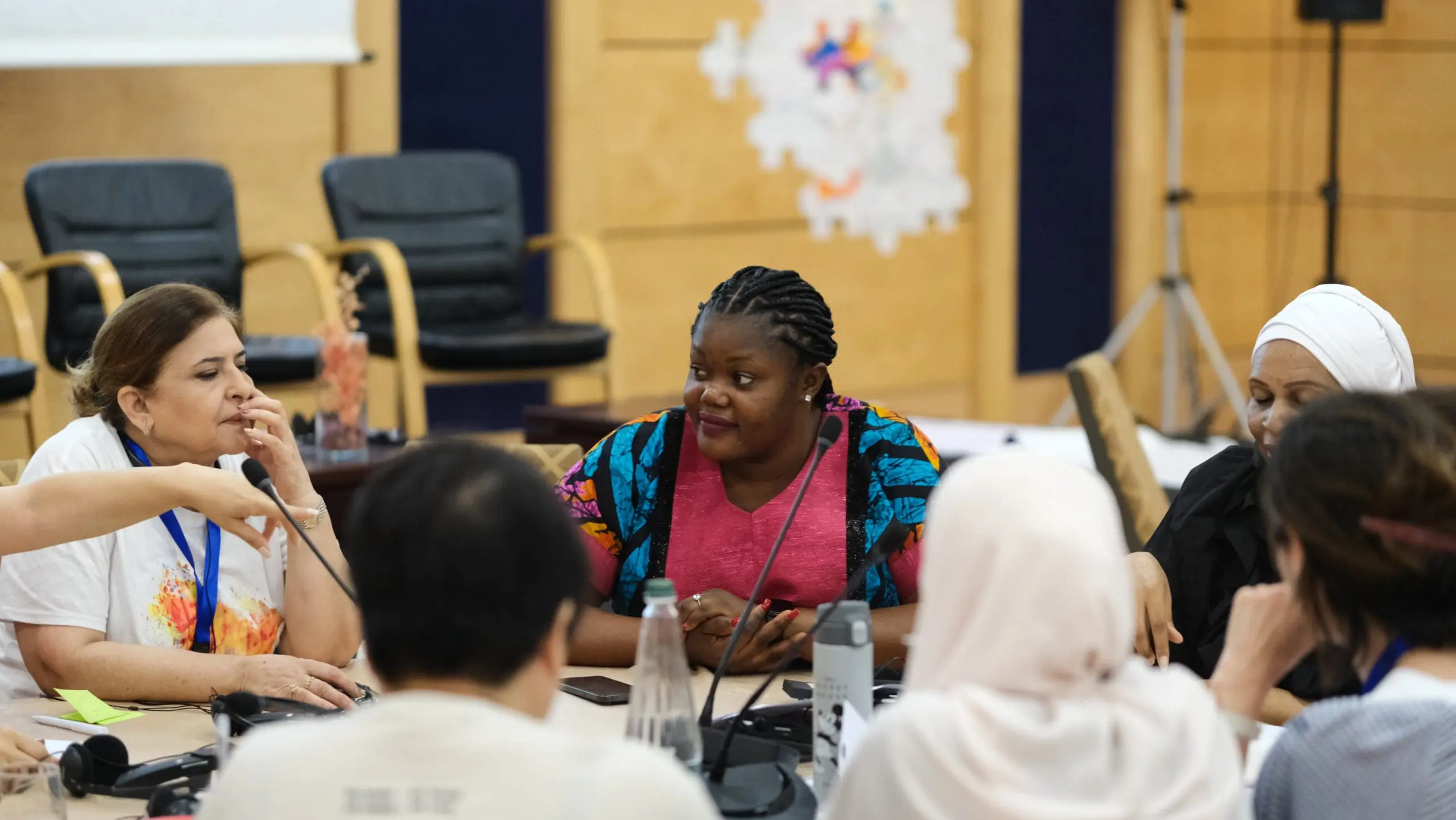
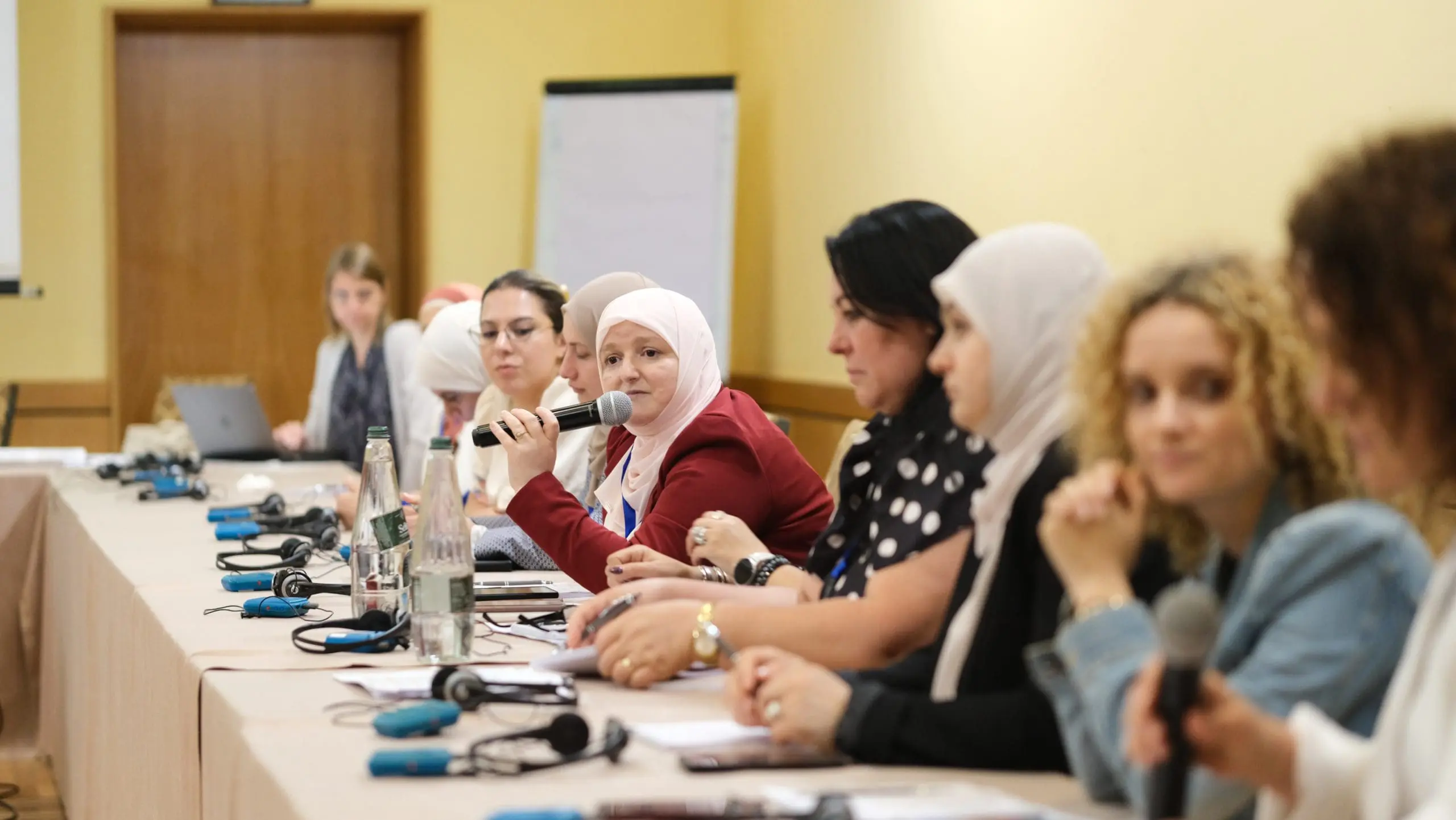
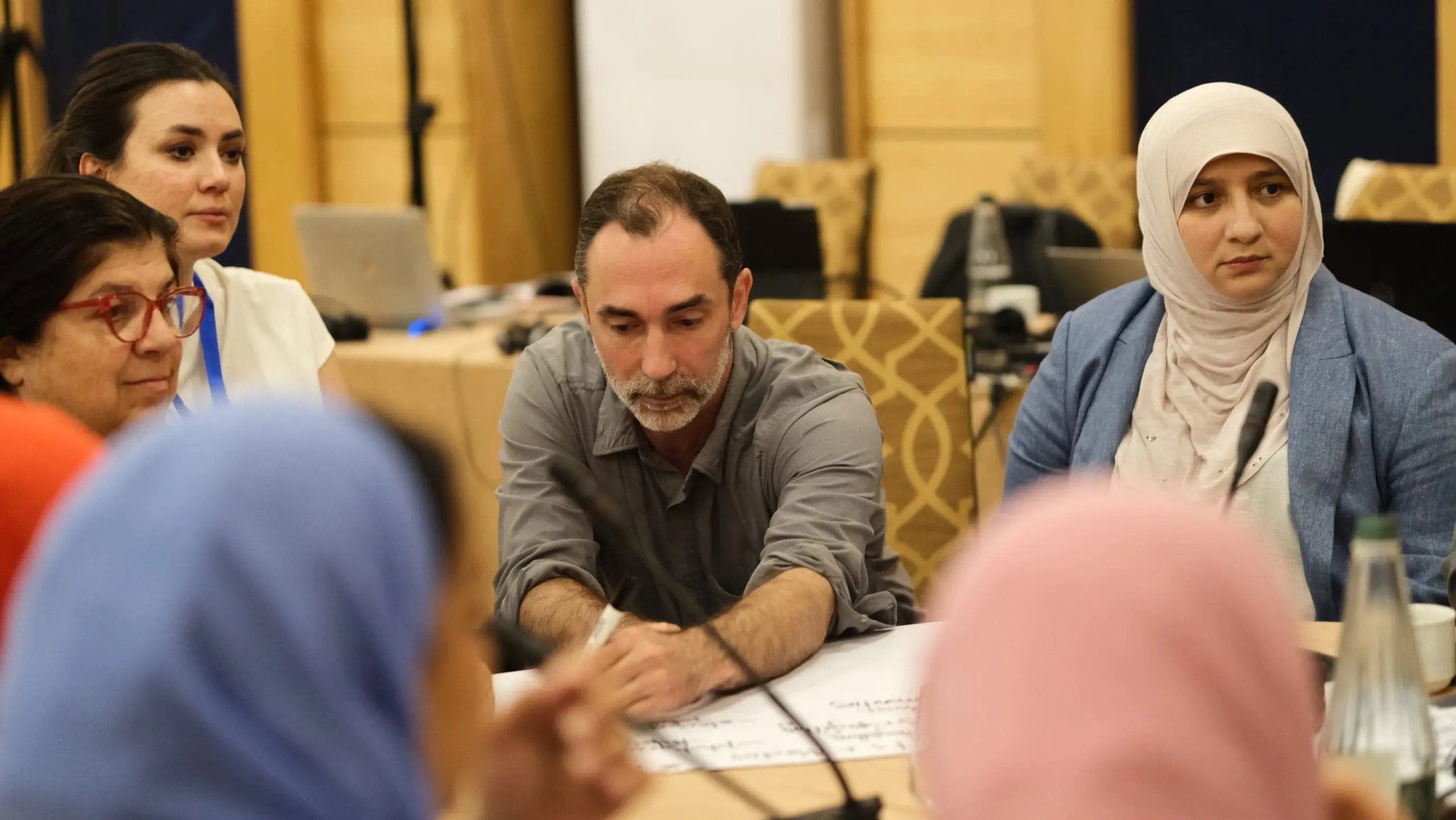
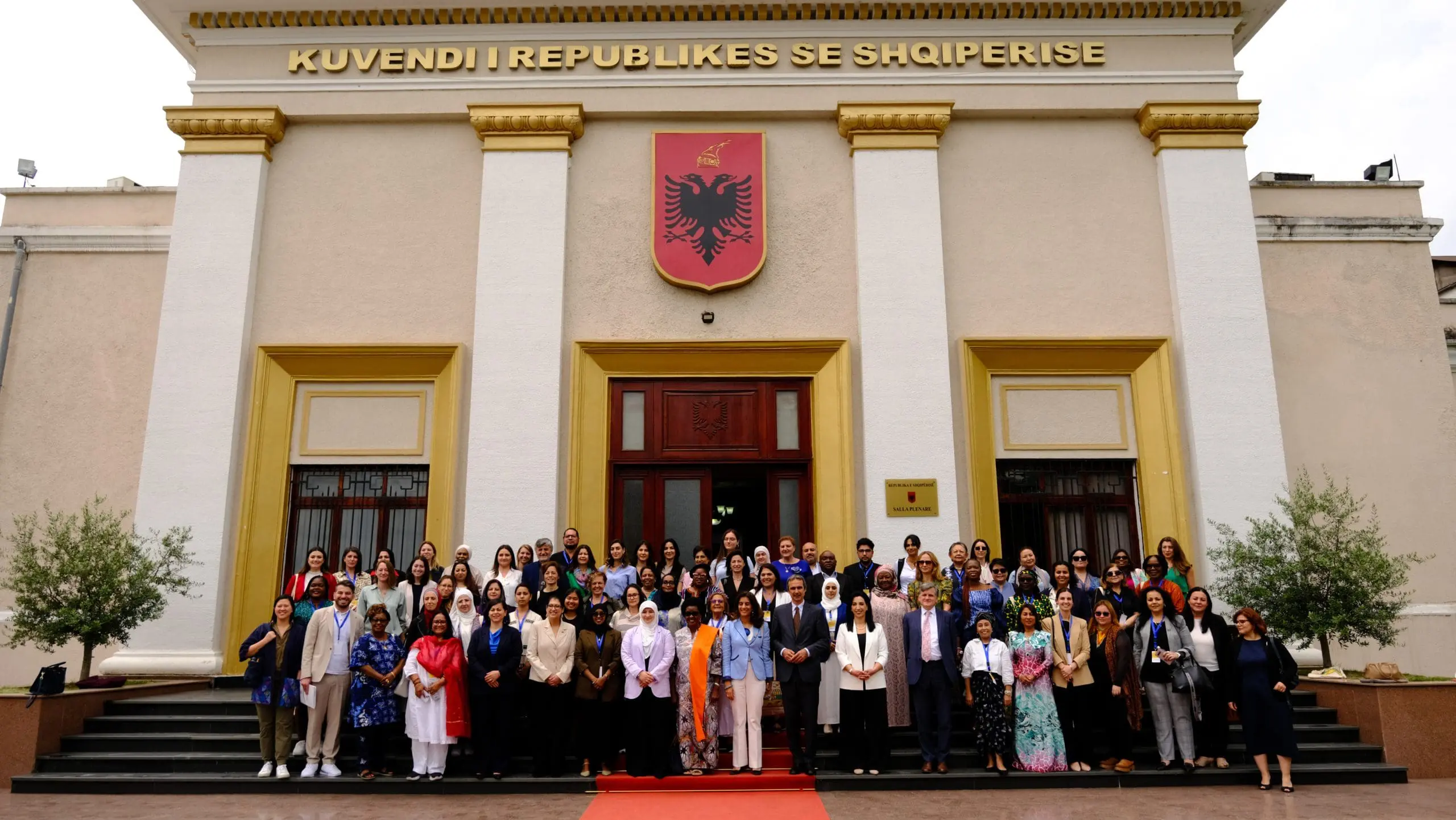
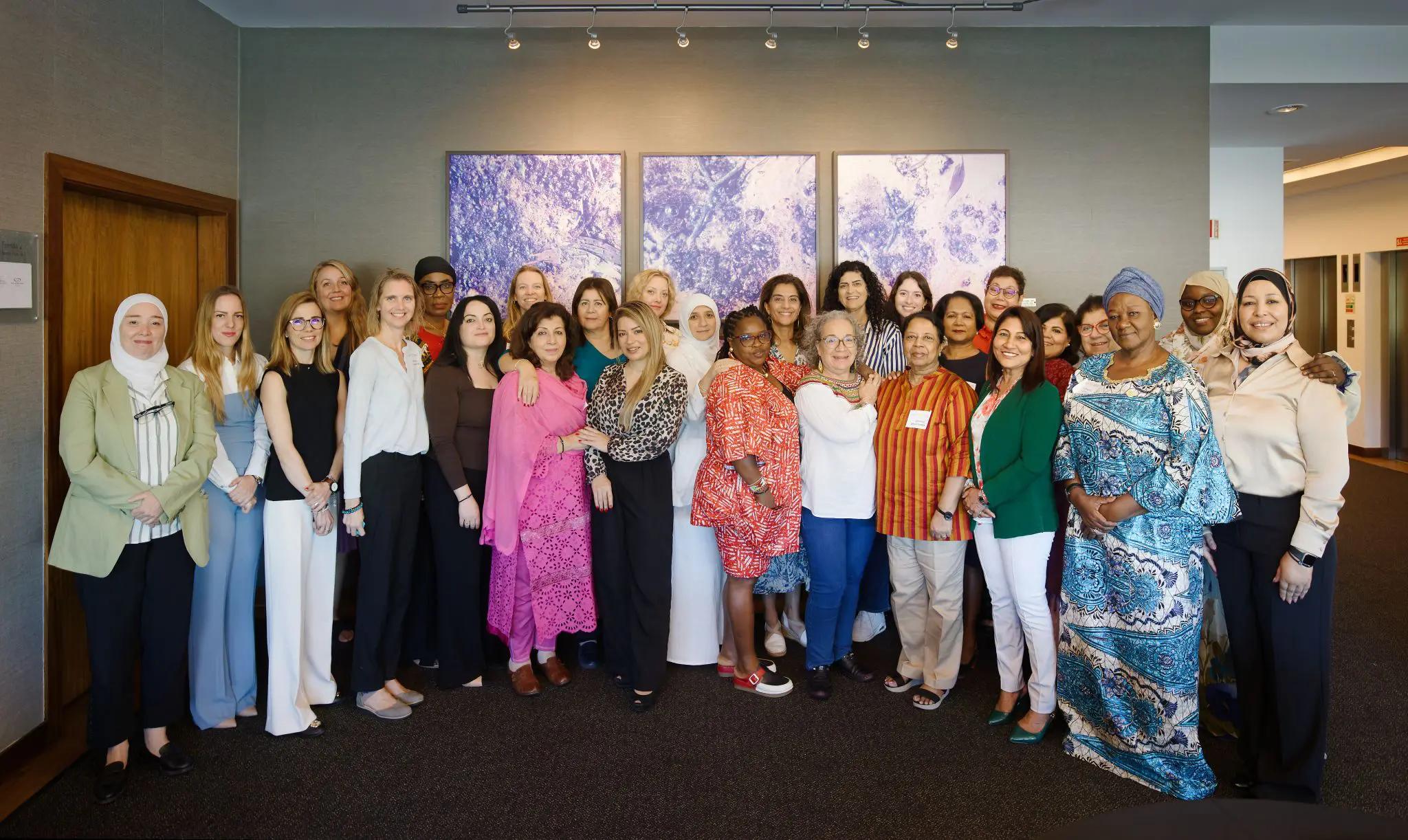
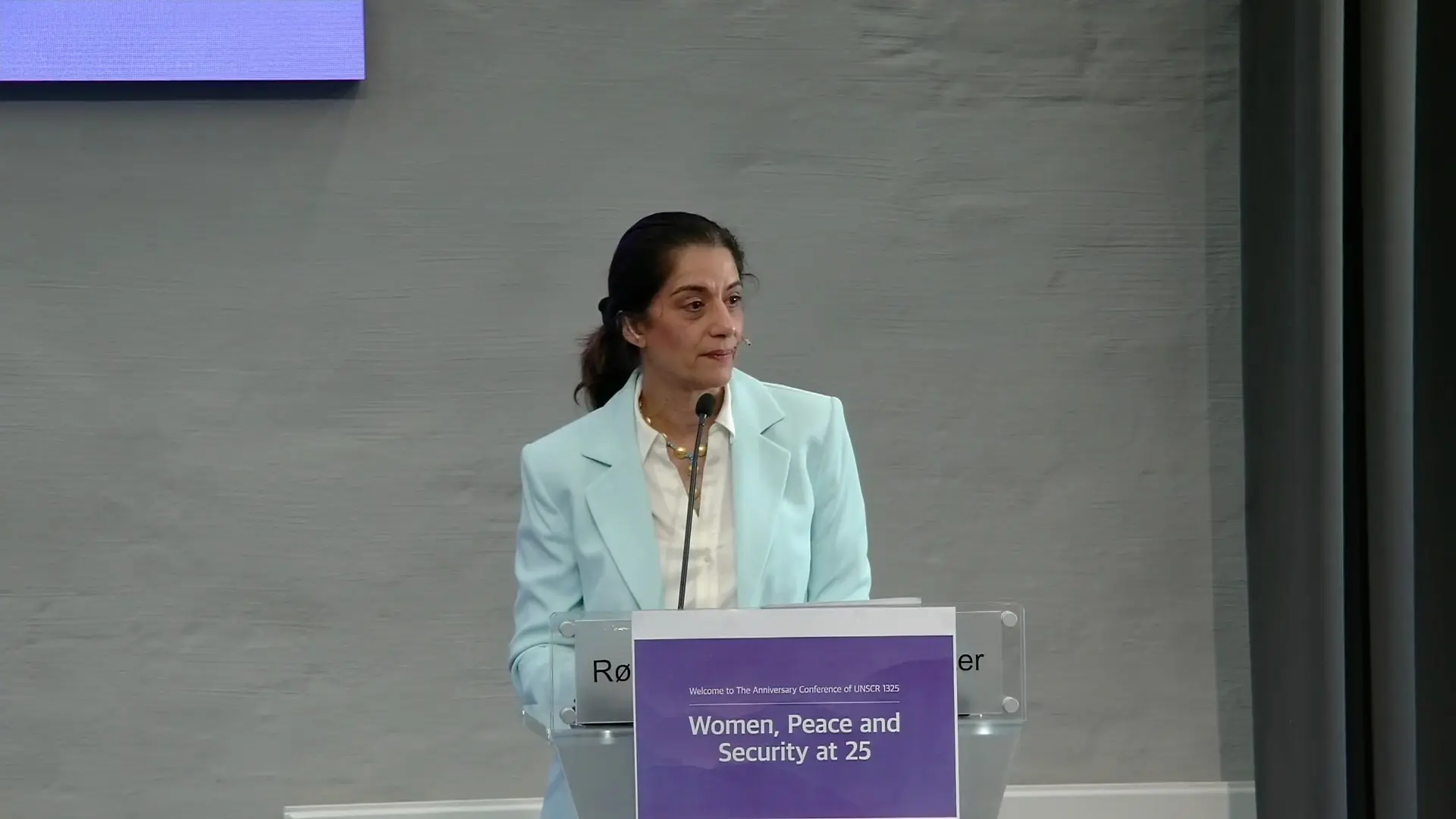
At a time when the world is witnessing the greatest number of conflicts since WWII, women peacebuilders convened for ICAN’s 10th Forum in Tirana, Albania from June 2-5, 2024. In partnership with the Women’s Center for Development and Culture Albania (WCDCA), ICAN brought together 110 participants—members of the Women’s Alliance for Security Leadership (WASL) representing 33 countries, international policymakers, and local stakeholders—to discuss effective strategies for promoting peace, resilience, equality, and pluralism.
Agenda at a Glance:
- 4 analytic plenaries to discuss current trends and strategize our collective work
- 16 parallel sessions:
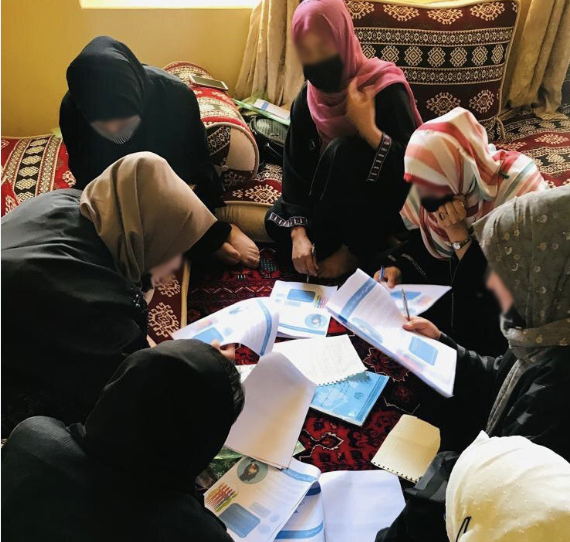
- Building skills in advocacy, women’s peace coalitions, Monitoring, Evaluation, and Learning, and organizational and digital security
- Exploring storytelling, performance creation, yoga, and self-defense as forms of expression for healing and building peace
- Shaping WASL collaboration through autoethnographic writing, peacebuilding campaigns, strategic litigation, and working across the humanitarian, peacebuilding, and development nexus
- Bilateral government meetings with the President of Albania, his Excellency Bajram Begaj, and with the Foreign Commonwealth Development Office (FCDO) of the UK
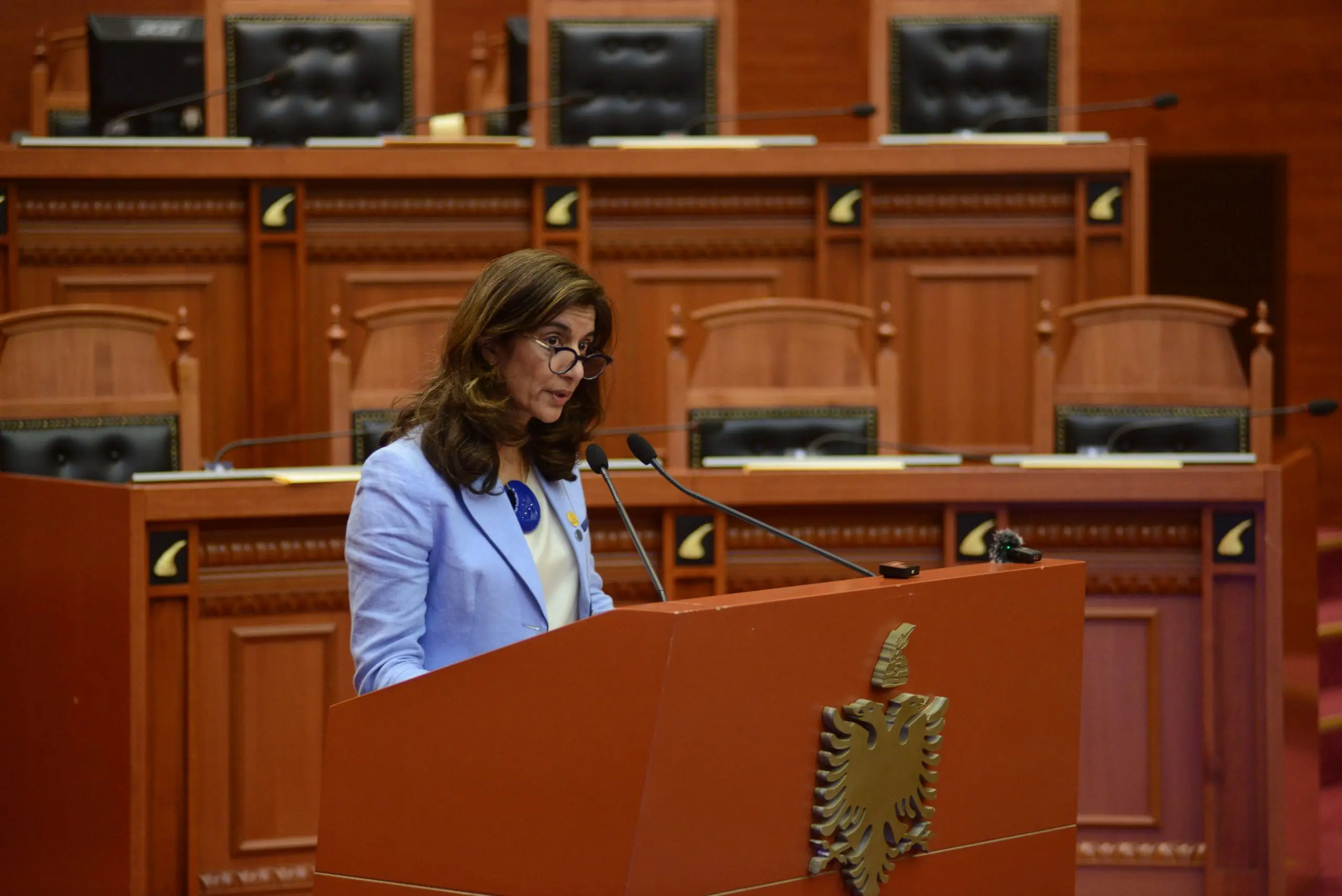
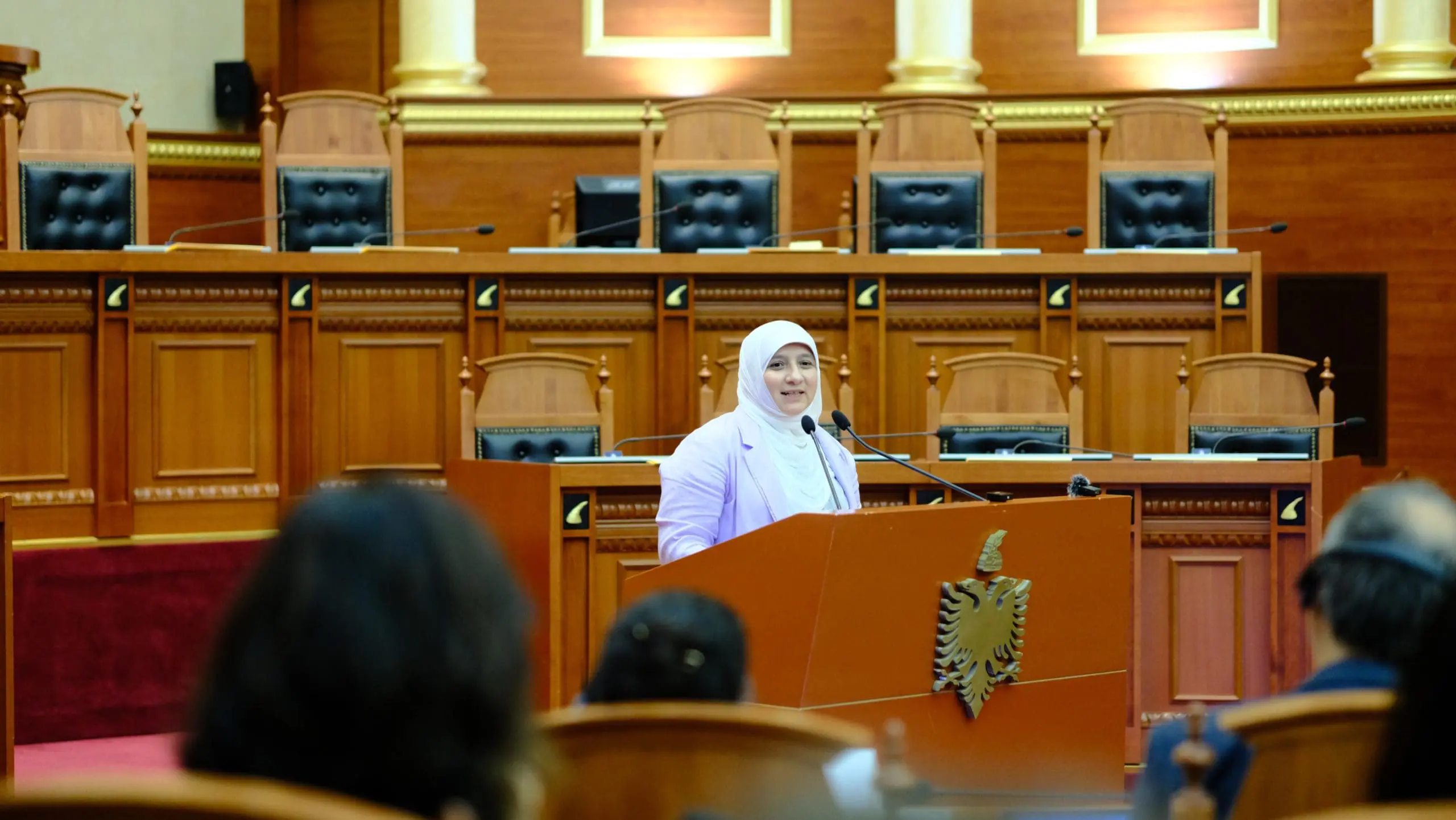
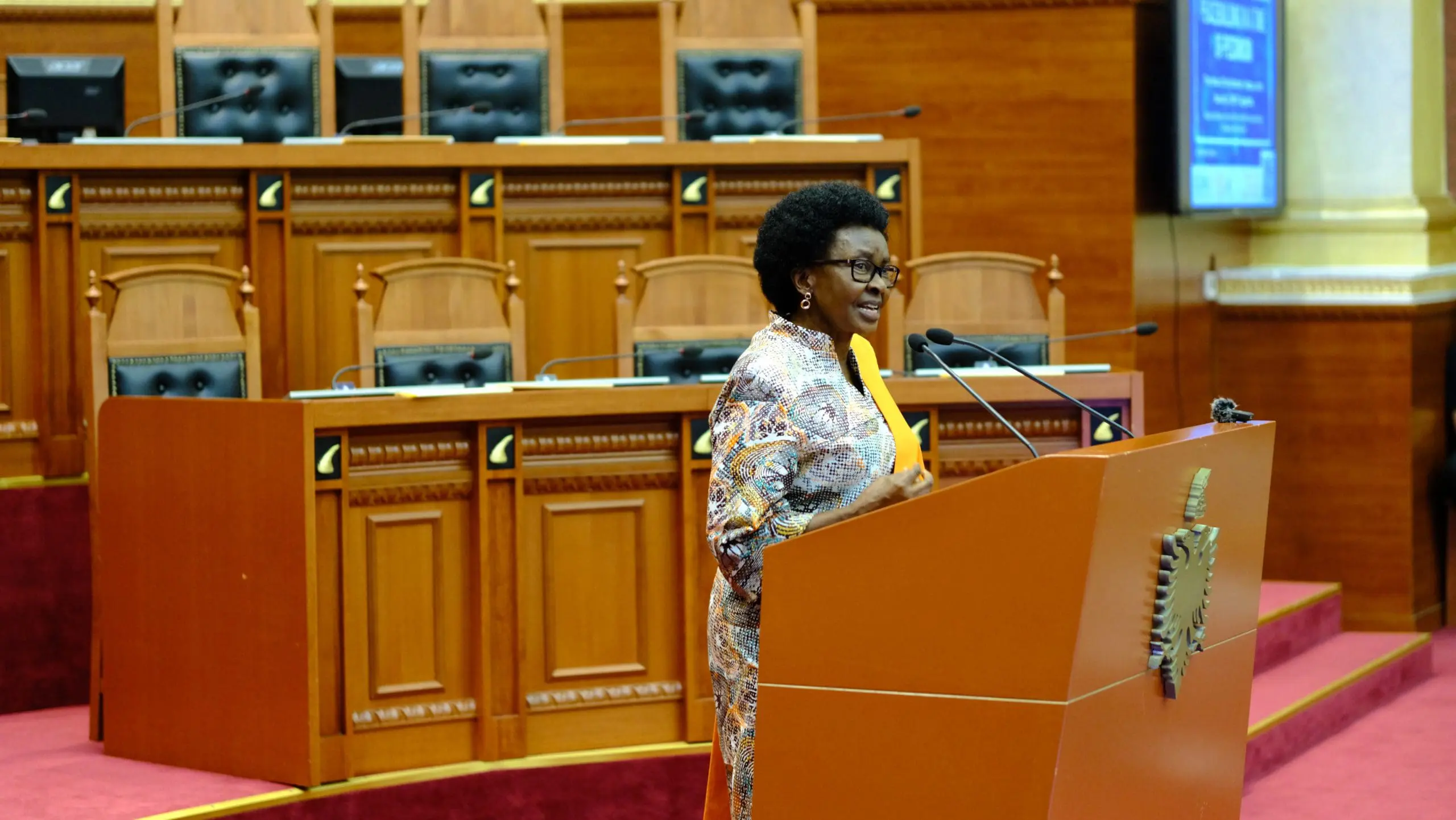
- First civil society-led convening in the Albanian Parliament, hosted by ICAN and WCDCA
- A fireside chat on the war in Gaza and the Israel-Palestine conflict
- 12 partner video interviews
- 4 hours of trauma-informed yoga practice
- A visit to the historic city of Kruja
- A bike ride in honor the legacy of our friend and partner Enass Muzamel, with gratitude to Romina Kuko from the Tirana Municipal Council and Iden Petraj, Tirana’s Bike Mayor
Forum discussions were organized around three inter-related themes: the state of the world, the state of our field, and the state of ourselves.
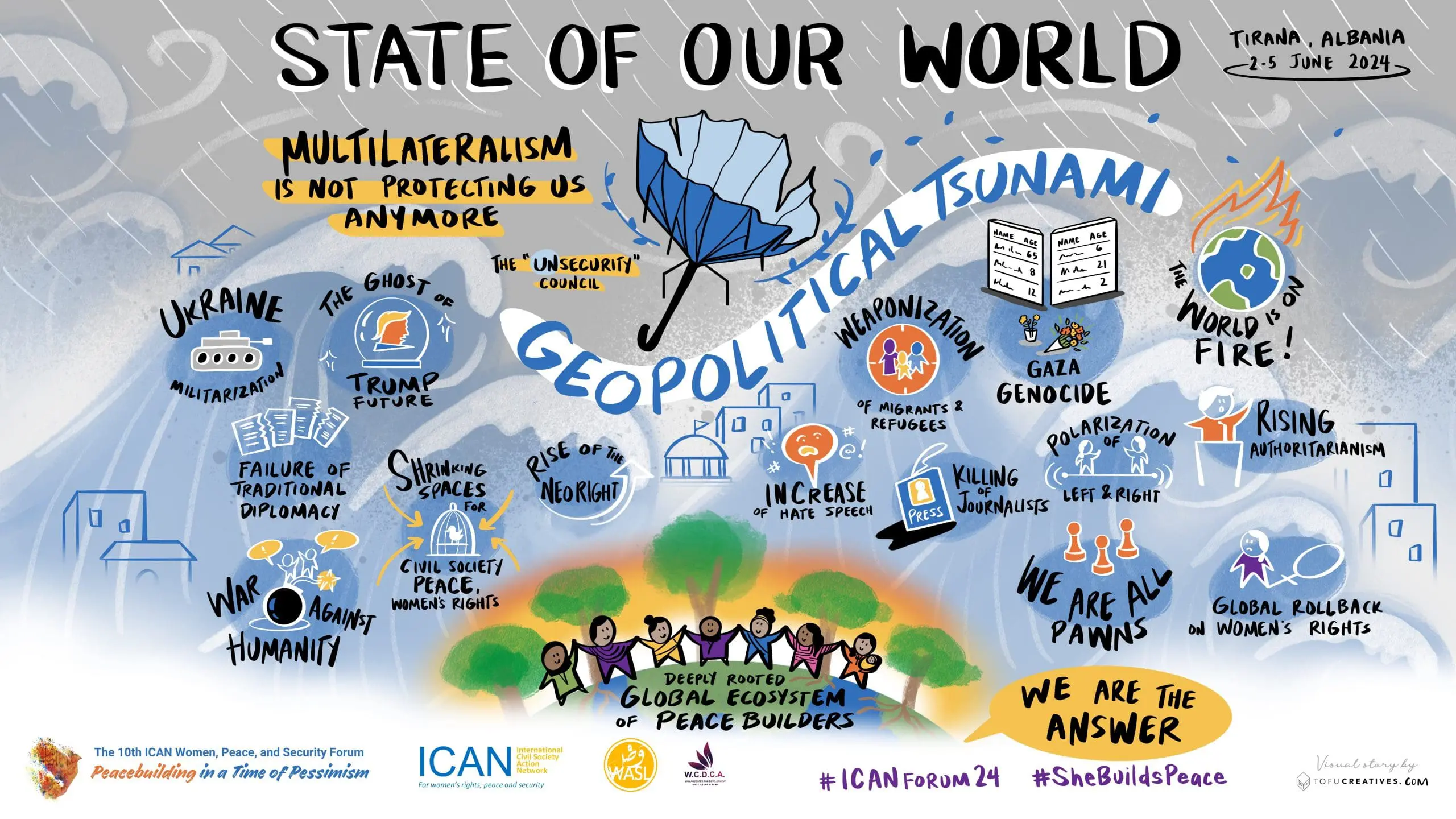
The State of the World
Amid a geopolitical tsunami of rising authoritarianism, a global rollback of women’s rights, and the failure of traditional diplomacy, women peacebuilders are increasingly relying on their local networks and innovation to build an ecosystem of peacebuilding to meet this moment. Multilateral systems—particularly the UN Security Council—have not lived up to their responsibilities to protect the world’s most vulnerable populations. In light of this inaction, the work of local peacebuilders is more important than ever.
Members of the WASL network shared the practical strategies and innovative solutions they use at the local level to prevent and mitigate violence and transform crises and conflicts.
“Peacebuilding is the most important thing you can do in times of conflict… we’re creating the next generation of multilateralism.”
- Sanam Naraghi Anderlini, MBE, Founder and CEO, ICAN
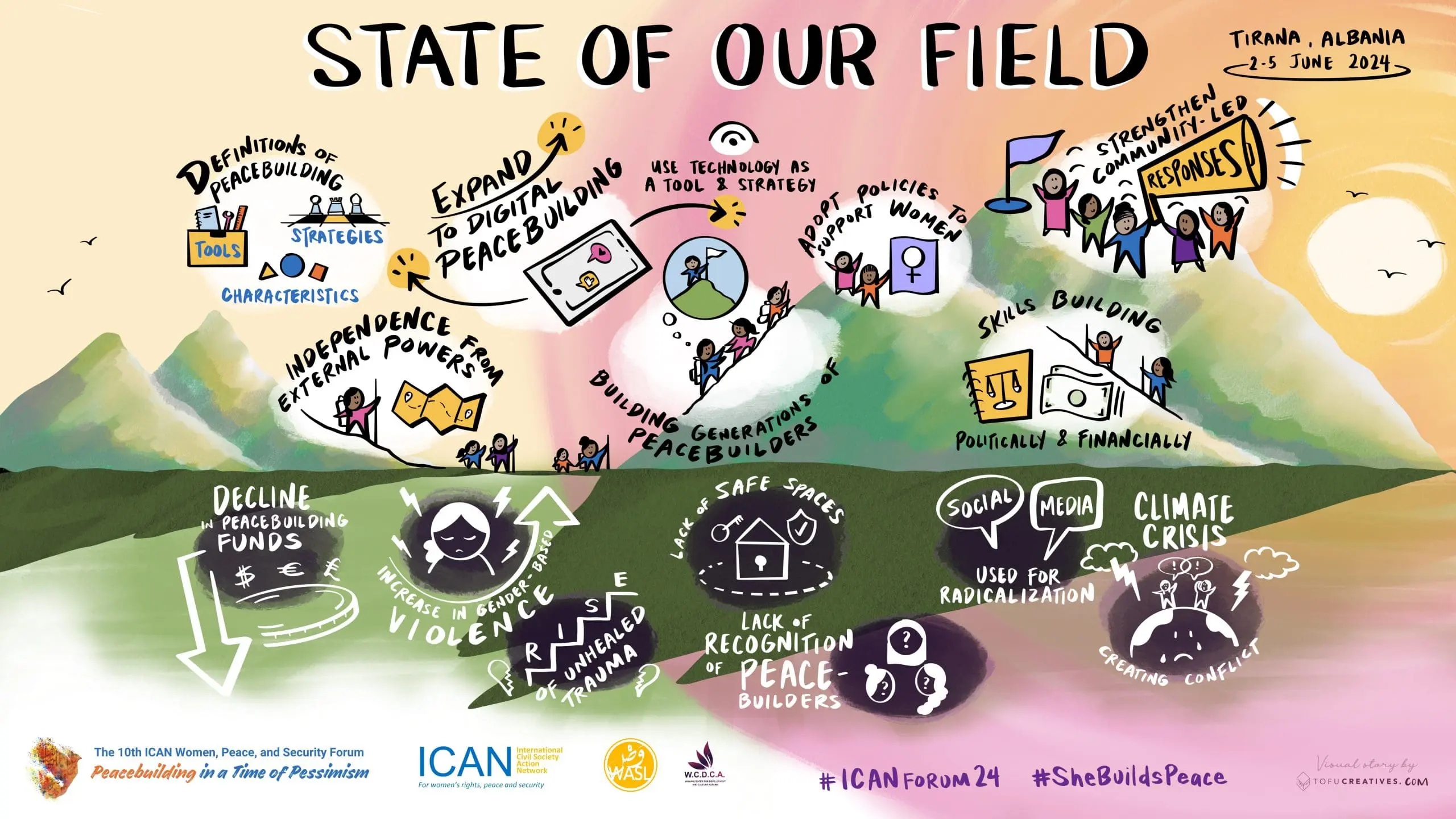
The State of the Field
The next iteration of multilateralism must be centered around people, not great power interests. To do so, peacebuilding should be woven into all aspects of a human security approach, encompassing the triple nexus of development, humanitarian aid, and peace efforts. Peacebuilding is not just about formal peace negotiations, but rather starts with the values we share in the home, then builds out into the community around us, and finally grows into the global framework that is today seen as traditional peacebuilding. Forum participants provided examples of adaptations needed to sustain the sector’s best practices.
“Communities need to see us as capable of creating change, rather than looking at us as just writing reports.”
– Abir Haj Ibrahim, Co-Founder, Mobaderoon, Syria, WASL Member
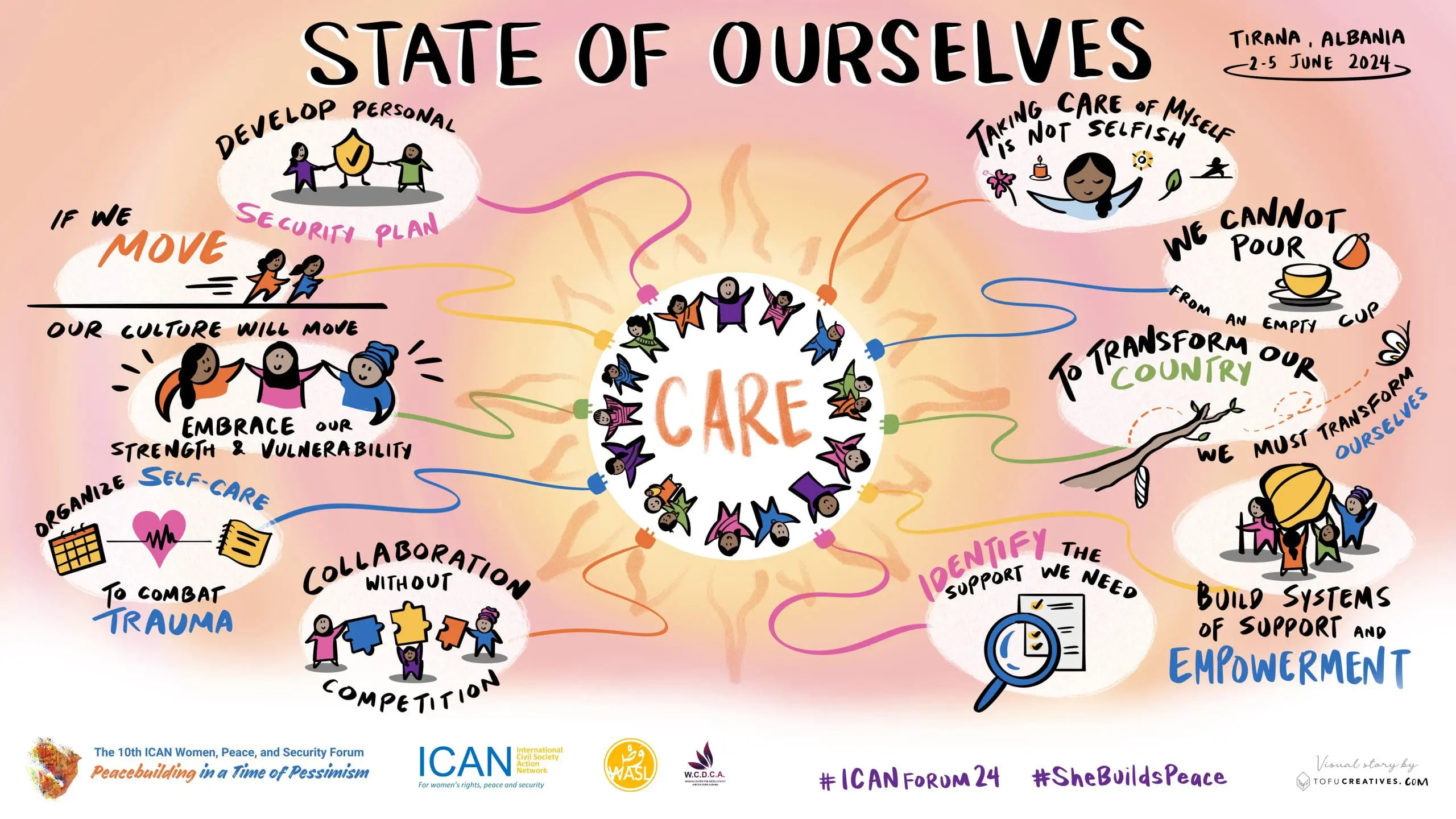
The State of Ourselves
The future of the peacebuilding field lies in networks and collective work across communities, with a culture of care shaping our approach to security and conflict mitigation. Caring for both the collective and oneself is a political act that defies patriarchal value structures. Conversations at the Forum centered around strategies women peacebuilders employ to prioritize their security and wellness and sustain their work.
“We can think about security and peace from a care perspective or from a control perspective.”
– Rosa Emilia Salamanca, Executive Director, CIASE, Colombia, WASL Member
Emerging Priorities
The following four priorities emerged from the Forum’s discussions. Specific recommendations and further analysis will be released in our Forum Outcome Report in September.
Embracing Self-Reliance and Local Solutions
Women’s peace coalitions, like WASL or other regional coalitions, act as bulwarks against escalating threats and provide alternative pathways of action when governments or institutions are paralyzed. Recognizing, protecting, and funding locally rooted women peacebuilders strengthens these first responders who take on the responsibility to protect their communities when other institutions lack the capacity or political will. Forum participants exchanged localized responses to extremism and conflict, trusting in their holistic understandings, deep community access, and specific expertise.
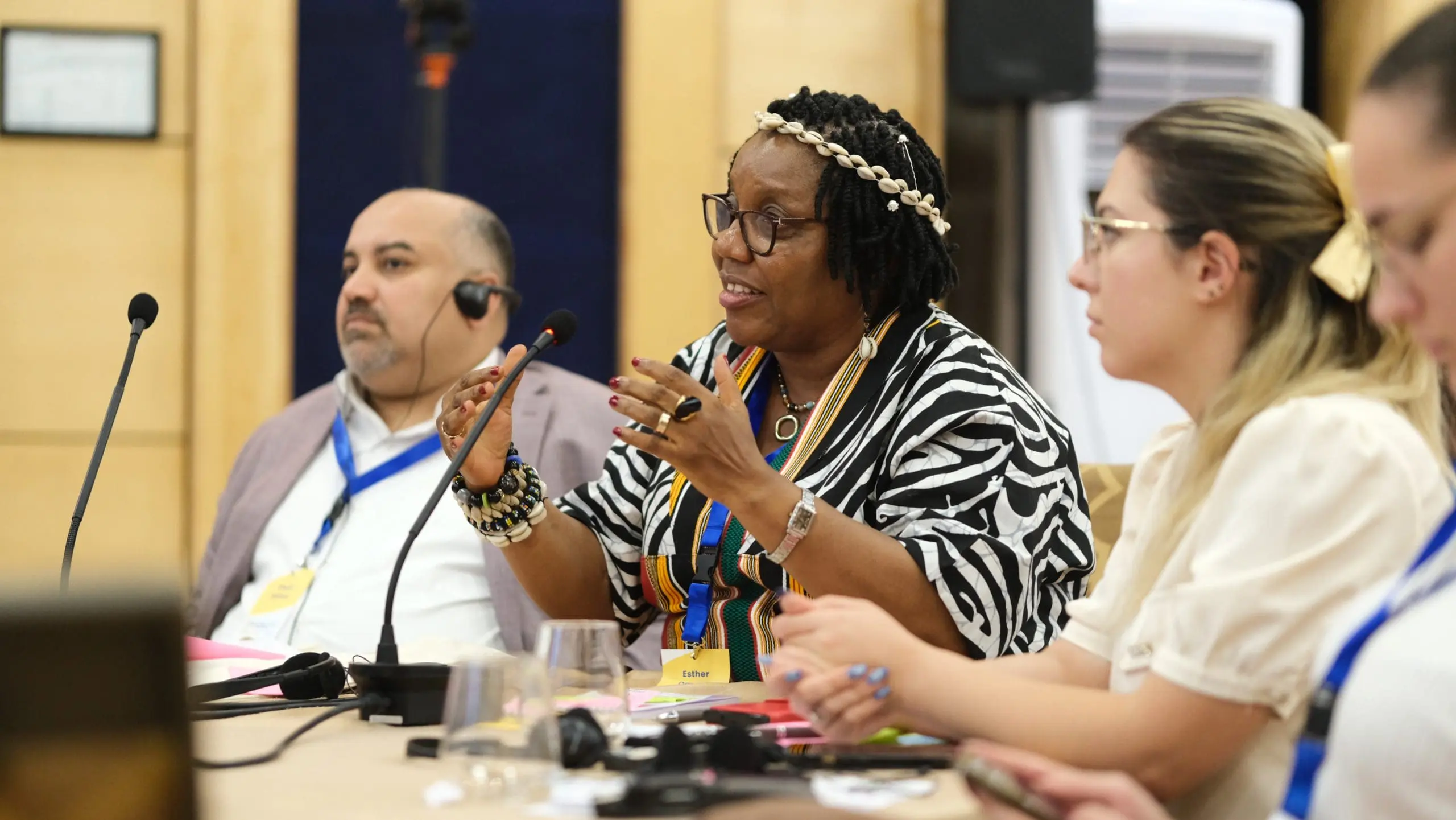
“We have been telling those who call themselves the leaders, the funders, the partners, those who make decisions, that they should allow us to define peace through a woman peacebuilder’s lens. What works best for us may not necessarily be what works for them. We live it, we know it, we see it, we breathe it every day.”
– Esther Omam, Executive Director, Reach Out Cameroon, WASL Member
Fostering Solidarity to Catalyze Change
Joint advocacy and strategic collaboration provide space for women peacebuilders to pool resources, share expertise, and create shared narratives to catalyze meaningful change in communities and institutions around the world. Participants affirmed the potential of collective action and solidarity to reinforce campaigns for a ceasefire now in Gaza, to recognize gender apartheid in Afghanistan, and to support women peacebuilders and local peacebuilders through She Builds Peace and Peace Starts Here, respectively. Storytelling, performance creation, and other forms of art and media were explored as important techniques for shifting narratives in our societies to center inclusive, just, and peaceful perspectives.
Telling Our Stories and Documenting Our Work
Articulating and sharing the journey of women peacebuilders individually and collectively is critical to advancing feminist leadership, decolonizing the field of peacebuilding, and equipping future generations of peacebuilders with the knowledge and skills to build on existing efforts and leverage previous successes and lessons learned. Women peacebuilders’ expertise, experience, and perspectives are inherently valuable for the work of democratization, inclusion, and maintaining civic space in highly polarized contexts. Throughout the Forum, WASL members developed ideas and avenues for storytelling and documentation from podcasting to autoethnography.
“This work is critical, controlling our own narratives so we get to determine what we see and do, and the process. For centuries, women’s stories have not been documented. Today will be history for tomorrow, so in documenting our work, we get to be recognized in history.”
– Sabrina Mowlah-Baksh, Peace Activist and Community Organizer, Trinidad and Tobago, WASL Member
Centering Care and Healing
Threats to women peacebuilders—physical, digital, and emotional—continue to grow, jeopardizing their work. Adopting a perspective of care is essential to respond to the existential challenges women face in their work as peacebuilders and to sustain the peacebuilding ecosystem. Viewing issues of peace and security through a lens of caring for oneself, for one’s community, and for the world evolves our notions of individual and collective responsibility away from control, fostering a more holistic and effective approach to conflict transformation. During the Forum, we held space for collective and individual healing through trauma-informed yoga, artistic expression, and empowerment self-defense and recommitted to centering care in our work together.
“Taking care of myself isn’t selfish. We deal with work that traumatizes our mind and bodies. Realizing that I need to take care of myself has liberated me and made me a more effective peacebuilder.”
– Robinah Rubimbwa, Executive Director, Coalition for Action on 1325 (CoACT), Uganda, WASL Member
We thank our donors for their faith in us and for enabling ICAN’s 10th Women, Peace and Security Forum to take place. Our deep gratitude and appreciation to Rudina Çollaku and her team at WCDCA for their kindness and hospitality, as well as to our: Arabic interpreters, Mandi Mourad and Marianne Kedemos; Farsi interpreters, Faridoon Aryan and Ayamudin Kamal; Tofu Creatives graphic illustrators, Desiree Llanos Dee and Nityalila Saulo; Elkierd Deliu and colleagues from Zemra Travel; Erti Zhilla and colleagues from Ciceroni SHPK; and facilitator, Yvonne Shanahan.
Sincerely,
The ICAN Team:
Sanam Naraghi Anderlini, Olga Andrews, France Bognon, Helena Gronberg, Melinda Holmes, Maya Kavaler, Rawan Kahwaji, Isabela Karibjanian, Sarah McMains, Charlotte Morgan, Nadia Noori, Stacey Schamber, Kendahl Tybursi, and Yodit Willis.
“Our guiding principle is the rebuilding of social cohesion and trust which we see as the glue that holds societies together.”
– Rudina Çollaku, Executive Director, WCDCA, WASL Member