As the world moves on from the Paris 2024 Olympics, we are left to ponder once again the potential impact of the convergence of sports and politics. The events took place against a backdrop of rising global conflicts and deepening divisions, some more present than others on this global stage. In such a climate, the need for innovative peace initiatives has never been more urgent.
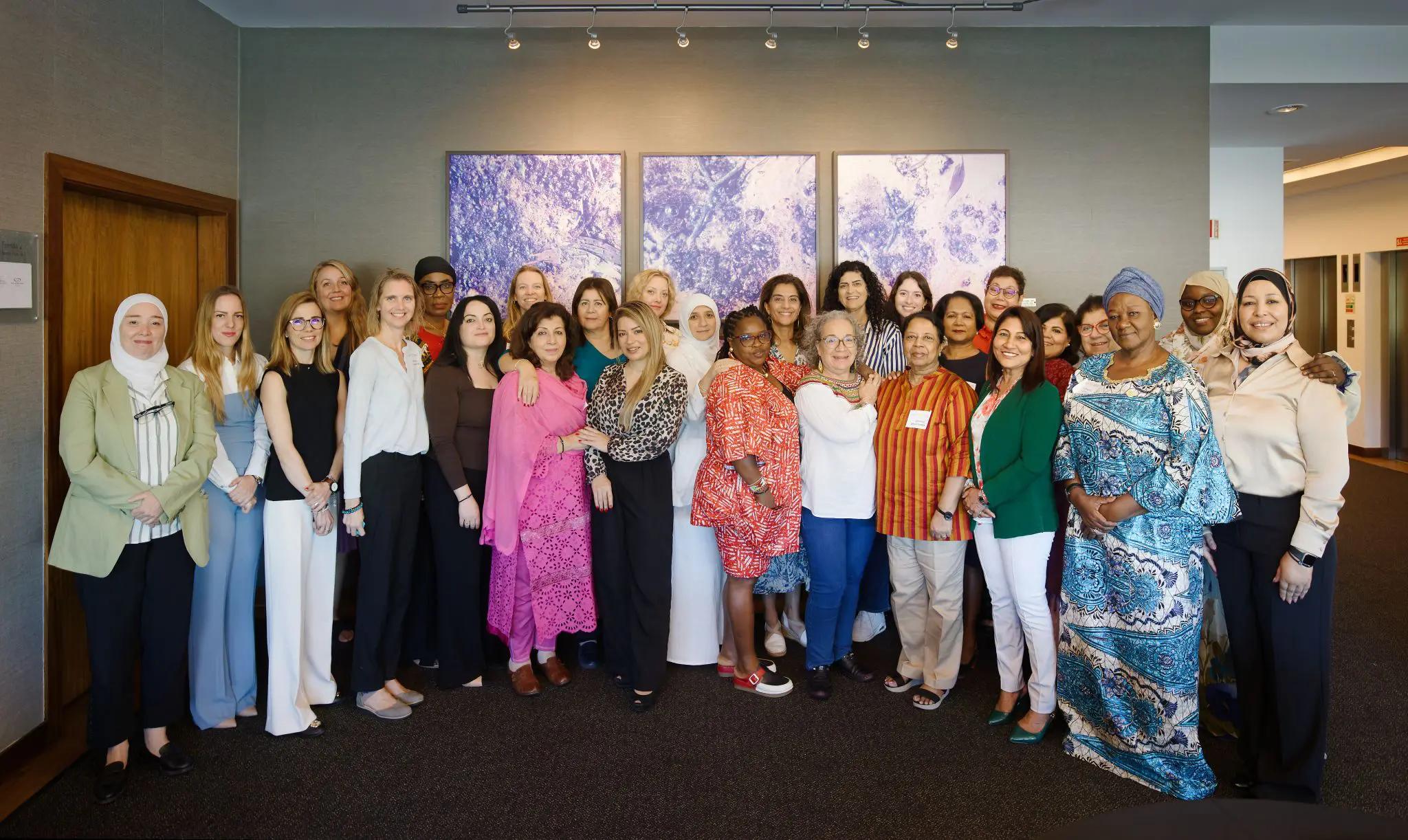
In a recent discussion, women peacebuilders from the ICAN-spearheaded Women’s Alliance for Security Leadership (WASL) explored the potential of sports as a tool for peacebuilding. Participants highlighted the dual nature of sports events: while they can serve as a powerful unifying force, they also have the potential to exacerbate existing tensions. With the Olympics offering a unique platform to showcase the best of humanity’s competitive spirit, the conversation underscored the importance of women peacebuilders’ work in leveraging these opportunities to foster peace, unity, and understanding across cultural and political divides.
International Sporting Events: A Double-Edged Sword
While the Olympic Games aim to represent an apolitical platform for universal participation and peaceful competition, they are frequently politicized and can bring divisions to the fore. The Games, and other international sporting events, are often accompanied by controversies and political tensions surrounding the participation of some countries, such as Russia and Israel, amid ongoing international conflicts.
The recent WASL discussion on sports and peacebuilding also highlighted both gender-based discrimination and racism faced by athletes. For example, participants considered the backlash against Egyptian fencer Nada Hafez, who faced intense scrutiny at home after competing in the 2024 Paris Olympics while seven months pregnant. However, participants also noted the 2024 Games’ achievement of gender parity, with equal numbers of male and female athletes competing, as an important milestone in the journey towards gender equality in sports.
Women peacebuilders emphasized that the media plays a significant role in either perpetuating negative stereotypes and deepening divisions or amplifying positive initiatives and fostering social cohesion. The ubiquity and immediacy of social media and digital news provide an important platform for communities to support athletes and positive social initiatives, such as Olympic champion Allyson Felix’s initiative to create the Olympics’ first-ever nursery to support athletes, particularly women, with children to compete equally in the Games. Yet, the same social media platforms are also a breeding ground for racist, sexist, transphobic, and other divisive and harmful narratives, such as the hateful rhetoric levied towards Algerian boxer and Olympic gold medalist, Imane Khelif. Women peacebuilders have regularly emphasized the need for positive and unifying narratives that provide alternatives to hate, extremism, and division—a call that continues to be relevant when leveraging sports as a space for peacebuilding.
Sports as a Tool for Peacebuilding
Despite their double-edged nature, sports have often transcended cultural and political barriers to promote peace and unity.
During the discussion, one WASL partner outlined how cricket matches have previously provided opportunities for diplomacy. In 1987, during heightened tensions along the India-Pakistan border with a high level of troops amassed on both sides, the then-President of Pakistan, Zia ul-Haq, attended a cricket match in India and afterward attended an hour of talks with his Indian counterpart, Prime Minister Rajiv Gandhi. By attending the match, he was able to successfully de-escalate the situation between the two countries in what is now commonly referred to as “cricket diplomacy.” In this spirit, women parliamentarians in Pakistan have also organized cross-party cricket matches to foster collaboration and trust across political groups.
An example shared from Syria reasserted that whilst sports can also serve as a site for political conflict, those same spaces can provide a means of reconciliation. On March 12, 2004, a football match in Qamishli between a local Kurdish team and an Arab team from Deir ez-Zor in Syria’s southeast sparked violent clashes between fans of the opposing sides. Solidarity protests and anti-government demonstrations spread into the streets of Qamishli and neighboring cities, with the Syrian government’s brutal crackdown resulting in extensive death, injuries, and displacement. Today, to mark the tragedy and build bridges between the two communities, March 12 is commemorated every year with a friendly football match, becoming a beacon of hope and helping both communities to remember and overcome past violence.
Local Sports Initiatives: Building Bridges and Challenging Norms
Women peacebuilders have intentionally harnessed the potential of sports to strengthen community cohesion and resilience.
WASL member Esther Omam, Executive Director at Reach Out Cameroon, shared inspiring examples from their work at the community level utilizing football matches to foster dialogue and build social cohesion. In communities with high numbers of internally displaced persons (IDPs) and refugees, football matches have provided a neutral ground for community members to come together, breaking down barriers and addressing gender stereotypes. The community members work together to create male and female football teams to compete in the matches. These initiatives provide a space for diverse community members to collaborate whilst also challenging the stereotype of football, and sports more broadly, as the domain of men. Reach Out addresses the crowd before the match begins, using the opportunity to raise awareness about peacebuilding and important issues facing the community. They also bring their mobile healthcare and protection units to these football matches, using the matches as an opportunity to reach people in need of these essential services.
In Pakistan, WASL partner Mossarat Qadeem and the Paiman Alumni Trust have utilized sports as a tool to address and counter violent and religious extremism. Paiman has developed an inclusive peace curriculum and trained hundreds of schools and religious madrassa teachers to teach respect for diversity and non-violence through sports, art, poetry, and interactive theatre. These activities, including sporting matches, provide a neutral space for inclusion, equality, and interfaith dialogues between community members, as well as building mutual understanding and respect. Paiman’s Tolana groups—youth and women who have been trained as peace practitioners and activists—also use sports events as an entry point to counter extremism and build community trust. These examples demonstrate that sports can be an innovative approach to bridge the many barriers that divide people across contexts with different religious, ethnic, and racial dynamics.
Sports for Solidarity
During the 10th ICAN Women, Peace, and Security Forum held in June 2024 in Tirana, Albania, women peacebuilders from around the world cycled through the capital, led by the city’s Bike Mayor and supported by the chair of the municipal council—two strong examples of Albanian women’s leadership. The Ride for Peace was held in honor of the late Sudanese peacebuilder, Enass Muzamel, who was passionate about cycling to reclaim public space for women in a context with decreasing civic space and to push back against cultural and societal limitations placed on women.
WASL partners also highlighted the importance of sports events in providing international solidarity and representation, particularly for marginalized and conflict-affected communities. Notably, in the 2024 Olympic Games, the participation of Palestinian and female Afghan athletes serves as powerful statements of their resilience and right to representation. Despite the extreme violence and suffering of the Palestinian people under Israel’s war on Gaza, a Palestinian WASL partner emphasized that witnessing the solidarity for Palestinian athletes in the Olympics was a source of pride and hope. Similarly, WASL partners from Afghanistan were heartened and encouraged by the support shown to the Afghan breakdancer, Manizha Talash, who used the platform to make a plea for the freedom of women and girls in Afghanistan.
Women peacebuilders effectively navigate the complexities
The discussion underscored the complex and multifaceted relationship between sports and peacebuilding. While sports have the potential to be a powerful catalyst for peace, they can also become arenas for conflict and division. Women peacebuilders are uniquely placed with extensive knowledge of cultural sensitivities, inequalities, and political contexts to foster community resilience, social cohesion, and peace through sports events. As the world continues to grapple with these challenges, it is even more crucial to support the work of women peacebuilders to leverage the unifying power of sports to build a more peaceful and inclusive world.
Previous summaries of WASL calls can be found here.