ICAN’s Holistic Security Menu: A New Way to Support Women Peacebuilders
Women peacebuilders often operate in some of the world’s most dangerous contexts—yet the security support available to them is frequently fragmented, repetitive, and short-term. Recognizing the need for a fundamentally different approach, ICAN conducted a holistic security assessment of its Afghan partners, including members of the Women’s Alliance for Security Leadership (WASL). The result is the Holistic Security Menu: a co-designed, partner-driven model that provides practical and sustainable security support—on women peacebuilders’ […]
The Odd Couple: Women Peacebuilders and Security Actors Bridging Positions, Building Trust
The WPS agenda has proven a vital entry point for women peacebuilders to engage with the security sector and build trust within affected communities. These efforts—often invisible—are contributing to the reform of the sector, reshaping local security environments and mitigating violence.
The War Against Ourselves: Afghan Women Peacebuilders’ Response to the Mental Health Crisis in Afghanistan
This case study describes the drivers of the mental health crisis in Afghanistan, its gendered and cultural dimensions, and the strategies used by Afghan women-led peacebuilding organizations to provide solutions. The authors conducted interviews with representatives of Afghan women-led peacebuilding organizations and thematic experts, which were complemented by a desk review of project documentation and […]
Open Statement to the United Nations Security Council on behalf of Women Peacebuilders Marking 25 Years of the Women, Peace, and Security Agenda
On October 6, 2025, the U.N. Security Council holds its annual open debate on Resolution 1325 on Women, Peace, and Security. Today, we are not issuing a new statement. Instead, we are honoring our community of women peacebuilders—who appeared before the Security Council throughout these 25 years, speaking for the millions they represent—by echoing their messages.
Home»Uncategorized»
ICAN Welcomes Terry Greenblatt and Sawsan Chebli to our Board of Directors
ICAN Welcomes Terry Greenblatt and Sawsan Chebli to our Board of Directors
23 May 2025
We are deeply honored and excited to welcome Terry Greenblatt and Sawsan Chebli to the International Civil Society Action Network (ICAN) Board of Directors.
In this moment of intensifying militarization, shrinking civic space, backlash against women in public roles, and growing uncertainty, the work of ICAN and its partners—women-led peacebuilding organizations in the Women’s Alliance for Security Leadership (WASL)—is even more urgent and necessary.
Terry Greenblatt and Sawsan Chebli each bring unique contributions and invaluable firsthand experiences as public figures and peace and justice advocates.
Terry Greenblatt is a Senior Advisor at Ploughshares, the largest foundation singularly committed to eliminating the threats of nuclear weapons. There, she initiated the Women’s and Equity Rises initiatives, promoting diverse emerging perspectives and expertise and grassroots and frontline community leadership.
She is a long-time women’s peace and justice activist with extensive experience leading and raising funds for international foundations and organizations. Prior to joining Ploughshares in 2016, she co-founded Rawa: Creative Palestinian Communities Fund, served as the executive director of Urgent Action Fund for Women’s Human Rights, was Global Fund for Women’s first Activist in Residence, and was the executive director of Bat Shalom, Israel’s national women’s peace organization.
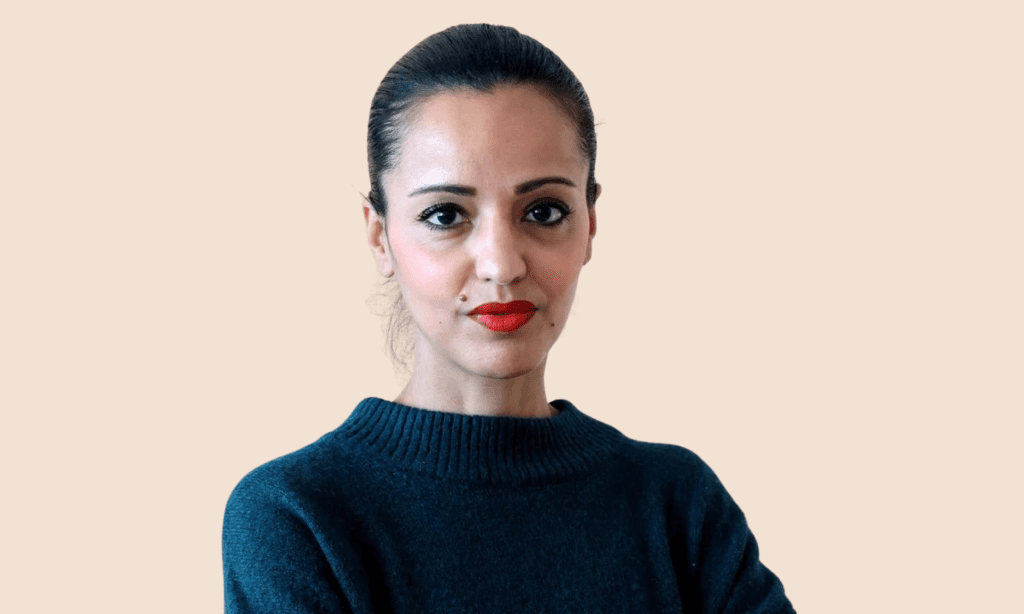
Sawsan Chebli is a Senior Advisor to the Chairman and the Board of Directors of Doha Media City in Qatar.
Born in Berlin in 1978 as the twelfth child of a Palestinian family who had fled their homeland. She and her family lived stateless in the German capital for 15 years before being granted German citizenship.
Despite the challenges of statelessness, Chebli pursued an academic career, studying political science at Freie Universität Berlin. She was one of the most prominent Muslim women of Palestinian descent to hold high-ranking political positions in Germany.
Born in Berlin in 1978 as the twelfth child of a Palestinian family who had fled their homeland. She and her family lived stateless in the German capital for 15 years before being granted German citizenship. Despite the challenges of statelessness, Chebli pursued an academic career, studying political science at Freie Universität Berlin. She was one of the most prominent Muslim women of Palestinian descent to hold high-ranking political positions in Germany.
Her political career began in the German Parliament, where she held various roles focusing on international politics, and human rights advocacy. In 2010, she became an Advisor for Intercultural Affairs to the Senator for the Interior at the Berlin Ministry of the Interior and Sport, where she helped give young Muslims a voice in German society.
In January 2014, then-Foreign Minister Frank-Walter Steinmeier appointed her as Deputy Spokesperson at the Federal Foreign Office, making her one of the first Muslim women in Germany to hold such a position at the federal level. In this role, Chebli witnessed firsthand several global conflicts, such as the annexation of Crimea by Russia, the refugee crisis in the EU, and the Iran nuclear deal. Her main responsibility was advising the minister on shaping Germany’s position on these conflicts and communicating Germany’s foreign policy to the public and both German and foreign media.
From 2016 to 2021, Chebli served as State Secretary for Civic Engagement and International Affairs in the Berlin government. In this role, she led numerous initiatives to strengthen civil society, promote international collaboration, and combat discrimination.
As an author and public speaker, Chebli has consistently highlighted the intersections of race, gender, and democratic participation. She has been a prominent advocate for marginalized groups, ensuring that their voices are included in democratic processes, and emphasizing the need for systemic changes to dismantle discriminatory structures.
As a social media influencer, Chebli has personally experienced hate speech and digital violence. In 2023, she published her first book, LAUT, which received wide acclaim for addressing the challenges democratic societies face due to social media and cyber violence. Drawing on her own experiences, LAUT became a powerful call for resilience, democratic values, and standing up against hate speech. In LAUT, she also calls on governments to adopt robust policies and legal frameworks to protect individuals from online harassment and ensure accountability for digital platforms.
Since September 2024, Sawsan Chebli has been working at Doha Media City as Senior Advisor to the Chairman and the Board of Directors, contributing her expertise in media, international affairs, and strategic development. In this role, she focuses on positioning Media City as a regional and international media hub, developing new partnerships, and advancing innovative media initiatives.
Women peacebuilders often operate in some of the world’s most dangerous contexts—yet the security support available to them is frequently fragmented, repetitive, and short-term. Recognizing the need for a fundamentally different approach, ICAN conducted a holistic security assessment of its Afghan partners, including members of the Women’s Alliance for Security Leadership (WASL). The result is the Holistic Security Menu: a co-designed, partner-driven model that provides practical and sustainable security support—on women peacebuilders’ […]
ICAN’s Mission Five Steps for Sustainable Prevention of Sexual Violence in Conflict ICAN Partner AWAPSA: A Catalyst for Kenya’s First SGBV Court The War Against Ourselves: Afghan Women Peacebuilders’ Response to the Mental Health Crisis in Afghanistan Protecting Women Peacebuilders: The Front Lines of Sustainable Peace
Thank you for your donation to ICAN. Your contribution strengthens women peacebuilders who are preventing violence, protecting communities, and rebuilding trust in some of the world’s most fragile contexts. By supporting ICAN and the Women’s Alliance for Security Leadership (WASL), you help women-led organizations in more than 40 countries mediate conflicts, assist families in crisis, and drive […]
On behalf of the International Civil Society Action Network (ICAN) and members of the global Women’s Alliance for Security Leadership (WASL), we are honored to nominate Francesca Albanese, United Nations Special Rapporteur on the situation of human rights in the Palestinian territories occupied since 1967, for the 2026 Nobel Peace Prize.
In a world increasingly divided by polarization, fear, and misinformation, building trust at the community level has never been more urgent. Religious and faith leaders—often seen as voices of moral authority and guidance—wield significant influence over the social and political attitudes of their communities. As locally rooted, trusted community leaders themselves, the women peacebuilders who make up the Women’s Alliance for Security Leadership (WASL) recognize the value of engaging with religious actors to advance inclusive peace and gender equality
ICAN together with GPPAC, GNWP, Kvinna till Kvinna, Permanent Missions of Bangladesh, Ireland and Sweden to the United Nations, UN Women, WILPF and WPS-HA Compact cordially invite you to a high-level hybrid roundtable on Innovative Solutions for Feminist Financing for Peacebuilding, to take place on 26 April 2022 at 1:15-2:45pm EDT as part of discussions surrounding the High-Level Meeting on Financing for Peacebuilding.
We are a coalition of NGOs, academics, activists, women’s rights defenders, journalists, artists, filmmakers and peacebuilders. We are working to get our Afghan colleagues and families, who are under direct threat from the Taliban, to safety. They have worked to bring peace to Afghanistan over the last 20 years, have fought for the rights of all Afghans, and especially women, girls and minority groups in direct opposition to the Taliban. They now come to us for help because nobody came for them.
The February 1st military coup in Myanmar brutally crushed dissent, and the crackdowns and killings continue. In May another resurgence of violence in Palestine and Israel brought renewed attention to this 54-year conflict. How do social activists survive and thrive when the tanks roll in, the bombs drop, the raids and the arbitrary arrests begin? These, among other questions, were discussed on June 29th at the fifth session of the Coming of Age of the Women, Peace and Security Agenda series, entitled ‘Survival and Activism under Occupation’, focusing on Myanmar and Palestine.