ICAN’s Mission Five Steps for Sustainable Prevention of Sexual Violence in Conflict ICAN Partner AWAPSA: A Catalyst for Kenya’s First SGBV Court The War Against Ourselves: Afghan Women Peacebuilders’ Response to the Mental Health Crisis in Afghanistan Protecting Women Peacebuilders: The Front Lines of Sustainable Peace
Country - Pakistan
About the Organization
PAIMAN Alumni Trust is a non-governmental, nonprofit organization, which was established in 2004 in Islamabad, Pakistan. The organization’s multi-faceted services include capacity building, economic and social development of community partners, research, and advocacy. PAIMAN Alumni Trust also serves as a resource center for disseminating information, as well as a platform for civic action for positive change through community mobilization and advocacy.
PAIMAN’s main mission is to serve as a link between people and their communities through meaningful initiatives that change their lives for the better and promote community development. PAIMAN has worked across various initiatives, including engaging religious leaders and inter-faith communities, supporting youth to build community resilience and social cohesion, providing peace education, and raising awareness around the impacts of violent extremism.
The organization’s work has also included socio-economic empowerment and livelihood support in marginalized communities, promoting healthcare and wellbeing, strengthening civic engagement and democracy, as well as crisis response and disaster management.
ICAN’s Innovative Peace Fund has supported PAIMAN Alumni Trust since 2015.
Core Areas of Work:
- Peacemaking
- PVE
- Crises and climate
- Protection
- Promoting political engagement
- Economic empowerment and livelihood support
Stories & Features
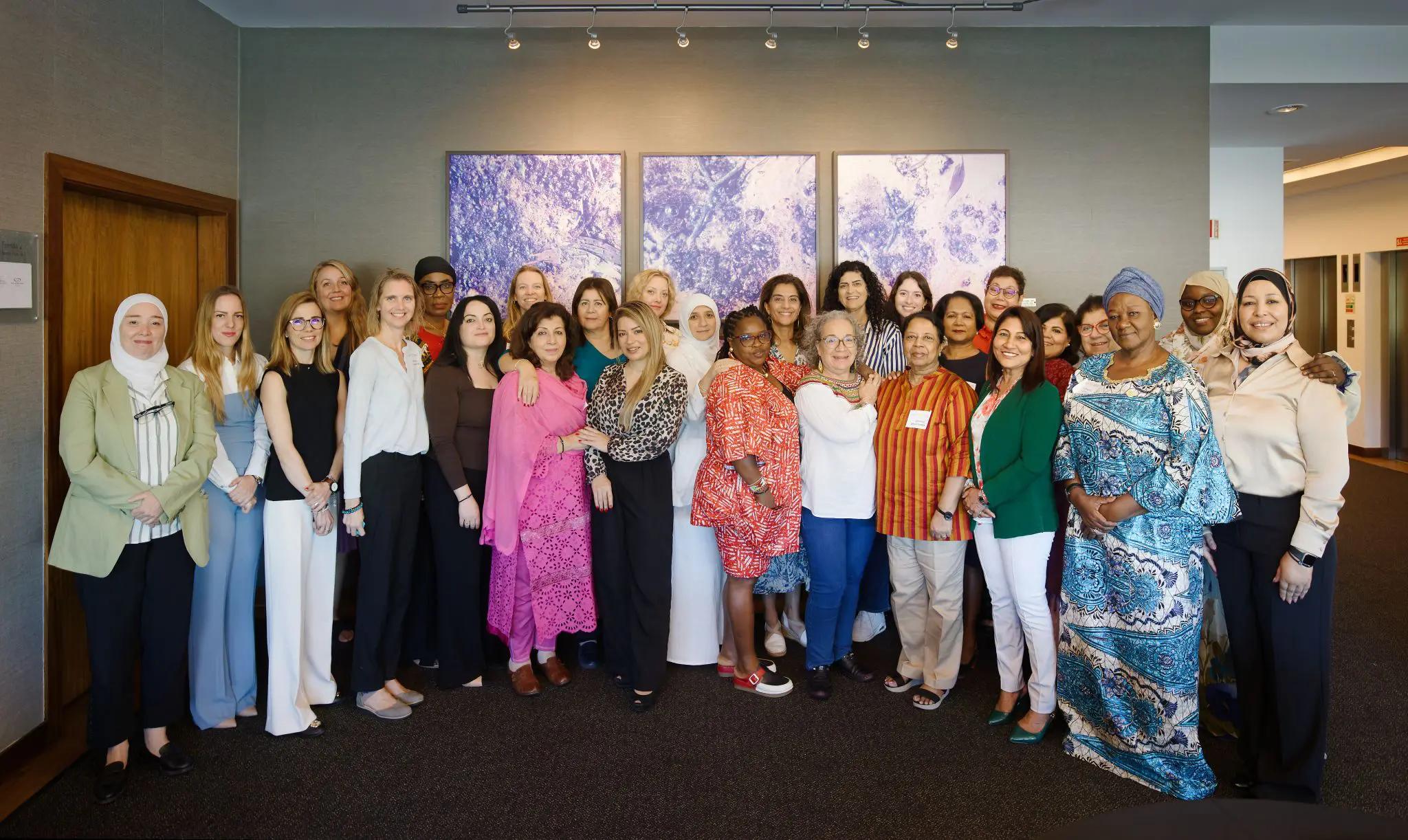
ICAN convened 20 members of WASL in Lisbon for the “Our Strategies, Our Peace” Writers’ Workshop. This unique gathering provided a secure and creative space for women peacebuilders to share their strategies, experience, expertise, and stories from conflict and crisis contexts.
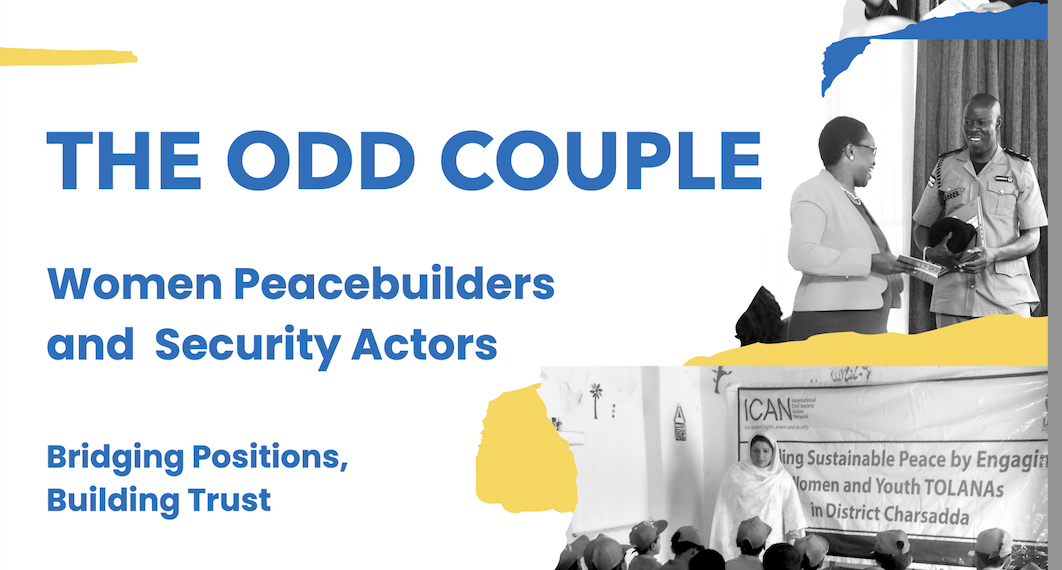
Trust between communities and the security sector is critical for effective governance and peace. So is a vibrant civil society. When women peacebuilders are recognized and engaged as independent, strategic partners and security actors—in their own right—the results are transformative. Twenty-five years on from the launch of the WPS agenda, women peacebuilders’ creativity and contributions to societal peace and security are not only timely, they are even more essential.
Representatives from ICAN and the WASL network attended the International Conference on Women, Peace, and Security (ICWPS) in Manila from October 28-30, 2024.
ICAN, in partnership with the Permanent Missions of Norway, Sweden, and Canada, the United Kingdom Foreign Commonwealth & Development Office (UKFCDO), the Ministry of Gender, Child and Welfare of South Sudan, the Global Partnership for the Prevention of Armed Conflict (GPPAC), and the National Transformational Leadership Institute (NTLI), convened a 1.5-day workshop to discuss how to strengthen community security as a localized, transformative approach for sustainable peace.
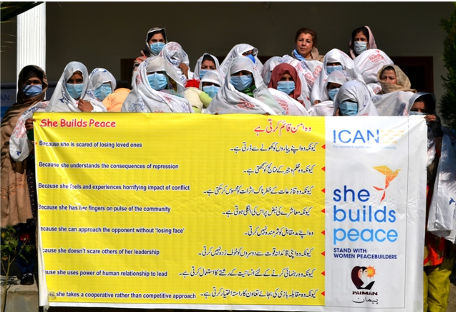
The She Builds Peace campaign was launched in Pakistan by PAIMAN Alumni Trust.
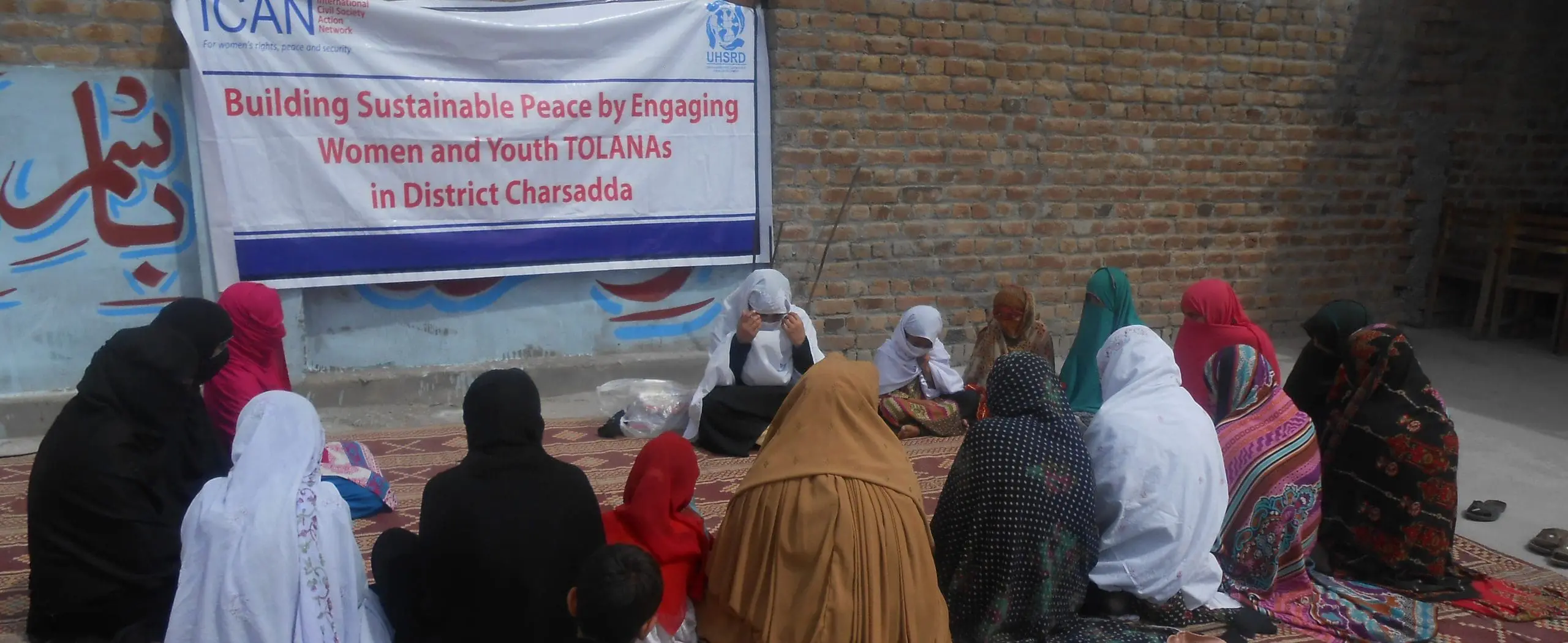
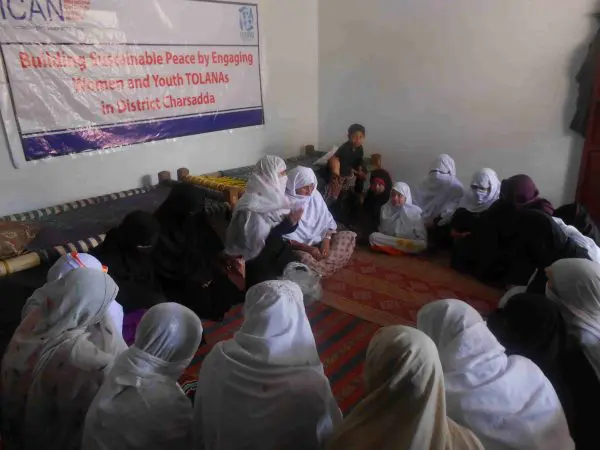
With support from ICAN’s Innovative Peace Fund (IPF), PAIMAN has been actively working in the Charsadda district of Pakistan to strengthen its TOLANA network, a peace network comprising over 150 women, mainly mothers. The aim is to equip these women with the necessary tools to improve their livelihoods and combat violent extremism effectively.
This report contributes a gendered analysis of approaches to the disengagement, rehabilitation and reintegration of women and girls associated with violent extremism. It highlights the gaps in current policies and practice, as well as the solutions that are emerging in part from the experiences and innovations of women-led civil society initiatives. The report concludes with practical recommendations for policymakers and programming guidance for practitioners.
Drawing on work with PAIMAN in Pakistan, this paper, written by WASL Partner and PAIMAN co-founder Mossarat Qadeem for the LSE Center for Women, Peace and Security, shows how women at various levels of Pakistani society can advance the cause for a more robust strategy on P/CVE.
Mossarat Qadeem and the Tolana Mothers convince a dozen women to stop stitching suicide jackets for extremist groups.

We are the foot soldiers, we are the first responders. We are more powerful than any soldiers, we are the most powerful people on earth because we have the capacity to do what others cannot do.
More Countries & Partners
YLDF envisions a Yemen in which young women and men can lead across society and contribute to a better world.
PCID is a non-partisan, nonprofit organization that is dedicated to the study of Islamic and democratic political thought.
AWAW creates space for war affected women and relatives of those who are missing to work together for peace.
Women Relief Aid (WRA) is a women-led, non-governmental, nonprofit, non-political, and non-religious organization based in South Sudan.
Madaniya is a nonprofit, non-governmental organization that was established in 2018 by a group of women activists in Sudan.
The Center for Civil Society and Democracy (CCSD) is an independent, nonprofit, non-governmental organization based in Syria.
Kareemat Center is an organization that supports conflict-affected Syrian women and children who sought refuge in Turkey.
Mobaderoon is a Syrian organization that works to promote active citizenship and build trust to support and sustain peaceful coexistence.
Zenobia Association for Syrian Women works to strengthen the capacities of Syrian women to create a better quality of life.