Guidance Areas for a Better Peace: Give Political Support for Inclusivity
2. Reference and demonstrate privately and publicly your institution’s commitment to the UNGA Resolution on Peaceful Mediation of Disputes and the UNSCR 1325 agenda.
3. Commit to gender parity and expertise in your team (30% minimum quota for women in negotiating teams/delegations); seek out women peacebuilders for their expertise.
4. Share multiple inclusivity models/methods with all stakeholders and mediators and explain why they matter. Do not rely on one method.
5. Invite women peacebuilders to speak and participate in international preparatory, strategy, or implementation meetings/summits. Provide updates, support, and time for women to prepare.
6. Call for the inclusion of women peacebuilders as signatories to peace agreements – point to precedents in Liberia, Somalia, Northern Ireland.
7. Verify that gender sensitivity is included in the terms of reference of transition or implementation bodies; ensure quotas or other measures are in place for the effective inclusion of women.
8. Set up or host regular meetings for women peacebuilders with international missions, diplomatic teams, and envoys, including during the pre-talks and implementation phases.
9. Establish national thematic working groups to contribute towards the implementation of agreements; include a ‘1325’ group to monitor and ensure gender sensitivity, and assign members of the ‘1325’ group to other thematic groups, as in Nepal in 2007.
10. Mitigate the risk of spoilers by sustaining and funding pro-peace women’s groups to keep the focus on implementation and warn against negative developments after an agreement has been signed.
Important to note:
- If inviting elders such as religious or clan leaders to Track I or II talks, consult women peacebuilders about which leaders are credible, respected, and uphold human rights and equality values.
- Even if the scope for broadening participation in formal talks is limited, engage with women peacebuilders on a systematic, constant, and regular basis throughout the process.
- The humanitarian, security, and political costs of exclusive processes, which are more prone to failure, make inclusivity a common sense condition of political and financial support.
- All UN Security Council country visits should include meetings with civil society organizations and women peacebuilders to hear their views.
Related Posts
ICAN’s Mission Five Steps for Sustainable Prevention of Sexual Violence in Conflict ICAN Partner AWAPSA: A Catalyst for Kenya’s First SGBV Court The War Against Ourselves: Afghan Women Peacebuilders’ Response to the Mental Health Crisis in Afghanistan Protecting Women Peacebuilders: The Front Lines of Sustainable Peace
UncategorizedThank you for your donation to ICAN. Your contribution strengthens women peacebuilders who are preventing violence, protecting communities, and rebuilding trust in some of the world’s most fragile contexts. By supporting ICAN and the Women’s Alliance for Security Leadership (WASL), you help women-led organizations in more than 40 countries mediate conflicts, assist families in crisis, and drive […]
Uncategorized
On behalf of the International Civil Society Action Network (ICAN) and members of the global Women’s Alliance for Security Leadership (WASL), we are honored to nominate Francesca Albanese, United Nations Special Rapporteur on the situation of human rights in the Palestinian territories occupied since 1967, for the 2026 Nobel Peace Prize.
ICAN Featured ICAN Updates Uncategorized
We are deeply honored and excited to welcome Terry Greenblatt and Sawsan Chebli to the International Civil Society Action Network (ICAN) Board of Directors.
Uncategorized
Sign up for updates on ICAN publications, events and programming.
UncategorizedPRESS RELEASE: Watan e Ma – وطن ما – Our Homeland: An Interactive Event and Exhibit Honoring the Resilience of Afghan Women Peacebuilders
Uncategorized
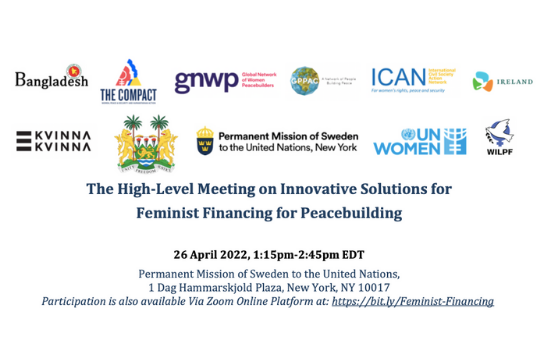
ICAN together with GPPAC, GNWP, Kvinna till Kvinna, Permanent Missions of Bangladesh, Ireland and Sweden to the United Nations, UN Women, WILPF and WPS-HA Compact cordially invite you to a high-level hybrid roundtable on Innovative Solutions for Feminist Financing for Peacebuilding, to take place on 26 April 2022 at 1:15-2:45pm EDT as part of discussions surrounding the High-Level Meeting on Financing for Peacebuilding.
ICAN Latest ICAN Updates Uncategorized
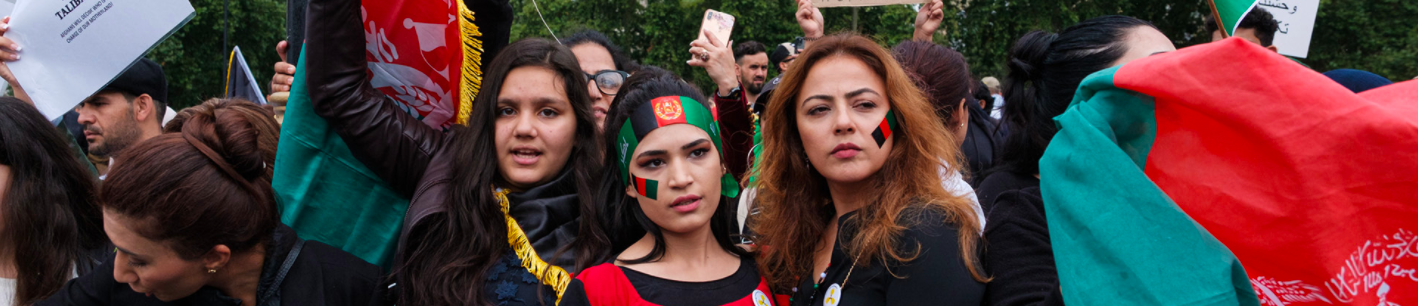
We are a coalition of NGOs, academics, activists, women’s rights defenders, journalists, artists, filmmakers and peacebuilders. We are working to get our Afghan colleagues and families, who are under direct threat from the Taliban, to safety. They have worked to bring peace to Afghanistan over the last 20 years, have fought for the rights of all Afghans, and especially women, girls and minority groups in direct opposition to the Taliban. They now come to us for help because nobody came for them.
Exclude from RSS ICAN Updates Uncategorized
The February 1st military coup in Myanmar brutally crushed dissent, and the crackdowns and killings continue. In May another resurgence of violence in Palestine and Israel brought renewed attention to this 54-year conflict. How do social activists survive and thrive when the tanks roll in, the bombs drop, the raids and the arbitrary arrests begin? These, among other questions, were discussed on June 29th at the fifth session of the Coming of Age of the Women, Peace and Security Agenda series, entitled ‘Survival and Activism under Occupation’, focusing on Myanmar and Palestine.
ICAN Latest ICAN Updates Uncategorized Wi'am