مدينة البصرة في جنوب العراق، المدينة التي تضررت طويلا من الحرب وقلة الاستثمارات، تواجه تهديدات متزايدة بسبب خطاب الكراهية والتطرف وتآكل الثقة بين المواطنين والمؤسسات. وغالبا ما يقع الشباب -وخاصة الشابات- في قلب هذه التوترات، في عالم تتقاطع فيه المضايقات والتحرش الالكتروني مع الواقع. وفي مثل هذه البيئة، تتبنى جمعية الفردوس العراقية (الفردوس) نهجا جديدا […]
The Odd Couple: Women Peacebuilders and Security Actors Bridging Positions, Building Trust
The WPS agenda has proven a vital entry point for women peacebuilders to engage with the security sector and build trust within affected communities. These efforts—often invisible—are contributing to the reform of the sector, reshaping local security environments and mitigating violence.
The War Against Ourselves: Afghan Women Peacebuilders’ Response to the Mental Health Crisis in Afghanistan
This case study describes the drivers of the mental health crisis in Afghanistan, its gendered and cultural dimensions, and the strategies used by Afghan women-led peacebuilding organizations to provide solutions. The authors conducted interviews with representatives of Afghan women-led peacebuilding organizations and thematic experts, which were complemented by a desk review of project documentation and […]
Home»ICAN Latest»
Carrying the Weight of Caring for Communities and Countries: Women Peacebuilders and COVID-19
Carrying the Weight of Caring for Communities and Countries: Women Peacebuilders and COVID-19
28 May 2020
By Lauren Mellows
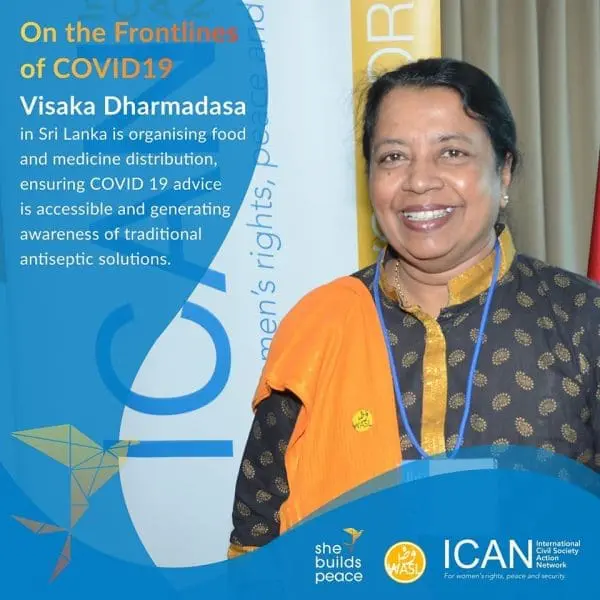
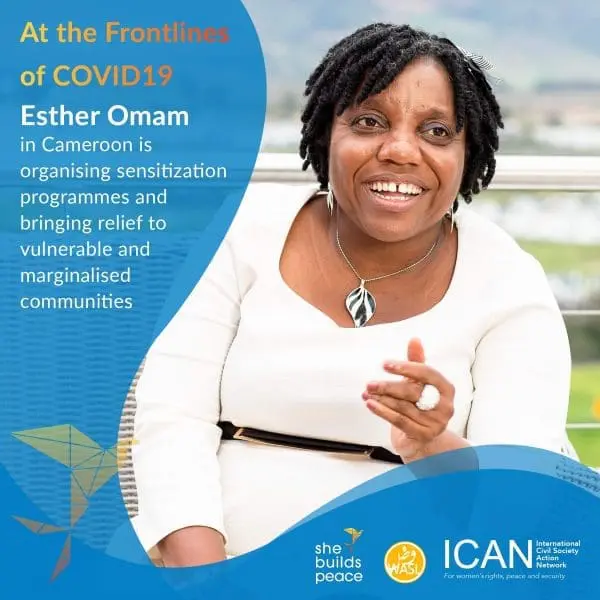
As some countries begin to see the light at the end of the tunnel, for many others, respite is not on the horizon. During the eighth virtual meeting of the Women’s Alliance for Security Leadership (WASL) on May 21, 2020, women peacebuilders highlighted some tough truths about worsening poverty, mismanaged Covid-19 funds, tragic events that have been largely ignored, and feelings of desertion by the international community.
As ever, the call was a firm reminder that WASL is a community; partners shared honestly about feelings of exhaustion, offered each other moral support and promised to keep each in their prayers as individuals overcome personal challenges. Adding a brighter note, a wave was exchanged between a small son in the United States and a young grandson in Cameroon, showing the universality of the joy and resilience of childhood even during difficult and unprecedented times.
Rising poverty and lost education
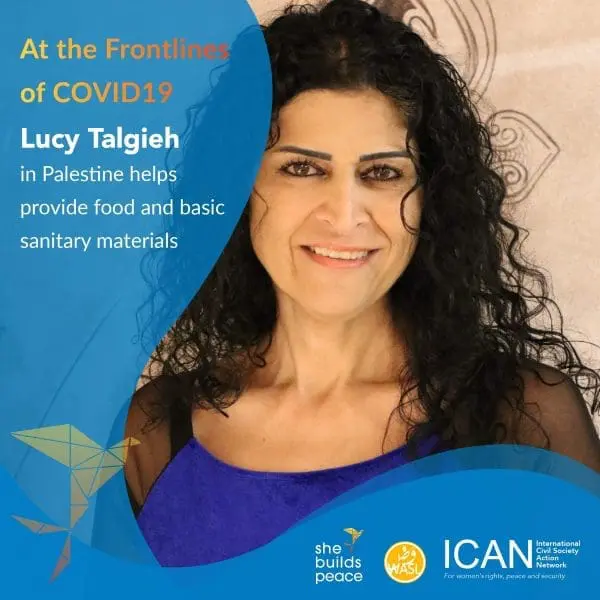
Across the world, women and civil society organisations report the desperate financial situation of communities during Covid-19. Lockdowns, curfews and isolation measures hit people who are dependent on daily wages particularly hard and the International Labour Organization reports that worsening economic conditions in Asia, Latin America and the Arab world threaten to undo decades of progress in reducing global poverty. In Libya and Iraq, WASL partners reveal that people are unable to work, poverty is worsening, and families are struggling to put food on the table. There have been shocking reports from Turkey that desperate Syrian refugees are selling their organs in return for money to pay rent and buy food. This black market exploits a vulnerable population who have fled war and violence and are attempting to rebuild their lives.
In conflict-affected countries, the economic hardships which are amplified by the pandemic add another layer of challenge to the work of peacebuilders. Where the state fails to provide for people’s basic health and economic needs, not only is it is impossible to make peace but the risk of extremist ideologies taking hold is multiplied. A WASL partner in Afghanistan expressed concern about the radicalization of women in her community, whom she fears may take on jihadi attitudes towards “fighting for God”.
“Nothing is good about war, except stopping it”
– WASL partner in Syria
WASL partners in Albania, Afghanistan and Sri Lanka voiced concerns over the disruption to education during the coronavirus crisis. The pandemic widens the gap between the children who ‘have’ and those who ‘have not’ because children who are digitally connected can continue to be taught and learn when schools are closed whereas underprivileged children who lack digital facilities are excluded from accessing any education. Canadian Senator Mobina Jaffer also expressed her fears over a generation of girls and young women whose education will be lost because of the crisis.
Lack of resources
The mismanagement of funds allocated to fighting coronavirus is a recurring theme in these weekly virtual meetings. In Libya, a WASL partner claims that while a great deal of money has been assigned by governments and the international community, there is no evidence of it reaching the ground. She asks: “Don’t the people who give the money have the obligation to follow it up?” The same partner expressed concerns about inaccurate coronavirus figures, with a far higher number of people suffering than is being reported.
The inability of funds to reach the communities in need highlights an integral problem with a developmental process:
“The top-down approach does not come down, the trickle-down approach does not trickle down—we have to build community structures”
– Sanam Naraghi Anderlini
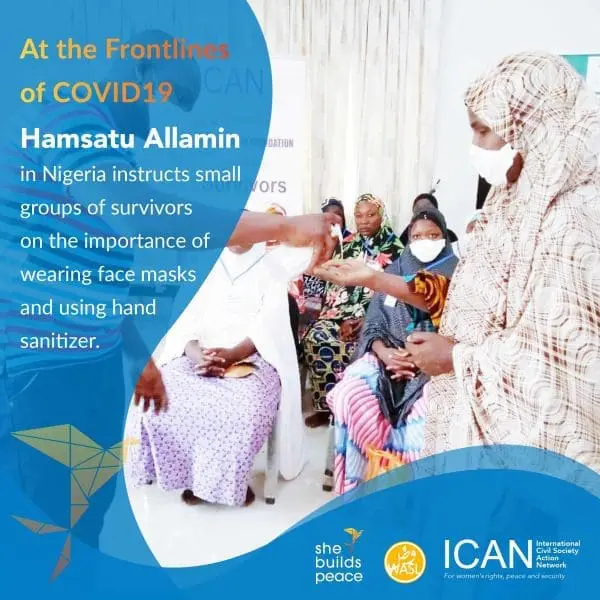
This crisis has demonstrated that who is on the ground and who has access are what matter. Week after week these calls demonstrate how women peacebuilders are taking on the burden of the pandemic and operating as first responders to the needs of their communities. Not only do they know best what their communities need, but they also have access to remote areas and to marginalized groups such as refugees and IDPs, in a way that external actors do not. To maximize the impact and effectiveness of COVID-19 responses, it is essential for the international community to partner with grassroots initiatives and community-based women and youth networks.
Absence of the international community
“When the world stoops so low as to not say a word when babies are killed in a maternity ward, we know we are in a bad place”
– Senator Mobina Jaffer
As global powers and the world’s leading industrial countries struggle to uphold their own social safety nets and economies, attention and the allocation of resources to the rest of the world is disjointed and scant. Media attention in much of the West has been focused on internal matters, meaning horrific abuses of human rights in other parts of the world are going largely unnoticed. In several parts of the world, women peacebuilders felt they were being ignored by the international community. For example, the attack on a Kabul maternity hospital on May 13, in which at least 24 people were killed, including new-borns, mothers and nurses, did not attract the attention and outcry expected of such a heinous crime. In Tripoli on May 19, a 25-year-old woman close to a WASL partner was kidnapped from her home by armed men. The family of the young woman, Wesal Meinna, have started a campaign calling on the United Nations Support Mission in Libya to support them in investigating and securing her release. Our partner in Libya asked why the international community was turning a blind eye to the situation in Tripoli, stating that there is no reliable law enforcement, government or security in the Libyan capital.
“Everyone is silent, and I am desperate, it feels like there is nothing civil society can do. No one is listening to us”
– WASL partner in Libya.
ICAN CEO and founder Sanam Naraghi Anderlini echoed the sentiments arguing that “we are seeing a total vacuum on global leadership”. With the failure of the United Nations Security Council to agree upon a Global Ceasefire resolution, she called upon smaller countries to step up and take moral authority. The WASL community reiterated how vital it is that the world does not lose track of the critical issues going on and does not turn its back on vulnerable minority groups. Situations with the Rohingya in Bangladesh, Muslims in Kashmir, and the Uighurs in China all show worrying warning signs.
It is clear that more attention is needed on those at most risk, whether that risk is from inadequate health facilities, continued violent extremism, increased poverty and lack of work, or a combination thereof. Peacebuilders on the ground, especially women peacebuilders, have been carrying much of the weight of caring for their communities and countries. They need the support of the international community to help ensure these conflicts and their crucial work are not forgotten.
The International Civil Society Action Network (ICAN) and the Women’s Alliance for Security Leadership (WASL) Statement: The Escalating U.S.-Israeli War on Iran and its Regional Ramifications
On October 6, 2025, the U.N. Security Council holds its annual open debate on Resolution 1325 on Women, Peace, and Security. Today, we are not issuing a new statement. Instead, we are honoring our community of women peacebuilders—who appeared before the Security Council throughout these 25 years, speaking for the millions they represent—by echoing their messages.
ICAN FeaturedICAN LatestICAN UpdatesWASL UpdatesWomen's Alliance for Security Leadership
On behalf of the International Civil Society Action Network (ICAN) and members of the global Women’s Alliance for Security Leadership (WASL), we are honored to nominate Francesca Albanese, United Nations Special Rapporteur on the situation of human rights in the Palestinian territories occupied since 1967, for the 2026 Nobel Peace Prize.
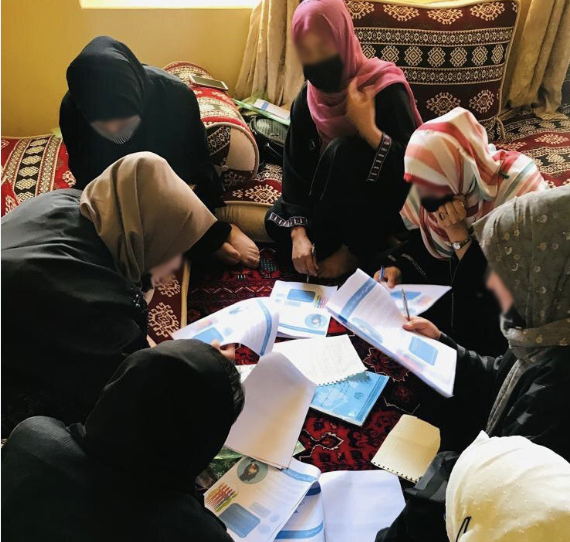
در عرصه صحت روانی، افغانستان با بحران پیچیدهای مواجه است که این بحران به طور جدایی ناپذیر با ناامنی شدید فیزیکی، سیاسی و اقتصادی در کشور گره خورده و این نا امنی ها بحران را تشدید میکند. برای رسیدگی به آسیب های روانی، صحت و بهداشت جامعه به شیوه های پاسخگو به جنسیت و با مد نظر گرفتن حساسیت های فرهنگی، سازمانهای فعال در عرصه صلح سازی به رهبری زنان افغان در موقعیتی منحصربه فرد قرار دارند. این سازمان ها خدمات ابتدایی ارائه میدهند، مهارتها را توسعه میبخشند و در شکلدهی هنجارهای فرهنگی و جنسیتی نقش مؤثر ایفا میکنند.
ICAN FeaturedICAN LatestICAN UpdatesWASL UpdatesWomen's Alliance for Security LeadershipWPSO
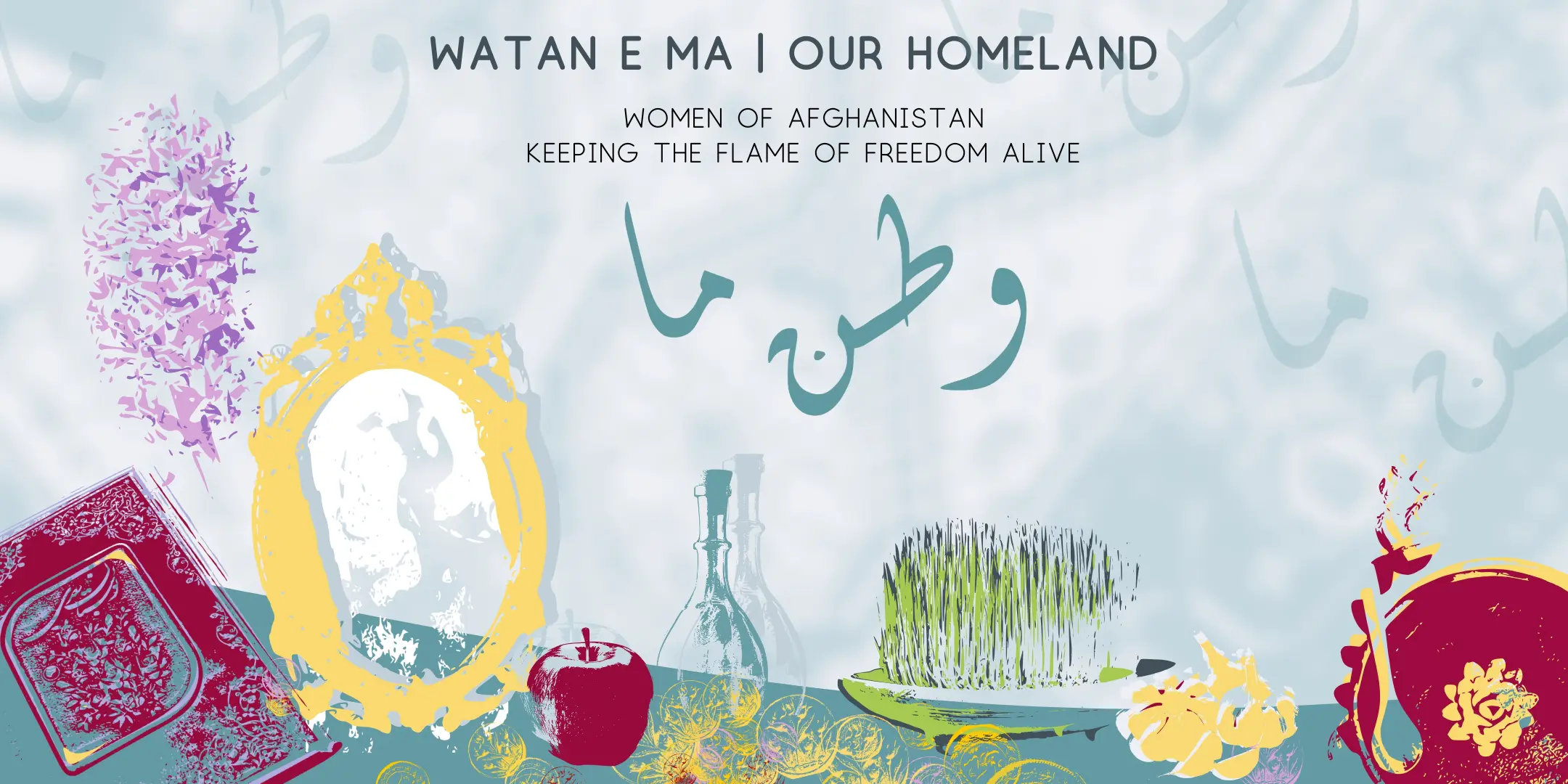
In a powerful departure from traditional advocacy, ICAN—guided by our Afghan partners and women peacebuilders—hosted the event “Watan e Ma – وطن ما – Our Homeland: Women of Afghanistan Keeping the Flame of Freedom Alive” on March 17, 2025 at Blue Gallery in New York City. Held during the 69th Commission on the Status of Women (CSW69), the event celebrated Afghan cultural heritage and the resilience of Afghan women peacebuilders, who persist in their leadership for peace, justice, and equality under the Taliban’s regime of gender apartheid.
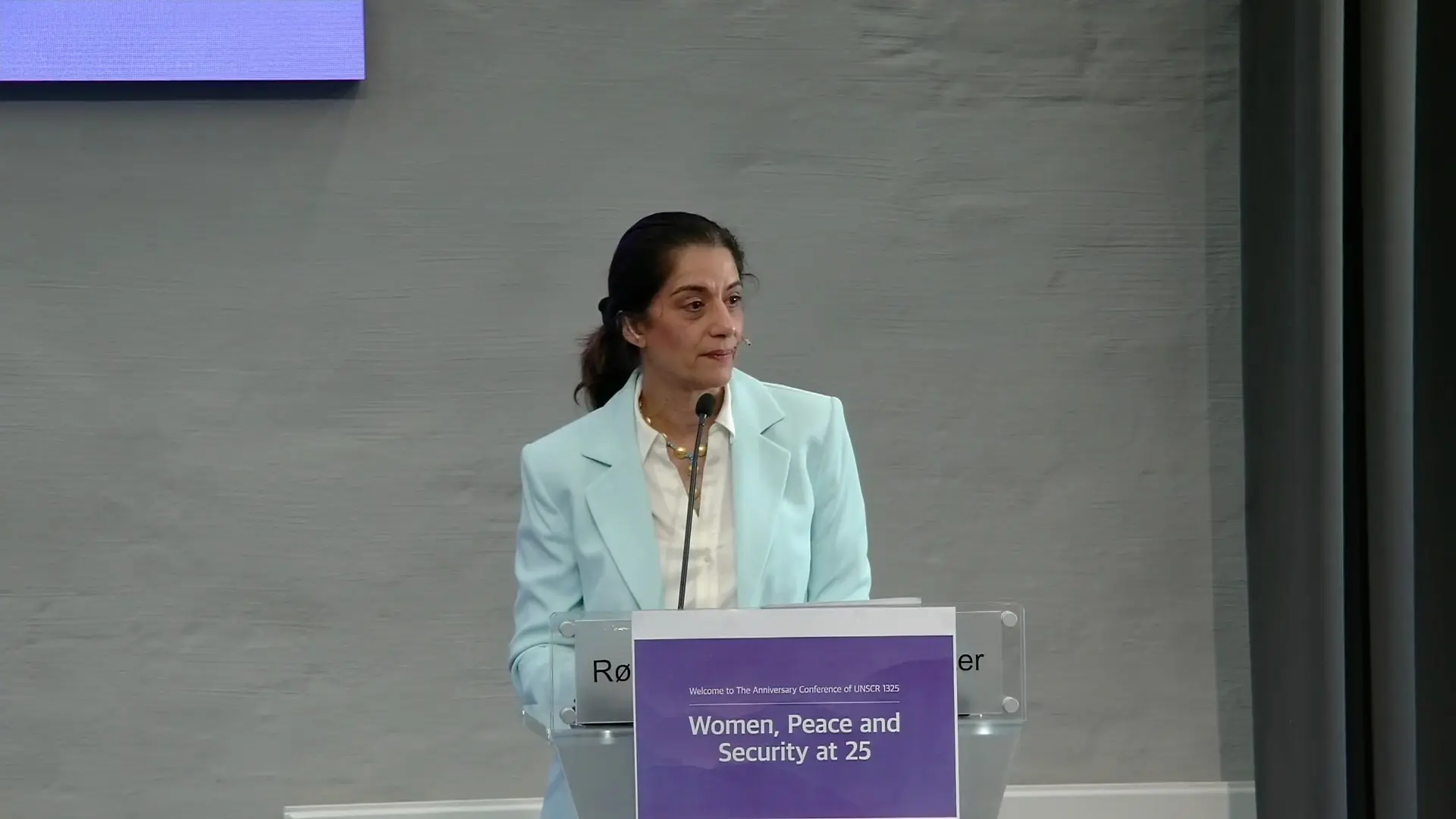
On May 5, 2025, ICAN's Sanam Naraghi Anderlini delivered the keynote speech at the two-day international conference "25th Anniversary Conference of UNSCR 1325 Women, Peace and Security."
As Senator Mobina Jaffer concludes 23 years of distinguished public service in the Canadian Senate, we extend our deepest thanks for her steadfast leadership as Chair of ICAN’s Board of Directors from 2014 to 2024.
Together with André Mundal, our new Interim Chair of the ICAN Board of Directors, we are delighted to welcome two new members to our Board of Directors.