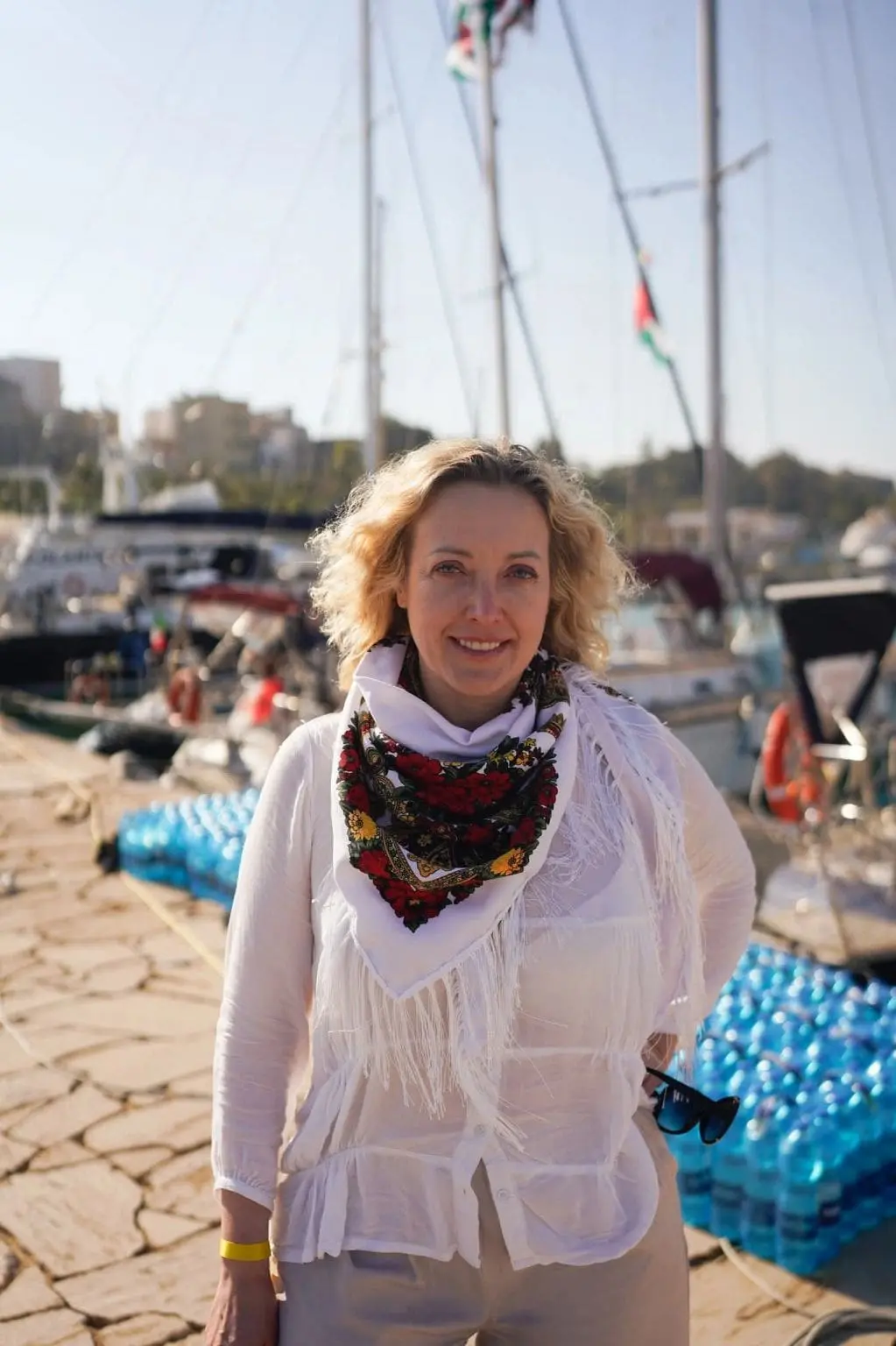
Nina Potarska, a member of the ICAN-spearheaded Women’s Alliance for Security Leadership, is currently at sea with the Global Sumud Flotilla, a civilian-led mission organized with the Freedom Flotilla Coalition, en route to Gaza.
The international community needs to take urgent action to ensure Afghan women and girls across all ethnic and religious communities, in urban and rural areas, feel safe and have equal rights and opportunities to a life of dignity, peace, safety and justice.
To achieve this overarching goal, and to ensure that there is no regression in the context of the impending humanitarian crisis, international actors need to take steps to accomplish the following four key outcomes:
Outcome I: Afghan women and girls across all communities and in urban and rural areas – including female-headed households – receive the humanitarian aid they need, including but not limited to food, shelter, heating, and health care.
A. Design clear gender-responsive plans to deliver humanitarian aid to women, girls, men and boys in religious, ethnic, and other minority communities across all of Afghanistan, in consultation with women leaders of Afghan civil society organizations.
B. Ensure aid programmes address the health, sanitation, reproductive, and nutritional needs of women and girls.
C. Include senior women officials and personnel with understanding of Afghanistan’s local languages and cultural context in international humanitarian delegations. Ensure UN missions have UN women representation.
D. Guarantee inclusion of Afghan women with experience in aid delivery in negotiations with Taliban representatives and local consultations.
E. Support access to cash transfer programs to Afghan families, targeting women and female headed households.
a. Allow safe passage for aid to be delivered to all Afghans, including women and girls, particularly those in religious and ethnic minority communities.
Outcome II: All violence against the Afghan population, especially women, girls, and minorities ends, including but not limited to instances of forced marriage and gender-based violence in private and public settings.
A. Systematically monitor, publicize, and inform organizational leadership of emerging reports of violence, such as reports of forced marriage.
B. Ensure gender-based violence prevention and response services are prioritized and funded.
C. Fund and maintain shelters and safehouses for Afghan women and girls at elevated risk of violence.
D. Report human rights violations through UN Special Procedures to the Human Rights Council and the ICC.
a. Issue, publicly announce, and enforce a new decree that expressly prohibits violence, harassment, threats, exploitation against the Afghan population, especially against women, girls, and minorities.
b. Arrest and charge those who violate or disrespect women verbally, physically, or sexually.
c. Enforce measures against forced marriage, which violates Islamic Sharia and is a crime against humanity. Respect divorces and the request for divorce.
Outcome III: Afghan women and girls continue to get an education, access public life, and go to work, including equal participation in legal, judicial, and security sectors.
A. Systematically monitor, publicize and inform organizational leadership of changes to Afghan women and girls’ rights, opportunities to work, attend school, access healthcare, access bank accounts, own property, move and travel freely, and fill leadership roles.
a. Immediately lift restrictions on women and girls’ freedom of movement, such as requirements to have a Mahram to go to work, access public life and services.
b. Give all Afghans safe and unfettered access to their bank accounts, savings, and services like Western Union to enable direct cash transfers.
c. Guarantee the security, protection, and ability to receive and retain salaries for women working in legal, judicial, security, and civil society sectors.
d. Reverse the reduction of women’s salaries, e.g. of teachers’ salaries in Herat.
e. Guarantee women and girls’ access to education from early childhood through university.
Outcome IV: Afghan civil society organizations, including women-led organizations, continue their work safely and sustainably.
A. Hire diverse Afghan civil society organizations, including women-led organizations, to provide for the health, education, livelihoods, and security of their communities.
B. Ensure civil society organizations have access to secure communication and protection mechanisms.
C. Fund Afghan civil society organizations, including women-led organizations, by providing long- term flexible funding not tied to specific activities.
a. Issue, publicly announce, and enforce a new decree that guarantees the protection of the life and property, and the freedom of movement of the staff and leaders of Afghan civil society organizations, including women-led civil organizations.
Signatories:
International Civil Society Action Network (ICAN)
Ahmad Masood Amer
Executive Director, Centre for Afghanistan Policy Studies
Humira Saqib
Director, Afghan News Agency Association
Women Peace Study Organization (WPSO)
Sonia Ahmadi
Founder and CEO, Afghan-Norwegian Women for Change in Norway
Humaira Rasuli
Human Rights Lawyer/ Activist
Marina LeGree
Ascend: Leadership Through Athletics
Women’s Regional Network: Afghanistan, Pakistan and India
People Serving Girls At Risk
Najla Ayoubi
Just Like My Child Foundation
Robinah Rubimbwa
Coalition for Action on 1325
Kendahl Tyburski
Public International Law & Policy Group
International Action Network for Gender Equity & Law (IANGEL)
Hope Revival Organization
Heartland Alliance International
KIOO Project
Leyla Merlo
Columbia University, Alliance for Peacebuilding
Zonta International
National Forum for Human Rights
WILPF AFGHANISTAN SECTION
Caryn Dasah
Hope Advocates Africa
Association of War Affected Women
Tom Grönberg
Girl Rising
Colorado Coalition on Women, Peace and Security
Korron-Scientific Community Based Care for Social, Health & Human Empowerment Initiative
Joseph Lapinski
Nassim Assefi
Mikko Pyhälä
Yvonne Bih Muma
Jade O’Halloran
Nicoline Nwenushi Wazeh Tumasang
Pathways for Women’s Empowerment and Development (PaWED)

Nina Potarska, a member of the ICAN-spearheaded Women’s Alliance for Security Leadership, is currently at sea with the Global Sumud Flotilla, a civilian-led mission organized with the Freedom Flotilla Coalition, en route to Gaza.
ICAN Featured Women's Alliance for Security Leadership
مدينة البصرة في جنوب العراق، المدينة التي تضررت طويلا من الحرب وقلة الاستثمارات، تواجه تهديدات متزايدة بسبب خطاب الكراهية والتطرف وتآكل الثقة بين المواطنين والمؤسسات. وغالبا ما يقع الشباب -وخاصة الشابات- في قلب هذه التوترات، في عالم تتقاطع فيه المضايقات والتحرش الالكتروني مع الواقع. وفي مثل هذه البيئة، تتبنى جمعية الفردوس العراقية (الفردوس) نهجا جديدا […]
ICAN Featured
The International Civil Society Action Network (ICAN) and the Women’s Alliance for Security Leadership (WASL) Statement: The Escalating U.S.-Israeli War on Iran and its Regional Ramifications
ICAN Featured ICAN Latest
In March 2020, ICAN and its global network of women-led peacebuilding organizations, WASL, launched the She Builds Peace (SBP) campaign.
Allamin Foundation CAGEAD COEC ICAN Featured ICAN Latest PAIMAN SBP Frameworks She Builds Peace Countries WCDCA Women Relief Aid Women's Alliance for Security Leadership
ICAN is hiring a Staff Accountant to provide financial and administrative support to ICAN’s Finance Director and broader team.
ICAN Updates Jobs
Iraqi Al-Firdaws Society (Al-Firdaws) is taking a new approach to peacebuilding. Their project, Horizon: Promoting Community Peace, supported by ICAN’s Innovative Peace Fund (IPF), brings together youth, local security forces, and civil society actors to address violent extremism through dialogue, education, and community-based action.
ICAN Featured
Women peacebuilders often operate in some of the world’s most dangerous contexts—yet the security support available to them is frequently fragmented, repetitive, and short-term. Recognizing the need for a fundamentally different approach, ICAN conducted a holistic security assessment of its Afghan partners, including members of the Women’s Alliance for Security Leadership (WASL). The result is the Holistic Security Menu: a co-designed, partner-driven model that provides practical and sustainable security support—on women peacebuilders’ […]
ICAN Featured Uncategorized
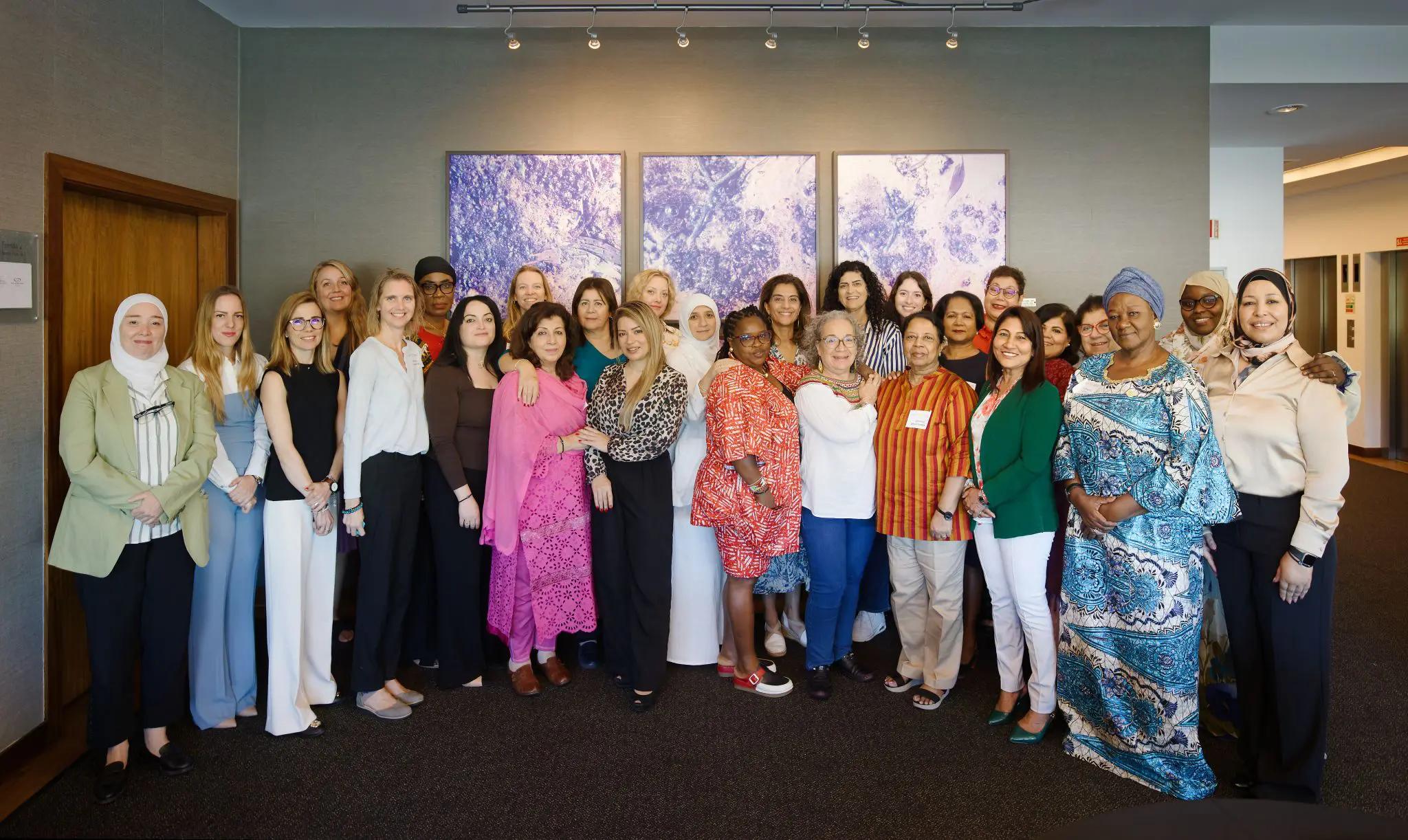
ICAN convened 20 members of WASL in Lisbon for the “Our Strategies, Our Peace” Writers’ Workshop. This unique gathering provided a secure and creative space for women peacebuilders to share their strategies, experience, expertise, and stories from conflict and crisis contexts.
Addu Women's Association Allamin Foundation AWAW CAGEAD CIASE COEC ICAN Featured Mobaderoon PAIMAN Rescue Me WCDCA Wi'am Women's Alliance for Security Leadership WPSO
On October 6, 2025, the U.N. Security Council holds its annual open debate on Resolution 1325 on Women, Peace, and Security. Today, we are not issuing a new statement. Instead, we are honoring our community of women peacebuilders—who appeared before the Security Council throughout these 25 years, speaking for the millions they represent—by echoing their messages.
ICAN Featured ICAN Latest ICAN Updates WASL Updates Women's Alliance for Security Leadership
In South Sudan, a nation where peace has long remained fragile and democratic progress uncertain, women are stepping forward to shape the future of their country. Long excluded from the corridors of power, they are forging their own movement for lasting change.
ICAN Featured Innovative Peace Fund
On behalf of the International Civil Society Action Network (ICAN) and members of the global Women’s Alliance for Security Leadership (WASL), we are honored to nominate Francesca Albanese, United Nations Special Rapporteur on the situation of human rights in the Palestinian territories occupied since 1967, for the 2026 Nobel Peace Prize.
ICAN Featured ICAN Updates Uncategorized