After more than a decade of war, Syria is navigating a fragile transition. The fall of the Assad regime in December 2024 ended more than 50 years of authoritarian rule, but it did not bring immediate stability. Instead, the country faces a deepening economic crisis, security tensions, ongoing human rights violations, mass displacement, and severe social fragmentation.
More than 16 million Syrians require humanitarian assistance, and over 90 percent of the population lives below the poverty line. Conflict has displaced millions within Syria and across borders, and devastated infrastructure, livelihoods, and essential services. Violence and insecurity persist, underscoring how fragile the transition remains.
Years of violence, repression, and division have profoundly fractured relationships within and between communities. Long-suppressed tensions have surfaced along sectarian, political, geographic, and social lines, while unresolved trauma and competing narratives of the past continue to shape everyday life.
In some communities, friction between returnees and those who stayed during the war have created new fault lines; in others, economic hardship and competition over scarce resources have deepened mistrust. Many Syrians also carry unspoken memories of violence, detention, displacement, and loss.
Hate speech and polarization—especially among youth—have become more visible, alongside local violence driven by revenge. Without safe community spaces to address these issues, misunderstandings and resentment can quickly escalate. As Syrians return and rebuild, these fractures pose a critical question: how can communities move forward together without addressing the wounds of the past?
For Mobaderoon, a women-led peacebuilding organization and member of the Women’s Alliance for Security Leadership (WASL), these dynamics revealed a critical gap: humanitarian and recovery efforts are essential but often overlook the need to rebuild relationships and address the social and emotional dimensions of conflict.
Mobaderoon was particularly well positioned to take on this work because of the trust and credibility it had built through years of locally rooted humanitarian response. During both the COVID-19 pandemic and the 2023 Turkey-Syria earthquake, the organization implemented agile, community-based responses that combined emergency support with sustained social engagement. During the pandemic, more than 80% of its programs were adapted into interactive digital formats, while over 200 facilitators were trained to continue community support and capacity-building remotely. Following the earthquake, Mobaderoon mobilized emergency teams across Aleppo, Latakia, Hama, and Tartous, providing psychosocial support and coordinating community-led relief efforts while maintaining educational and community initiatives.
These experiences strengthened Mobaderoon’s relationships within communities and reinforced local trust in the organization, demonstrating the vital importance of investing in locally led and locally rooted organizations that can respond flexibly to crisis while sustaining the relationships necessary for long-term peacebuilding.
Building on this foundation, Mobaderoon launched its Local Peace Committees initiative, supported by the International Civil Society Action Network (ICAN) through its Innovative Peace Fund (IPF) and the Vitol Foundation.
The initiative recognized that in contexts shaped by displacement, trauma, and deep social division, humanitarian recovery and peacebuilding cannot be separated: rebuilding infrastructure and services must go hand in hand with rebuilding trust and relationships within communities. Furthermore, this project was based on a core premise that sustainable peace cannot be imposed from above. It must be built within communities through dialogue, trust-building, and locally-driven solutions grounded in daily realities.
Local Peace Committees: From Dialogue to Local Action
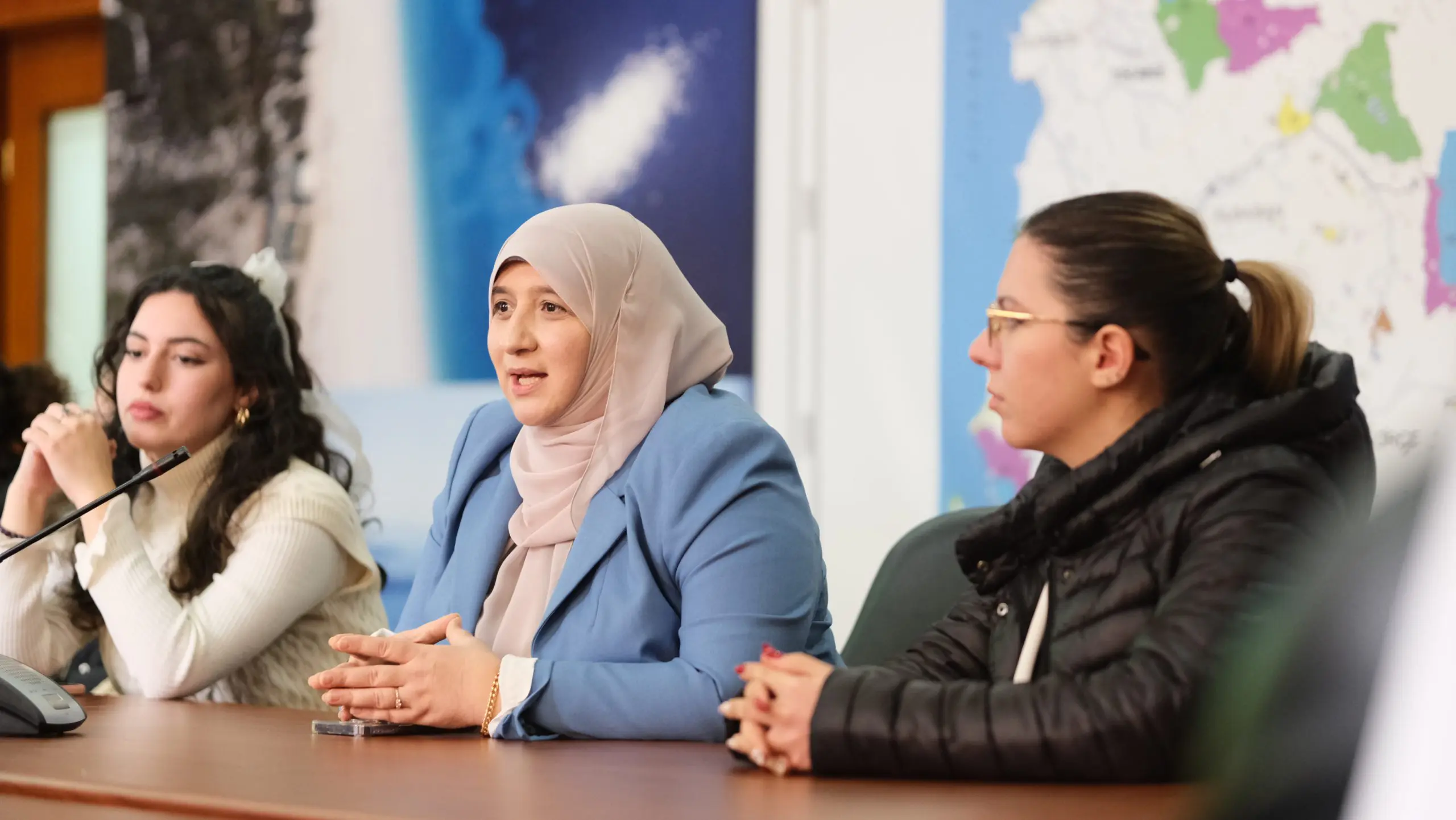
To launch the initiative, Mobaderoon worked with their network of peace experts, who had recently returned to their hometowns and cities, to establish local peace committees (LPCs). Each committee brought together community leaders, youth, and trained “peace architects” to identify local tensions, rebuild trust, and develop interventions tailored to their communities.
The LPCs were intentionally diverse, bringing together people of different ages, genders, religious and political backgrounds, and experiences, including both returnees and long-term residents. By reflecting their communities, LPCs were better positioned to design interventions that were inclusive, credible, and locally-grounded.
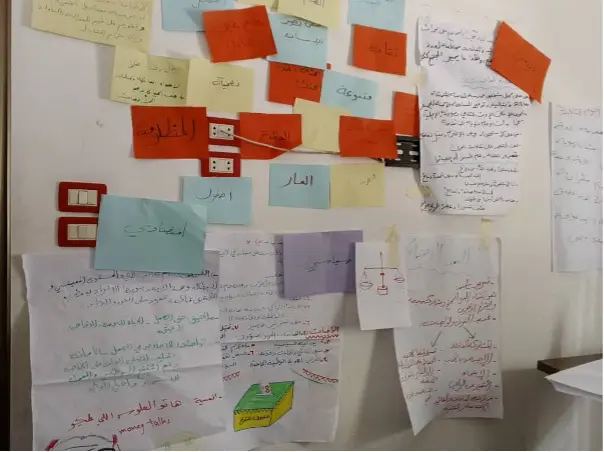
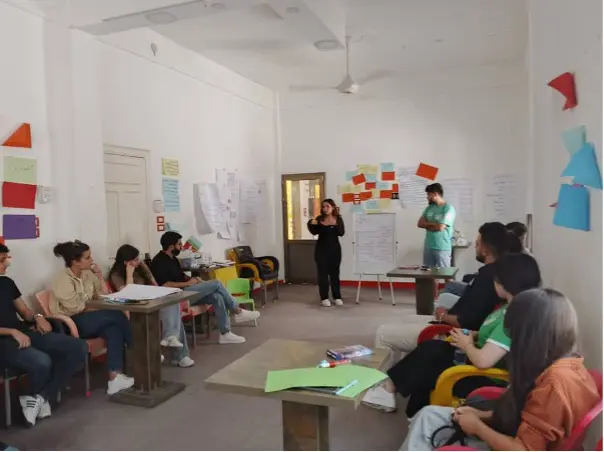
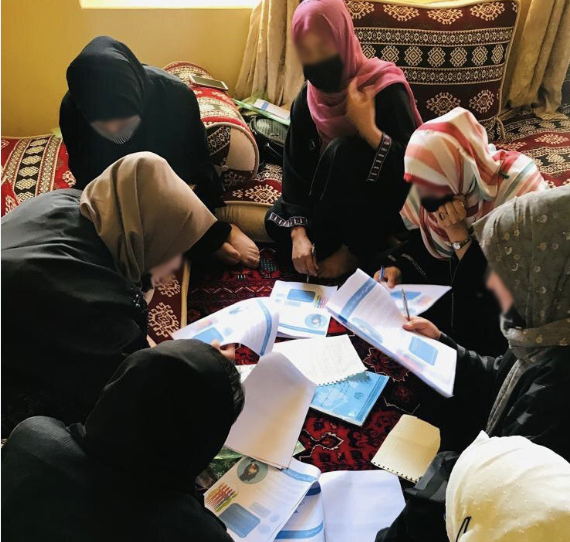
Rather than prescribing solutions, Mobaderoon equipped communities to identify root causes of conflict and determine what kinds of responses would be most effective in their own contexts. Through training, mentorship, practical guides, and ongoing technical support, LPC members developed skills in conflict analysis, dialogue facilitation, and project design. They also received hands-on support from Mobaderoon with budgeting, proposal writing, and impact assessment, helping turn ideas into concrete action.
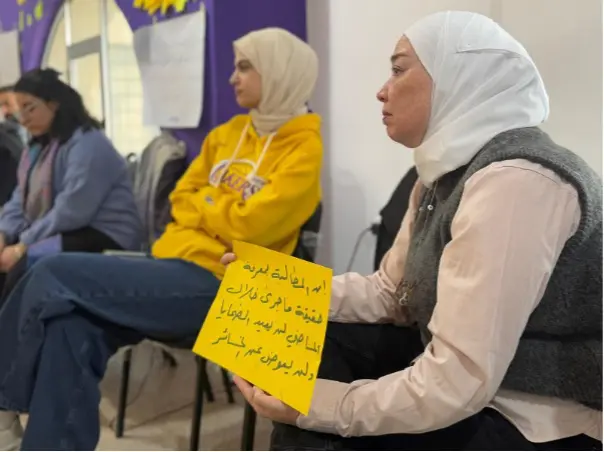
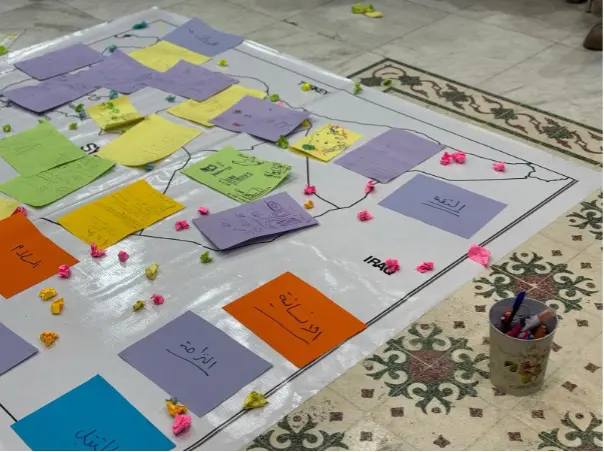
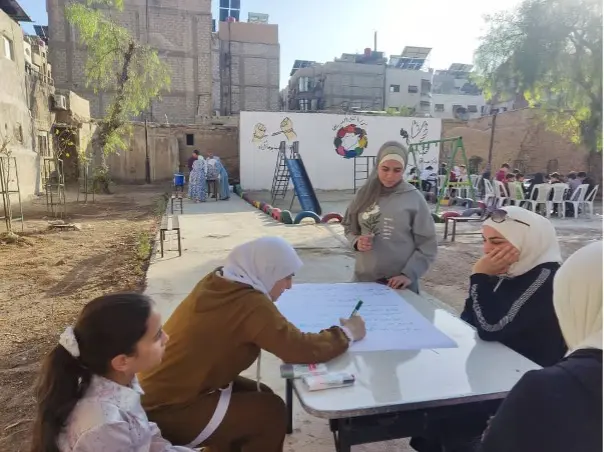
Dialogue was often the starting point. Drawing on years of relationship-building across geographic, religious, sectarian, and political lines, Mobaderoon created spaces where people could discuss sensitive issues in the aftermath of the regime’s fall. In cities, such as Aleppo, Homs, and Damascus, participants reflected on their lived experiences, explored questions of identity and belonging, and shared perspectives shaped by years of conflict.
These conversations surfaced both the depth of division and a strong desire to reconnect. They helped identify communities where tensions were highest and where targeted project activities—from youth activities and cultural initiatives to community rehabilitation projects and reconciliation efforts—could have the greatest impact.
This work also connected Mobaderoon’s approach to the Strengthening Community-Led Response (SCLR) methodology, which ICAN is supporting through the IPF across several conflict-affected countries. For Mobaderoon, SCLR is not a new way of working, but rather a framework and shared language for practices the organization had long used: trusting communities to identify their own priorities, adapt to changing realities, and lead responses grounded in local relationships and knowledge.
By connecting their work to the broader SCLR community, the approach also helped give greater visibility and legitimacy to forms of community-led peacebuilding that are often overlooked or constrained by siloed funding structures. At the same time, Mobaderoon’s work expanded how SCLR itself is understood in practice—not only as a tool for humanitarian response, but also as a more holistic approach that can support trust-building, social cohesion, and long-term peacebuilding in deeply divided societies.
Community-Led Interventions: Many Paths to Peace
The LPCs’ work took many forms, but shared common goals: fostering understanding, reducing tensions, and strengthening social cohesion.
In Hama, an LPC documented community stories that had remained unspoken for decades due to fear and trauma. Participants shared personal and family experiences, often for the first time, turning silence into dialogue.
“We canceled silence and raised our voices after 40 years of violence. We opened the space to understand ourselves and listen to the experiences of others.”
– Peace architect in Hama
In Homs, an LPC’s dialogue sessions brought together 179 participants from 27 neighborhoods to identify shared challenges and develop collective recommendations. These discussions both strengthened community relationships and opened new channels of communication with local authorities.
“People felt safe to discuss their issues. In the final meeting, they realized that despite coming from different neighborhoods, they shared the same experiences and challenges.”
– Peace architect in Homs
One concrete outcome in Homs began with a shared safety concern: a large hole on a high-speed road that had caused repeated accidents. Instead of raising the issue individually—or leaving it unaddressed—residents mobilized local resources and volunteers to repair it. The action reduced immediate risk and reflected a broader shift towards a shared responsibility and local agency.
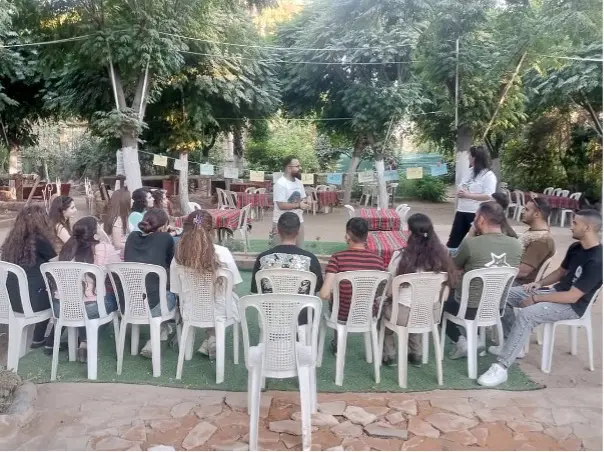
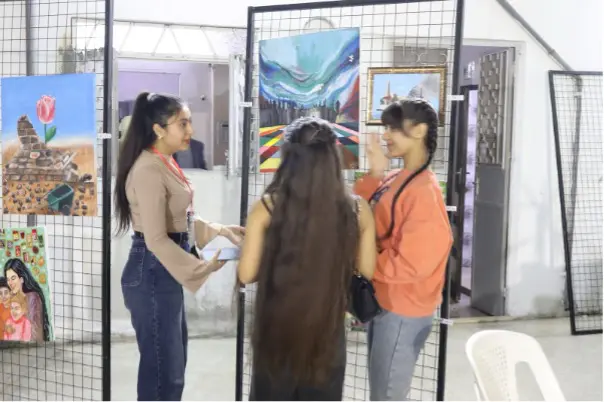
In Latakia, where tensions were particularly high, LPC members used food as a tool for connection. Women from different backgrounds cooked and shared meals, creating informal spaces where dialogue could unfold naturally and stereotypes could be challenged. Over 170 people visited the food exhibition.
“People from areas of conflict hosted each other and shared meals, which was a powerful gesture of trust and reconciliation.”
– Peace architect in Latakia
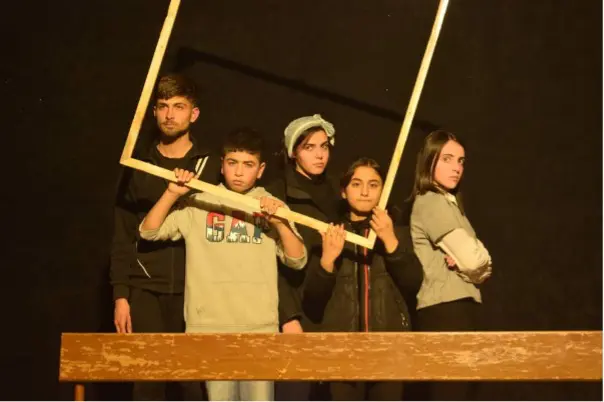
Other committees focused on youth, recognizing their vulnerability to polarization, and their ability to transform it. In Masyaf, an LPC’s dialogue sessions and interactive theatre helped young people from different backgrounds question inherited narratives, build trust, and form meaningful connections. The work culminated in a widely attended performance, after which participants proposed forming a permanent interactive theatre troupe—an important sign of lasting community ownership.
“The interactive theatre became a space where teenagers could express issues they had nowhere else to share. They themselves suggested the idea.”
– Peace architect in Masyaf
In a rapidly changing environment, LPCs could adapt continuously, shifting activities as security conditions evolved and redesigning initiatives to meet emerging needs.
In Jaramana, the LPC initially planned citizenship workshops, but pivoted to psychosocial support and practical assistance when displaced students from Sweida arrived. In Mezza, plans for trauma-focused dialogue sessions between two sectarian communities evolved into rehabilitating a neutral garden—creating a shared space that encouraged everyday interaction and coexistence.
Rebuilding Trust, One Conversation at a Time
At their core, Mobaderoon’s LPCs rebuilt trust—one conversation, relationship, and initiative at a time—while operating in a constantly shifting and often fragile environment.
Participants reported greater confidence in expressing their views and communities saw greater cohesion and collaboration. In some cases, dialogue translated directly into collective action, with residents addressing shared challenges without waiting for external support.
The initiative also underscored how progress depended heavily on local conditions. Trust levels varied widely, with places like Latakia requiring significantly more time to build confidence. Deeply contested historical narratives—especially between people from former regime-controlled areas and those from northwestern Syria—often surfaced, highlighting the need for careful facilitation, patience, and sustained engagement.
Harnessing what peace architects called “soft power”—dialogue, culture, and creative expression—the committees could address tensions often overlooked when projects focus only on visible outputs. Storytelling, food, art, and theatre created safer spaces to surface grievances, challenge stereotypes, and begin rebuilding trust, laying groundwork for longer-term impact.
This work also required peace architects to confront their own biases, inherited narratives, and internal tensions. Though often underfunded, this relational and internal work is foundational to credible, lasting peacebuilding.
Most importantly, the initiative reinforced that peace is not a single outcome but an ongoing process. As one peace architect noted, meaningful change takes time, patience, and continuous engagement—and communities can lead when they are trusted and supported.
Looking Ahead: Sustaining Community-Led Peace
As Syria continues its transition, the need for locally driven peacebuilding remains urgent. Building on years of trust, Mobaderoon is uniquely positioned to sustain and scale community-led efforts while maintaining local ownership.
It is expanding its work by forming new committees, strengthening existing ones, and developing a national network of peace architects, alongside a shared, locally informed vision for civic peace, and a locally grounded framework that can guide national peacebuilding efforts.
Despite ongoing challenges, LPC members remained deeply committed, with many continuing their work independently after the project’s close. Their message is clear: peace cannot be imposed from above—it must be built from within. And even after years of conflict, Syrians are finding ways to come together and begin again.