By Rana Allam
As the lights in the building of the Arab League in Cairo remain off, the streets of many Arab cities are alight with protests. In Cairo as in Palestine, security forces used force to disperse protesters, and the US instructed its embassies and consulates worldwide to increase their security in preparation for the backlash against Trump’s decision to recognize Jerusalem as the capital of Israel and move the US embassy from Tel Aviv to the holy city.
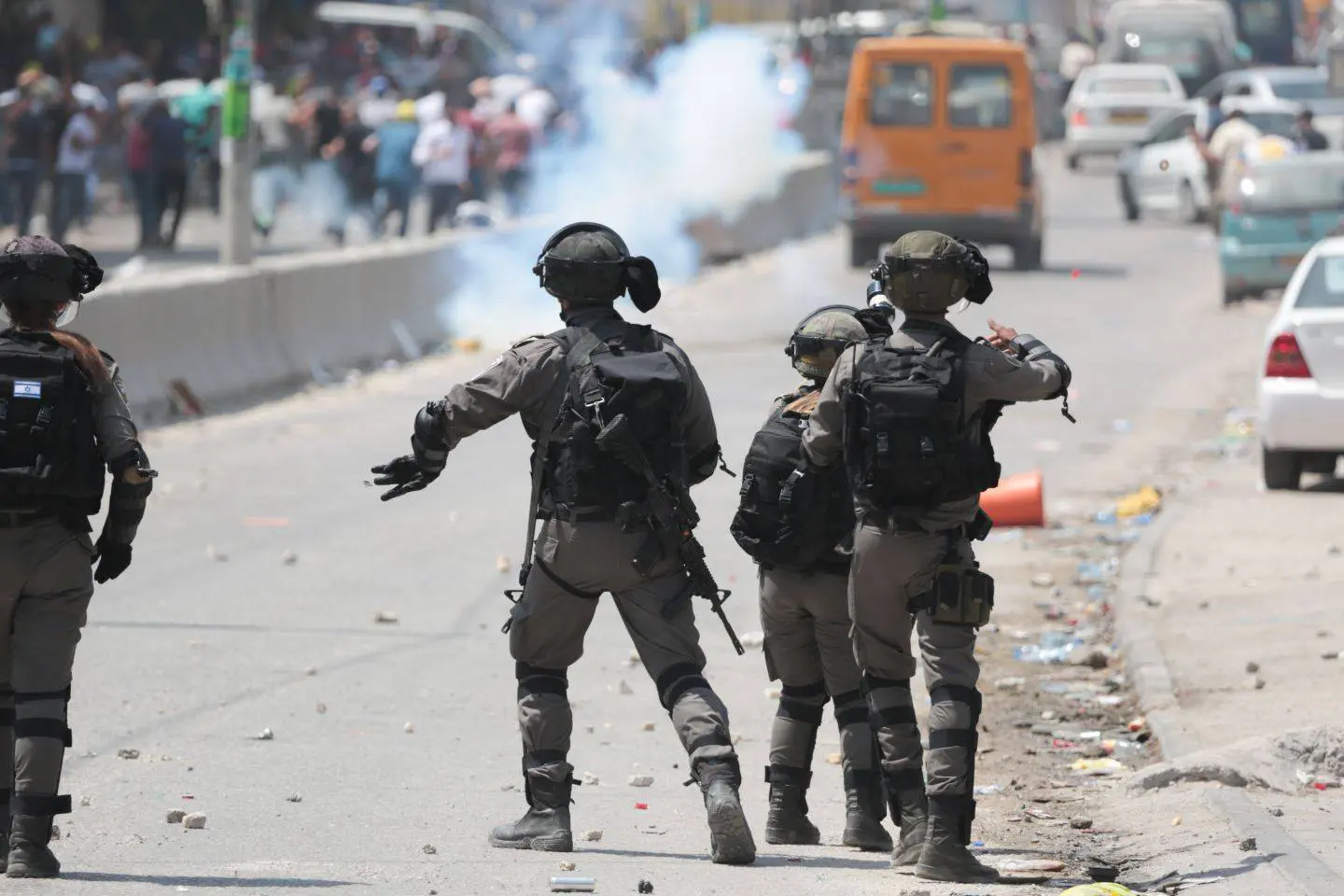
The Arab League will indeed have an emergency meeting a few days after the decision, but it is highly unlikely that anything but a few weak words of condemnation will see the light. Meanwhile in Palestine, protests have broken out on the streets, stores have shut their doors, schools have closed, and much of the public has embarked on a general strike. Friday witnessed a “Day of Rage” in the West Bank and Gaza, as thousands of Palestinians demonstrated against Trump’s decision, with the Israeli army responding with deadly force. Only a few hours into the protests, the Red Crescent reported that 254 Palestinians were injured. Of those, 178 suffered from tear-gas inhalation, another 52 were hurt by rubber bullets, and 11 were hit by live bullets. No Israeli casualties were reported. The leaders of Hamas called for a new intifada, and soon after the call projectiles were fired from Gaza into Israel. By Saturday, Israel had launched its own retaliatory attack on Gaza, bringing the number of Palestinian casualties to four in 24 hours. Long-time US ally Mahmoud Abbas announced that the US could no longer act as a sponsor of the peace process.
By handing Israel the city of Jerusalem, which Palestinians view as the heart of the two-state solution, Trump has killed any hope of a viable peace process. But then, the peace process has not exactly been successful and the UN’s many resolutions have been largely ignored because Palestine remains occupied, settlements are still ongoing, the right of return has not been granted, and the 1967 borders have not been respected. Despite this, Palestinians and Arabs still had hope. Now, what is referred to as the “peace camp” is disillusioned.
“What happened today was a blow for US allies and a gift to the extremists, to the anarchists who want to see this conflict a religious one rather than a political and legal one that could be resolved,” Lucy Talgieh, a peace activist and municipality representative in the Bethlehem council, tells me. Although a war between the Palestinians and Israelis was never on the table— the Palestinians have no military power to counter the Israeli Defense Forces—Trump’s announcement gives fuel to violent extremist groups like the Islamic State, al-Qaeda, and whatever new ones that will arise from this.
After a somewhat weakly worded condemnation from Britain, France, Germany, Sweden, and Italy—as well as the UN secretary general—US Ambassador to the UN Nikki Haley said, “Israel will never be, and should never be, bullied into an agreement by the United Nations, or by any collection of countries that have proven their disregard for Israel’s security.” But it is Israel’s security, and US security, that is at stake here. Violent extremist groups the world over will use this move to recruit more people and to launch attacks everywhere and against everyone. Trump is only aggravating an already volatile situation in the Middle East.
Trump may have the support of the Saudi and Egyptian leaders, but he doesn’t have the support of their populations. In Egypt, protests in several places broke out but were forcibly dispersed and many were detained, including journalists. The Sisi regime has been using brutal force against his people, which has only strengthened terrorist groups such as the one that recently carried out the deadliest attack on civilians at a mosque in North Sinai, killing over 300 people. Nor will brute force silence people when it comes to Jerusalem, which is described by H. A. Hellyer as “the most emblematic symbol of the lack of Arab autonomy. Or to put it another way: Jerusalem is the capital of Arab freedom.” Force might disperse protests or prevent them from happening, but this empowers violent extremists at the expense of peace advocates.
It remains unclear what Trump and Israel want to achieve from this move. Jerusalem is already the de facto capital of Israel. It’s where the president lives, where the ministries, parliament, and supreme court are, so what can possibly be the reason for this move? It is highly unlikely that it is to appease and gain favor with American Jews and evangelical Christians, for the stakes are too high for such a small domestic gain.
By overturning US policy, Trump’s decision has not only caused uproar from enemies but even allies are hard-pressed to take a stand. Egyptian and Saudi leaders might support Trump in whatever he does, but they cannot endorse this move publicly. Long-time US ally, Jordan, is in a tough position with King Abdullah II warning of “dangerous repercussions on the stability and security of the region.” After the dust settles, the United States, even after Trump, will face a mighty challenge on all fronts, be it fighting terrorism or trying to regain its position as a peace broker in the Middle East.
Photo: Violence in Jerusalem (Wikimedia Commons).
This article was originally published in Lobelog