Case Studies on the Role of Gender and Identity in Shaping Positive Alternatives to Extremisms
21 October 2021
The International Civil Society Action Network (ICAN), with the support of Global Affairs Canada, has developed a set of “Case Studies on the Role of Gender and Identity in Shaping Positive Alternatives to Extremisms,” in Cameroon, Indonesia, Jordan, Libya, Pakistan, Somalia, Sweden, and the United States. The case studies demonstrate how conducting a Gender-Based Analysis Plus (GBA+) improves understanding of the drivers, narratives and roles that engender extremisms and violent extremist activity. By profiling examples of peacebuilding, deradicalization, reintegration and counternarrative work in these contexts, the case studies emphasize how attention to gender and intersectional identities can improve the effectiveness of interventions to transform extremisms – not only by preventing or countering it, but by providing positive alternatives that enable people to realize a peaceful, pluralistic future.
The case studies cover a number of themes relevant to contemporary preventing/countering violent extremism (P/CVE) and counterterrorism (CT) work, including countering white supremacist extremism, the role of masculinities in recruitment and disengagement, addressing trauma and deploying mental health and psychosocial support (MHPSS) approaches in reintegration and rehabilitation, and work with religious leaders to promote peaceful, pluralistic and gender-just interpretations of religious texts and traditions. The case studies are intended for use by practitioners and policymakers to guide them in conducting a gender analysis and in integrating responsiveness to gender and identity factors in policies and interventions.
*NEW* Case Study: Cameroon
 The South West / North West Women’s Taskforce (SNWOT) and the Cameroon Women’s Peace Movement (CAWOPEM) two peace networks formed by women peacebuilders and activists to unite women in responding to Cameroon’s Anglophone crisis, which many of them view as a manifestation of violent extremism and which has been – controversially – labeled by the Cameroonian government as terrorism. The networks advocate for a “third” narrative to the crisis that centers universal values of peace, pluralism, human rights, and gender equality. The case study will also discuss the work of Action Locale pour un Développement Participatif et Autogéré (ALDEPA) in establishing networks to respond to the Boko Haram violence in Cameroon’s Far North.
Taking a Gender-based Analysis Plus (GBA+) approach, this case study discusses how Cameroonian conflict actors have systematically targeted, excluded, and co-opted women and radicalized men to promote a patriarchal culture of violence and militarism. It considers the role of women-led peace networks as a source for challenging structural inequality, maintaining collective agency, and providing support in the face of risk and threats.
Cameroon is challenged by growing instability and violent extremism in its Far North region, a result of violent Boko Haram activity thought to be spillover from neighboring Nigeria. In the country’s North West and South West regions, longstanding socio-economic grievances and perceptions of political marginalization of Cameroon’s Anglophone population by the Francophone-dominated government sparked protests in October 2016. The escalation of violence between armed Anglophone separatist groups and government security forces has brought the country to the brink of civil war with devastating social and humanitarian consequences. Conflict actors on both sides use identity-based grievances, hateful speech, and divisive labeling to radicalize primarily young Cameroonian men into joining networks perpetrating extreme violence.
*NEW* Case Study: Jordan
 The HASBANI project is a Counter-Terrorism Capacity Building Program (CTCBP) implemented by Canada to improve the participation of Jordanian female police officers in operational roles in counterterrorism (CT) crisis response. By complementing technical training with strategies to promote gender awareness and taking a personal, trust- based approach to cultural change, the project has made inroads in shifting rigid gender roles in the Jordanian security sector.
Taking a Gender-based Analysis Plus (GBA+) approach,2 this case study discusses facilitating factors, barriers, and challenges to expanding the roles of women in CT responses. Drawing on good practices from women-led civil society organizations in other contexts, it considers how combining women’s participation with a community policing approach strengthens the ability of the security sector to provide a positive alternative to participation in violent extremist groups.
Despite Jordan’s relative stability, the country is one of the highest per-capita contributors of foreign fighters in the world and has suffered several violent extremist attacks on its soil. Islamist extremist groups in the region have taken a dynamic and strategic approach to including women in combat, operations, and propaganda. They skillfully manipulate gender roles to avoid detection, bolster recruitment, and generate attention for their cause.
*NEW* Case Study: Libya
 The Libyan Women’s Forum (LWF) has developed the Islamic Peace Tool (IPT), a guidebook which draws on Islamic texts, traditions, and law to deconstruct narratives that create an enabling environment for violent extremism, and affirm the need for peace, pluralism, and gender equality. The IPT is used by peace activists and community leaders throughout Libya to challenge misogynistic extremist rhetoric and advocate for Libyan women’s right to participation in politics and peacebuilding. The success of the tool is attributable not only to its content, but also to the inclusive and deliberate process by which it was developed.
Taking a Gender-Based Plus (GBA+) approach, this case study discusses how Libya has become home to extremist narratives justified by conservative interpretations of Islam that position women as weak, belonging in the domestic sphere, and in need of protection. The case analyzes how militant groups have deployed these gendered narratives to systematically curtail women’s legal rights and exclude women from reforming Libya’s post-war political institutions and promoting a more inclusive, equitable and gender just state.
Since the 2011 revolution, Libya has been characterized by civil war, a deeply fractural political situation, and rising extremism. Despite the silencing of Libyan women’s voices in the aftermath of the uprising, many women have emerged as agents of community change and civil society leaders, advocating for peace and providing essential service to their communities. They have also come under attack, with women activists subject to death threats, smear campaigns, and assassinations.
*NEW* Case Study: Pakistan
 Bushra Qadim Hyder, founder and director of the Qadims Lumiere School and College in Peshawar, Pakistan, developed a peace curriculum to promote understanding, acceptance, critical thinking, and open discussion of different ideas. She has partnered with private schools and madrassas to train teachers and integrate peace education into their curricula which has mitigated the impact of violent extremism on students and their parents by challenging the divisive and rigid religious interpretations that dominate the cultural mindset in Pakistan.
Taking a Gender-Based Analysis Plus (GBA+) approach, this case study focuses on how peace education curricula provide a positive counterweight to the identity- based divisions fostered by violent extremist groups in Pakistan and respond to signs of violent extremism in the larger Pakistani culture. It discusses how taking a broad educational approach enables direct intervention with students and parents to prevent their joining violent extremist groups, promoting community resilience rather than stigmatizing individuals.
The structure of Pakistan’s education sector encourages division and intolerance between students of different, genders, religions, and socio-economic classes, leaving them vulnerable to recruitment by violent extremist actors. Increasingly, Pakistani schools – particularly madrassas and public schools – teach a rigid religious and nationalist ideology. By promoting the primacy of conservative religious identity, they undermine other aspects of human identity and foster exclusion and rejection of the “other” as threatening and inferior. This ideology is reinforced by strict gender norms that assert women’s subservience to men.
Case Study: Sweden
 Through its EXIT program, the Swedish Fryshuset Foundation has pioneered a relational and psychological approach to disengagement from white extremist groups. In EXIT’s approach, coaches support clients to build a stable identity outside of extremist ideology and practice, facilitating their reintegration into society. The EXIT program has expanded its impact by integrating a gendered perspective that breaks down the constricting ideas around gender and masculinity internalized by clients during their time in the white extremist movement.
Taking a Gender-based Analysis Plus (GBA+) approach, the case study focuses on the drivers of violent extremism and proposes that creating a society that guarantees peace, pluralism and justice will require both social services and relational support, and complementary state-led interventions that address the structural and political drivers of racism, discrimination, and inequality.
White extremist groups in Sweden have re-entered the spotlight in recent years, encouraged and inspired by the international expansion of white extremist ideology. They continue to organize marches and commit acts of violence. Drivers of violent extremism in Sweden are deeply gendered, as they are everywhere. For men, these may include a sense of “aggrieved entitlement” that draws them to the ideological superiority, camaraderie, and simplified belief systems offered by white extremist groups. Age considerations are equally important: while Swedish young people are perceived as most at-risk of recruitment, this assumption does not hold up to scrutiny.
Case Study: Indonesia
 Indonesia has a well-established tradition of female religious leadership, with women ulama (religious scholars) playing significant roles in education, activism and religious legal discourse. The Asian Muslim Action Network (AMAN) in Indonesia co-convened the Indonesian Congress of Women Scholars or Kongres Ulama Perempuan Indonesia (KUPI) to amplify the Islamic narratives of women ulama and work with them to promote gender equality and counter extremist violence.
Taking a Gender-based Analysis Plus (GBA+) approach, this case study discusses the narratives promoting and countering violent extremism and terrorism. It focuses on how the women ulama movement’s trust-based relationships, gender-sensitive Islamic perspective and consultative process enables them to deconstruct violent narratives as they pursue gender justice in Indonesia.
Violent extremism in Indonesia is framed by gendered narratives that draw on narrow interpretations of Islam and Qur’anic texts, which are further amplified by social media. This includes extremism among Indonesians who traveled to join the Islamic State in Syria and Iraq. These narratives use conservative gender roles and familial power structures to promote violent extremist ideology among young men and women.
Case Study: Somalia
 Witness Somalia is a human rights organization that engages and promotes the roles of women and youth in preventing/countering violent extremism. They have broken the secrecy surrounding Al-Shabaab and enabled women, youth, religious leaders, artists, and police officers to come together, share their experiences, and develop messages, campaigns, and community systems that prevent recruitment and help people heal from the impact of violent extremism.
Taking a Gender-based Analysis Plus (GBA+) approach, this case study focuses on how expanding socially accepted gender roles for all identity groups challenges violent extremist rhetoric and creates new spaces for engaging in prevention work.
In the 1990s, Somalia endured state collapse and war, caused by post-colonial governance and international economic policies. Somalia’s traditional, clan-based culture suffered severe blows. The resulting corruption and chaos allowed several Islamist extremist groups to gain a foothold, providing alternative governance systems and applying strict Shariah law. The resulting marginalization, lack of opportunity, and exposure to violence for youth and women helped push them to join extremist groups. Since women and youth experience some of the most severe impacts of violent extremism, there is a growing recognition of their critical roles in its prevention.
Case Study: United States
 As a former white supremacist, Shannon Foley Martinez has unique insight into the draw of the far-right and uses her experience and knowledge to help others leave the movement. While women are underrepresented in far-right extremist groups, they have always played critical roles and are becoming increasingly visible. The rationale of women who join clearly misogynist movements—whether the Islamic State or the Alt-Right—has often perplexed experts. However, Foley Martinez’s experience illustrates that the complex and gendered power dynamics within these groups can benefit individual women.
Taking a Gender-Based Analysis Plus (GBA+) approach,3 this case study is partially autoethnographic, co-authored by Foley Martinez herself. It focuses on the drivers to violent extremism and terrorism, and the importance of addressing trauma and building interpersonal skills to successfully reintegrate into society after leaving a violent extremist group.
Foley Martinez grew up with no sense of belonging in her family, and experienced sexual violence at a young age. The self-hatred that stemmed from that unresolved trauma found a home in Neo-Nazis’ rhetoric and violence. During her days as a white supremacist, Foley Martinez’s relationships were abusive, and she was exposed to violence by leaders of the group. At the same time, her adjacency to power provided a sense of safety from outsiders. In her current work mentoring people leaving violent white supremacist groups, she emphasizes the importance of identifying and addressing trauma, and developing interpersonal and emotional skills to positively engage with the complex modern world.




Related Posts
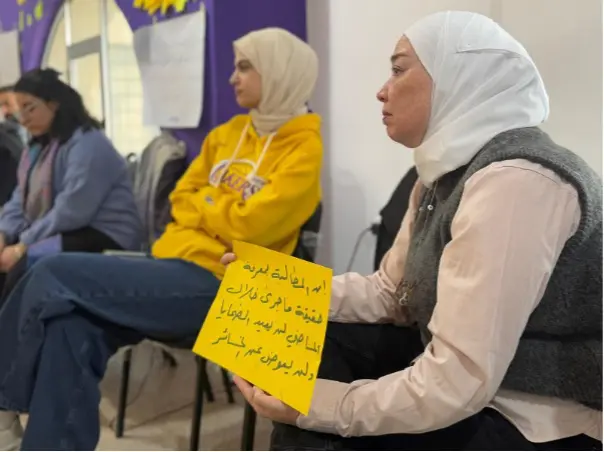
“لقد ألغينا الصمت”: كيف تعيد لجان السلام المحلية بناء الثقة في سوريا
بعد أكثر من عقد من الحرب، تشهد سوريا مرحلة انتقالية هشة. لقد كتب سقوط نظام الأسد في ديسمبر/كانون الأول من عام 2024 نهاية أكثر من 50 عاما من الحكم الاستبدادي، ولكنه لم يجلب الاستقرار الفوري. بل على العكس، يواجه البلد أزمة اقتصادية متفاقمة، وتوترات أمنية، وانتهاكات مستمرة لحقوق الإنسان، ونزوحا جماعيا، وتفككا اجتماعيا حادا. أكثر […]
ICAN Featured Mobaderoon Our Stories Stories Women's Alliance for Security Leadership
“We Canceled Silence”: How Local Peace Committees Rebuild Trust in Syria
Across Syria, communities are finding ways to reconnect after years of war through dialogue, storytelling, art, and collective action. Mobaderoon’s Local Peace Committees demonstrate why lasting peace begins within communities themselves.
ICAN Featured Innovative Peace Fund Mobaderoon Our Stories Stories WASL Updates Women's Alliance for Security Leadership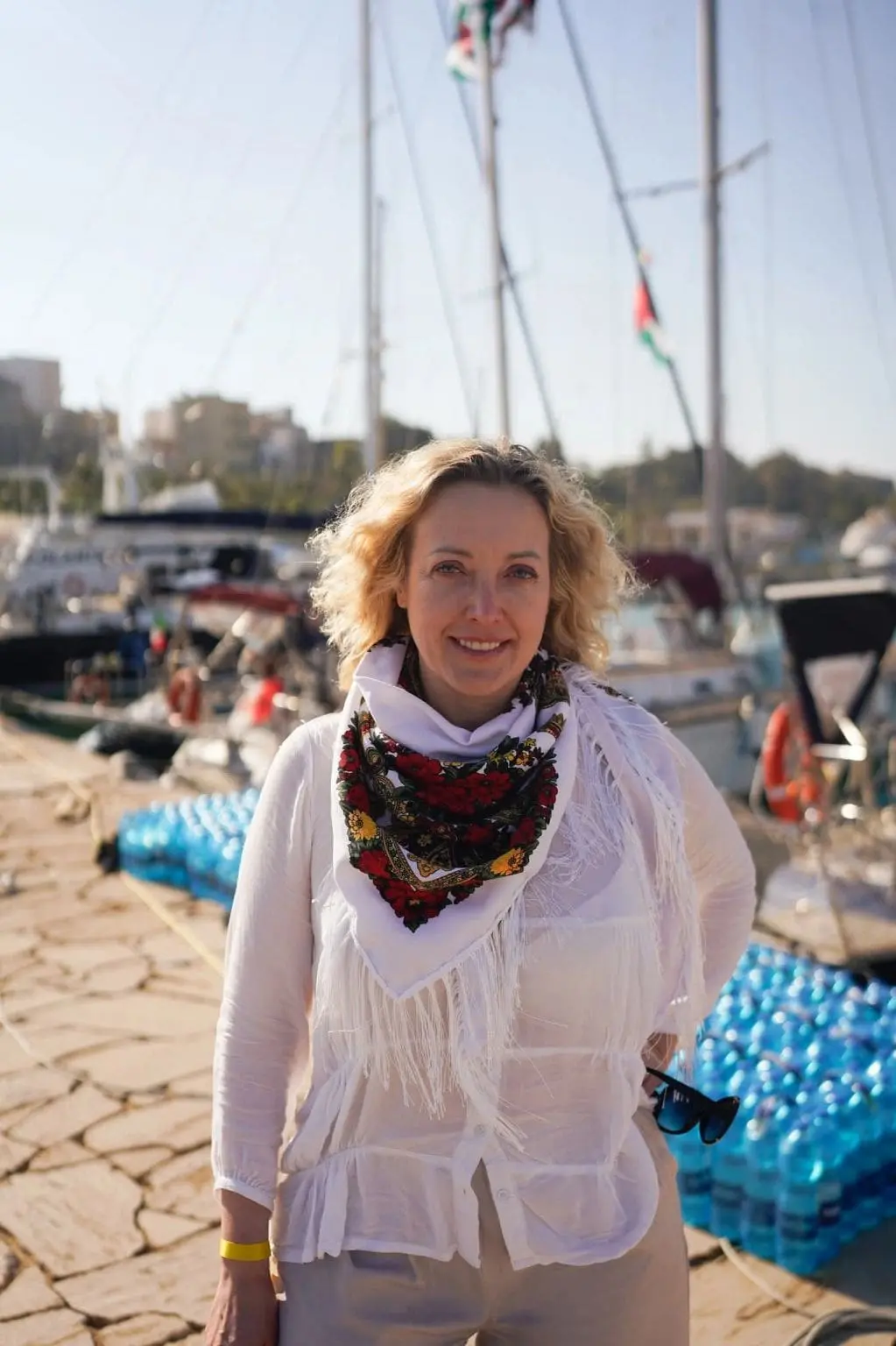
Ukrainian peacebuilder Nina Potarska sails to challenge illegal blockade of Gaza
Nina Potarska, a member of the ICAN-spearheaded Women’s Alliance for Security Leadership, is currently at sea with the Global Sumud Flotilla, a civilian-led mission organized with the Freedom Flotilla Coalition, en route to Gaza.
ICAN Featured Our Stories Stories Women's Alliance for Security Leadership
مكافحة التطرف في العراق: أفق جديد للسلام
مدينة البصرة في جنوب العراق، المدينة التي تضررت طويلا من الحرب وقلة الاستثمارات، تواجه تهديدات متزايدة بسبب خطاب الكراهية والتطرف وتآكل الثقة بين المواطنين والمؤسسات. وغالبا ما يقع الشباب -وخاصة الشابات- في قلب هذه التوترات، في عالم تتقاطع فيه المضايقات والتحرش الالكتروني مع الواقع. وفي مثل هذه البيئة، تتبنى جمعية الفردوس العراقية (الفردوس) نهجا جديدا […]
ICAN Featured Our Stories Stories Women's Alliance for Security Leadership
The U.S. and Israel’s War on Iran and its Regional Ramifications
The International Civil Society Action Network (ICAN) and the Women’s Alliance for Security Leadership (WASL) Statement: The Escalating U.S.-Israeli War on Iran and its Regional Ramifications
ICAN Featured ICAN Latest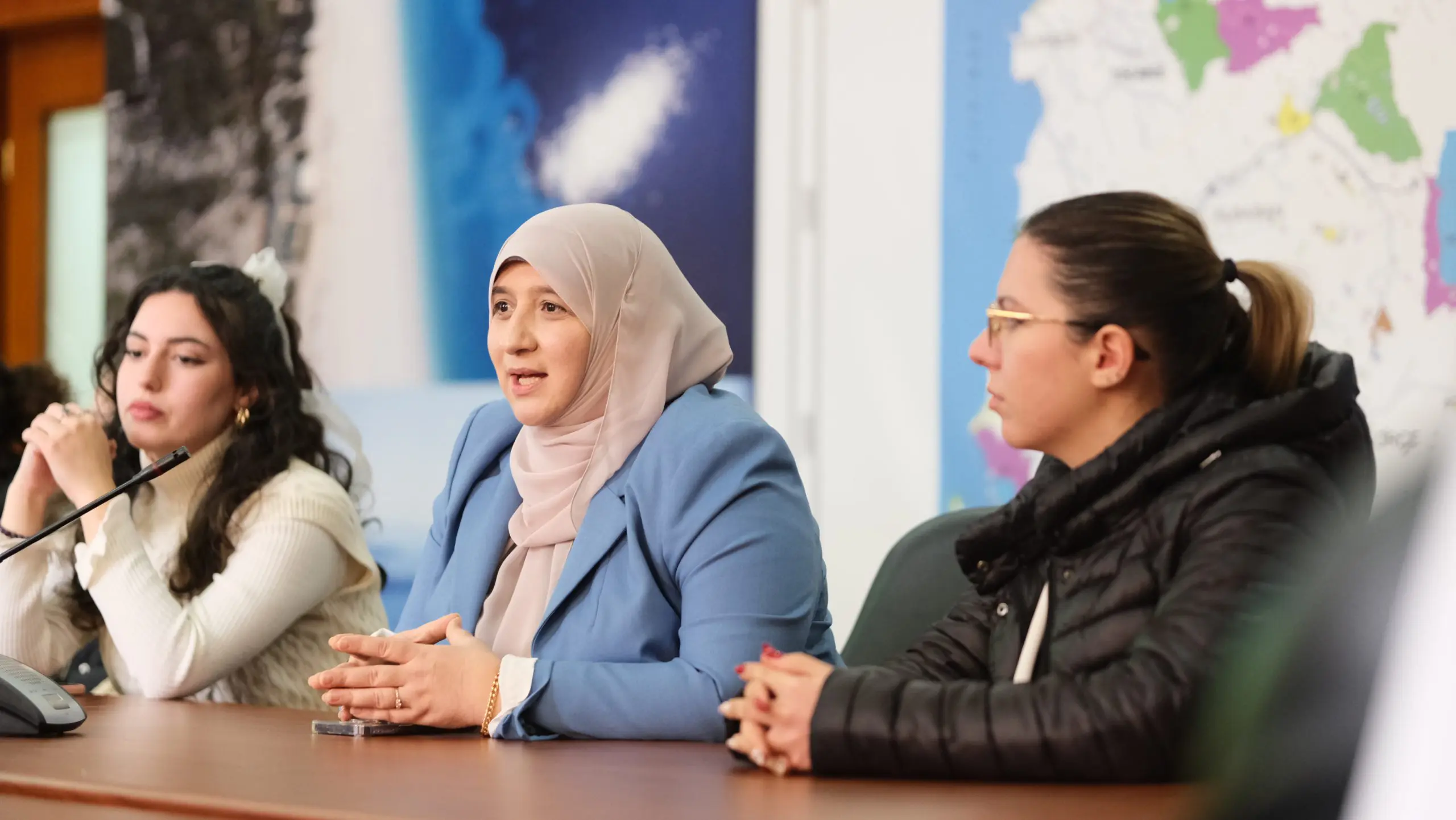
She Builds Peace: A Global Movement Growing Stronger Six Years On
In March 2020, ICAN and its global network of women-led peacebuilding organizations, WASL, launched the She Builds Peace (SBP) campaign.
Allamin Foundation CAGEAD COEC ICAN Featured ICAN Latest Our Stories PAIMAN SBP Frameworks She Builds Peace Countries Stories WCDCA Women Relief Aid Women's Alliance for Security Leadership
Staff Accountant (Remote, US Based)
ICAN is hiring a Staff Accountant to provide financial and administrative support to ICAN’s Finance Director and broader team.
ICAN Updates Jobs
Countering Extremism in Iraq: A New Horizon for Peace
Iraqi Al-Firdaws Society (Al-Firdaws) is taking a new approach to peacebuilding. Their project, Horizon: Promoting Community Peace, supported by ICAN’s Innovative Peace Fund (IPF), brings together youth, local security forces, and civil society actors to address violent extremism through dialogue, education, and community-based action.
ICAN Featured Our Stories Stories Women's Alliance for Security Leadership
ICAN’s Holistic Security Menu: A New Way to Support Women Peacebuilders
Introducing the Holistic Security Menu: a co-designed, partner-driven model that provides practical and sustainable security support—on women peacebuilders’ own terms.
ICAN Featured ICAN Updates Innovative Peace Fund Neem Foundation Rescue Me WASL Updates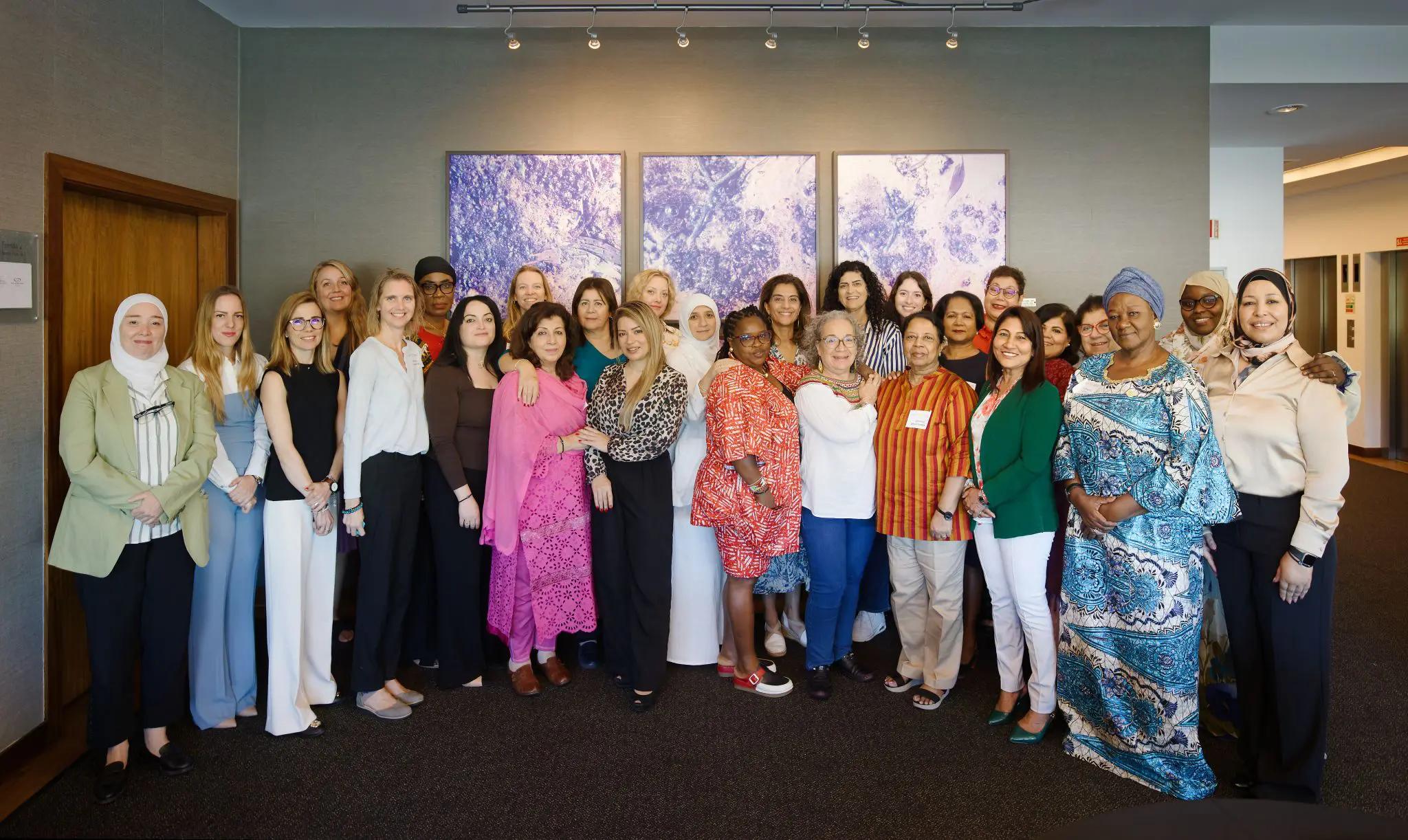
Our Strategies, Our Peace: ICAN’s Writers’ Workshop
ICAN convened 20 members of WASL in Lisbon for the “Our Strategies, Our Peace” Writers’ Workshop. This unique gathering provided a secure and creative space for women peacebuilders to share their strategies, experience, expertise, and stories from conflict and crisis contexts.
Addu Women's Association Allamin Foundation AWAW CAGEAD CIASE COEC ICAN Featured Mobaderoon Our Stories PAIMAN Rescue Me Stories WCDCA Wi'am Women's Alliance for Security Leadership WPSO
Open Statement to the United Nations Security Council on behalf of Women Peacebuilders Marking 25 Years of the Women, Peace, and Security Agenda
On October 6, 2025, the U.N. Security Council holds its annual open debate on Resolution 1325 on Women, Peace, and Security. Today, we are not issuing a new statement. Instead, we are honoring our community of women peacebuilders—who appeared before the Security Council throughout these 25 years, speaking for the millions they represent—by echoing their messages.
ICAN Featured ICAN Latest ICAN Updates WASL Updates Women's Alliance for Security Leadership