ICAN’s Mission Five Steps for Sustainable Prevention of Sexual Violence in Conflict ICAN Partner AWAPSA: A Catalyst for Kenya’s First SGBV Court The War Against Ourselves: Afghan Women Peacebuilders’ Response to the Mental Health Crisis in Afghanistan Protecting Women Peacebuilders: The Front Lines of Sustainable Peace
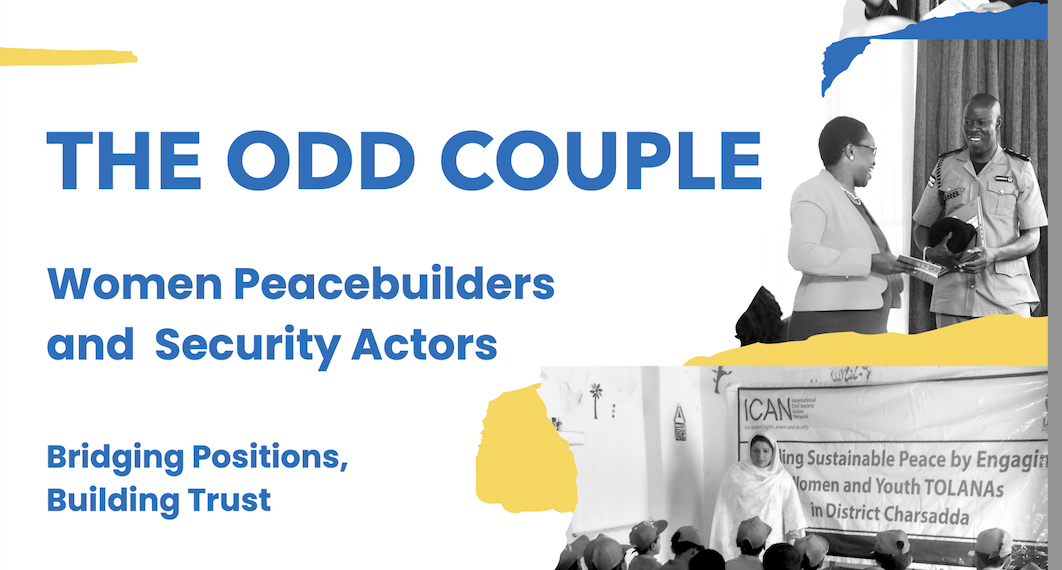
The Odd Couple: Women Peacebuilders and Security Actors Bridging Positions, Building Trust
The WPS agenda has proven a vital entry point for women peacebuilders to engage with the security sector and build trust within affected communities. These efforts—often invisible—are contributing to the reform of the sector, reshaping local security environments and mitigating violence.
The War Against Ourselves: Afghan Women Peacebuilders’ Response to the Mental Health Crisis in Afghanistan
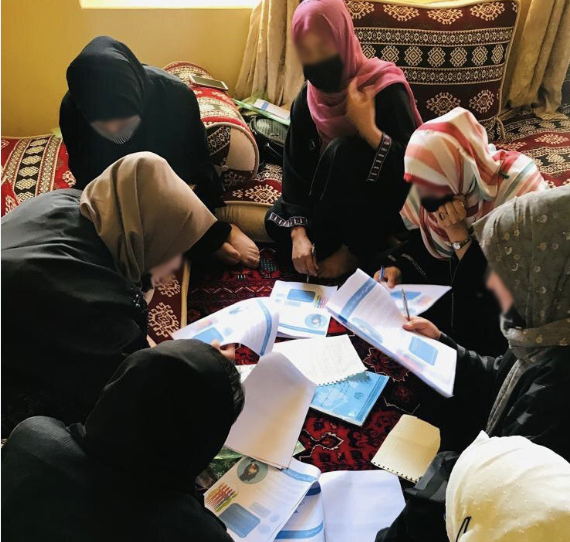
This case study describes the drivers of the mental health crisis in Afghanistan, its gendered and cultural dimensions, and the strategies used by Afghan women-led peacebuilding organizations to provide solutions. The authors conducted interviews with representatives of Afghan women-led peacebuilding organizations and thematic experts, which were complemented by a desk review of project documentation and […]
Open Statement to the United Nations Security Council on behalf of Women Peacebuilders Marking 25 Years of the Women, Peace, and Security Agenda
On October 6, 2025, the U.N. Security Council holds its annual open debate on Resolution 1325 on Women, Peace, and Security. Today, we are not issuing a new statement. Instead, we are honoring our community of women peacebuilders—who appeared before the Security Council throughout these 25 years, speaking for the millions they represent—by echoing their messages.
Home»ICAN Featured»
Recognizing Women Peacebuilders: Critical Actors in Effective Peacemaking
Recognizing Women Peacebuilders: Critical Actors in Effective Peacemaking
06 October 2020
In 2000 women peacebuilders were the inspiration and engine behind UN Security Council Resolution 1325 that for the first time in history called for the inclusion of women in matters of war prevention and peacemaking. Evidence proves that women’s inclusion increases the quality and sustainability of peace processes. But they are still overwhelmingly absent from track one negotiations.
Acknowledging the existence, skills, influence, values and approaches of women peacebuilders is a necessary preliminary step to ensure their rightful and systematic place at the tables of negotiations and decision-making that end wars and foster future peace around the world.
Drawing on two decades of desk and primary research and interviews, policy development, and experiences in advocacy and Track One mediation practices, “Recognizing Women Peacebuilders: Critical Actors in Effective Peacemaking”, delves into the motivations and factors that propel women to become peacebuilders in the face of violence and conflict; the activities they engage in that bridge the local and the global arenas; and how across time and geography, they willingly and strategically harness, reframe, and deploy existing traditions, cultural practices, religious teachings, and kinship structures, alongside national and international laws, in their pursuit of peace, justice, and the power to influence adversaries and belligerent forces.
The brief explores how the lexicon and labels in the policy arena hinder or help women’s greater inclusion in peace processes, and factors that capture the complexity and commonality of WPBs’ experiences in relation to and distinct from other forms of socio-political activism.
Produced as a part of the She Builds Peacecampaign led by the International Civil Society Action Network (ICAN)and members of the Women’s Alliance for Security Leadership (WASL), the brief also provides a ten-point operational guidance and examples of precedence that guarantee the participation of women peacebuilders in track one peace processes.
Operational Guidance to Guarantee the Participation of Women Peacebuilders in Track One Peace Processes
Precedence: At the Somali National Peace Conference in Arta, Djibouti (2000), the UN invited Somali women peacebuilders to observe the peace talks among the five clans all represented by men. The women united across clans as the “Sixth Clan,” referencing the clan-based design of the conference. They negotiated with the men to secure their seat at the table as an independent delegation and signatories to the agreement.
Precedence: In facilitating the 2012-2014 Yemen National Dialogue Conference (NDC), the UN heeded the call for inclusivity and helped create a process that included political and tribal leaders alongside youth and women’s civil society movements. The NDC comprised 28% female participation. There was an all-woman delegation and a minimum 30% quota for women’s participation in the delegations of other parties. Women chaired three of the nine working groups and comprised 25% of the Consensus Committee.
Between women peacebuilders and the envoy/ mediator; and,
Between women peacebuilders and the negotiating parties.
Precedence: As common practice, Norwegian mediation teams meet with various stakeholders, including women, before an official process starts. Throughout the process they engage on issues like inclusion and rights, particularly with those that are likely to be the formal parties. A gendered conflict- and actor analysis is undertaken, and targeted support for relevant women’s peace organizations and WPS actors provided.
come up with negotiated solutions to share with armed actors and encourage them to adopt solutions.
Precedence: In Burundi, in 1999 Nelson Mandela (mediator), UNIFEM, and the Mwalimu Nyerere Foundation supported an all-party women’s peace conference bringing together more than 50 women representatives from the 19 Burundian groups involved in the peace negotiations. The women discussed and agreed on gender specific demands including inclusion of a women’s charter in the Constitution, measures to ensure women’s security, women’s rights to land, inheritance and education, and an end to impunity for gender-based war crimes and domestic violence. Mandela subsequently presented the negotiated recommendations to the 19 negotiating parties, who accepted all requests.
such as ceasefires, power/ responsibility sharing, security sector reform etc. and what they expect to see coming out of the process.
Precedence: In 2002, in advance of the Sun City talks, UNIFEM assisted Congolese women to meet with women from South Africa, Guatemala and Uganda who had experience in peace negotiations. The women were later able to contribute substantively to the agenda of defense and security, political and judiciary, financial and economic, humanitarian, social and cultural, peace and reconciliation commissions and provide technical assistance to the Facilitator’s office in the last round of negotiations.
on all thematic topics on the agenda, so delegates understand how women and men are affected by and respond to conflict, and what expertise they bring to the table.
Precedence: During the Colombia peace process, the UN’s Mediation Standby Team produced gendered briefing notes for the envoy on each of the topics on the agenda of the peace talks including land issues, victims’ rights, Disarmament, Demobilization, Reintegration (DDR).
This enables them to carry out consultations, draft statements and papers, and engage substantively in the process from the start and to engage in implementation and monitoring of accords. Refer to their outputs to inform and shape the agenda and the process, and in discussions with belligerent parties, as precedence in actions four and five show.
to women peacebuilders to enable them to travel on short notice and participate in peace processes.
Precedence: In 2019 ICAN’s Innovative Peace Fund (IPF) and Better Peace Initiative (BPI) mobilized within 16 days mobilized to provide financial support (travel, accommodation, per diems) and strategic advising (messaging and statement input) to Cameroonian women to enable them to engage in the National Dialogue.
Provide other travel support (including transportation, accommodations and per diems) and assist in obtaining security clearance and access.
Precedence: In 2002, as Canada’s Special Envoy for Peace in Sudan, Senator Mobina Jaffer with the support of mediator Salim Salim (former President of Tanzania), was able to insist that 17 Darfuri women be brought to the peace talks. By building rapport with the Arab League and the African Union, Jaffer was able to change the dynamics of the process despite the initial refusal by male negotiators to include women.
Precedence: In 2019 the European Union included Yemeni and Syrian women peacebuilders in its delegation to the UN Commission on the Status of Women (CSW), enabling them to secure visas to the United States that would otherwise not have been issued. The peacebuilders were able to address and engage with a wide array of UN, member state and US government officials, as well as the global NGO community.
Don’t commit support if agreements enable, validate or reinforce violence, corruption, discrimination and exclusion.
Precedence: In its May 2020 Conclusions on the Future of the Afghanistan Peace Process and the European Union’s Support (8223/20 COR 1), the Council stated that the EU “will condition its future political and financial support to ensure that the republican, democratic and values-based principles are protected and further promoted”(emphasis added). In reaffirming the EU’s support for a negotiated political settlementleading to lasting peace and reconciliation, which must build on the democratic and fundamental freedoms of all Afghans especially women, children, all persons belonging to minorities and groups at risk must be protected and further strengthened to benefit from and to further the economic, social, political and development achievements of the past 19 years.” It further states: “In line with United Nations Security Council Resolution 1325, the EU reiterates the importance of meaningful participation of women in all peace initiatives including formal and informal peace negotiations.”
“The inclusion of an individual or a small group of women into existing delegations is rarely transformative.”
“Women peacebuilders, by virtue of being ‘women’, face discrimination and unconscious bias.”
“But having women mediators or gender expertise within mediation teams, while necessary, is not a replacement for the representation, knowledge and action that women peacebuilders can bring.”
“Because they are of the community, they also have an understanding of the context and cultural nuances of their settings, and thus are able to adapt their messages and their activities to fit local needs and evolving changes.”
“There is also a distinction to be made and respected between local peacebuilders who are from war-affected communities and choose to engage in addressing the conflict non-violently, and international actors, who may be peacebuilders or diplomats by profession, but are not of the context where the conflict is impacting lives.”
“it is time to acknowledge and respect the unique combination of values, characteristics, strategies and tactics that together define women peacebuilders as critical actors working in conflict settings on conflicts.”
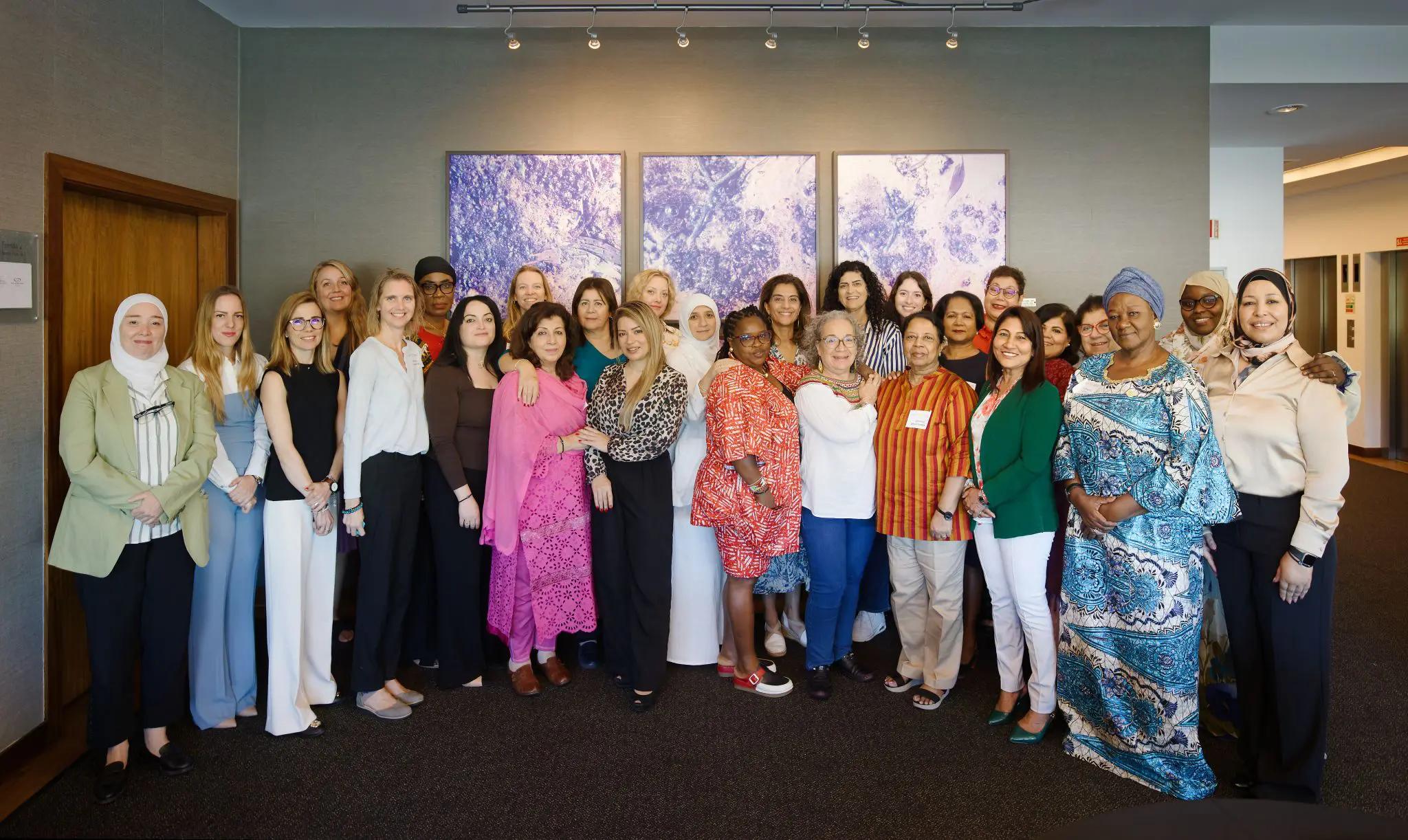
ICAN convened 20 members of WASL in Lisbon for the “Our Strategies, Our Peace” Writers’ Workshop. This unique gathering provided a secure and creative space for women peacebuilders to share their strategies, experience, expertise, and stories from conflict and crisis contexts.
Addu Women's AssociationAllamin FoundationAWAWCAGEADCIASECOECICAN FeaturedMobaderoonPAIMANRescue MeWCDCAWi'amWomen's Alliance for Security LeadershipWPSO
On October 6, 2025, the U.N. Security Council holds its annual open debate on Resolution 1325 on Women, Peace, and Security. Today, we are not issuing a new statement. Instead, we are honoring our community of women peacebuilders—who appeared before the Security Council throughout these 25 years, speaking for the millions they represent—by echoing their messages.
ICAN FeaturedICAN LatestICAN UpdatesWASL UpdatesWomen's Alliance for Security Leadership
In South Sudan, a nation where peace has long remained fragile and democratic progress uncertain, women are stepping forward to shape the future of their country. Long excluded from the corridors of power, they are forging their own movement for lasting change.
On behalf of the International Civil Society Action Network (ICAN) and members of the global Women’s Alliance for Security Leadership (WASL), we are honored to nominate Francesca Albanese, United Nations Special Rapporteur on the situation of human rights in the Palestinian territories occupied since 1967, for the 2026 Nobel Peace Prize.
در عرصه صحت روانی، افغانستان با بحران پیچیدهای مواجه است که این بحران به طور جدایی ناپذیر با ناامنی شدید فیزیکی، سیاسی و اقتصادی در کشور گره خورده و این نا امنی ها بحران را تشدید میکند. برای رسیدگی به آسیب های روانی، صحت و بهداشت جامعه به شیوه های پاسخگو به جنسیت و با مد نظر گرفتن حساسیت های فرهنگی، سازمانهای فعال در عرصه صلح سازی به رهبری زنان افغان در موقعیتی منحصربه فرد قرار دارند. این سازمان ها خدمات ابتدایی ارائه میدهند، مهارتها را توسعه میبخشند و در شکلدهی هنجارهای فرهنگی و جنسیتی نقش مؤثر ایفا میکنند.
ICAN FeaturedICAN LatestICAN UpdatesWASL UpdatesWomen's Alliance for Security LeadershipWPSO
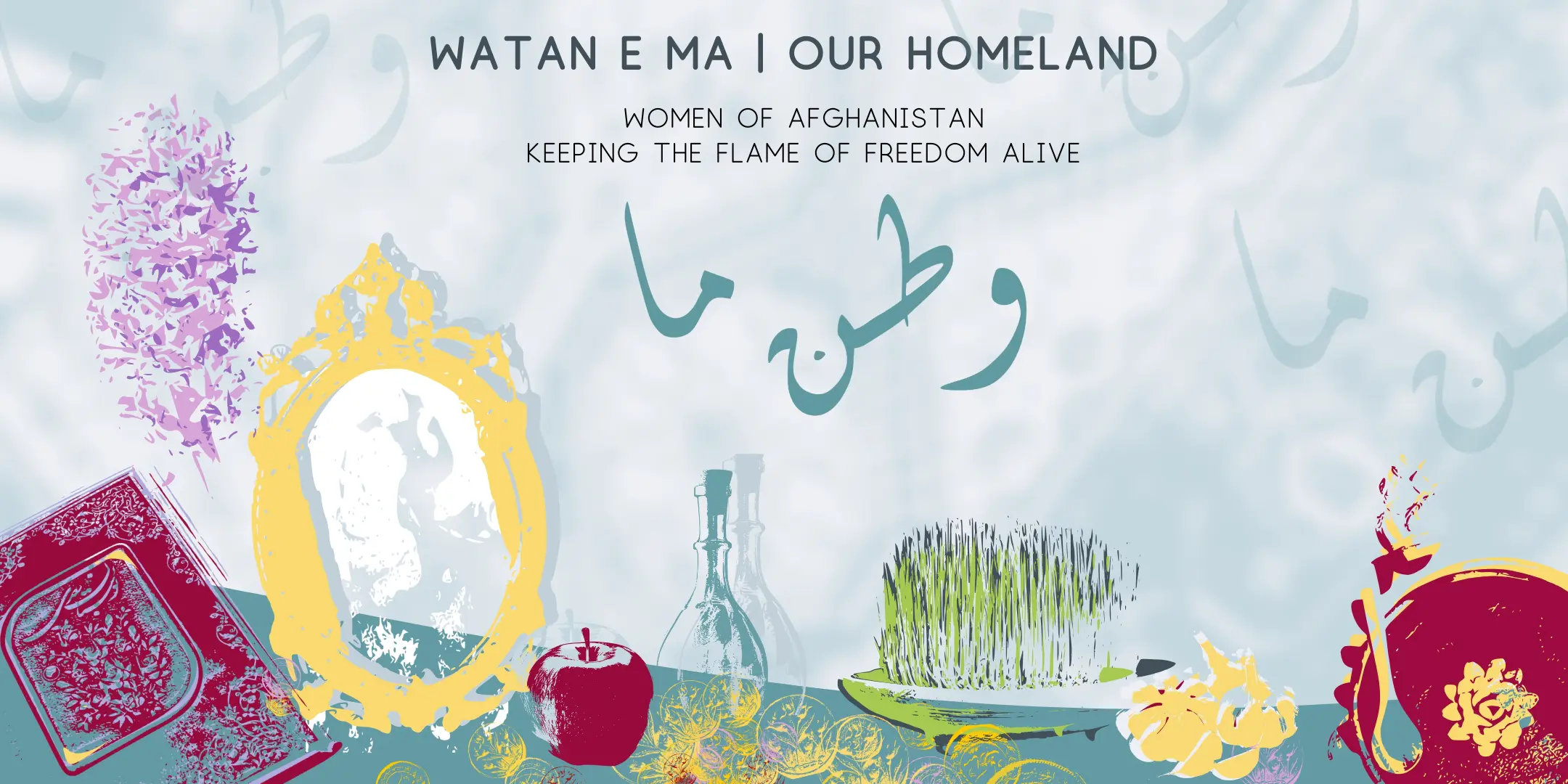
In a powerful departure from traditional advocacy, ICAN—guided by our Afghan partners and women peacebuilders—hosted the event “Watan e Ma – وطن ما – Our Homeland: Women of Afghanistan Keeping the Flame of Freedom Alive” on March 17, 2025 at Blue Gallery in New York City. Held during the 69th Commission on the Status of Women (CSW69), the event celebrated Afghan cultural heritage and the resilience of Afghan women peacebuilders, who persist in their leadership for peace, justice, and equality under the Taliban’s regime of gender apartheid.
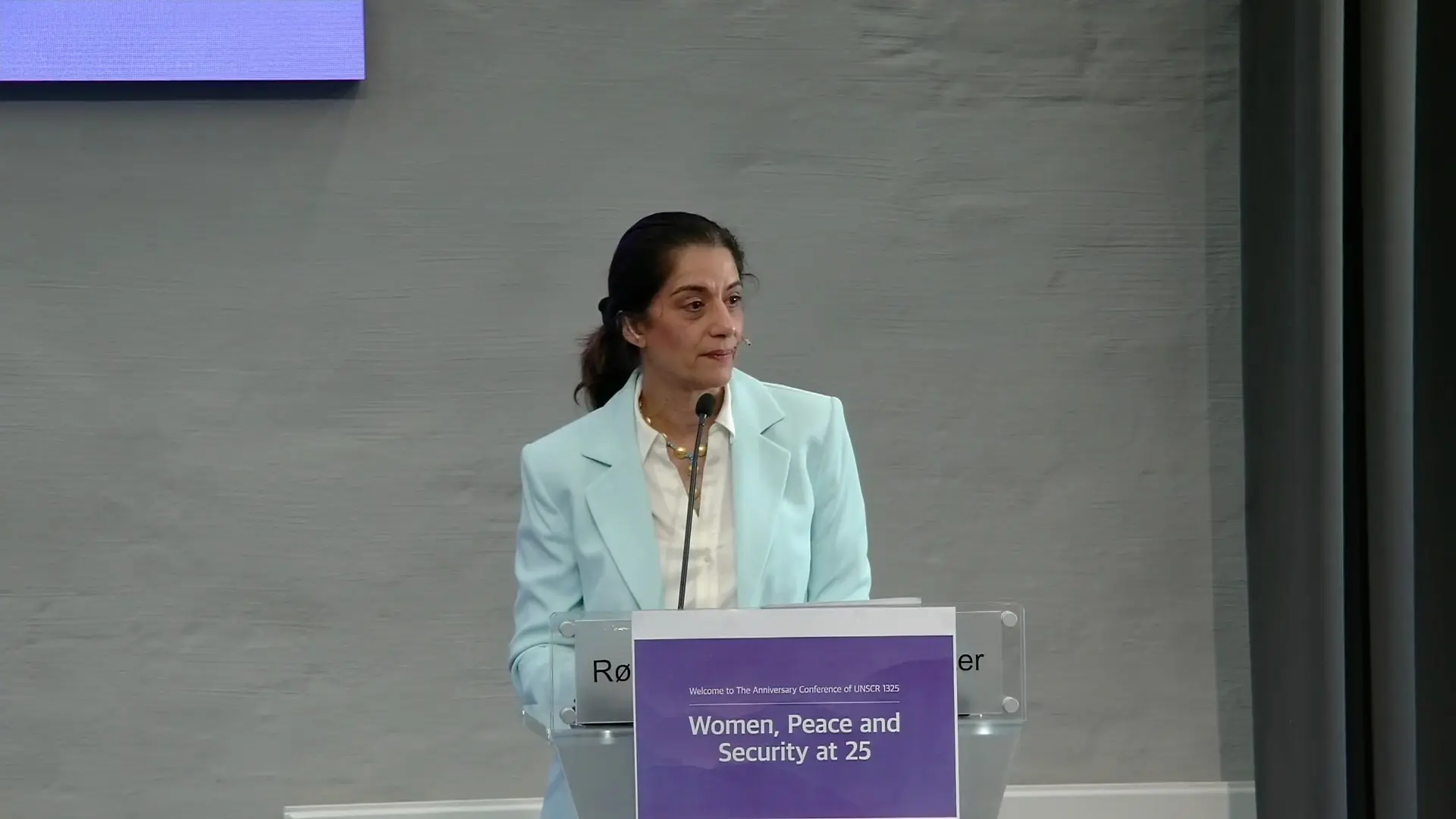
On May 5, 2025, ICAN's Sanam Naraghi Anderlini delivered the keynote speech at the two-day international conference "25th Anniversary Conference of UNSCR 1325 Women, Peace and Security."
As Senator Mobina Jaffer concludes 23 years of distinguished public service in the Canadian Senate, we extend our deepest thanks for her steadfast leadership as Chair of ICAN’s Board of Directors from 2014 to 2024.
Together with André Mundal, our new Interim Chair of the ICAN Board of Directors, we are delighted to welcome two new members to our Board of Directors.
Trust between communities and the security sector is critical for effective governance and peace. So is a vibrant civil society. When women peacebuilders are recognized and engaged as independent, strategic partners and security actors—in their own right—the results are transformative. Twenty-five years on from the launch of the WPS agenda, women peacebuilders’ creativity and contributions to societal peace and security are not only timely, they are even more essential.
Allamin FoundationAWAPSAAWAWBetter Peace InitiativeCIASECoACTGEN MyanmarGender and ExtremismsICAN FeaturedICAN LatestICAN UpdatesPAIMANPCIDWASL UpdatesWomen's Alliance for Security Leadership